Revisiting Rural America - Böcker
Visar alla böcker i serien Revisiting Rural America. Handla med fri frakt och snabb leverans.
7 produkter
7 produkter
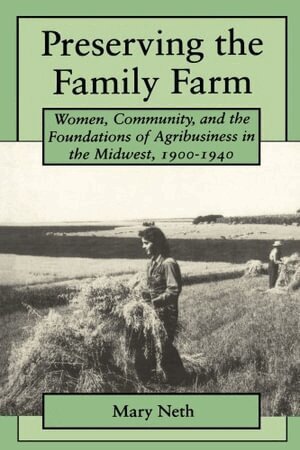
Preserving the Family Farm
Women, Community, and the Foundations of Agribusiness in the Midwest, 1900-1940
Häftad, Engelska, 1999
446 kr
Skickas inom 5-8 vardagar
Between 1900 and 1940 American family farming gave way to what came to be called agribusiness. Government policies, consumer goods aimed at rural markets, and the increasing consolidation of agricultural industries all combined to bring about changes in farming strategies that had been in use since the frontier era. Because the Midwestern farm economy played an important part in the relations of family and community, new approaches to farm production meant new patterns in interpersonal relations as well. In Preserving the Family Farm Mary Neth focuses on these relations -- of gender and community -- to shed new light on the events of this crucial period.
564 kr
Tillfälligt slut
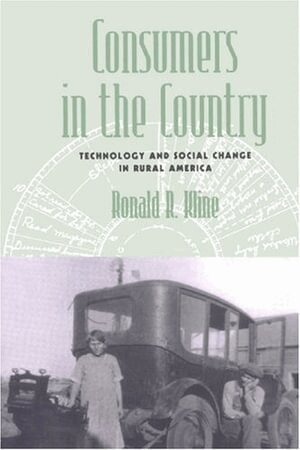
From 1900 to 1960, the introduction and development of four so-called urbanizing technologies-the telephone, automobile, radio, and electric light and power-transformed the rural United States. But did these new technologies revolutionize rural life in the ways modernizers predicted? And how exactly-and with what levels of resistance and acceptance-did this change take place? In Consumers in the Country Ronald R. Kline, avoiding the trap of technological determinism, explores the changing relationships among the Country Life professionals, government agencies, sales people, and others who promoted these technologies and the farm families who largely succeeded in adapting them to rural culture.
663 kr
Skickas
In the years after World War I, Southern farm women found their world changing. A postwar plunge in farm prices stretched into a twenty-year agricultural depression and New Deal programs eventually transformed the economy. Many families left their land to make way for larger commercial farms. New industries and the intervention of big government in once insular communities marked a turning point in the struggle of upcountry women-forcing new choices and the redefinition of traditional ways of life. Melissa Walker's All We Knew Was to Farm draws on interviews, archives, and family and government records to reconstruct the conflict between rural women and bewildering and unsettling change. Some women adapted by becoming partners in farm operations, adopting the roles of consumers and homemakers, taking off-farm jobs, or leaving the land. The material lives of rural upcountry women improved dramatically by midcentury-yet in becoming middle class, Walker concludes, the women found their experiences both broadened and circumscribed.
349 kr
Skickas inom 11-20 vardagar
In the years after World War I, Southern farm women found their world changing. A postwar plunge in farm prices stretched into a twenty-year agricultural depression and New Deal programs eventually transformed the economy. Many families left their land to make way for larger commercial farms. New industries and the intervention of big government in once insular communities marked a turning point in the struggle of upcountry women-forcing new choices and the redefinition of traditional ways of life. Melissa Walker's All We Knew Was to Farm draws on interviews, archives, and family and government records to reconstruct the conflict between rural women and bewildering and unsettling change. Some women adapted by becoming partners in farm operations, adopting the roles of consumers and homemakers, taking off-farm jobs, or leaving the land. The material lives of rural upcountry women improved dramatically by midcentury-yet in becoming middle class, Walker concludes, the women found their experiences both broadened and circumscribed.
430 kr
Skickas inom 5-8 vardagar
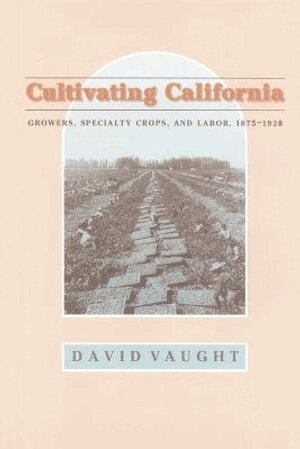
In Cultivating California, David Vaught shows how fruit and nut growers were neither industrialists nor agrarians. From the very outset, he explains, these "horticulturists" saw themselves as guardians of California's unique culture-raising crops for market while self-consciously building healthy and prosperous communities. Every grower was not, in fact, like every other, Vaught argues, whether one examines their labor systems, recruiting methods, harvest needs, marketing strategies, farm size, or their relationships with their communities, unions, and the state. The hard work, foresight, and devotion to detail required to nurture an orchard or vineyard made them, they insisted, cultivators of a better society. Over time, however, labor relations, market imperatives, and changing political conditions undermined the growers' horticultural ideal.
446 kr
Skickas inom 5-8 vardagar
From 1900 to 1960, the introduction and development of four so-called urbanizing technologies-the telephone, automobile, radio, and electric light and power-transformed the rural United States. But did these new technologies revolutionize rural life in the ways modernizers predicted? And how exactly-and with what levels of resistance and acceptance-did this change take place? In Consumers in the Country Ronald R. Kline, avoiding the trap of technological determinism, explores the changing relationships among the Country Life professionals, government agencies, sales people, and others who promoted these technologies and the farm families who largely succeeded in adapting them to rural culture.
336 kr
Tillfälligt slut
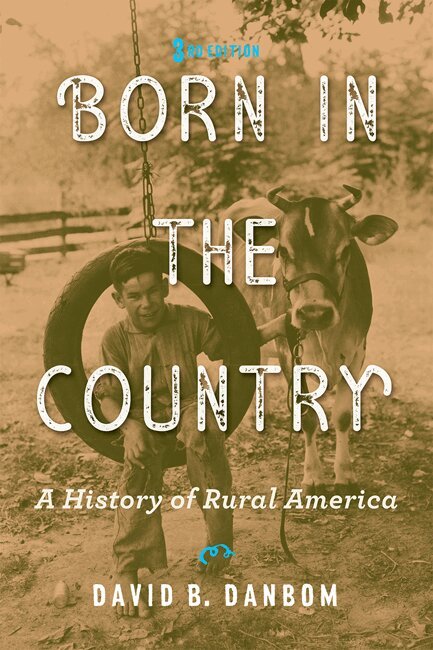
Throughout most of its history, America has been a rural nation, largely made up of farmers. David B. Danbom's Born in the Country was the first-and still the only-general history of rural America. Ranging from pre-Columbian times to the enormous changes of the twentieth century, the book masterfully integrates agricultural, technological, and economic themes with new questions about the American experience. Danbom employs the stories of particular farm families to illustrate the experiences of rural people-including the persistence of Old-World custom, chores of family members, decisions about inheritance, the evolution from subsistence to commercial farming, movement westward, demographic erosion as children left for cities, the rise of corporate agriculture, and the decline of family farming.This substantially revised and updated third edition * expands and deepens its coverage of the late twentieth and early twenty-first centuries* focuses on the changes in agriculture and rural life in the progressive and New Deal eras as well as the massive shifts that have taken place since 1945* adds new information about African American and Native American agricultural experiences* discusses the decline of agriculture as a productive enterprise and its impact on farm families and communities* explores rural culture, gender issues, agriculture, and the environment* traces the relationship among farmers, agribusiness, and consumers In a new and provocative concluding chapter, Danbom reflects on increasing consumer disenchantment with and resistance to modern agriculture as well as the transformation of rural America into a place where farmers are a shrinking minority. Ultimately, he asks whether a distinctive style of rural life exists any longer.