Routledge Library Editions: Film and Literature – serie
Visar alla böcker i serien Routledge Library Editions: Film and Literature. Handla med fri frakt och snabb leverans.
11 produkter
11 produkter
14 933 kr
Skickas inom 10-15 vardagar
Reissuing works originally published between 1968 and 1993, Routledge Library Editions: Film and Literature offers a selection of scholarship covering the crossover of novels and the movies. Volumes on Shakespearean and Greek Tragedy films among others round this out to be an interesting compact collection of previously out-of-print works.
2 430 kr
Skickas inom 10-15 vardagar
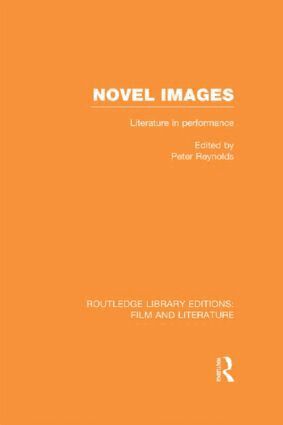
Written specifically with the student in mind and focusing on a number of well-known texts, including Les Liaisons Dangereuses, Nicholas Nickleby, Nice Work and The Color Purple, the contributions in this book demonstrate how we can look critically at literary adaptations and learn to distinguish between mythical images and the reality of the process that constructed them. They argue that adaptations should not be seen as secondary or marginal, because through them we can enter into an exciting debate with the literary text itself. Originally published in 1993.
2 430 kr
Skickas inom 10-15 vardagar
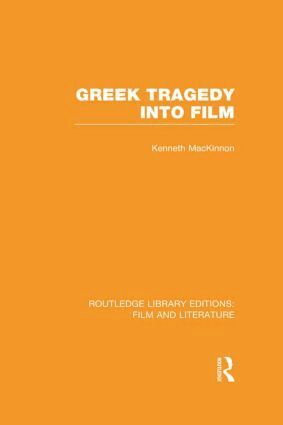
If Greek tragedy is sometimes regarded as a form long dead and buried, both theatre producers and film directors seem slow to accept its interment. Originally published in 1986, this book reflects the renewed interest in questions of staging the Greek plays, to give a comprehensive account and critical analysis of all the important versions of Greek tragedy made on film. From the 1927 footage of the re-enactment of Aeschylus’ Prometheus in Chains at the Delphi Festival organised by Angelos Sikelianos to Pasolini’s Notes for an African Oresteia, the study encompasses the version of Oedipus by Tyrone Guthrie, Tzavellas’s Antigone (with Irene Papas), Michael Cacoyannis’s series which included Electra, The Trojan Women, and Iphigeneia, Pasolini’s Oedipus and Medea (with Maria Callas), Miklos Jancso’s Elektreia, Dassim’s Phaedra and others. Many interesting questions are raised by the transference of a highly stylised form such as Greek tragedy to what is often claimed to be the ‘realistic’ medium of film. What becomes clear is that the heroic myths retain with ease the power to move the audiences in very different milieux through often strikingly different means.The book may be read as an adjunct to viewing of the films, but enough synopsis is given to make its arguments accessible to those familiar only with the classical texts, or with neither version.
2 430 kr
Skickas inom 10-15 vardagar
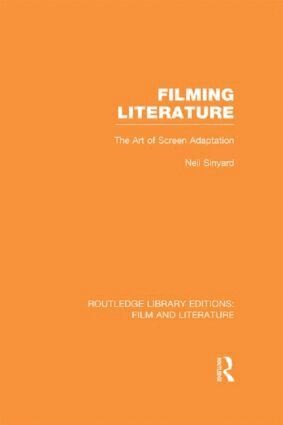
This is a comprehensive survey of the relationship between film and literature. It looks at the cinematic adaptations of such literary masters as Shakespeare, Henry James, Joseph Conrad and D.H. Lawrence, and considers the contribution to the cinema made by important literary figures as Harold Pinter, James Agree and Graham Greene. Elsewhere, the book draws intriguing analogies between certain literary and film artists, such as Dickens and Chaplin, Ford and Twain, and suggests that such analogies can throw fresh light on the subjects under review. Another chapter considers the film genre of the bio-pic, the numerous cinematic attempts to render in concrete terms the complexities of the literary life, whether the writer be Proust, Joyce, Oscar Wilde, Dashiel Hammett, Agatha Christie or Boris Pasternak.Originally published in 1986, this is a book to appeal to any reader with an interest in film or literature, and is of especial value to those involved in the teaching or study of either subject.
2 977 kr
Skickas inom 10-15 vardagar
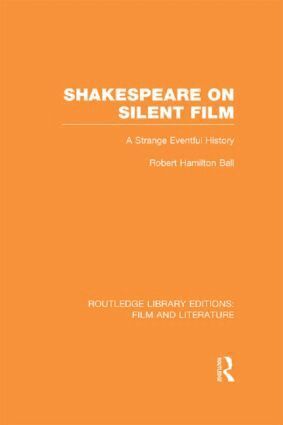
In 1899, when film projection was barely three years old, Herbert Beerbohm Tree was filmed as King John. In his highly entertaining history, Robert Hamilton Ball traces in detail the fate of Shakespeare on silent films from Tree’s first effort until the establishment of sound in 1929. The silent films brought Shakespeare to a wide public who had never had the chance to see his plays in the theatre. And Shakespeare gave the film makers an air of respectability that was badly needed by a medium with a reputation for frivolity.This work, first published in 1968, brings history to life with excerpts from scenarios, from reviews and from contemporary film journals, and with reproduction of stills and frames from the films themselves, including unusual shots of leading screen actors. This is a valuable source book for film experts, enhanced by full notes, bibliography and indexes; a fresh approach for Shakespeareans; and a vivid sketch of a world that has passed for all.
2 430 kr
Skickas inom 10-15 vardagar
Originally published in 1990, this book brought a new rigor and subtlety to the interpretation of film adaptations of Shakespeare. Drawing on traditional literary analysis, psychoanalysis, and current film theory about gender and subjectivity, the author combines close readings of seven films with historical and biographical studies of the directors who made them.Offering substantial readings of Jean-Luc Godard’s controversial deconstructed King Lear and of Liz White’s independent African-American Othello, Donaldson also applies his provocative and contemporary point of view to more familiar films. He reads Olivier’s Henry V in relation to its treatment of sexual difference; Olivier’s Hamlet in part as an expression of the director’s childhood sexual trauma; Kurosawa’s Throne of Blood as an allegory of the relationship between Western and Japanese cinema; and Zeffirelli’s immensely popular Romeo and Juliet in the light of its powerful homoerotic subtext.With striking perspectives on Shakespeare, on the movies as an expressive medium, and on the complex processes of cultural change, this is timeless useful reading for teachers and students of film and literature.
805 kr
Skickas inom 10-15 vardagar
This is a comprehensive survey of the relationship between film and literature. It looks at the cinematic adaptations of such literary masters as Shakespeare, Henry James, Joseph Conrad and D.H. Lawrence, and considers the contribution to the cinema made by important literary figures as Harold Pinter, James Agree and Graham Greene. Elsewhere, the book draws intriguing analogies between certain literary and film artists, such as Dickens and Chaplin, Ford and Twain, and suggests that such analogies can throw fresh light on the subjects under review. Another chapter considers the film genre of the bio-pic, the numerous cinematic attempts to render in concrete terms the complexities of the literary life, whether the writer be Proust, Joyce, Oscar Wilde, Dashiel Hammett, Agatha Christie or Boris Pasternak.Originally published in 1986, this is a book to appeal to any reader with an interest in film or literature, and is of especial value to those involved in the teaching or study of either subject.
774 kr
Skickas inom 10-15 vardagar
If Greek tragedy is sometimes regarded as a form long dead and buried, both theatre producers and film directors seem slow to accept its interment. Originally published in 1986, this book reflects the renewed interest in questions of staging the Greek plays, to give a comprehensive account and critical analysis of all the important versions of Greek tragedy made on film. From the 1927 footage of the re-enactment of Aeschylus’ Prometheus in Chains at the Delphi Festival organised by Angelos Sikelianos to Pasolini’s Notes for an African Oresteia, the study encompasses the version of Oedipus by Tyrone Guthrie, Tzavellas’s Antigone (with Irene Papas), Michael Cacoyannis’s series which included Electra, The Trojan Women, and Iphigeneia, Pasolini’s Oedipus and Medea (with Maria Callas), Miklos Jancso’s Elektreia, Dassim’s Phaedra and others. Many interesting questions are raised by the transference of a highly stylised form such as Greek tragedy to what is often claimed to be the ‘realistic’ medium of film. What becomes clear is that the heroic myths retain with ease the power to move the audiences in very different milieux through often strikingly different means.The book may be read as an adjunct to viewing of the films, but enough synopsis is given to make its arguments accessible to those familiar only with the classical texts, or with neither version.
805 kr
Skickas inom 10-15 vardagar
Written specifically with the student in mind and focusing on a number of well-known texts, including Les Liaisons Dangereuses, Nicholas Nickleby, Nice Work and The Color Purple, the contributions in this book demonstrate how we can look critically at literary adaptations and learn to distinguish between mythical images and the reality of the process that constructed them. They argue that adaptations should not be seen as secondary or marginal, because through them we can enter into an exciting debate with the literary text itself. Originally published in 1993.
805 kr
Skickas inom 10-15 vardagar
Originally published in 1990, this book brought a new rigor and subtlety to the interpretation of film adaptations of Shakespeare. Drawing on traditional literary analysis, psychoanalysis, and current film theory about gender and subjectivity, the author combines close readings of seven films with historical and biographical studies of the directors who made them.Offering substantial readings of Jean-Luc Godard’s controversial deconstructed King Lear and of Liz White’s independent African-American Othello, Donaldson also applies his provocative and contemporary point of view to more familiar films. He reads Olivier’s Henry V in relation to its treatment of sexual difference; Olivier’s Hamlet in part as an expression of the director’s childhood sexual trauma; Kurosawa’s Throne of Blood as an allegory of the relationship between Western and Japanese cinema; and Zeffirelli’s immensely popular Romeo and Juliet in the light of its powerful homoerotic subtext.With striking perspectives on Shakespeare, on the movies as an expressive medium, and on the complex processes of cultural change, this is timeless useful reading for teachers and students of film and literature.
774 kr
Skickas inom 10-15 vardagar
In 1899, when film projection was barely three years old, Herbert Beerbohm Tree was filmed as King John. In his highly entertaining history, Robert Hamilton Ball traces in detail the fate of Shakespeare on silent films from Tree’s first effort until the establishment of sound in 1929. The silent films brought Shakespeare to a wide public who had never had the chance to see his plays in the theatre. And Shakespeare gave the film makers an air of respectability that was badly needed by a medium with a reputation for frivolity.This work, first published in 1968, brings history to life with excerpts from scenarios, from reviews and from contemporary film journals, and with reproduction of stills and frames from the films themselves, including unusual shots of leading screen actors. This is a valuable source book for film experts, enhanced by full notes, bibliography and indexes; a fresh approach for Shakespeareans; and a vivid sketch of a world that has passed for all.