Kenneth MacKinnon – författare
Visar alla böcker från författaren Kenneth MacKinnon. Handla med fri frakt och snabb leverans.
5 produkter
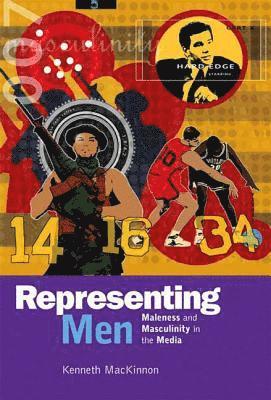
Representing Men
Häftad, 2003
486 kr
Lägg i varukorg
In this study, Kenneth MacKinnon suggests that ultimately masculinity is no straightforward actuality. Instead, several aspects of masculinity are ideals rather than social realities. These ideals might be best understood as forming a near-impossible version of masculinity to which males in society …
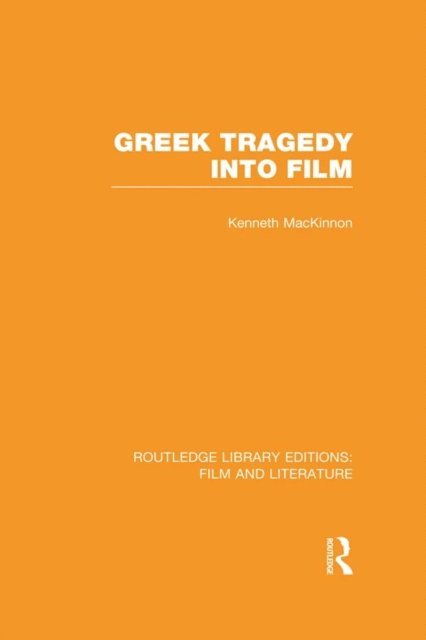
Greek Tragedy into Film
Inbunden, 2013
2879 kr
Lägg i varukorg
If Greek tragedy is sometimes regarded as a form long dead and buried, both theatre producers and film directors seem slow to accept its interment. Originally published in 1986, this book reflects the renewed interest in questions of staging the Greek plays, to give a comprehensive account and …
Greek Tragedy into Film
E-bok, 2013
1016 kr
Lägg i varukorg
If Greek tragedy is sometimes regarded as a form long dead and buried, both theatre producers and film directors seem slow to accept its interment. Originally published in 1986, this book reflects the renewed interest in questions of staging the Greek plays, to give a comprehensive account and …
Greek Tragedy into Film
Häftad, 2016
859 kr
Lägg i varukorg
If Greek tragedy is sometimes regarded as a form long dead and buried, both theatre producers and film directors seem slow to accept its interment. Originally published in 1986, this book reflects the renewed interest in questions of staging the Greek plays, to give a comprehensive account and …
Greek Tragedy into Film
E-bok, 2013
1016 kr
Lägg i varukorg
If Greek tragedy is sometimes regarded as a form long dead and buried, both theatre producers and film directors seem slow to accept its interment. Originally published in 1986, this book reflects the renewed interest in questions of staging the Greek plays, to give a comprehensive account and …