Routledge Public Budgeting and Finance - Böcker
Visar alla böcker i serien Routledge Public Budgeting and Finance. Handla med fri frakt och snabb leverans.
8 produkter
8 produkter
646 kr
Skickas inom 10-15 vardagar
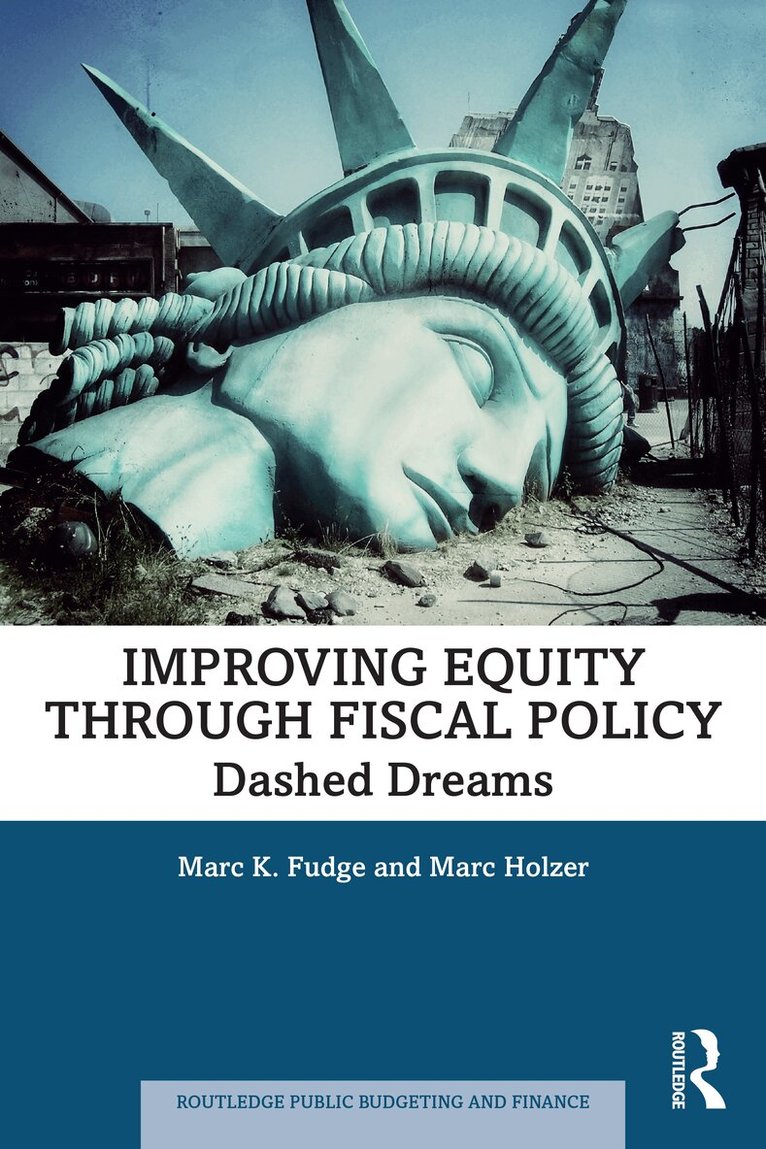
Improving Equity through Fiscal Policy: Dashed Dreams explores the delivery of key services to the public and to what extent equity is considered when government allocates resources. Authors Marc K. Fudge and Marc Holzer examine the key topics in a typical public budgeting, finance or policy course including taxation, public choice and political economics from an equity-based lens. They then offer a deep dive into the development of US public policies, tackling a complex history of policies written expressly to undermine or suppress the advancement of Blacks and people of color. The result is a timely supplement to public budgeting and finance courses that encourages readers to recognize and reckon with the persistence of deep disparities – and the ways in which contemporary public budgeting cannot be understood without considering equity.The book begins with a discussion of the value of social equity and how it emerged as a critical component of public administration and policy. It then provides coverage of the economic role of government in society, taxation and its distributional effects, voter suppression, as well as inequities in housing, education and health. It further explores the racial wealth gap as well as positive examples of strategies that have helped to support a fairer and more equal allocation of resources. Improving Equity through Fiscal Policy: Dashed Dreams offers instructors, students, policymakers, elected officials, managers and leaders a critical and necessary re-examination of this important topic.
2 113 kr
Skickas inom 10-15 vardagar
Improving Equity through Fiscal Policy: Dashed Dreams explores the delivery of key services to the public and to what extent equity is considered when government allocates resources. Authors Marc K. Fudge and Marc Holzer examine the key topics in a typical public budgeting, finance or policy course including taxation, public choice and political economics from an equity-based lens. They then offer a deep dive into the development of US public policies, tackling a complex history of policies written expressly to undermine or suppress the advancement of Blacks and people of color. The result is a timely supplement to public budgeting and finance courses that encourages readers to recognize and reckon with the persistence of deep disparities – and the ways in which contemporary public budgeting cannot be understood without considering equity.The book begins with a discussion of the value of social equity and how it emerged as a critical component of public administration and policy. It then provides coverage of the economic role of government in society, taxation and its distributional effects, voter suppression, as well as inequities in housing, education and health. It further explores the racial wealth gap as well as positive examples of strategies that have helped to support a fairer and more equal allocation of resources. Improving Equity through Fiscal Policy: Dashed Dreams offers instructors, students, policymakers, elected officials, managers and leaders a critical and necessary re-examination of this important topic.
578 kr
Skickas inom 10-15 vardagar
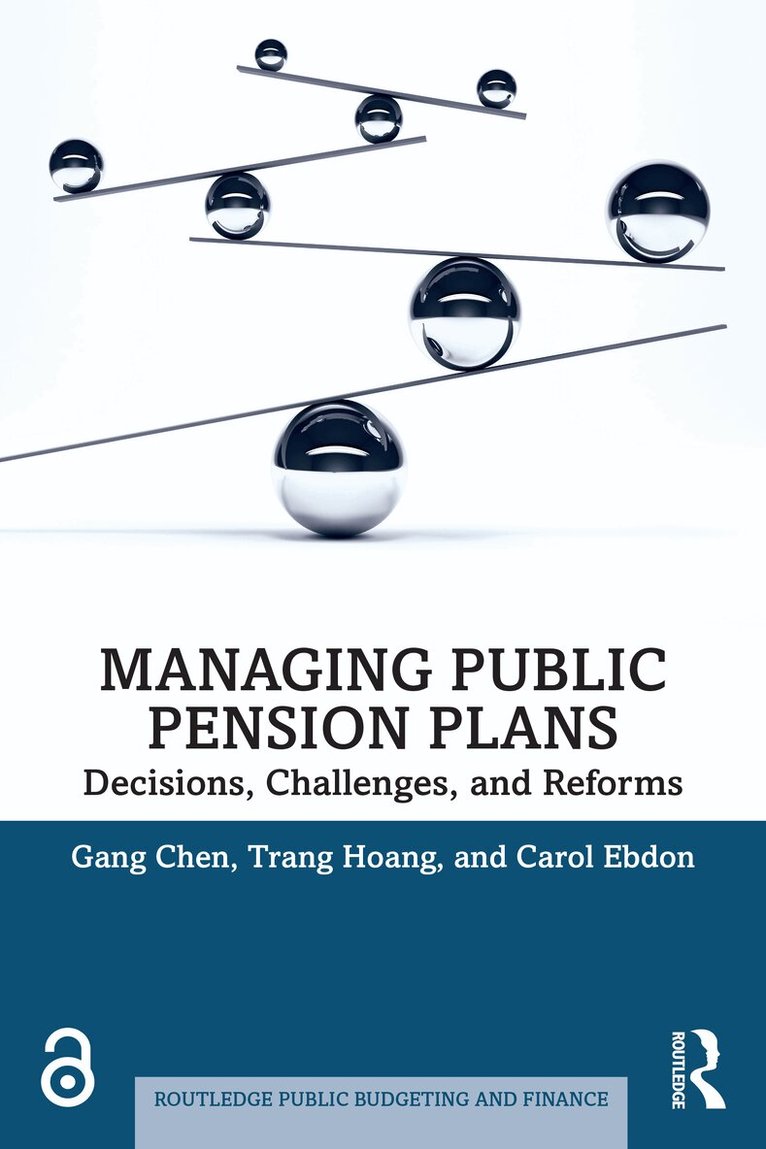
This book provides an in-depth explanation of public pension plan management and the decision-making processes surrounding pension policies within state and local governments in the United States. It addresses the intricate balance between securing retirement benefits for public employees and ensuring the fiscal sustainability of pension systems and their sponsoring governments. The book begins with an introduction to the purpose and significance of public pension systems, establishing a foundation for understanding key pension decisions. Using a logic model framework, the authors assess how environmental factors, stakeholders, and legal constraints shape decisions in pension management. The book identifies five core goals for public pension management — benefit sufficiency, cost affordability, funding sustainability, asset management efficiency, and governance quality — emphasizing the relationships among these objectives.Detailed chapters cover investment policies, actuarial processes, and the design of benefits and contributions, explaining the financial and actuarial bases necessary for sound pension decisions. Pension reform efforts, including the transition from defined benefit plans to defined contribution, cash-balance, and hybrid plans, are examined in depth, highlighting the reasons for reforms and analyzing their impacts on the employees and employers. The book concludes with ten takeaways for effective pension plan management and addresses emerging challenges such as fiscal pressures, inflation, and changing demographics. With practical implications grounded in research, this book serves as an essential resource for pension board members, pension system administrators, government officials, legislators and their staff, professionals, researchers, and students involved in public pension plan management.
2 113 kr
Skickas inom 10-15 vardagar
This book provides an in-depth explanation of public pension plan management and the decision-making processes surrounding pension policies within state and local governments in the United States. It addresses the intricate balance between securing retirement benefits for public employees and ensuring the fiscal sustainability of pension systems and their sponsoring governments. The book begins with an introduction to the purpose and significance of public pension systems, establishing a foundation for understanding key pension decisions. Using a logic model framework, the authors assess how environmental factors, stakeholders, and legal constraints shape decisions in pension management. The book identifies five core goals for public pension management — benefit sufficiency, cost affordability, funding sustainability, asset management efficiency, and governance quality — emphasizing the relationships among these objectives.Detailed chapters cover investment policies, actuarial processes, and the design of benefits and contributions, explaining the financial and actuarial bases necessary for sound pension decisions. Pension reform efforts, including the transition from defined benefit plans to defined contribution, cash-balance, and hybrid plans, are examined in depth, highlighting the reasons for reforms and analyzing their impacts on the employees and employers. The book concludes with ten takeaways for effective pension plan management and addresses emerging challenges such as fiscal pressures, inflation, and changing demographics. With practical implications grounded in research, this book serves as an essential resource for pension board members, pension system administrators, government officials, legislators and their staff, professionals, researchers, and students involved in public pension plan management.
537 kr
Skickas inom 10-15 vardagar
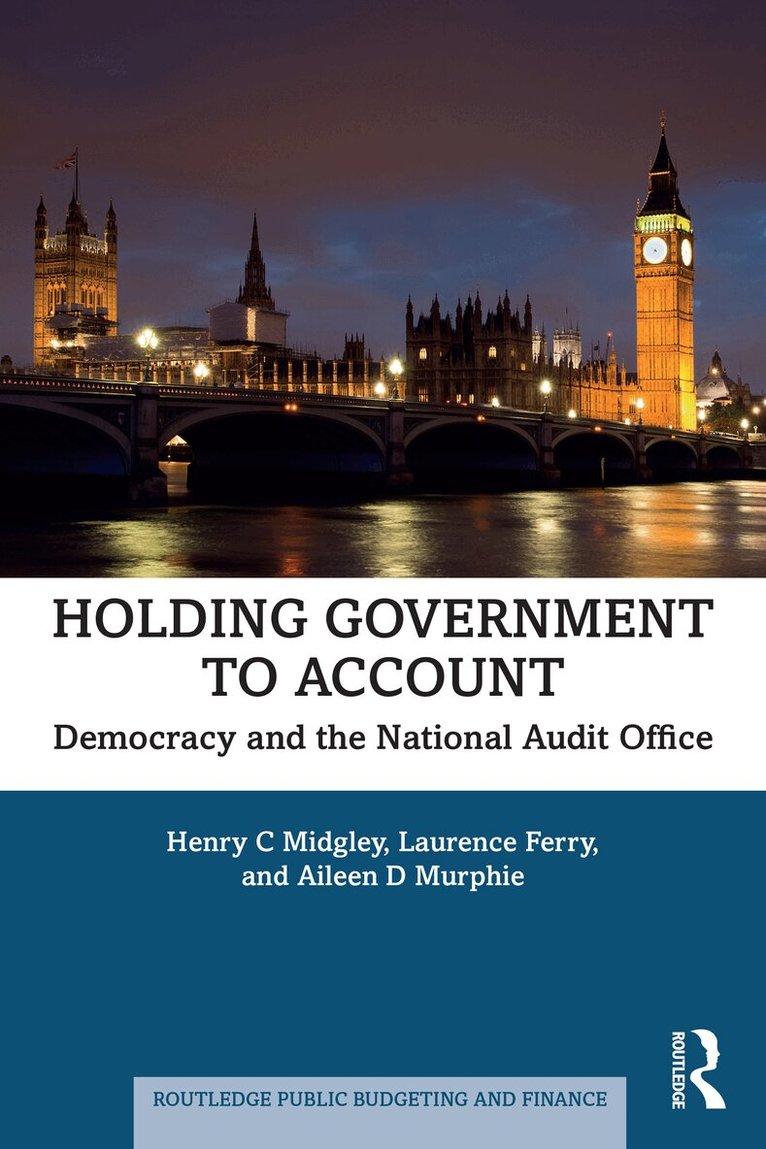
The National Audit Office has played an important role in the checks and balances of the UK parliamentary and political system over the last 40 years. This new book, more than just a history of the UK’s supreme audit institution, examines the very definition of accountability through both an historic and an academic lens, critically exploring questions about the role of audit in a democracy and how well it is working.Holding Government to Account draws on several unique sources of evidence, including interviews with senior officials from the National Audit Office and the civil service, as well as senior parliamentarians with experience of the NAO’s relationships with government and legislature. These interviews are supplemented by an analysis of previously unpublished manuscript material in the National Archives, examination of NAO reports and parliamentary and other reports focused on accountability. The book begins with a history of the National Audit Office in the context of the UK’s wider history. It then offers an overview of the constitutional, political and human legacies of the Exchequer and Audit Department, followed by a close examination of the National Audit Office’s leadership and decision-making from inception in 1984 through to the present. The authors conclude with an exploration of the way in which the meaning of public sector audit has evolved over time, in accordance with its wider political, ideological and material context. In doing so, they demonstrate that any question about the National Audit Office’s future and organisation is really a question about what democracy and good government mean in a modern bureaucratic state.Holding Government to Account will be of keen interest to students enrolled in courses on accounting, public administration, law and politics as well as to politicians, civil servants and Supreme Audit Institutions internationally.
1 977 kr
Skickas inom 10-15 vardagar
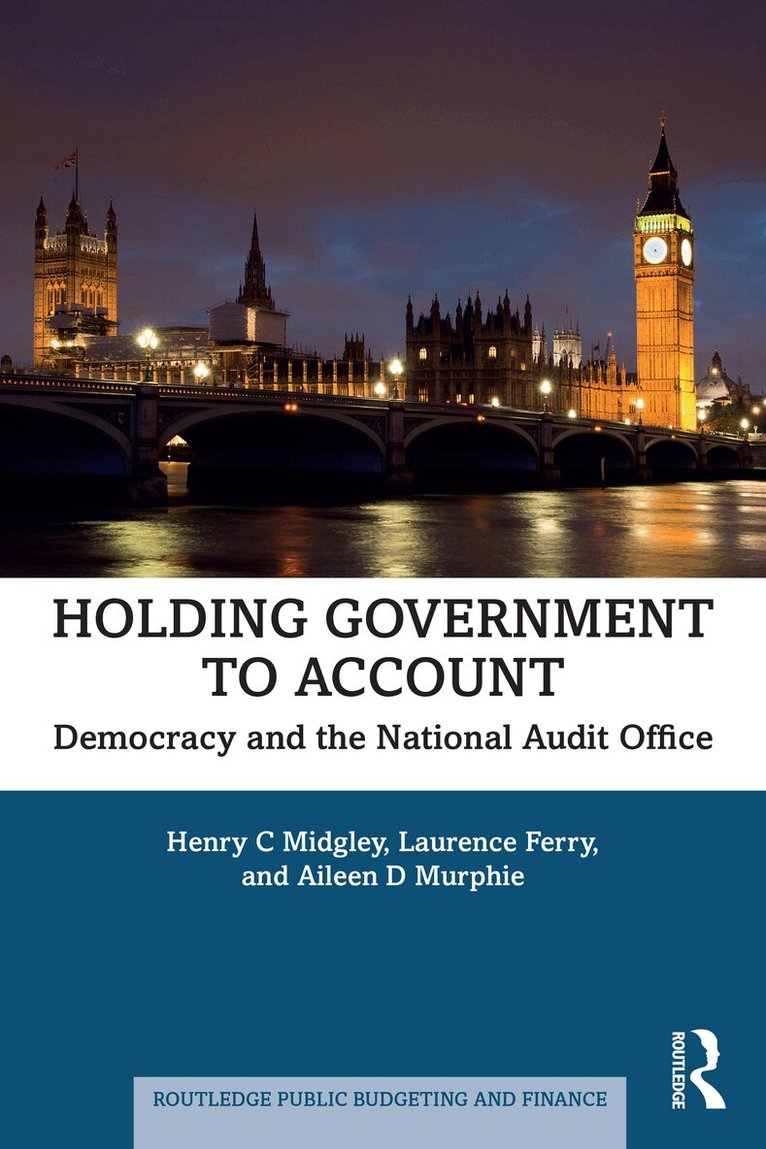
The National Audit Office has played an important role in the checks and balances of the UK parliamentary and political system over the last 40 years. This new book, more than just a history of the UK’s supreme audit institution, examines the very definition of accountability through both an historic and an academic lens, critically exploring questions about the role of audit in a democracy and how well it is working.Holding Government to Account draws on several unique sources of evidence, including interviews with senior officials from the National Audit Office and the civil service, as well as senior parliamentarians with experience of the NAO’s relationships with government and legislature. These interviews are supplemented by an analysis of previously unpublished manuscript material in the National Archives, examination of NAO reports and parliamentary and other reports focused on accountability. The book begins with a history of the National Audit Office in the context of the UK’s wider history. It then offers an overview of the constitutional, political and human legacies of the Exchequer and Audit Department, followed by a close examination of the National Audit Office’s leadership and decision-making from inception in 1984 through to the present. The authors conclude with an exploration of the way in which the meaning of public sector audit has evolved over time, in accordance with its wider political, ideological and material context. In doing so, they demonstrate that any question about the National Audit Office’s future and organisation is really a question about what democracy and good government mean in a modern bureaucratic state.Holding Government to Account will be of keen interest to students enrolled in courses on accounting, public administration, law and politics as well as to politicians, civil servants and Supreme Audit Institutions internationally.
617 kr
Kommande
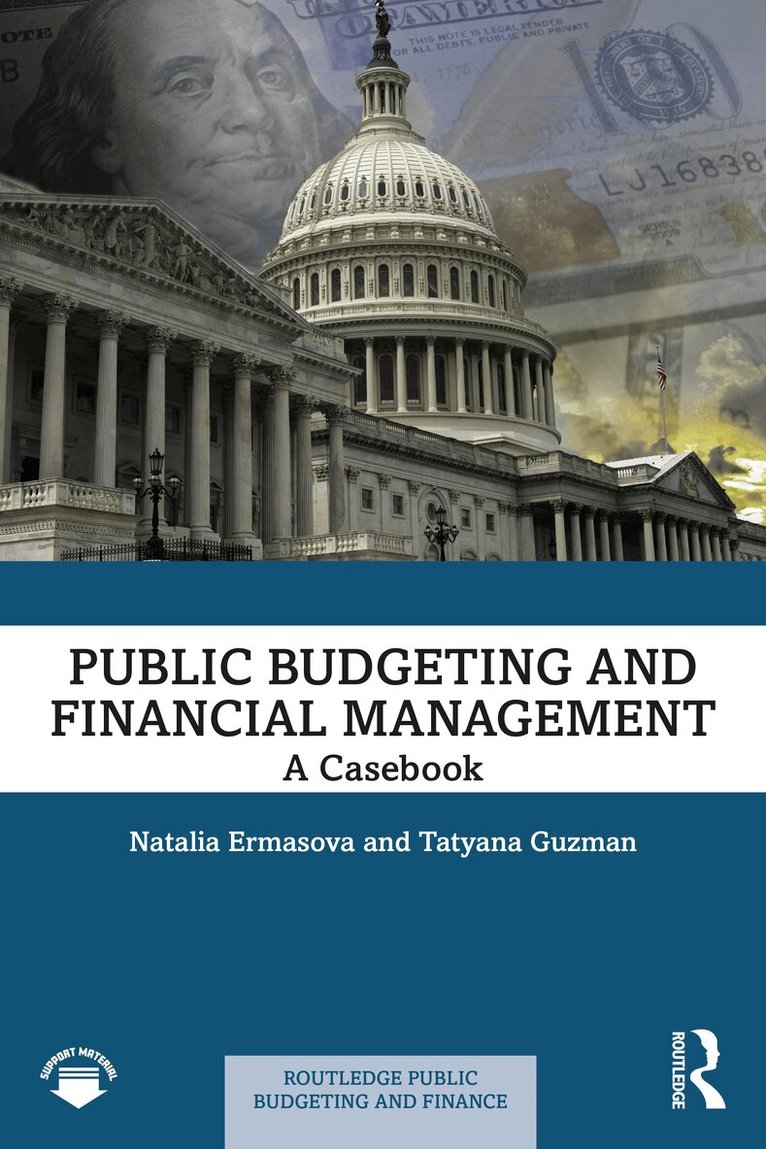
It is no secret that public budgeting courses can feel dry, technical, and overwhelming for students. Exploring real financial and budgeting situations in the public sector to engage students more actively in their learning, Public Budgeting and Financial Management: A Casebook applies budgeting and public finance course concepts in context to help students transform abstract concepts into practical applications. Each chapter of the book begins with a brief introduction to a foundational budgeting concept, including definitions, basic steps, and optional further reading, to provide an overview of and context for each concept. The case studies that then follow are organized by topic, designed to help students reflect, make connections, and analyze budgeting situations within and across settings. The cases demonstrate strategies in system implementation, policy formulation, and financial management for different levels of government, with international, federal, state, county, and local cases included. Each case study concludes with questions for discussion, and teaching notes are woven thoughtfully throughout the book, offering instructors guidance on how the case studies can be implemented effectively in a classroom setting.Public Budgeting and Financial Management: A Casebook is a detailed, indispensable guide for all public budgeting students, as well as early career faculty as they prepare to teach the course for what may be the first time, as well as for more senior faculty looking to improve the learning experience of students in the classroom.
2 258 kr
Kommande
It is no secret that public budgeting courses can feel dry, technical, and overwhelming for students. Exploring real financial and budgeting situations in the public sector to engage students more actively in their learning, Public Budgeting and Financial Management: A Casebook applies budgeting and public finance course concepts in context to help students transform abstract concepts into practical applications. Each chapter of the book begins with a brief introduction to a foundational budgeting concept, including definitions, basic steps, and optional further reading, to provide an overview of and context for each concept. The case studies that then follow are organized by topic, designed to help students reflect, make connections, and analyze budgeting situations within and across settings. The cases demonstrate strategies in system implementation, policy formulation, and financial management for different levels of government, with international, federal, state, county, and local cases included. Each case study concludes with questions for discussion, and teaching notes are woven thoughtfully throughout the book, offering instructors guidance on how the case studies can be implemented effectively in a classroom setting.Public Budgeting and Financial Management: A Casebook is a detailed, indispensable guide for all public budgeting students, as well as early career faculty as they prepare to teach the course for what may be the first time, as well as for more senior faculty looking to improve the learning experience of students in the classroom.