Routledge Studies in Public Administration and Environmental Sustainability - Böcker
Visar alla böcker i serien Routledge Studies in Public Administration and Environmental Sustainability. Handla med fri frakt och snabb leverans.
8 produkter
8 produkter
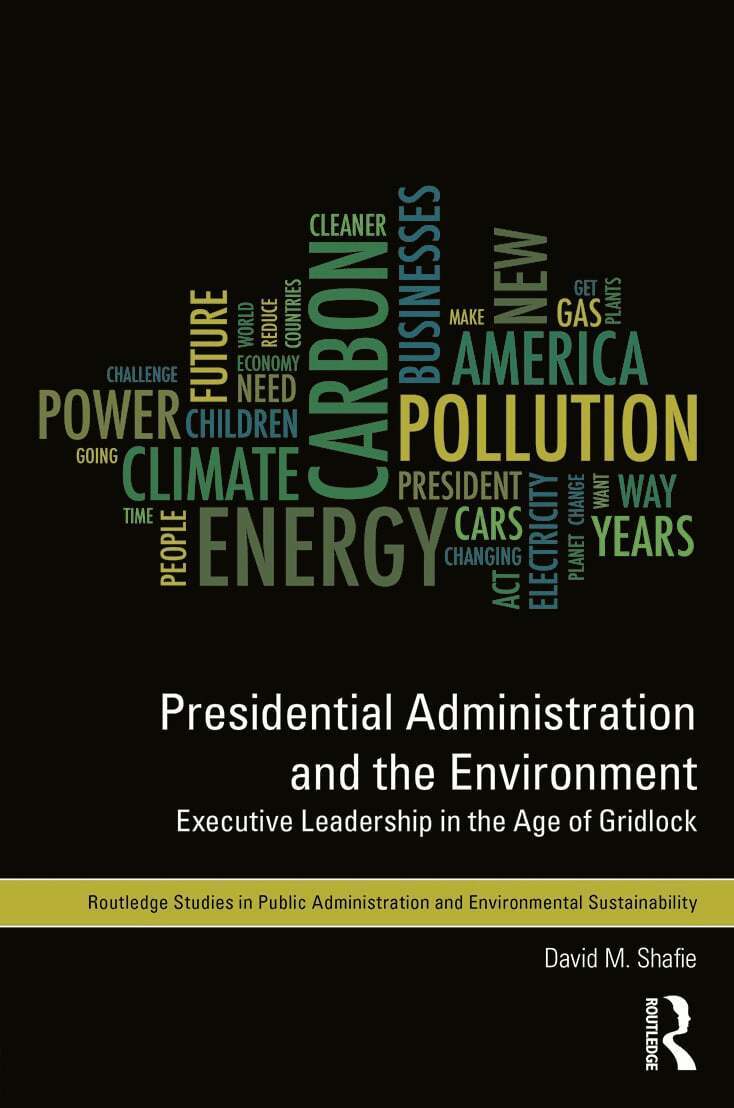
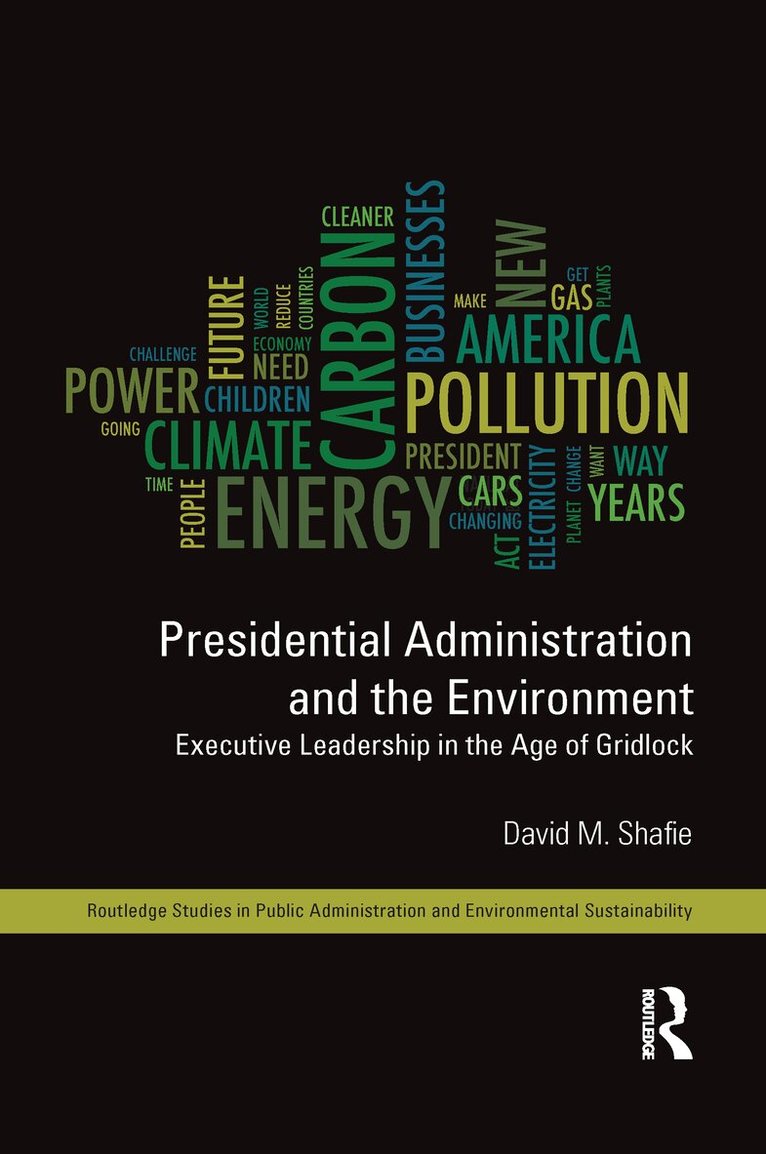
Presidential Administration and the Environment
Executive Leadership in the Age of Gridlock
Inbunden, Engelska, 2013
2 181 kr
Skickas inom 10-15 vardagar
After sweeping environmental legislation passed in the 1970s and 1980s, the 1990s ushered in an era when new legislation and reforms to existing laws were consistently caught up in a gridlock. In response, environmental groups became more specialized and professional, learning how to effect policy change through the courts, states, and federal agencies rather than through grassroots movements. Without a significantly mobilized public and with a generally uncooperative Congress, presidents since the 1990s have been forced to step into a new role of increasing presidential dominance over environmental policies. Rather than working with Congress, presidents instead have employed unilateral actions and administrative strategies to further their environmental goals.Presidential Administration and the Environment offers a detailed examination of the strategies and tools used by U.S. presidents. Using primary sources from presidential libraries such as speeches and staff communications, David M. Shafie analyzes how presidents such as Bill Clinton and George W. Bush have used alternative executive approaches to pass environmental policies. From there, Shafie presents case studies in land management, water policy, toxics, and climate change. He analyzes the role that executive leadership has played in passing policies within these four areas, explains how this role has changed over time, and concludes by investigating how Obama’s policies compare thus far with those of his predecessors.Shafie’s combination of qualitative content analysis and topical case studies offers scholars and researchers alike important insights for understanding the interactions between environmental groups and the executive branch and the implications for future policymaking in the United States.
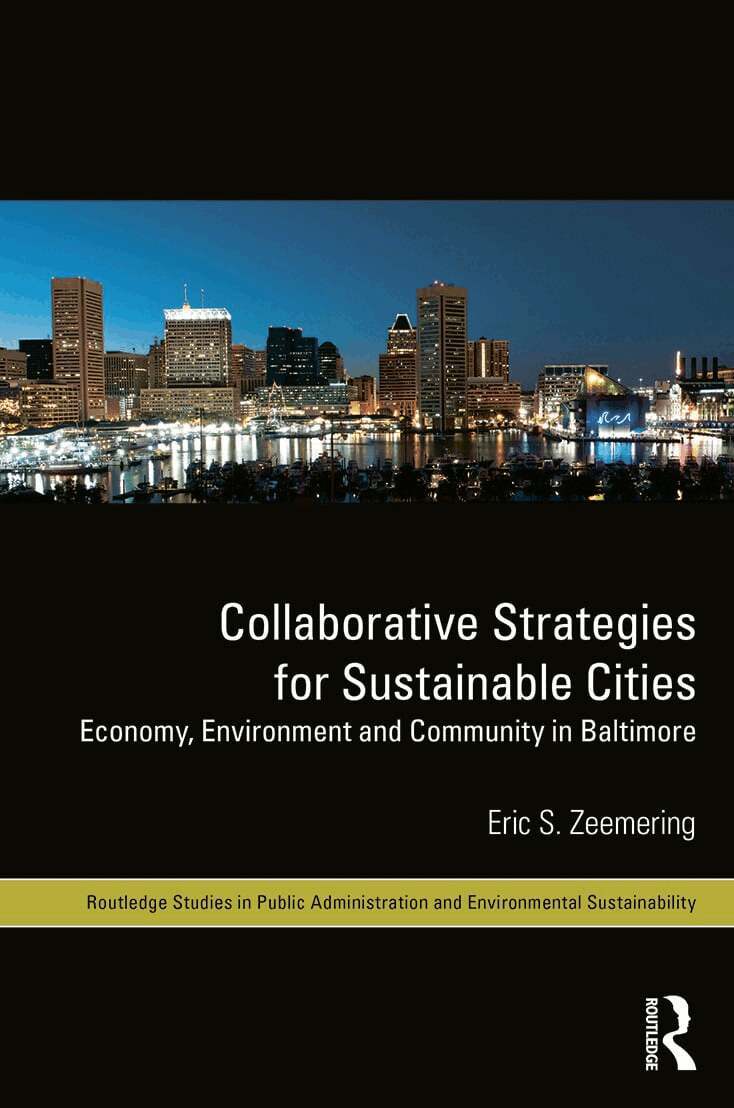
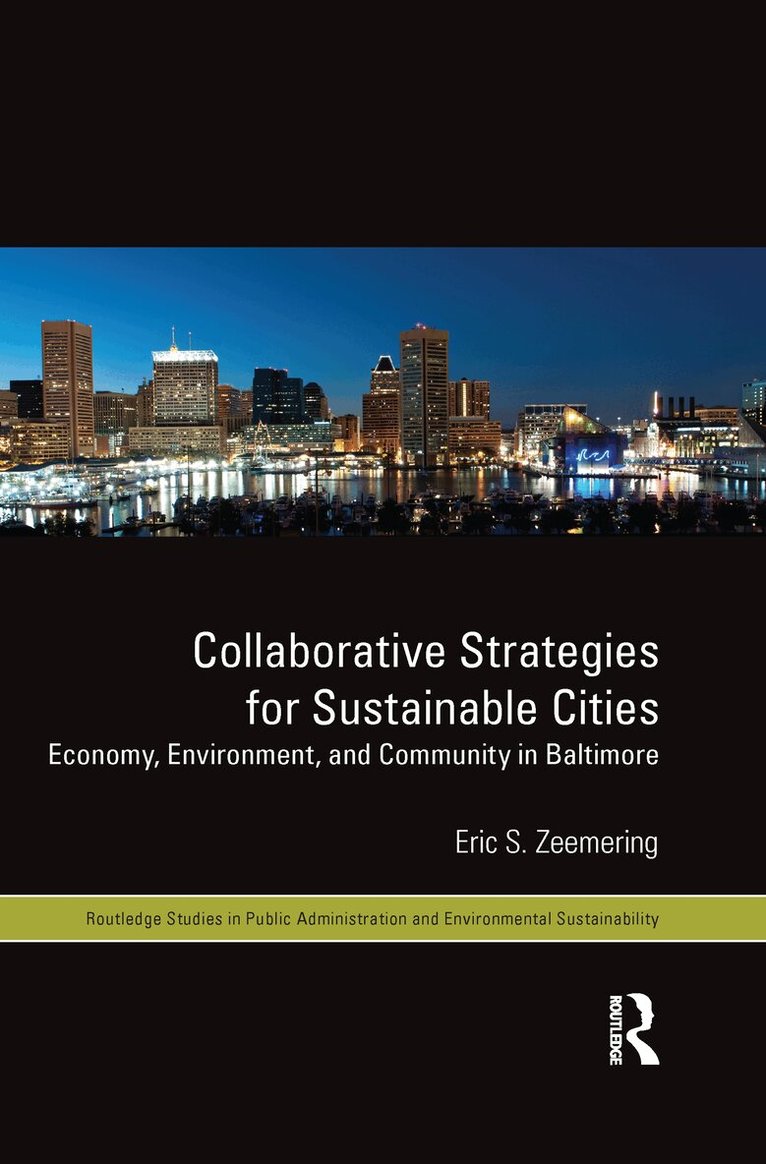
Collaborative Strategies for Sustainable Cities
Economy, Environment and Community in Baltimore
Inbunden, Engelska, 2014
2 317 kr
Skickas inom 10-15 vardagar
Baltimore, like many other cities around the globe, is redesigning local government policy and programs in order to become a more sustainable city. Sustainability, as a concept guiding public action, encourages city officials to integrate policy and programs addressing the economic, environmental, and social health of the community. City governments, including Baltimore, have adopted plans to integrate this new priority into local policy and program management. Reorienting city policy and programs to address an emergent concern like sustainability requires collaboration between city government and various actors and organizations in the community. Collaborative Strategies for Sustainable Cities examines how cities define sustainability and form policy implementation networks to integrate sustainability into city programs. Using the city of Baltimore to describe and analyze the involvement of the participants in local sustainability efforts in rich detail, Eric S. Zeemering argues that when we think about the sustainable city, the city government is not the best unit of analysis for our investigations or policy planning. Instead, policy networks within cities carve out slices of a sustainability agenda, define sustainability in their own ways, and form implementation networks with city government officials, neighborhood and community organizations, funders, and state and federal agencies in order to achieve specific goals. When cities begin to integrate sustainability into policies and programs, surveying and understanding competing definitions of sustainability within the community may be central to their success. The book’s rich array of data, including qualitative data from elite interviews and public documents, Q-methodology and social network analysis will make for an engaging read to scholars of political science or public affairs as well as the interested citizen or policy advocate.
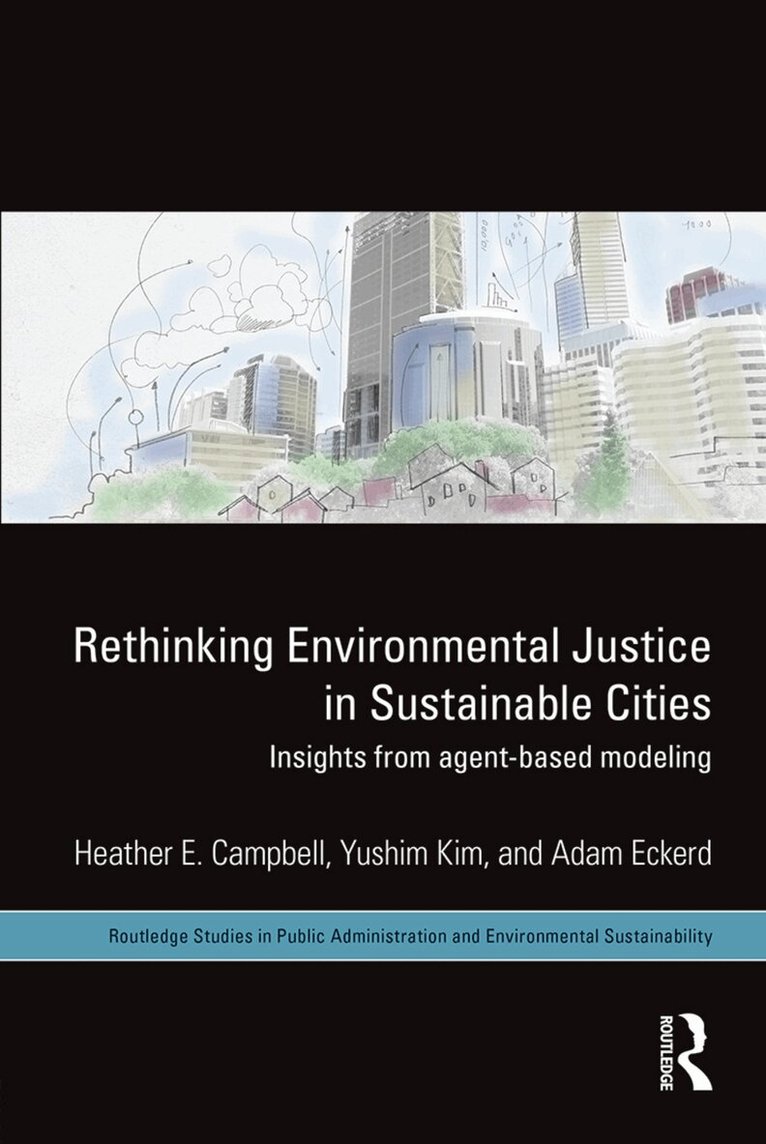
Rethinking Environmental Justice in Sustainable Cities
Insights from Agent-Based Modeling
Inbunden, Engelska, 2015
2 181 kr
Skickas inom 10-15 vardagar
As the study of environmental policy and justice becomes increasingly significant in today’s global climate, standard statistical approaches to gathering data have become less helpful at generating new insights and possibilities. None of the conventional frameworks easily allow for the empirical modeling of the interactions of all the actors involved, or for the emergence of outcomes unintended by the actors. The existing frameworks account for the "what," but not for the "why."Heather E. Campbell, Yushim Kim, and Adam Eckerd bring an innovative perspective to environmental justice research. Their approach adjusts the narrower questions often asked in the study of environmental justice, expanding to broader investigations of how and why environmental inequities occur. Using agent-based modeling (ABM), they study the interactions and interdependencies among different agents such as firms, residents, and government institutions. Through simulation, the authors test underlying assumptions in environmental justice and discover ways to modify existing theories to better explain why environmental injustice occurs. Furthermore, they use ABM to generate empirically testable hypotheses, which they employ to check if their simulated findings are supported in the real world using real data.The pioneering research on environmental justice in this text will have effects on the field of environmental policy as a whole. For social science and policy researchers, this book explores how to employ new and experimental methods of inquiry on challenging social problems, and for the field of environmental justice, the authors demonstrate how ABM helps illuminate the complex social and policy interactions that lead to both environmental justice and injustice.
Rethinking Environmental Justice in Sustainable Cities
Insights from Agent-Based Modeling
Häftad, Engelska, 2017
673 kr
Skickas inom 10-15 vardagar
As the study of environmental policy and justice becomes increasingly significant in today’s global climate, standard statistical approaches to gathering data have become less helpful at generating new insights and possibilities. None of the conventional frameworks easily allow for the empirical modeling of the interactions of all the actors involved, or for the emergence of outcomes unintended by the actors. The existing frameworks account for the "what," but not for the "why."Heather E. Campbell, Yushim Kim, and Adam Eckerd bring an innovative perspective to environmental justice research. Their approach adjusts the narrower questions often asked in the study of environmental justice, expanding to broader investigations of how and why environmental inequities occur. Using agent-based modeling (ABM), they study the interactions and interdependencies among different agents such as firms, residents, and government institutions. Through simulation, the authors test underlying assumptions in environmental justice and discover ways to modify existing theories to better explain why environmental injustice occurs. Furthermore, they use ABM to generate empirically testable hypotheses, which they employ to check if their simulated findings are supported in the real world using real data.The pioneering research on environmental justice in this text will have effects on the field of environmental policy as a whole. For social science and policy researchers, this book explores how to employ new and experimental methods of inquiry on challenging social problems, and for the field of environmental justice, the authors demonstrate how ABM helps illuminate the complex social and policy interactions that lead to both environmental justice and injustice.
Presidential Administration and the Environment
Executive Leadership in the Age of Gridlock
Häftad, Engelska, 2015
578 kr
Skickas inom 10-15 vardagar
After sweeping environmental legislation passed in the 1970s and 1980s, the 1990s ushered in an era when new legislation and reforms to existing laws were consistently caught up in a gridlock. In response, environmental groups became more specialized and professional, learning how to effect policy change through the courts, states, and federal agencies rather than through grassroots movements. Without a significantly mobilized public and with a generally uncooperative Congress, presidents since the 1990s have been forced to step into a new role of increasing presidential dominance over environmental policies. Rather than working with Congress, presidents instead have employed unilateral actions and administrative strategies to further their environmental goals.Presidential Administration and the Environment offers a detailed examination of the strategies and tools used by U.S. presidents. Using primary sources from presidential libraries such as speeches and staff communications, David M. Shafie analyzes how presidents such as Bill Clinton and George W. Bush have used alternative executive approaches to pass environmental policies. From there, Shafie presents case studies in land management, water policy, toxics, and climate change. He analyzes the role that executive leadership has played in passing policies within these four areas, explains how this role has changed over time, and concludes by investigating how Obama’s policies compare thus far with those of his predecessors.Shafie’s combination of qualitative content analysis and topical case studies offers scholars and researchers alike important insights for understanding the interactions between environmental groups and the executive branch and the implications for future policymaking in the United States.
Collaborative Strategies for Sustainable Cities
Economy, Environment and Community in Baltimore
Häftad, Engelska, 2015
578 kr
Skickas inom 10-15 vardagar
Baltimore, like many other cities around the globe, is redesigning local government policy and programs in order to become a more sustainable city. Sustainability, as a concept guiding public action, encourages city officials to integrate policy and programs addressing the economic, environmental, and social health of the community. City governments, including Baltimore, have adopted plans to integrate this new priority into local policy and program management. Reorienting city policy and programs to address an emergent concern like sustainability requires collaboration between city government and various actors and organizations in the community. Collaborative Strategies for Sustainable Cities examines how cities define sustainability and form policy implementation networks to integrate sustainability into city programs. Using the city of Baltimore to describe and analyze the involvement of the participants in local sustainability efforts in rich detail, Eric S. Zeemering argues that when we think about the sustainable city, the city government is not the best unit of analysis for our investigations or policy planning. Instead, policy networks within cities carve out slices of a sustainability agenda, define sustainability in their own ways, and form implementation networks with city government officials, neighborhood and community organizations, funders, and state and federal agencies in order to achieve specific goals. When cities begin to integrate sustainability into policies and programs, surveying and understanding competing definitions of sustainability within the community may be central to their success. The book’s rich array of data, including qualitative data from elite interviews and public documents, Q-methodology and social network analysis will make for an engaging read to scholars of political science or public affairs as well as the interested citizen or policy advocate.
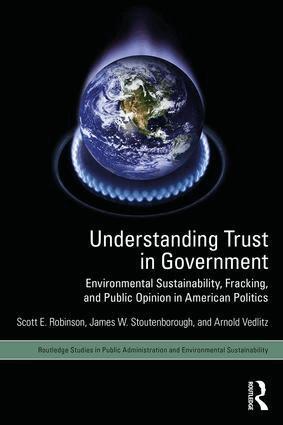
Understanding Trust in Government
Environmental Sustainability, Fracking, and Public Opinion in American Politics
Inbunden, Engelska, 2017
2 113 kr
Skickas inom 10-15 vardagar
Growing disenfranchisement with political institutions and policy processes has generated interest in trust in government. For the most part, research has focused on trust in government as a general attitude covering all political institutions. In this book, Scott E. Robinson, James W. Stoutenborough, and Arnold Vedlitz argue that individual agencies develop specific reputations that may contrast with the more general attitudes towards government as a whole.Grounded in a treatment of trust as a relationship between two actors and taking the Environmental Protection Agency as their subject, the authors illustrate that the agency’s reputation is explained through general demographic and ideological factors – as well as policy domain factors like environmentalism. The book presents results from two approaches to assessing trust: (1) a traditional attitudinal survey approach, and (2) an experimental approach using the context of hydraulic fracturing. While the traditional attitudinal survey approach provides traditional answers to what drives trust in the EPA, the experimental results reveal that there is little specific trust in the EPA across the United States.Robinson, Stoutenborough, and Vedlitz expertly point the way forward for more reliable assessments of trust, while demonstrating the importance of assessing trust at the agency level. This book represents a much-needed resource for those studying both theory and methods in Public Administration and Public Policy.
Understanding Trust in Government
Environmental Sustainability, Fracking, and Public Opinion in American Politics
Häftad, Engelska, 2017
632 kr
Skickas inom 10-15 vardagar
Growing disenfranchisement with political institutions and policy processes has generated interest in trust in government. For the most part, research has focused on trust in government as a general attitude covering all political institutions. In this book, Scott E. Robinson, James W. Stoutenborough, and Arnold Vedlitz argue that individual agencies develop specific reputations that may contrast with the more general attitudes towards government as a whole.Grounded in a treatment of trust as a relationship between two actors and taking the Environmental Protection Agency as their subject, the authors illustrate that the agency’s reputation is explained through general demographic and ideological factors – as well as policy domain factors like environmentalism. The book presents results from two approaches to assessing trust: (1) a traditional attitudinal survey approach, and (2) an experimental approach using the context of hydraulic fracturing. While the traditional attitudinal survey approach provides traditional answers to what drives trust in the EPA, the experimental results reveal that there is little specific trust in the EPA across the United States.Robinson, Stoutenborough, and Vedlitz expertly point the way forward for more reliable assessments of trust, while demonstrating the importance of assessing trust at the agency level. This book represents a much-needed resource for those studying both theory and methods in Public Administration and Public Policy.