RSART: Renaissance Society of America Reprint Text Series – serie
Visar alla böcker i serien RSART: Renaissance Society of America Reprint Text Series. Handla med fri frakt och snabb leverans.
21 produkter
Ash Wednesday Supper
Av Giordano Bruno, Edward A. Gosselin m. fl.
Häftad, 1995
440 kr
Lägg i varukorg
Giordano Bruno was an itinerant Italian friar who was burned at the stake in 1600 for heresies, that included his rejection of the Ptolemaic cosmology. Like Galileo, who met a similar fate for similar reasons later in the century, Bruno has been accorded martyrdom to the cause of scientific truth …
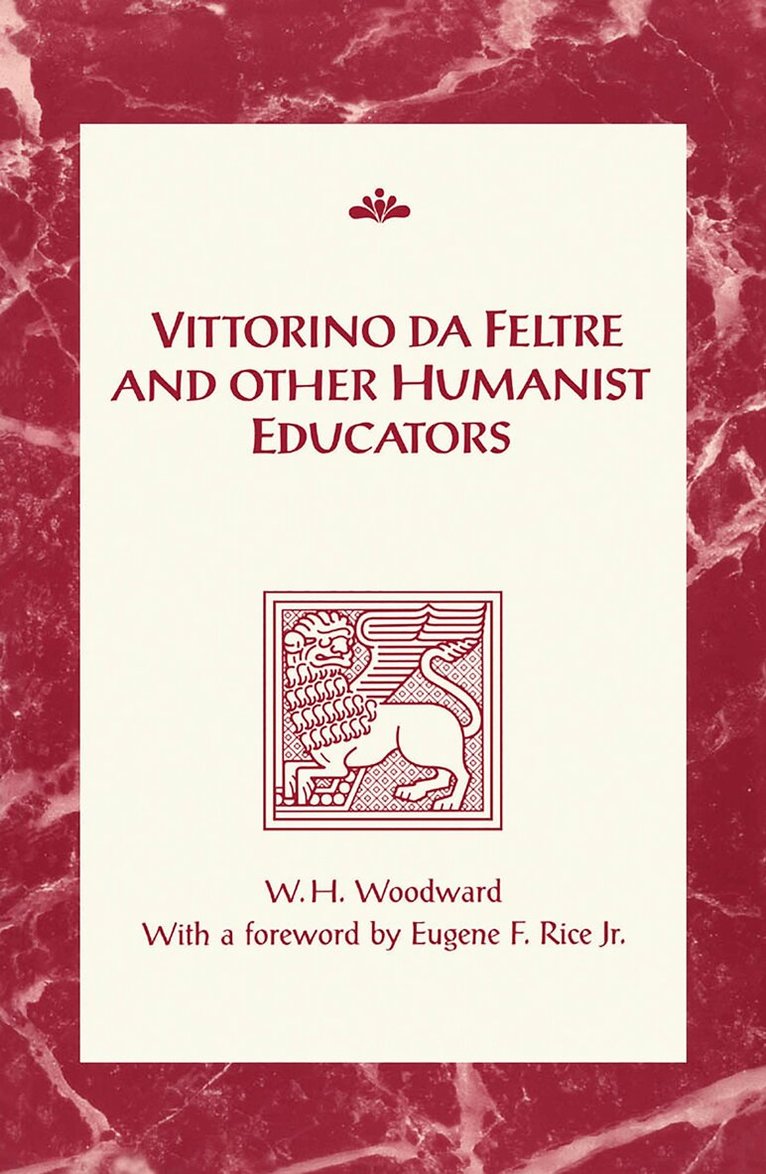
Vittorino Da Feltre and Other Humanist Educators
Häftad, 1996
370 kr
Lägg i varukorg
'The humanist idea of education is among the permanently influential legacies of the Italian Renaissance. Four short Latin treatises published between 1400 and 1460 define it admirably: Pier Paolo Vergerio's De ingenuis moribus et liberalibus adolescentiae studiis; Leonardo Bruni's De studiis et …
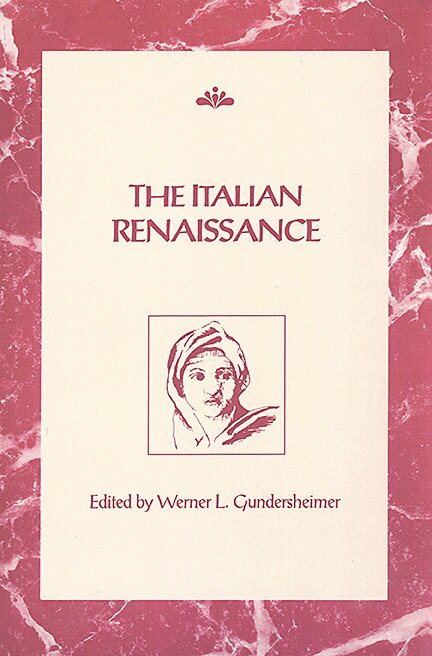
Italian Renaissance
Häftad, 1993
352 kr
Lägg i varukorg
An anthology of writings from the fifteenth and early sixteenth centuries designed to illustrate the life and thought of Italians for students and the general reader. It offers a broad sampling of humanist work by educators, statesmen, philosophers, churchmen and courtiers translated into English. …
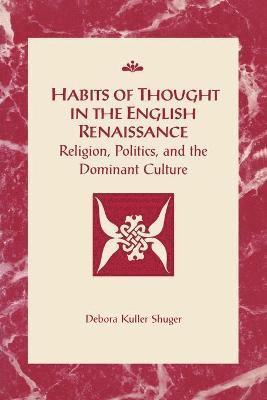
Habits of Thought in the English Renaissance
Religion, Politics and the Dominant Culture
Häftad, 1997
429 kr
Lägg i varukorg
When attempting to globally divide ideas into orthodox and subversive categories, it is not always clear what precisely is subversive to the dominant ideology and vice versa. Going against recent trends in English Renaissance studies, Deborah Shuger examines orthodox, rather than subversive, …
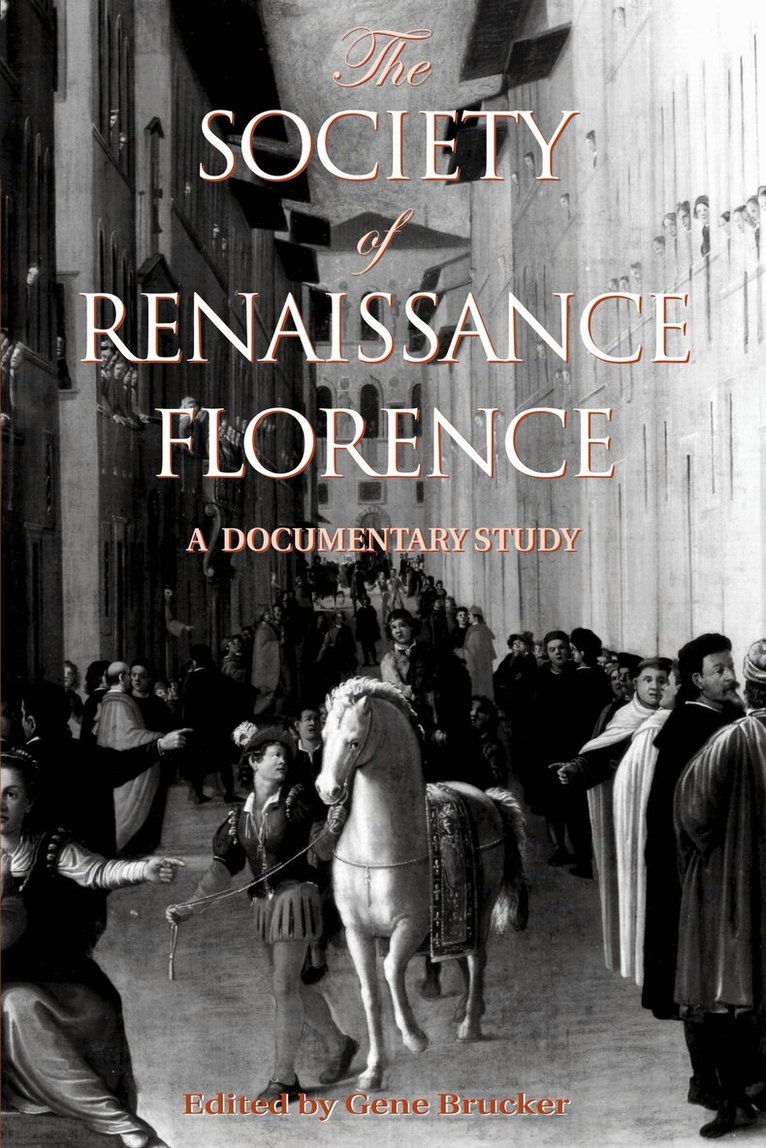
Society of Renaissance Florence
A Documentary Study
Häftad, 2001
395 kr
Lägg i varukorg
First published in 1971 by Harper & Row, The Society of Renaissance Florence is an invaluable collection of 132 original Florentine documents dating from the fourteenth and fifteenth centuries and covering a wide range of subjects from taxes to social mobility, to family, death, and civic life, to …
On Assistance to the Poor
Häftad, 1999
294 kr
Lägg i varukorg
'I wish we were able to eliminate poverty completely in this city' Those words written by Juan Luis Vives, a Spanish humanist living in Bruges in 1526, could have been written in the late twentieth century. The urban problems of sixteenth-century Bruges are very familiar to the modern reader: …
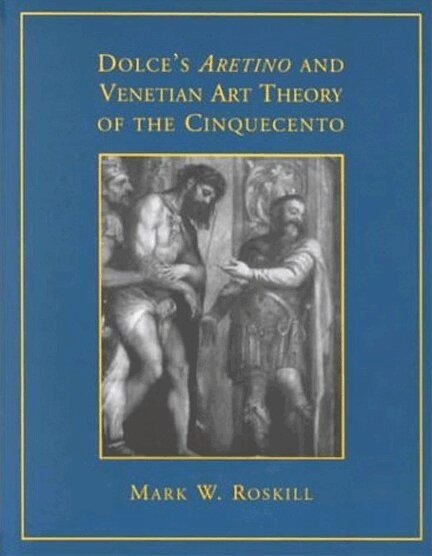
Dolce's 'Aretino' and Venetian Art Theory of the Cinquecento
Häftad, 2000
496 kr
Lägg i varukorg
Ludovico Dolce's Dialogo della pittura first appeared in Venice in 1557. L'Aretino, by which the work is known today, consists of a three-part dialogue between two Venetians, Aretino and Fabrini, on the particular merits of works of art and artists, including Michaelangelo, Raphael, and Donatello. …
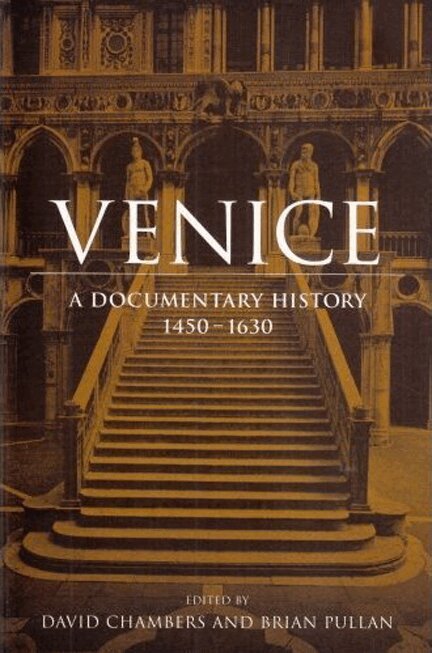
Venice
A Documentary History, 1450-1630
Av David Chambers, David Chambers m. fl.
Häftad, 2001
539 kr
Lägg i varukorg
During the Renaissance, there were two centres of art, culture and mercantile power in Italy: Florence, and Venice. This is a sourcebook of primary materials, almost none previously available in English, for the history of the city-state of Venice. The time period covers the apogee of Venetian …
Soldiers of Christ
Preaching in Late Medieval and Reformation France
Häftad, 2002
440 kr
Lägg i varukorg
In an age when the printed book was still in its infancy, the pulpit was the mass medium. A vital part of religious life, sermons were the chief occasions on which the church attempted to bridge the gap between high theology and popular religious culture. The preaching event provided the …
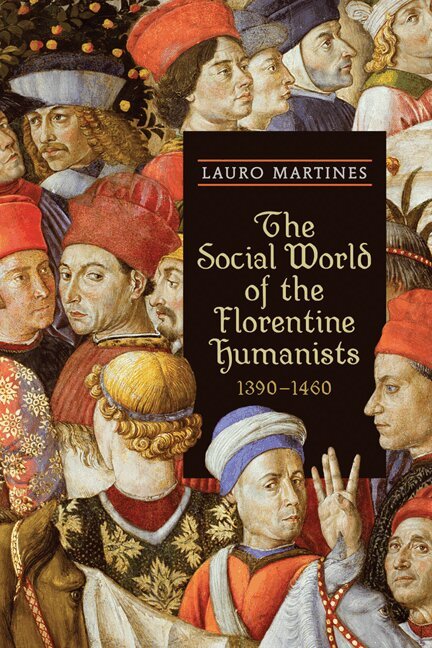
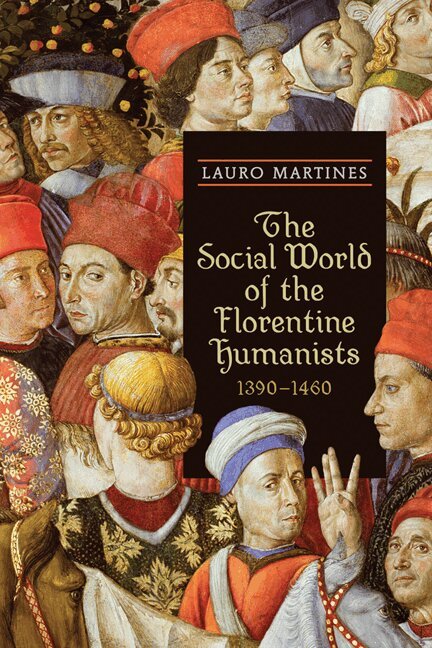
Social World of the Florentine Humanists, 1390-1460
Häftad, 2011
467 kr
Lägg i varukorg
Lauro Martines' exhaustive search of manuscript material in the state archives of Florence is the basis for a fascinating portrayal of representative humanists of the period. The Social World of the Florentine Humanists explores the wealth, family tradition, civic prominence, and intellectual …
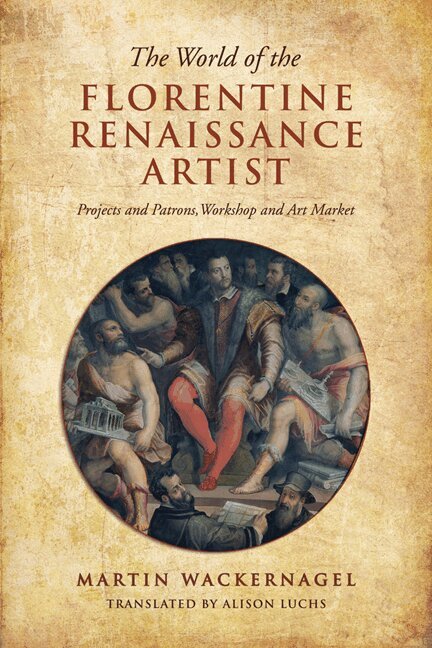
World of the Florentine Renaissance Artist
Projects and Patrons, Workshop and Art Market
Häftad, 2011
510 kr
Lägg i varukorg
First published in German in 1938 and later translated into English, this classic of Italian Renaissance historiography centres on the relationship between Florentine art and the conditions under which it was created. In rich detail, Martin Wackernagel explores the impact of patronage and function, …
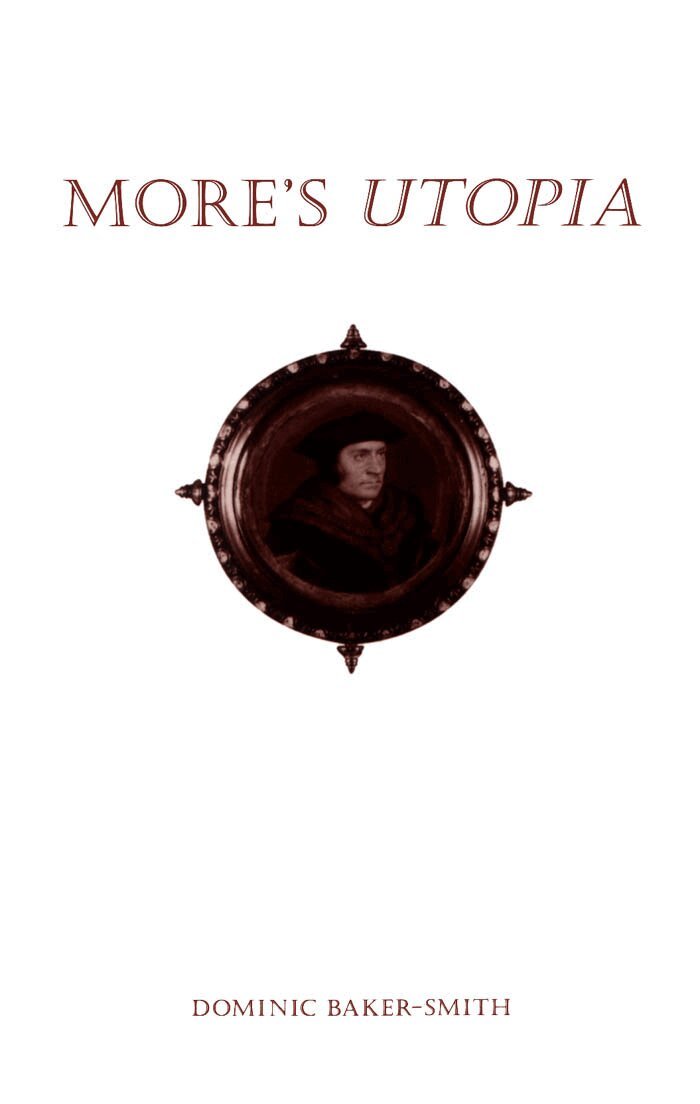
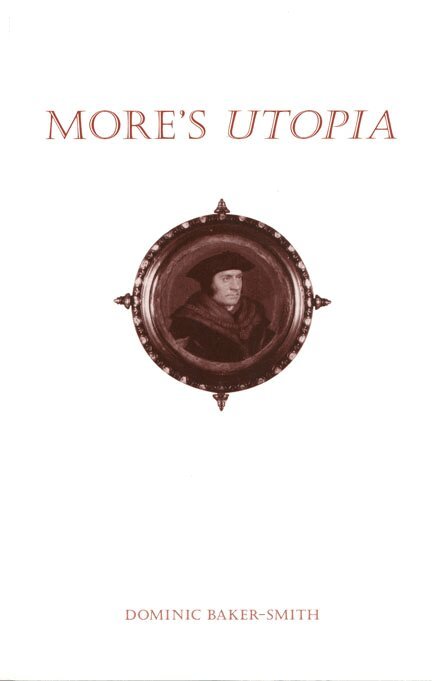
More's Utopia
E-bok, 2000
713 kr
Lägg i varukorg
"Utopia" has a strong claim to be the most misunderstood book ever written; its name has been hijacked by countless idealistic schemes having little in common with More's own assessment of social possibilities. For although it contributes to a line of argument that can be traced from Plato to Marx, …
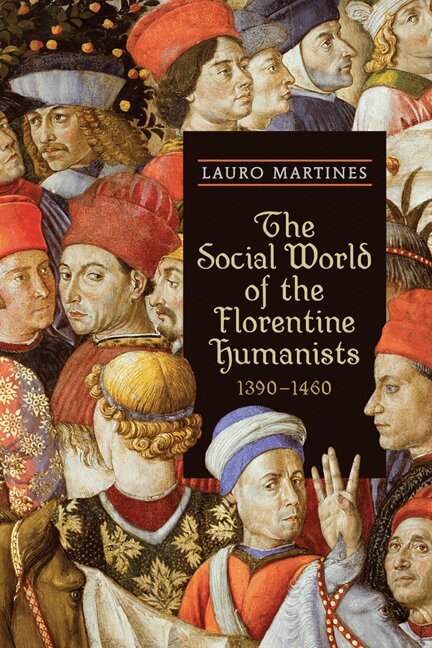
Social World of the Florentine Humanists, 1390-1460
E-bok, 2011
621 kr
Lägg i varukorg
Lauro Martines' exhaustive search of manuscript material in the state archives of Florence is the basis for a fascinating portrayal of representative humanists of the period. The Social World of the Florentine Humanists explores the wealth, family tradition, civic prominence, and intellectual …
Social World of the Florentine Humanists, 1390-1460
E-bok, 2011
621 kr
Lägg i varukorg
Lauro Martines' exhaustive search of manuscript material in the state archives of Florence is the basis for a fascinating portrayal of representative humanists of the period. The Social World of the Florentine Humanists explores the wealth, family tradition, civic prominence, and intellectual …
Religion and Economic Action
The Protestant Ethic, the Rise of Capitalism and the Abuses of Scholarship
Av Kurt Samuelsson, E. Geoffrey French
E-bok, 1993
408 kr
Lägg i varukorg
The idea that capitalism grew out of Puritan values, as unlikely as it seems, has aroused much interest among economic historians. First proposed by Max Weber, the hypothesis gained wide acceptance through the writings of R.H. Tawney. In this bold and hard-hitting essay, Samuelsson cuts through the …
Tudor Historical Thought
Av F.J. Levy
Häftad, 2004
453 kr
Tillfälligt slut
Tudor Historical Thought is a revealing account of vital changes in intellectual orientation. Originally published in 1967, F.J. Levy's seminal work explores the factors – humanism, theology, antiquarianism, Machiavellianism – that brought about the changes in historical thinking from the time of …
Religion and Economic Action
The Protestant Ethic, the Rise of Capitalism and the Abuses of Scholarship
Av Kurt Samuelsson, E. Geoffrey French
Häftad, 1993
314 kr
Tillfälligt slut
The idea that capitalism grew out of Puritan values, as unlikely as it seems, has aroused much interest among economic historians. First proposed by Max Weber, the hypothesis gained wide acceptance through the writings of R.H. Tawney. In this bold and hard-hitting essay, Samuelsson cuts through the …
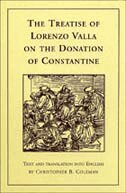
Treatise of Lorenzo Valla on the Donation of Constantine
Text and Translation Into English
Häftad, 1993
453 kr
Tillfälligt slut
The Donation of Constantine is the most famous forgery in European history. Written in the eighth century, it was allegedly a fourth-century document by which the Emperor Constatine the Great gave extensive privileges and property to Pope Sylvester I. This document was accepted as genuine for seven …
More's Utopia
Häftad, 2000
473 kr
Tillfälligt slut
"Utopia" has a strong claim to be the most misunderstood book ever written; its name has been hijacked by countless idealistic schemes having little in common with More's own assessment of social possibilities. For although it contributes to a line of argument that can be traced from Plato to Marx, …
Jews in the Canary Islands
Being a Calendar of Jewish Cases Extracted from the Records of the Canariote Inquisition in the Collection of the Marquess of Bute
Häftad, 2001
440 kr
Tillfälligt slut
In 1492, the Jews of Spain were given a choice: convert to Christianity or be expelled from Spain. Many chose to hide themselves as 'New Christians,' or conversos, outwardly professing to be Christians while practicing their true faith in secret. In 1504, the Office of the Inquisition was set up in …
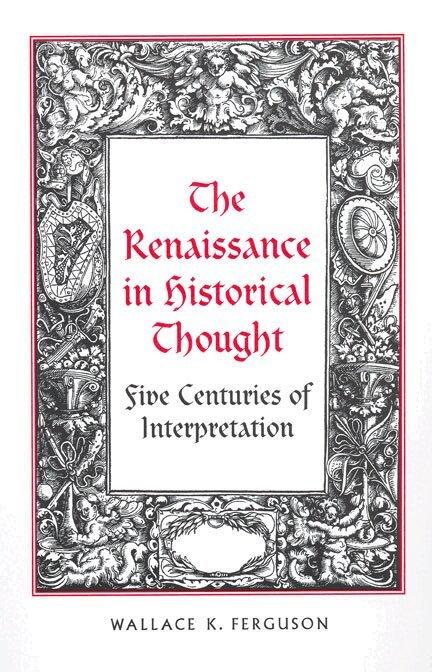
Renaissance in Historical Thought
Häftad, 2006
453 kr
Tillfälligt slut
For centuries, the idea of a Renaissance at the end of the Middle Ages has been an active agent in shaping conceptions of the development of Western European civilization. Though the idea has enjoyed so long a life, conceptions of the nature of the Renaissance, of its sources, its extent, and its …