Gender, Space and Society - Böcker
Visar alla böcker i serien Gender, Space and Society. Handla med fri frakt och snabb leverans.
10 produkter
10 produkter
614 kr
Skickas inom 10-15 vardagar
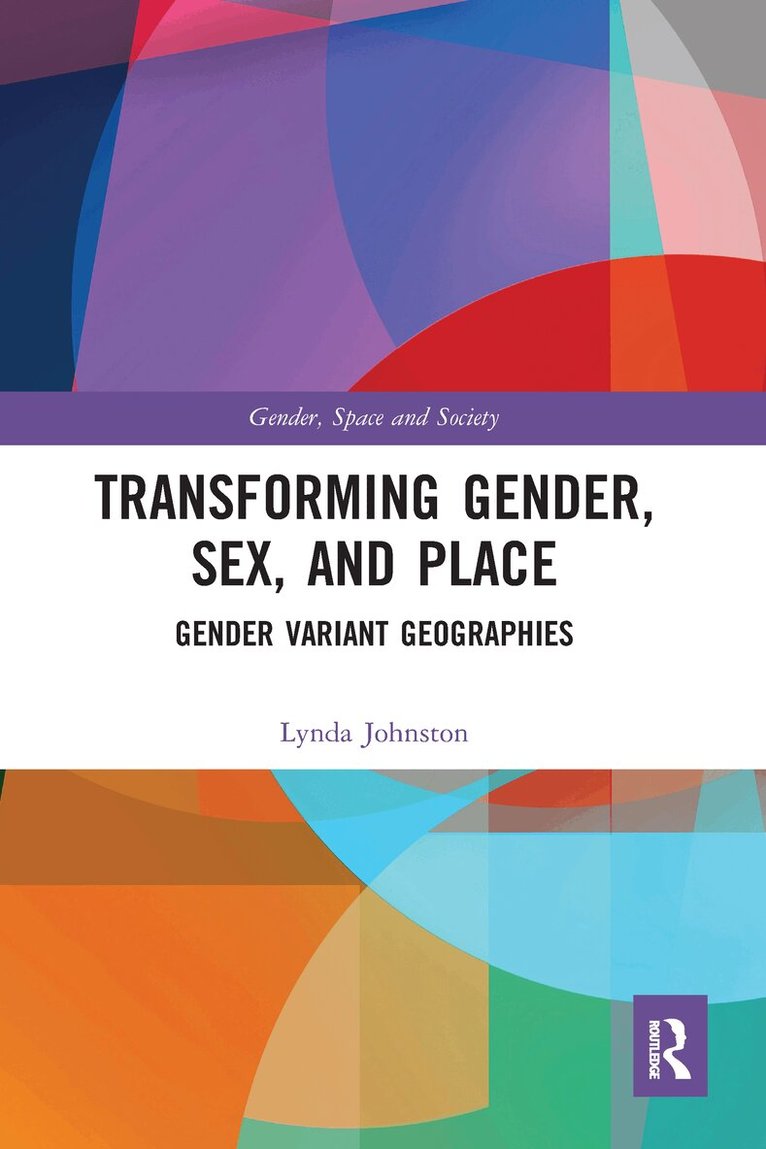
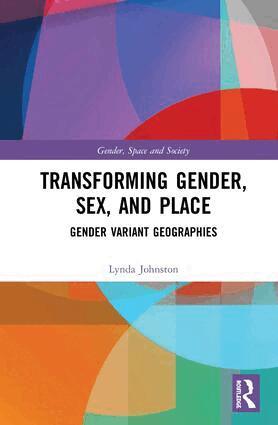
Transgender, gender variant and intersex people are in every sector of all societies, yet little is known about their relationship to place. Using a trans, feminist and queer geographical framework, this book invites readers to consider the complex relationship between transgender people, spaces and places.This book addresses questions such as, how is place and space transformed by gender variant bodies, and vice versa? Where do some gender variant people feel in and / or out of place? What happens to space when binary gender is unravelled and subverted? Exploring the diverse politics of gender variant embodied experiences through interviews and community action, this book demonstrates that gendered bodies are constructed through different social, cultural and economic networks. Firsthand stories and international examples reveal how transgender people employ practices and strategies to both create and contest different places, such as: bodies; homes; bathrooms; activist spaces; workplaces; urban night spaces; nations and transnational borders.Arguing that bodies, gender, sex and space are inextricably linked, this book brings together contemporary scholarly debates, original empirical material and popular culture to consider bodies and spaces that revolve around, and resist, binary gender. It will be a valuable resource in Geography, Gender and Sexuality studies.
Gender, Migration and Social Transformation
Intersectionality in Bolivian Itinerant Migrations
Häftad, Engelska, 2020
614 kr
Skickas inom 10-15 vardagar
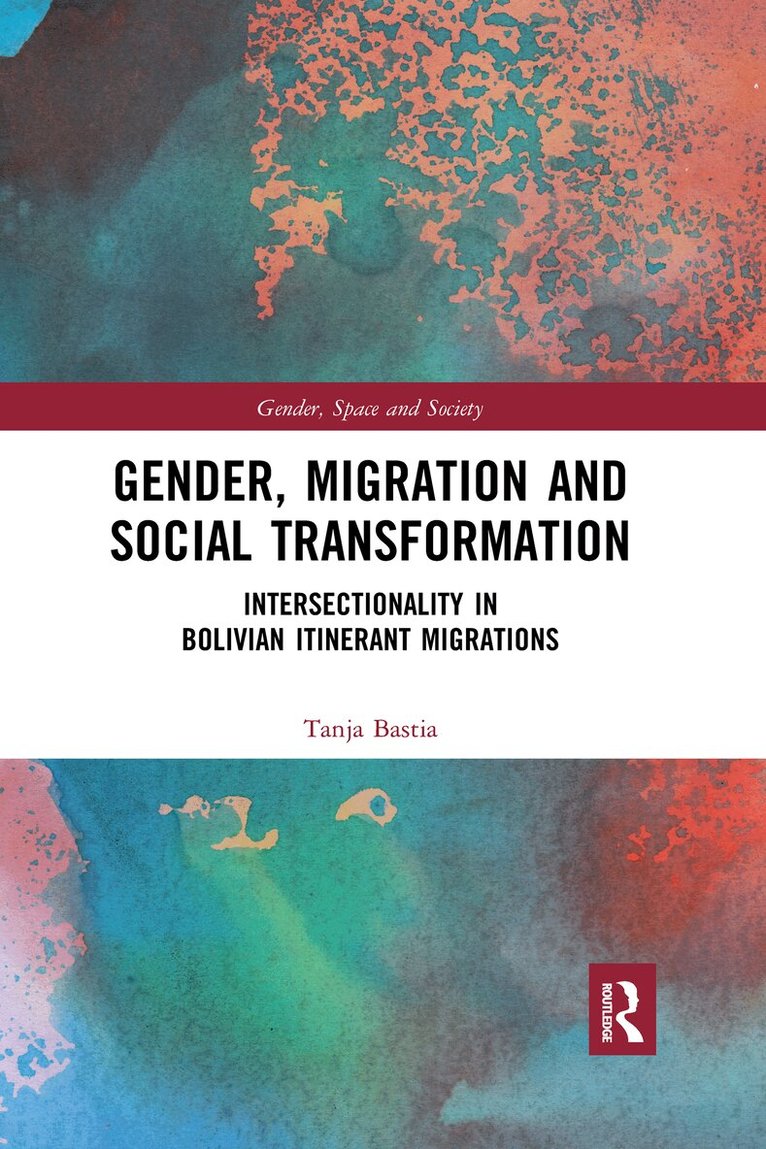
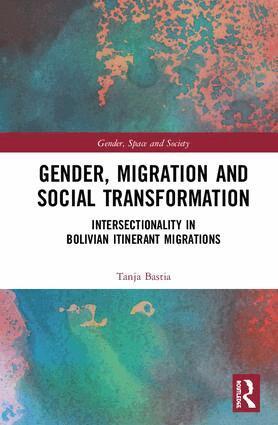
Intersectionality can be used to analyse whether migration leads to changes in gender relations. This book finds out how migrants from a peri-urban neighbourhood on the outskirts of Cochabamba, Bolivia, make sense of the migration journeys they have undertaken.Migration is intrinsically related to social transformation. Through life stories and community surveys, the author explores how gender, class, and ethnicity intersect in people’s attempts to make the most of the opportunities presented to them in distant labour markets. While aiming to improve their economic and material conditions, migrants have created a new transnational community that has undergone significant changes in the ways in which gender relations are organised. Women went from being mainly housewives to taking on the role of the family’s breadwinner in a matter of just one decade.This book asks and addresses important questions such as: what does this mean for gender equality and women’s empowerment? Can we talk of migration being emancipatory? Does intersectionality shed light in the analysis of everyday social transformations in contexts of transnational migrations? This book will be useful to researchers and students of human geography, development studies and Latin America area studies.
803 kr
Skickas inom 10-15 vardagar
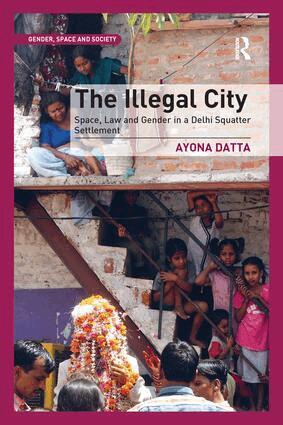
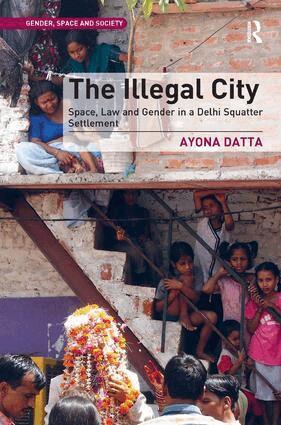
The Illegal City explores the relationship between space, law and gendered subjectivity through a close look at an 'illegal' squatter settlement in Delhi. Since 2000, a series of judicial rulings in India have criminalised squatters as 'illegal' citizens, 'encroachers' and 'pickpockets' of urban land, and have led to a spate of slum demolitions across the country. This book argues that in this context, it has become vital to distinguish between illegality and informality since it is those 'illegal' slums which are at the receiving end of a 'force of law', where law is violently encountered within everyday spaces. This book uses a gendered intersectional lens to explore how a 'violence of law' shapes how 'public' subjectivities of gender, class, religion and caste are encountered and negotiated within the 'private' spaces of home, family and neighbourhood. This book suggests that resettlement is not a condition that squatters desire; rather something that is seen as the only way out of the 'illegal' city. The wait for resettlement is a temporal space of anxiety and uncertainty, where particular kinds of politics around law, space and gender takes shape, which transform squatters' relations with the state, urban development, civil society, and with each other. Through their everyday struggles around water, sanitation, social and political organisation and the transformation of their homes and families, this book shows that the desire for the 'legal city' is also the irony and utopia of home, which will remain an incomplete gendered project - both for the state and for squatters.
749 kr
Skickas inom 10-15 vardagar
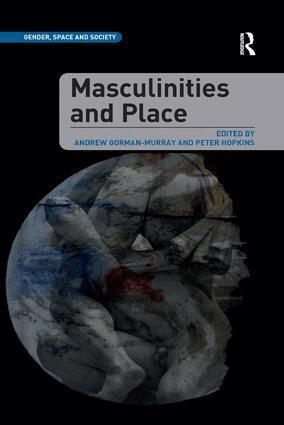
Masculinities and Place bring together an impressive range of high-profile and emerging researchers to consolidate and expand new domains of interest in the geographies of men and masculinities. It is structured around key and emerging themes within recently completed and on-going research about the intersections between men, masculinities and place. Building upon broader themes in social and cultural geographies, cultural economy and urban/rural studies, the collection is organised around the key themes of: theorising masculinities and place; intersectionality; home; family; domestic labour; work; and health and well-being.
2 302 kr
Skickas inom 10-15 vardagar
The Illegal City explores the relationship between space, law and gendered subjectivity through a close look at an 'illegal' squatter settlement in Delhi. Since 2000, a series of judicial rulings in India have criminalised squatters as 'illegal' citizens, 'encroachers' and 'pickpockets' of urban land, and have led to a spate of slum demolitions across the country. This book argues that in this context, it has become vital to distinguish between illegality and informality since it is those 'illegal' slums which are at the receiving end of a 'force of law', where law is violently encountered within everyday spaces. This book uses a gendered intersectional lens to explore how a 'violence of law' shapes how 'public' subjectivities of gender, class, religion and caste are encountered and negotiated within the 'private' spaces of home, family and neighbourhood. This book suggests that resettlement is not a condition that squatters desire; rather something that is seen as the only way out of the 'illegal' city. The wait for resettlement is a temporal space of anxiety and uncertainty, where particular kinds of politics around law, space and gender takes shape, which transform squatters' relations with the state, urban development, civil society, and with each other. Through their everyday struggles around water, sanitation, social and political organisation and the transformation of their homes and families, this book shows that the desire for the 'legal city' is also the irony and utopia of home, which will remain an incomplete gendered project - both for the state and for squatters.
2 100 kr
Skickas inom 10-15 vardagar
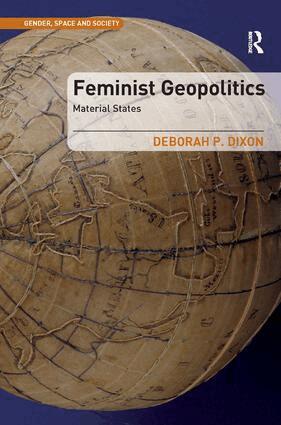
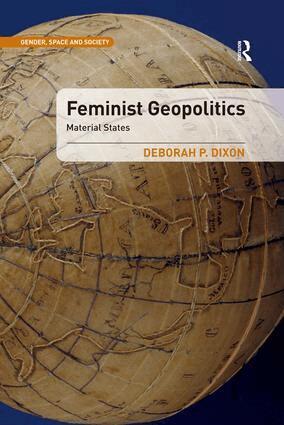
What can unfold from an engagement of feminist issues, concerns and practices with the geopolitical? How does feminism allow for a reconfiguration of how these two elements, the geo- and the -political, are understood and related? What kinds of objects can be located and put into motion? What kinds of relations can be drawn between these? What kinds of practice become valued? And, what is glossed or rendered absent in the process? In this thought-provoking and original contribution, Deborah P. Dixon cautions against the exhaustion of feminist geopolitics as a critique of both a classical and a critical geopolitics, and points instead to how feminist imaginaries of Self, Other and Earth allow for all manner of work to be undertaken. Importantly, one of the things they provide for is a reservoir of concerns, thoughts and practices that can be reappropriated to flesh out what a feminist geopolitics can be. While providing a much-needed, sustained interjection that draws out achievements to date, the book thus gestures forward to productive lines of inquiry and method. Grounded via a series of globally diverse case studies that traverse time as well as space, Feminist Geopolitics feels for the borders of geopolitical thought and practice by navigating four complex and corporeally-aware objects of analysis, namely flesh, bone, touch and abhorrence.
2 167 kr
Skickas inom 10-15 vardagar
Masculinities and Place bring together an impressive range of high-profile and emerging researchers to consolidate and expand new domains of interest in the geographies of men and masculinities. It is structured around key and emerging themes within recently completed and on-going research about the intersections between men, masculinities and place. Building upon broader themes in social and cultural geographies, cultural economy and urban/rural studies, the collection is organised around the key themes of: theorising masculinities and place; intersectionality; home; family; domestic labour; work; and health and well-being.
Gender, Migration and Social Transformation
Intersectionality in Bolivian Itinerant Migrations
Inbunden, Engelska, 2019
2 100 kr
Skickas inom 10-15 vardagar
Intersectionality can be used to analyse whether migration leads to changes in gender relations. This book finds out how migrants from a peri-urban neighbourhood on the outskirts of Cochabamba, Bolivia, make sense of the migration journeys they have undertaken.Migration is intrinsically related to social transformation. Through life stories and community surveys, the author explores how gender, class, and ethnicity intersect in people’s attempts to make the most of the opportunities presented to them in distant labour markets. While aiming to improve their economic and material conditions, migrants have created a new transnational community that has undergone significant changes in the ways in which gender relations are organised. Women went from being mainly housewives to taking on the role of the family’s breadwinner in a matter of just one decade.This book asks and addresses important questions such as: what does this mean for gender equality and women’s empowerment? Can we talk of migration being emancipatory? Does intersectionality shed light in the analysis of everyday social transformations in contexts of transnational migrations? This book will be useful to researchers and students of human geography, development studies and Latin America area studies.
2 100 kr
Skickas inom 10-15 vardagar
Transgender, gender variant and intersex people are in every sector of all societies, yet little is known about their relationship to place. Using a trans, feminist and queer geographical framework, this book invites readers to consider the complex relationship between transgender people, spaces and places.This book addresses questions such as, how is place and space transformed by gender variant bodies, and vice versa? Where do some gender variant people feel in and / or out of place? What happens to space when binary gender is unravelled and subverted? Exploring the diverse politics of gender variant embodied experiences through interviews and community action, this book demonstrates that gendered bodies are constructed through different social, cultural and economic networks. Firsthand stories and international examples reveal how transgender people employ practices and strategies to both create and contest different places, such as: bodies; homes; bathrooms; activist spaces; workplaces; urban night spaces; nations and transnational borders.Arguing that bodies, gender, sex and space are inextricably linked, this book brings together contemporary scholarly debates, original empirical material and popular culture to consider bodies and spaces that revolve around, and resist, binary gender. It will be a valuable resource in Geography, Gender and Sexuality studies.
668 kr
Skickas inom 10-15 vardagar
What can unfold from an engagement of feminist issues, concerns and practices with the geopolitical? How does feminism allow for a reconfiguration of how these two elements, the geo- and the -political, are understood and related? What kinds of objects can be located and put into motion? What kinds of relations can be drawn between these? What kinds of practice become valued? And, what is glossed or rendered absent in the process? In this thought-provoking and original contribution, Deborah P. Dixon cautions against the exhaustion of feminist geopolitics as a critique of both a classical and a critical geopolitics, and points instead to how feminist imaginaries of Self, Other and Earth allow for all manner of work to be undertaken. Importantly, one of the things they provide for is a reservoir of concerns, thoughts and practices that can be reappropriated to flesh out what a feminist geopolitics can be. While providing a much-needed, sustained interjection that draws out achievements to date, the book thus gestures forward to productive lines of inquiry and method. Grounded via a series of globally diverse case studies that traverse time as well as space, Feminist Geopolitics feels for the borders of geopolitical thought and practice by navigating four complex and corporeally-aware objects of analysis, namely flesh, bone, touch and abhorrence.