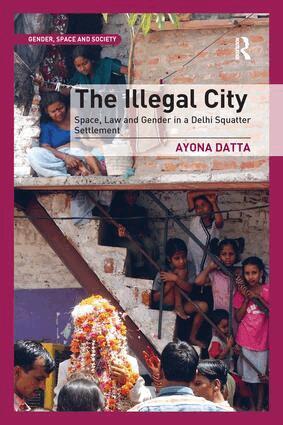
Häftad, Engelska, 2016
Illegal City
Space, Law and Gender in a Delhi Squatter Settlement
Av Ayona Datta
Del i serien Gender, Space and Society
906 kr
Beställningsvara. Skickas inom 10-15 vardagar. Fri frakt över 249 kr.
Beskrivning
Produktinformation
- Utgivningsdatum: 2016-09-02
- Mått: 156 x 234 x 20 mm
- Vikt: 340 g
- Format: Häftad
- Språk: Engelska
- Serie: Gender, Space and Society
- Antal sidor: 210
- Förlag: Taylor & Francis Ltd
- ISBN: 9781138248328
Utforska kategorier
Mer om författaren
Ayona Datta is a Senior Lecturer in Citizenship and Belonging at the School of Geography, University of Leeds, UK.
Recensioner i media
'This fresh, multilayered, meticulous examination of everyday life in a squatter camp in New Delhi reveals key intersections among land tenure, illegality, and gender power relations to show how vulnerable residents experience law in deeply transformative fashion, and everyday life becomes the fulcrum where residents negotiate their relationships with each other and with the state. The use of an analytical lens centered on gender, but including caste, class, and religion, allows Datta to draw a subtle and rich portrait of how vulnerable residents encounter the state in fragile housing situations. This compelling analysis sheds new light on interstices of vulnerability that are often hidden from view or simply neglected and attributed to the "normality" of life among the poor. The Illegal City is immensely smart and will appeal to a wide readership.' Cecilia Menjivar, Arizona State University, USA ’The Illegal City is a thought provoking study of the double nature of law as both threat and hope in the lives of people in squatter settlements in a city. Paying close attention to the processes of governmentality through which space is categorized and acted upon, Datta produces an excellent ethnographic account of the fine workings of power and domination that are reproduced within the slum. Especially interesting is the way she tracks the manner in which gender folds into other differences and produces the uneven subjectivities through which law is encountered. This book is theoretically bold and ethnographically well anchored in the lived experiences of the poor.’ Veena Das, Johns Hopkins University, USA ’An insightful and thought-provoking account of what illegality means for Delhi’s squatters which takes a strikingly original approach to gender, showing how gender and illegality are mutually constituted, and exploring the consequences in both private and public spaces.’ Ann Varley, University College London, UK 'At its core, it is an immensely scholarly
Betyg & recensioner
0 recensioner
Inga recensioner tillgängliga.