Special Issues of Cognitive Neuropsychiatry – Serie
Visar alla böcker i serien Special Issues of Cognitive Neuropsychiatry. Handla med fri frakt och snabb leverans.
6 produkter
6 produkter
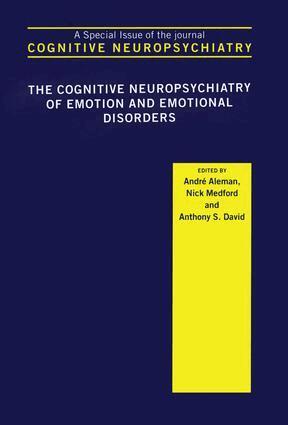
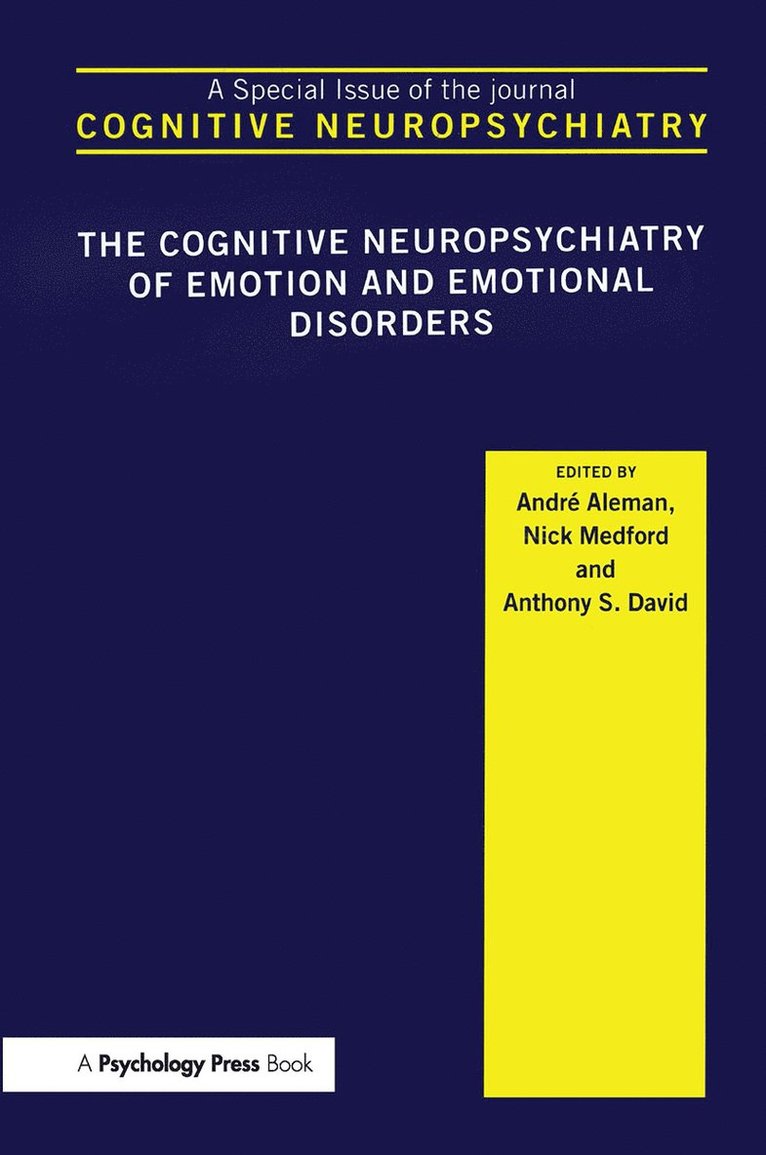
Cognitive Neuropsychiatry of Emotion and Emotional Disorders
A Special Issue of Cognitive Neuropsychiatry
Häftad, Engelska, 2015
511 kr
Skickas inom 10-15 vardagar
Recent years have shown an increased interest in the cognitive and neural basis of emotion in psychiatric and neurological disorders. Indeed, various methods of behavioural and neural measurement of emotional processes are continually being developed and refined, which has led to an explosion of research in this area. This Special Issue of Cognitive Neuropsychiatry brings together timely reviews and new empirical papers regarding the cognitive and neural basis of emotional processing in health and disease, written by renowned researchers in the field. Clinical conditions that are addressed include amygdala damage, bipolar disorder, schizophrenia, social phobia, psychopathy and alexithymia.
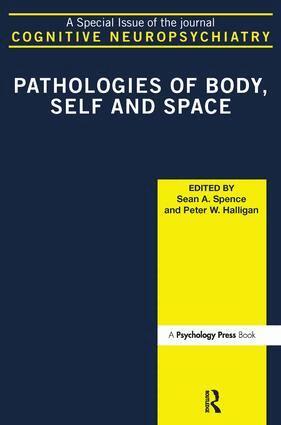
Pathologies of Body, Self and Space
A Special Issue of Cognitive Neuropsychiatry
Häftad, Engelska, 2019
511 kr
Skickas inom 10-15 vardagar
What happens when the physical body and the subjective sense of self part company? How do we explain phantom limbs and alien abduction? What are the cognitive, neurobiological mechanisms that support such phenomena? In this special issue of Cognitive Neuropsychiatry, Spence and Halligan explore all these issues and more, with contributions drawn from an internationally renowned panel of authors, most of whom contributed to a symposium held in Sheffield, England in June 2001 ('The Neuropsychiatry of the Body in Space'). That meeting was primarily concerned with those bizarre and disturbing syndromes that arise when 'body' and 'self', soma and psyche are dissociated from each other, within or beyond the body's surface. Some disorders constrain the space of the body (as in neglect and dissociation syndromes), others seem to extend the boundaries (as with phantom limbs and autoscopy). Still others suggest a permeability of those boundaries (as in alien control and thought insertion, each occurring in schizophrenia). Finally, the body may itself be perceived as having passed into space, the most extreme exemplar being 'alien abduction'. Each paper contains a description of disturbed phenomenology and an account and critique of current cognitive neuropsychiatric findings.
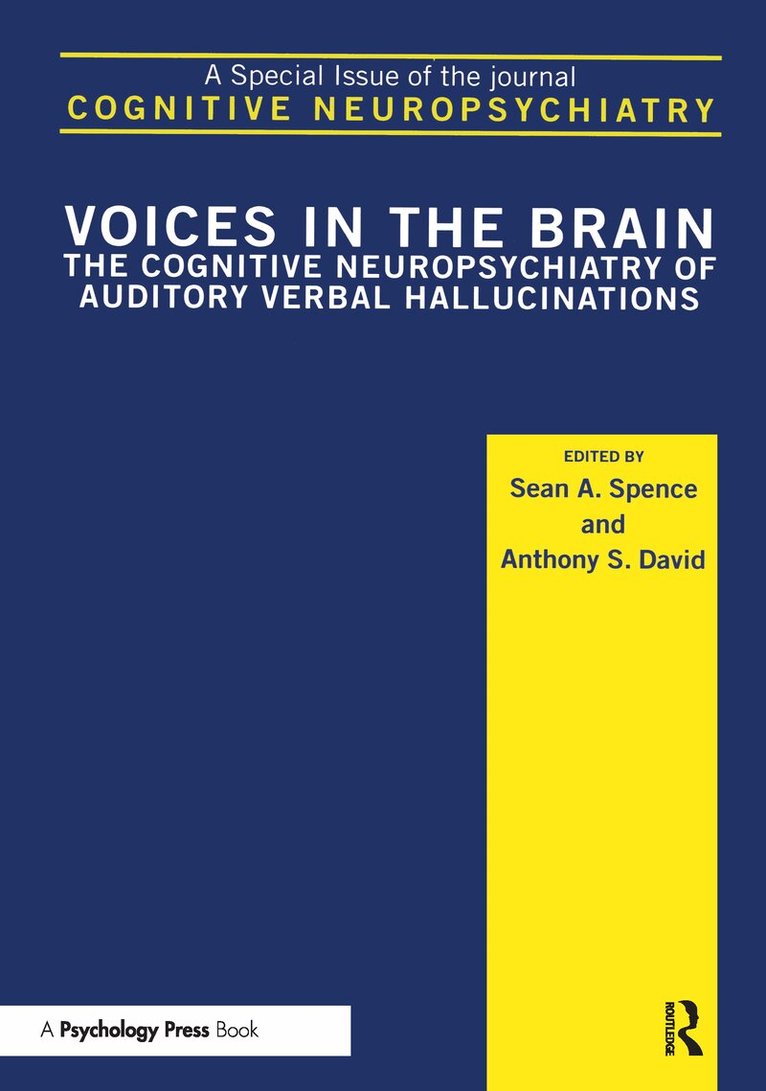
Voices in the Brain: The Cognitive Neuropsychiatry of Auditory Verbal Hallucinations
A Special Issue of Cognitive Neuropsychiatry
Häftad, Engelska, 2005
627 kr
Skickas inom 10-15 vardagar
For millennia, human beings have reported hearing ‘voices’. These experiences have been a source of fascination, sometimes because they spoke of revelation, sometimes because they presaged madness and destruction. From Socrates to the Yorkshire Ripper, the impact of voices upon human society has been considerable. But after all this time what can we really say about their causes, their meaning and their treatment? In the special issue of Cognitive Neuropsychiatry, Spence and David have edited a contemporary synthesis of what is known about voices (‘auditory verbal hallucinations’, AVH). Contributions are drawn from an internationally renowned panel of authors, most of whom contributed to a symposium held in Sheffield, England in September 2002 (‘Voices in the Brain: The Cognitive Neuropsychiatry of Auditory Verbal Hallucinations’). Topics included in this special issue are: a contemporary voice hearer’s perspective on voices and their treatment (Cockshutt); a phenomenological-hermeneutic interpretation of the content of ‘voice speech’ (Thomas, Bracken & Leudar); a review of the evidence for cognitive interventions used to treat AVH in a group setting (Wykes); a structured literature review of evidence for and against 3 cognitive models of AVH (Seal, Aleman & McGuire); a review of the functional neuroimaging literature on AVH and proposed directions for future discovery (Woodruff); the use of ‘virtual acoustics’ to model hallucinations in healthy subjects in the brain scanner (Hunter); a critique of contrasting cognitive models of the AVH phenomenon (David), an evolutionary account of schizophrenic voices and the place of language in human speciation (Crow); and the phenomology of a saint who was burned at the stake.
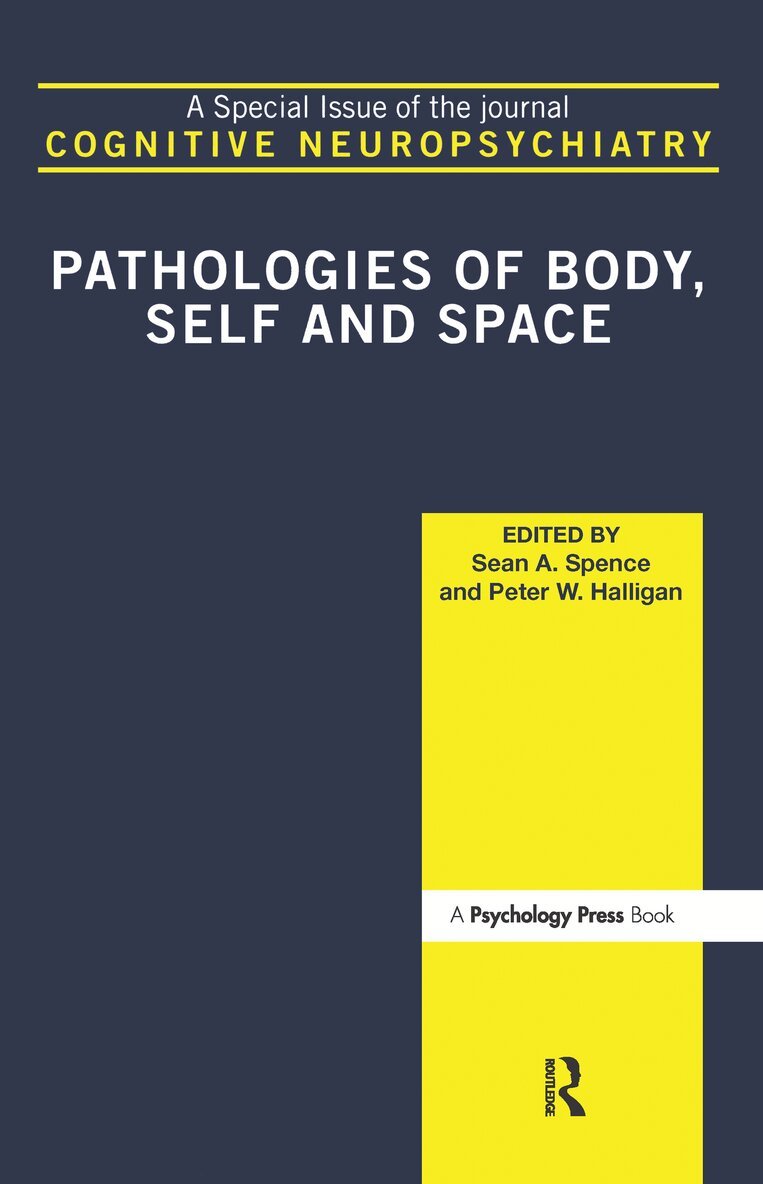
Pathologies of Body, Self and Space
A Special Issue of Cognitive Neuropsychiatry
Inbunden, Engelska, 2002
1 336 kr
Skickas inom 10-15 vardagar
What happens when the physical body and the subjective sense of self part company? How do we explain phantom limbs and alien abduction? What are the cognitive, neurobiological mechanisms that support such phenomena? In this special issue of Cognitive Neuropsychiatry, Spence and Halligan explore all these issues and more, with contributions drawn from an internationally renowned panel of authors, most of whom contributed to a symposium held in Sheffield, England in June 2001 ('The Neuropsychiatry of the Body in Space'). That meeting was primarily concerned with those bizarre and disturbing syndromes that arise when 'body' and 'self', soma and psyche are dissociated from each other, within or beyond the body's surface. Some disorders constrain the space of the body (as in neglect and dissociation syndromes), others seem to extend the boundaries (as with phantom limbs and autoscopy). Still others suggest a permeability of those boundaries (as in alien control and thought insertion, each occurring in schizophrenia). Finally, the body may itself be perceived as having passed into space, the most extreme exemplar being 'alien abduction'. Each paper contains a description of disturbed phenomenology and an account and critique of current cognitive neuropsychiatric findings.
Cognitive Neuropsychiatry of Emotion and Emotional Disorders
A Special Issue of Cognitive Neuropsychiatry
Inbunden, Engelska, 2006
1 261 kr
Skickas inom 10-15 vardagar
Recent years have shown an increased interest in the cognitive and neural basis of emotion in psychiatric and neurological disorders. Indeed, various methods of behavioural and neural measurement of emotional processes are continually being developed and refined, which has led to an explosion of research in this area. This Special Issue of Cognitive Neuropsychiatry brings together timely reviews and new empirical papers regarding the cognitive and neural basis of emotional processing in health and disease, written by renowned researchers in the field. Clinical conditions that are addressed include amygdala damage, bipolar disorder, schizophrenia, social phobia, psychopathy and alexithymia.
Genes, Cognition and Neuropsychiatry
A Special Issue of Cognitive Neuropsychiatry
Inbunden, Engelska, 2009
1 261 kr
Skickas inom 10-15 vardagar
Neuropsychiatry stands to benefit enormously from the new research framework afforded by the sequencing of the human genome and from examining the role of molecular genetics on the clinical presentation of psychiatric patients. A solid foundation is essential if novel genetic breakthroughs are to be translated to successful clinical agents. However, this new research program is magnitudes more complex than any enterprise embarked on hitherto and requires the development, validation and deployment of novel behavioural and neurophysiological phenotypes in order to unravel the pathologies within neural functional systems. This Special Issue provides an introduction to some important findings and implications for neuropsychiatry. The role of specific functional polymorphisms - including genomic mutations - as well as ‘generalist’ genes are explored in childhood, adolescence and adulthood in terms of their modulatory roles on variables present at the level of clinical diagnosis as well as those evident at the level of intermediate neurocognitive and neurophysiological phenotypes, such as emotional reactivity, working memory, executive function, episodic memory and general intelligence. Methodological considerations of this research enterprise are discussed, such as genome wide association studies, the role of cognitive ontologies for neuropsychiatric phenomics as well as possible novel cognitive endophenotypes.