Struggle and Suffrage - Böcker
Visar alla böcker i serien Struggle and Suffrage. Handla med fri frakt och snabb leverans.
3 produkter
3 produkter
148 kr
Skickas
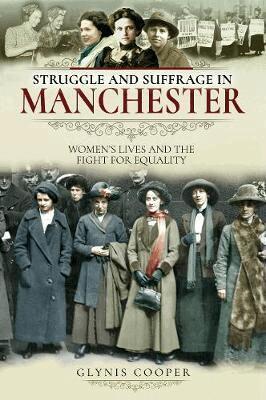
Women are not persons.' That was the ruling of the Court of Appeal when Gwynneth Bebb challenged the Law Society to allow her to take exams and become a solicitor. The case was dismissed because only 'persons' (i.e. males) could become members of the Law Society and it proved the depth of misogyny within the Establishment at that time. 'Suffrage and Struggle in Manchester' celebrates the struggle for the recognition of female rights, the centenary of female suffrage and the 90th anniversary of universal suffrage, as well as the female achievements and freedoms gained during those years. For much of the 19th century hundreds of thousands of women were simply legalised slaves with no rights. The suffrage movement was born in the appalling conditions of the 19th century Manchester millscapes, although the later militant suffrage campaign was led by Emmeline Pankhurst, together with her daughters Christabel, Sylvia and Adela. Opposition to female suffrage came from other women, like Margot Asquith and Beatrice Webb, but it was the effort of all women during the Great War which finally won women the vote. Marie Stopes also played a part in female emancipation through her pioneering work in birth control, but her motives had sinister undertones. This is also the story of the countless thousands of women of Manchester, whose names are lost to us, but without whose strength, willingness and determination the development of modern Britain would have been very different. This is their story as much as the story of those who made the headlines and gained their place in the history books.
157 kr
Skickas
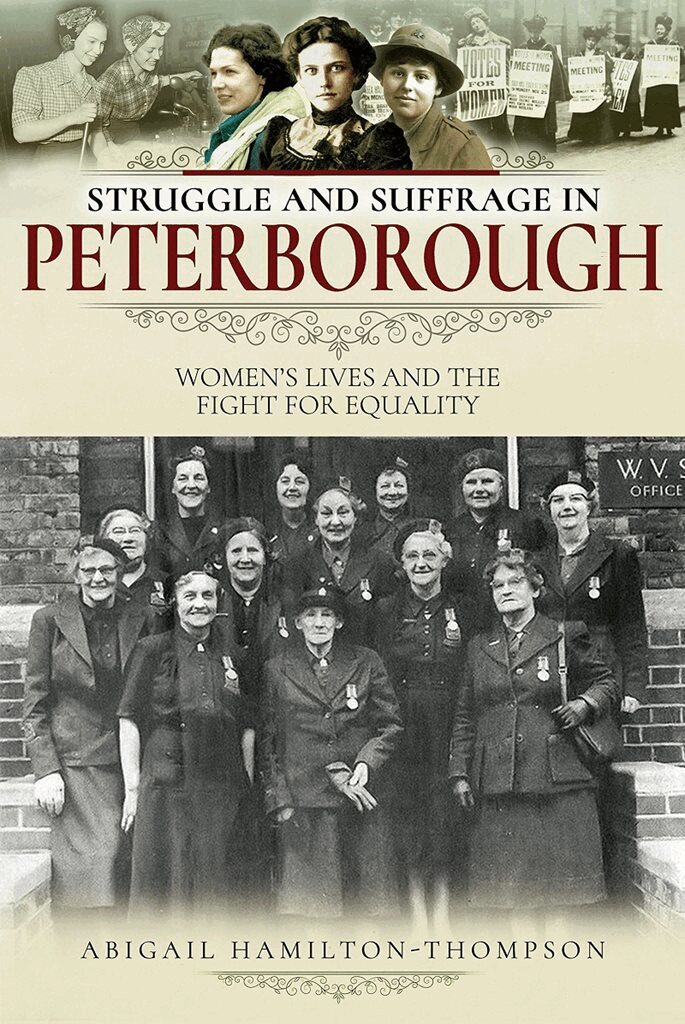
'Votes for Women. Handle with Care' was the message left on a hoax bomb found under the Oundle railway bridge in 1913, just two years after the leading suffrage campaigner Mrs Pankhurst visited the city.Notable women of Peterborough include Florence Saunders, a selfless dedicated nurse who regularly visited the poorer areas of Peterborough and set up the District Nursing Health Service at the Soke. Another well known nurse, Edith Cavell, spent some time at the Laurel Court School, which was run by a leading female character.The Women's United Total Abstinence Council (WUTAC) set up a coffee wagon to encourage male workers to avoid drinking, thus helping families in the war against alcoholism. The WUTAC also set up a tea room at the railway station during the First World War to discourage sailors and soldiers from the public houses.This book explores the lives of women in Peterborough between 1850 and 1950 by looking at home life, the taking on of men's roles during the First World War, the land army, nursing, the accommodating of evacuees during the Second World war, the eccentric first Freewoman of the city and the first female mayor.Struggle and Suffrage in Peterborough uncovers the stories of the leading women in the city who helped change women's lives forever.
Struggle and Suffrage in Newcastle-upon-Tyne
Women's Lives and the Fight for Equality
Häftad, Engelska, 2026
157 kr
Kommande
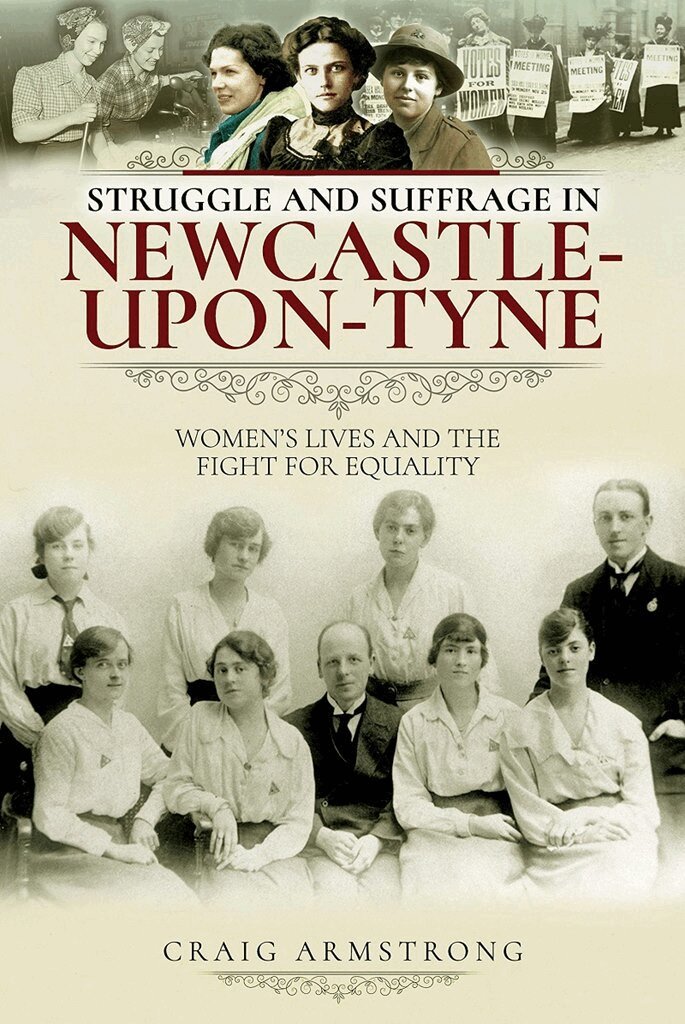
For much of the nineteenth century, the women of Newcastle had occupied crucial, though largely underappreciated and acknowledged, roles within society. Aside from the hard life of raising families in an area where money was often hard to come by, and where much of the available work was labour intensive and dangerous, women were also expected to play a role in bringing money into the household.The use of female labour in Newcastle was often criticised by visitors to the town, particularly with the use of women on building sites. It was believed that many of the roles undertaken by women had a poor effect on their character, but it also created a unique and colourful variety of local personalities, some of whom were celebrated in song and story.The period was also one of considerable upheaval. Women were increasingly demanding greater rights and freedoms and Newcastle became a hotbed of support for the suffragist movement. Indeed, a number of prominent Tyneside suffragists and radical suffragettes launched several attacks in the area. The Chancellor was attacked while on a visit to Newcastle to make a political speech, and a number of suffragettes were arrested for damaging properties and for attempting to throw things at him. On another occasion, a bowling clubhouse was burned to the ground in an arson attack made by local, though unidentified, suffragettes.Women had also been excluded from many of the vital industries on Tyneside. Shipbuilding, heavy engineering, mining, women were excluded from all of these male bastions and there was a prevailing attitude amongst many Newcastle men that women should be kept out of industry as much as possible. The two World Wars changed this, when the rush of men to the colours resulted in these vital industries having to employ ever larger numbers of women and to acknowledge their contributions.