Studies in Archaeological Sciences - Böcker
Visar alla böcker i serien Studies in Archaeological Sciences. Handla med fri frakt och snabb leverans.
9 produkter
9 produkter
848 kr
Tillfälligt slut
For all archaeological artefactual evidence, the study of the provenance, production technology and trade of raw materials must be based on archaeometry. Whereas the study of the provenance and trade of stone and ceramics is already well advanced, this is not necessarily the case for ancient glass. The nature of the raw materials used and the geographical location of their transformation into artefacts often remain unclear. Currently, these questions are addressed by the use of radiogenic isotope analysis. With the specific information the technique provides, archaeologists can further their understanding of the of ancient glass production, based not only on typo-morphological features but also on exact scientific methods. The book captures the state of the art in this rapidly advancing field. It includes methodological papers on isotope analysis, innovative applications of several isotope systems to current questions in glass and glaze research, and advances in the knowledge of the economy of vitreous materials.
848 kr
Tillfälligt slut
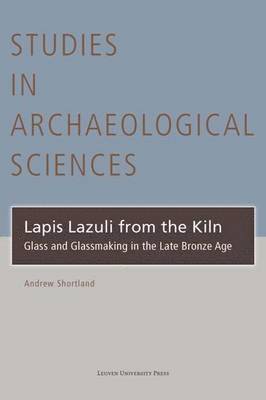
Lapis Lazuli from the Kiln examines the history of the first glass, from its early sporadic occurrence, through the height of its production in the late second millennium BC, to its disappearance at the end of that millennium. The book draws on an exceptionally wide range of sources including ancient texts detailing recipes and trade in glass, iconographic depictions in tombs and temples, archaeological excavation of the most important sites including Amarna and Qantir, and the description of the glass objects themselves. The area covered includes the heart of glassmaking and use in Egypt and the Near East, as well as those areas were glass might have been traded, i.e. the Levant and the Mycenaean Aegean. The life of the glassmaker, his place in society and relationship to other industries are also considered. The book especially details the use of scientific analysis to provide information for the reconstruction of the history of this glass and highlights the importance of analysis in validating or challenging archaeological and textual interpretations. Although describing the most up to date scientific techniques and interpretations, it is written from a non-technical viewpoint and includes systematic glossaries detailing the technical terminology used as well as the most important sites, object types and periods. The book is designed to be a specific study for the student of archaeology demonstrating the general themes of how scientific analysis can assist in the reconstruction of ancient material culture and the society in which it used.
533 kr
Tillfälligt slut
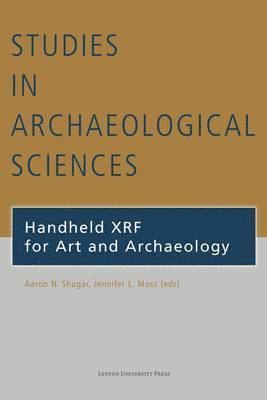
Applications, possibilities, and limitations of handheld XRF in art conservation and archaeology.Over the last decade the technique of X-ray fluorescence has evolved, from dependence on laboratory-based standalone units to field use of portable and lightweight handheld devices. These portable instruments have given researchers in art conservation and archaeology the opportunity to study a broad range of materials with greater accessibility and flexibility than ever before. This volume focuses specifically on the applications, possibilities, and limitations of handheld XRF in art conservation and archaeology. The papers deal with experimental methodologies, protocols, and possibilities of handheld XRF analysis in dealing with the complexity of materials encountered in this research.
321 kr
Skickas
New insights into the trade and processing of mineral raw materials for glass making This book presents a reconstruction of the Hellenistic-Roman glass industry from the point of view of raw material procurement. Within the ERC funded ARCHGLASS project, the authors of this work developed new geochemical techniques to provenance primary glass making. They investigated both production and consumer sites of glass, and identified suitable mineral resources for glass making through geological prospecting. Because the source of the raw materials used in the manufacturing of natron glass can be determined, new insights in the trade of this material are revealed. While eastern Mediterranean glass factories were active throughout the Hellenistic to early Islamic period, western Mediterranean and possibly Italian and North African sources also supplied the Mediterranean world with raw glass in early Roman times. By combining archaeological and scientific data, the authors develop new interdisciplinary techniques for an innovative archaeological interpretation of glass trade in the Hellenistic-Roman world, highlighting the development of glass as an economic material. Ebook available in Open Access.This publication is GPRC-labeled (Guaranteed Peer-Reviewed Content). Contributors Annelore Blomme (KU Leuven), Sara Boyen (KU Leuven), Dieter Brems (KU Leuven), Florence Cattin (Université de Bourgogne), Mike Carremans (KU Leuven), Veerle Devulder (KU Leuven, UGent), Thomas Fenn (Yale University), Monica Ganio (Northwestern University), Johan Honings (KU Leuven), Rebecca Scott (KU Leuven)
988 kr
Skickas inom 5-8 vardagar
Does the "Minoan myth" still stand up to scientific scrutiny? Since the work of Sir Arthur Evans at Knossos (Crete, Greece), the romanticized vision of the Cretan Bronze Age as an era of peaceful prosperity only interrupted by the catastrophic effects of natural disasters has captured the popular and scientific imagination. Its impact on the development of archaeology, archaeoseismology, and earthquake geology in the eastern Mediterranean is considerable. Yet, in spite of more than a century of archaeological explorations on the island of Crete, researchers still do not have a clear understanding of the effects of earthquakes on Minoan society. This volume, gathering the contributions of Minoan archaeologists, geologists, seismologists, palaeoseismologists, geophysicists, architects, and engineers, provides an up-to-date interdisciplinary appraisal of the role of earthquakes in Minoan society and in Minoan archaeology - what we know, what are the remaining issues, and where we need to go.Contributors Tim Cunningham (Universite catholique de Louvain), Jan Driessen (Universite catholique de Louvain), Charalampos Fassoulas (Natural History Museum of Crete, University of Crete), Christoph Grutzner (RWTH Aachen University, University of Cambridge), Susan E. Hough (U.S. Geological Survey), Simon Jusseret (The University of Texas at Austin, Universite catholique de Louvain), Colin F. Macdonald (The British School at Athens), Jack Mason (RWTH Aachen University), James P. McCalpin (GEO-HAZ Consulting Inc.), Floyd W. McCoy (University of Hawaii - Windward), Clairy Palyvou (Aristotle University of Thessaloniki), Gerassimos A. Papadopoulos (National Observatory of Athens), Klaus Reicherter (RWTH Aachen University), Manuel Sintubin (KU Leuven), Jeffrey S. Soles (University of North Carolina - Greensboro), Rhonda Suka (Research Corporation of the University of Hawaii), Eleftheria Tsakanika (National Technical University of Athens), Thomas Wiatr (RWTH Aachen University, German Federal Agency for Cartography and Geodesy)
Del 6 - Studies in Archaeological Sciences
Beyond Provenance
New Approaches to Interpreting the Chemistry of Archaeological Copper Alloys
Inbunden, Engelska, 2018
546 kr
Skickas
For the last 180 years, scientists have been attempting to determine the 'provenance' (geological source) of the copper used in Bronze Age artefacts. However, despite advances in analytical technologies, the theoretical approach has remained virtually unchanged over this period, with the interpretative methodology only changing to accommodate the increasing capacity of computers. This book represents a concerted effort to think about the composition of Bronze Age metal as the product of human intentionality as well as of geology. It considers the trace element composition of the metal, the alloying elements, and the lead isotopic composition, showing how a combination of these aspects, along with archaeological context and typology, can reveal much more about the life history of such artefacts, expanding considerably upon the rather limited ambition of knowing where the ore was extracted.Beyond Provenance serves as a 'how-to handbook' for those wishing to look for evidence of human intentionality in the chemical patterning observed inbronzes.This publication is GPRC-labeled (Guaranteed Peer Review Content).
Del 7 - Studies in Archaeological Sciences
Islamic Glass in the Making
Chronological and Geographical Dimensions
Inbunden, Engelska, 2022
1 052 kr
Skickas inom 5-8 vardagar
New insights into the history of Islamic glassmaking The ancient glass industry changed dramatically towards the end of the first millennium. The Roman glassmaking tradition of mineral soda glass was increasingly supplanted by the use of plant ash as the main fluxing agent at the turn of the ninth century CE. Defining primary production groups of plant ash glass has been a challenge due to the high variability of raw materials and the smaller scale of production. Islamic Glass in the Making advocates a large-scale archaeometric approach to the history of Islamic glassmaking to trace the developments in the production, trade and consumption of vitreous materials between the eighth and twelfth centuries and to separate the norm from the exception. It proposes compositional discriminants to distinguish regional production groups, and provides insights into the organisation of the glass industry and commerce during the early Islamic period. The interdisciplinary approach leads to a holistic understanding of the development of Islamic glass; assemblages from the early Islamic period in Mesopotamia, Central Asia, Egypt, Greater Syria and Iberia are evaluated, and placed in the larger geopolitical context. In doing so, this book fills a gap in the present literature and advances a large-scale approach to the history of Islamic glass.Ebook available in Open Access.This publication is GPRC-labeled (Guaranteed Peer-Reviewed Content).
Del 8 - Studies in Archaeological Sciences
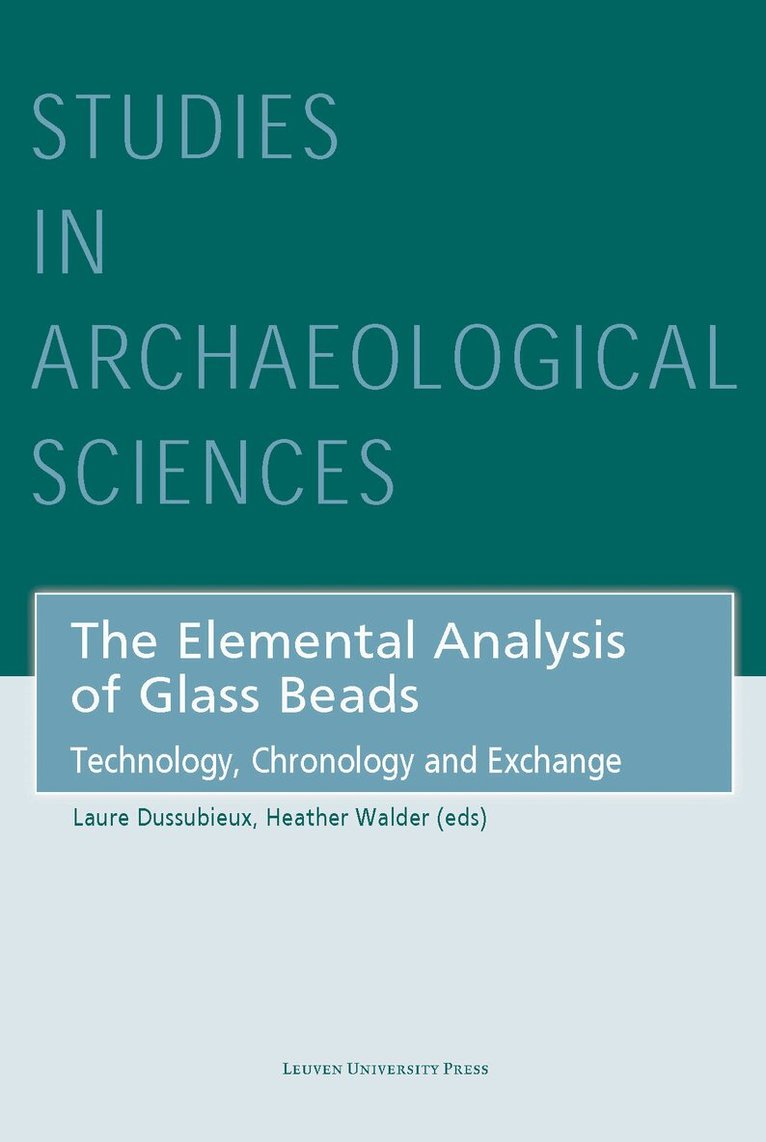
Elemental Analysis of Glass Beads
Technology, Chronology and Exchange
Inbunden, Engelska, 2022
1 116 kr
Skickas inom 5-8 vardagar
Ancient glass beads as a window to the ancient worldGlass beads, both beautiful and portable, have been produced and traded globally for thousands of years. Modern archaeologists study these artifacts through sophisticated methods that analyze the glass composition, a process which can be utilized to trace bead usage through time and across regions. This book publishes open-access compositional data obtained from laser ablation – inductively coupled plasma – mass spectrometry, from a single analytical laboratory, providing a uniquely comparative data set. The geographic range includes studies of beads produced in Europe and traded widely across North America and beads from South and Southeast Asia traded around the Indian Ocean and beyond. The contributors provide new insight on the timing of interregional interactions, technologies of bead production and patterns of trade and exchange, using glass beads as a window to the past.This volume will be a key reference for glass researchers, archaeologists, and any scholars interested in material culture and exchange; it provides a wide range of case studies in the investigation and interpretation of glass bead composition, production and exchange since ancient times.Contributors: Bernard Gratuze (Institut de Recherche sur les ArchéoMATériaux, Centre Ernest-Babelon, UMR 5060 CNRS/Université d'Orléans), Alicia L. Hawkins (University of Toronto Mississauga), Elliot H. Blair (University of Alabama), Jessica Dalton-Carriger (Roane State Community College), Lee M. Panich (Santa Clara University), Thomas R. Fenn (The University of Oklahoma), Alison K. Carter (University of Oregon), Jennifer Craig (McGill University), Mark Aldenderfer (University of California, Merced), Mudit Trivedi (Stanford University), Lindsey Trombetta (The University of Texas at Austin), Jonathan R. Walz (The Field Museum / SIT-Graduate Institute), Akshay Sarathi (Florida Atlantic University), Carla Klehm (University of Arkansas), Marilee Wood (University of the Witwatersrand), Katherine A. Larson (Corning Museum of Glass), Heather Walder (The Field Museum / University of Wisconsin – La Crosse), Laure Dussubieux (The Field Museum)Supplementary Material 'The Elemental Analysis of Glass Beads' >Ebook available in Open Access.This publication is GPRC-labeled (Guaranteed Peer-Reviewed Content).
1 116 kr
Skickas inom 5-8 vardagar
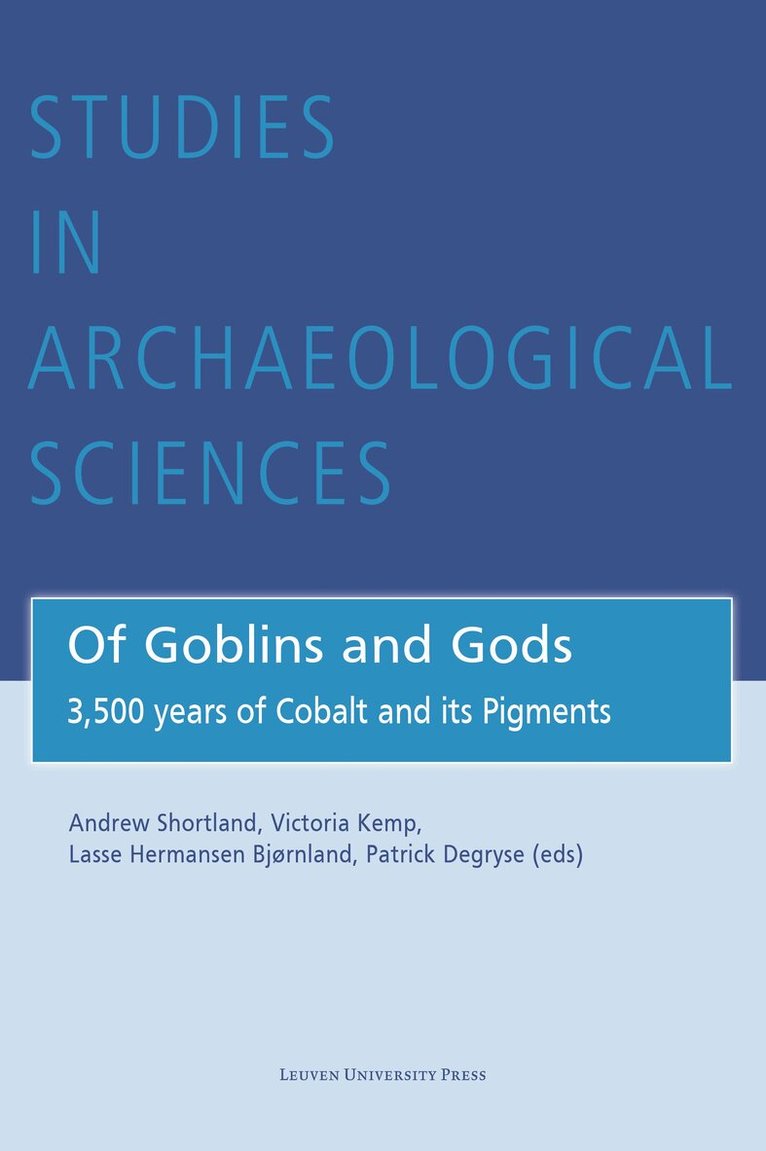
The historical and technological significance of cobalt and its compoundsCobalt: named after goblins, allotted to gods.Cobalt and its compounds have had a long and important part to play in history. Metallic cobalt is a modern innovation, vital in the green energy transition. However, cobalt compounds have been used for 3,500 years to create deep-blue pigments, featuring in many important works of art and religious artefacts, associated with heaven, eternity and the divine. Cobalt ores are rare, and their exploitation is a dangerous pursuit. Their co-occurrence with arsenic has led to severe health consequences for workers, which were blamed on supernatural spirits and goblins, “kobolds”, from which the name cobalt is derived. Of Goblins and Gods discusses the state-of-the-art of the extraction and use of cobalt ores through history, alongside the technology involved in making and applying cobalt pigments in many man-made materials across all regions and periods, from the Death Mask of Tutankhamun and pre-Islamic tiles to Indian manuscripts and the windows of Canterbury Cathedral.