Studies in Game Sound and Music - Böcker
Visar alla böcker i serien Studies in Game Sound and Music. Handla med fri frakt och snabb leverans.
7 produkter
7 produkter
1 371 kr
Skickas inom 5-8 vardagar
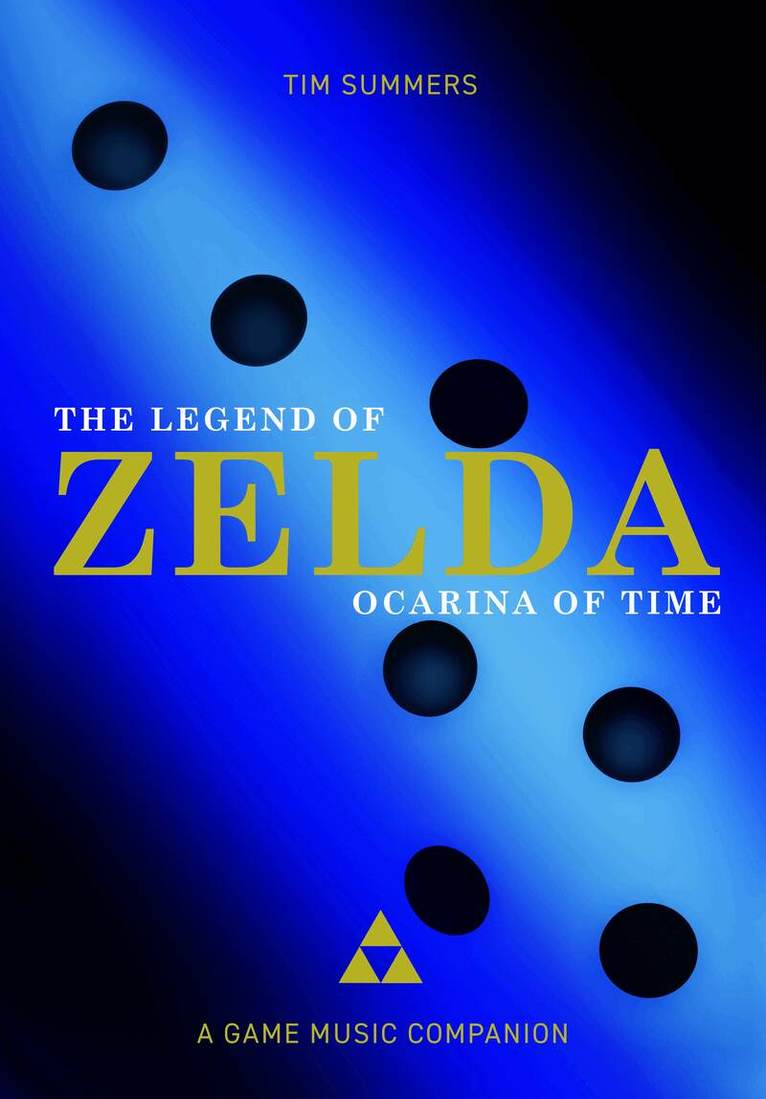
Some 22 years after its creation, The Legend of Zelda: Ocarina of Time is still held in high critical regard as one of the finest examples of the video game medium. The same is true of the game’s music, whose superlative reception continues to be evident, whether in the context of the game or in orchestral concerts and recordings of the game’s music.Given music’s well-established significance for the video game form, it is no coincidence that music is placed at the forefront of this most lauded and loved of games. In Ocarina of Time, music connects and unifies all aspects of the game, from the narrative conceit to the interactive mechanics, from the characters to the virtual worlds, and even into the activity of legions of fans and gamers, who play, replay and reconfigure the music in an enduring cultural site that has Ocarina of Time at its centre. As video game music studies begins to mature into a coherent field, it is now possible to take the theoretical apparatus and critical approaches that have been developed in antecedent scholarship and put these into practice in the context of an extended concrete game example.The most extensive investigation into the music of a single game yet undertaken, this book serves three important primary purposes: first, it provides a historical-critical account of the music of an important video game text; second, it uses this investigation to explore wider issues in music and media studies (including interactivity, fan cultures, and music and technology); and third, it serves as a model for future in-depth studies of video game music.
Nostalgia and Videogame Music
A Primer of Case Studies, Theories, and Analyses for the Player-Academic
Inbunden, Engelska, 2022
1 451 kr
Skickas inom 5-8 vardagar
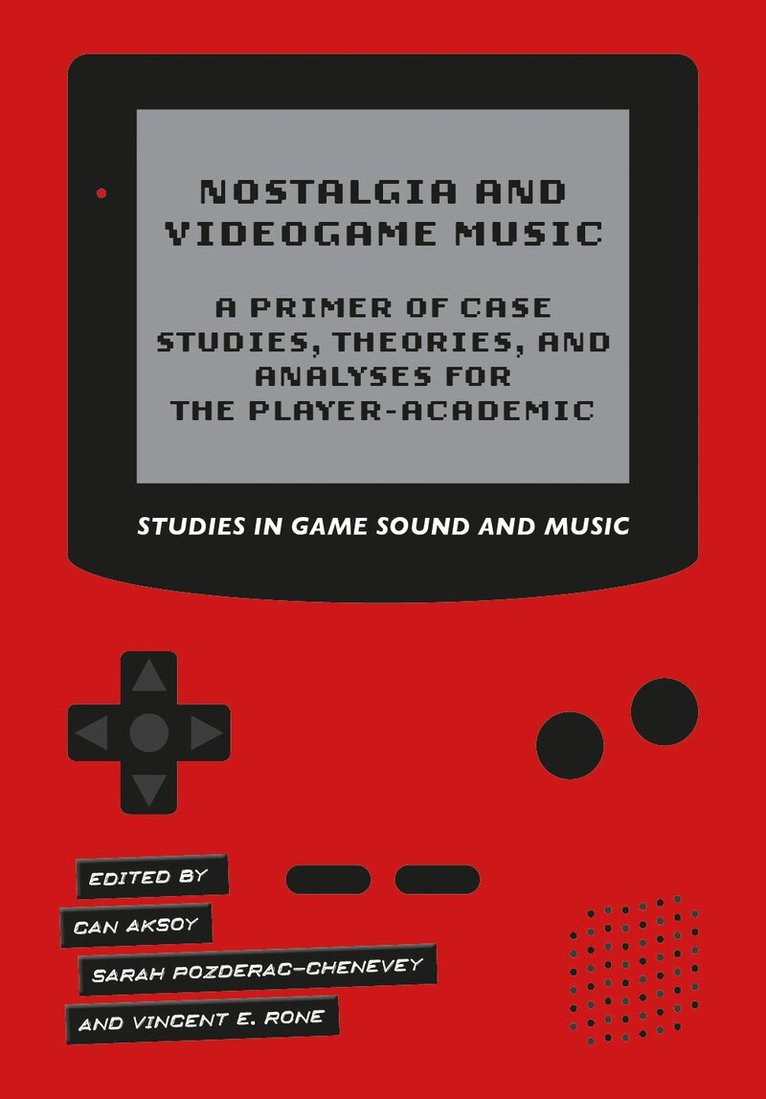
This book, the first multi-disciplinary study of nostalgia and videogame music, allows readers to understand the relationships and memories they often form around games, and music is central to this process. The quest into the past begins with this book, a map that leads to the intersection between nostalgia and videogame music.Informed by research on musicology and memory as well as practices of gaming culture the edited volume discusses different forms of nostalgia, how video games display their relation to those and in what ways theoretically self-conscious positions can be found in games. The perspectives of the new discipline ludmusicology provide the broader framework for this project. This significant new book focuses on an important topic that has not been sufficiently addressed in the field and is clear in its contribution to ludomusicology.An important scholarly addition to the field of ludomusicology, with potential appeal to undergraduate and graduate scholars in many related fields due to its inherent interdisciplinarity, including musicology more broadly, game studies and games design, film studies, as well as cultural and media studies. It could also appeal to practitioners, particularly those nostalgic and self-reflexive artists who already engage in nostalgic practice (chiptune musicians, for instance). Also to those researching and studying in the fields of memory studies and cultural studies.Readership will include researchers, educators, practitioners, undergraduate and graduate students, fans and game players.
426 kr
Skickas
Some 22 years after its creation, The Legend of Zelda: Ocarina of Time is still held in high critical regard as one of the finest examples of the video game medium. The same is true of the game’s music, whose superlative reception continues to be evident, whether in the context of the game or in orchestral concerts and recordings of the game’s music.Given music’s well-established significance for the video game form, it is no coincidence that music is placed at the forefront of this most lauded and loved of games. In Ocarina of Time, music connects and unifies all aspects of the game, from the narrative conceit to the interactive mechanics, from the characters to the virtual worlds, and even into the activity of legions of fans and gamers, who play, replay and reconfigure the music in an enduring cultural site that has Ocarina of Time at its centre. As video game music studies begins to mature into a coherent field, it is now possible to take the theoretical apparatus and critical approaches that have been developed in antecedent scholarship and put these into practice in the context of an extended concrete game example.The most extensive investigation into the music of a single game yet undertaken, this book serves three important primary purposes: first, it provides a historical-critical account of the music of an important video game text; second, it uses this investigation to explore wider issues in music and media studies (including interactivity, fan cultures, and music and technology); and third, it serves as a model for future in-depth studies of video game music.
Nostalgia and Videogame Music
A Primer of Case Studies, Theories, and Analyses for the Player-Academic
Häftad, Engelska, 2022
494 kr
Skickas inom 5-8 vardagar
This book, the first multi-disciplinary study of nostalgia and videogame music, allows readers to understand the relationships and memories they often form around games, and music is central to this process. The quest into the past begins with this book, a map that leads to the intersection between nostalgia and videogame music.Informed by research on musicology and memory as well as practices of gaming culture the edited volume discusses different forms of nostalgia, how video games display their relation to those and in what ways theoretically self-conscious positions can be found in games. The perspectives of the new discipline ludmusicology provide the broader framework for this project. This significant new book focuses on an important topic that has not been sufficiently addressed in the field and is clear in its contribution to ludomusicology.An important scholarly addition to the field of ludomusicology, with potential appeal to undergraduate and graduate scholars in many related fields due to its inherent interdisciplinarity, including musicology more broadly, game studies and games design, film studies, as well as cultural and media studies. It could also appeal to practitioners, particularly those nostalgic and self-reflexive artists who already engage in nostalgic practice (chiptune musicians, for instance). Also to those researching and studying in the fields of memory studies and cultural studies.Readership will include researchers, educators, practitioners, undergraduate and graduate students, fans and game players.
495 kr
Skickas
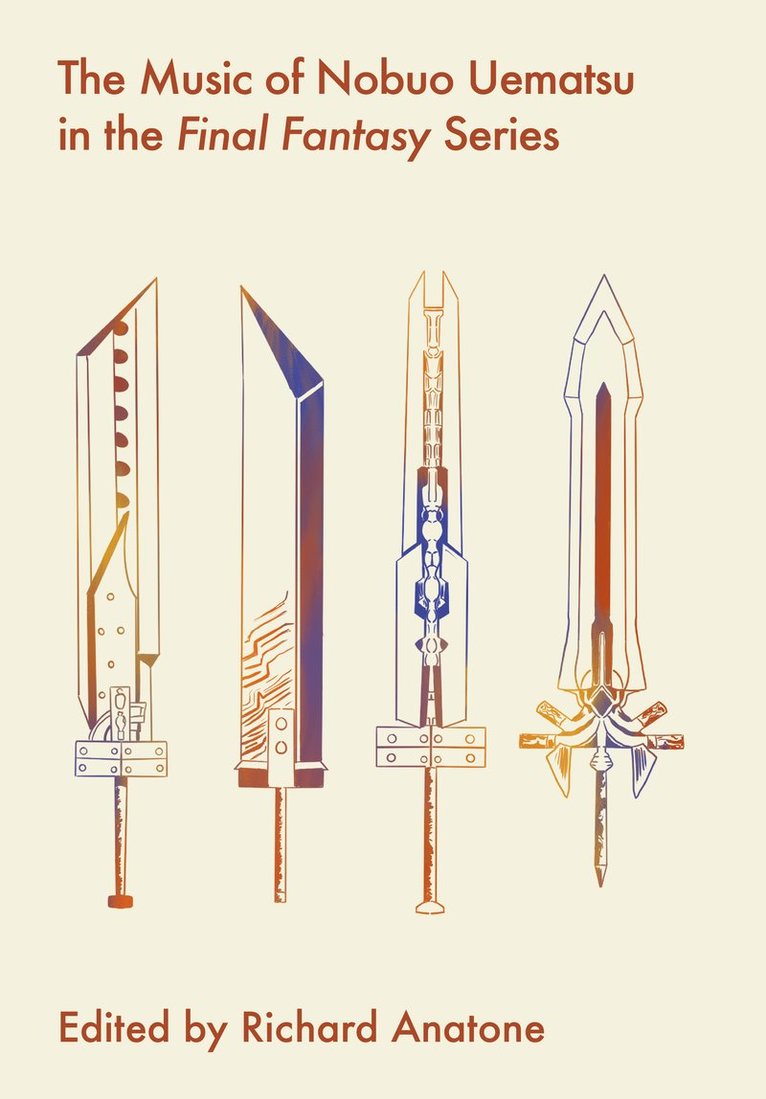
Nobuo Uematsu is one of the most influential Japanese composers of the current age. One of Japan’s most beloved living composers, he has been composing music for the popular franchise since 1987, inspiring a new generation of classical music fans, and named by Time Magazine as an ‘innovator’ of the new wave of music.Sometimes described as the Beethoven of video game music, Nobuo Uematsu has built his career and reputation from his soundtracks to the enduring Final Fantasy series of video games, which are notable for their remarkable cinematic feel.Classic FM radio describes Nobuo as ‘part John Williams, part Wagnerian leitmotif, part new-age soundscaper – and a legend in his own right’. He has so far appeared five times in the top 20 of the annual Classic FM Hall of Fame, voted for by listeners.This is the first book-length study on the music of Uematsu. It takes a variety of different analytical approaches to his music. It offers readers interested in ludomusicology (the study of and research into video game music) a variety of ways in which to understand Uematsu’s compositional process and the role that video game music has in the overall gaming experience.Those interested in Uematsu’s music will gain a greater appreciation and understanding of his compositional processes and his interaction with musical narrative, and those interested in ludomusicology in general will be shown various methodologies that can be applied to a single composer. Those interested in composing for video games or movies will also be given insight into how they might compose for a narrative themselves.Professional musicians will gain deeper insight into the music from selected games in the series, as each chapter applies traditional theoretical and musicological methodologies to selected games from the series. It my also be a useful educational resource for use in their own studies by student and amateur musicians.Foreword by William Gibbons, associate professor of musicology at Texas Christian University. Editor Richard Anatone is a professor of music theory at Prince George's Community College in Largo, Maryland.It will be a valuable resource for ludomusicologists, as well as academics from a variety of disciplines who work in popular music and culture, film and visual media, and subjects traditionally marginalized by the Western 'Classical' canon. It will also be of interest to fans of the Final Fantasy series, both inside and outside of academia and to composers of video game music.It will also appeal to readers interested in the business and marketing side of the video game industry, and who want to learn from the successes of live video game concerts and how symbolism and thematic interplay aids in drawing gamers’ attention to soundtracks and concerts of video game music.Game developers will learn how to recognize potential composers and compositional approaches that will aid in storytelling, fandom and gamer immersion.General video game historians who want to learn more about Square’s early years and eventual transition into a powerhouse development company will also find much to interest them.While there have been several edited collections in the subdiscipline of ludomusicology, this is the first book to address a composer’s oeuvre as the main subject. It brings together a variety of methodologies and voices on the subject, and has potential to become a model for future composer-focused studies.
Del 3 - Studies in Game Sound and Music
Gender, Race and Religion in Video Game Music
Inbunden, Engelska, 2024
1 402 kr
Skickas
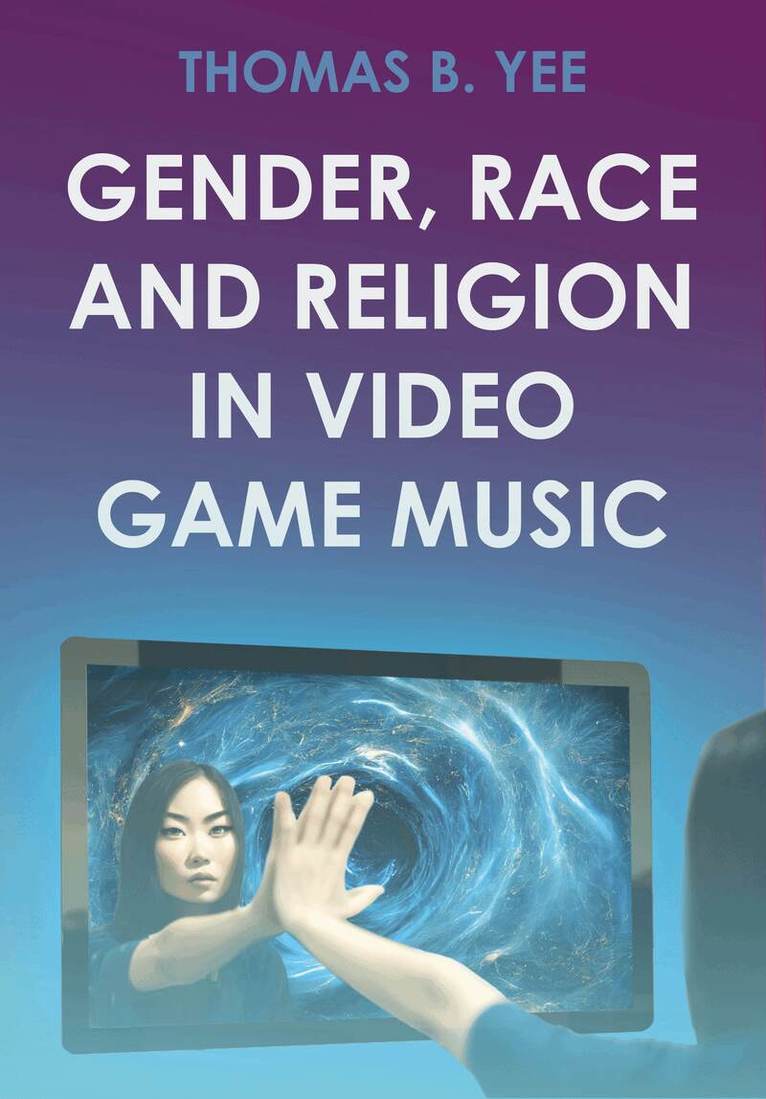
This book provides semiotically-focused analyses and interpretations of video game music, focusing specifically on musical representation of three demographic diversity traits. Adopting a narratologist orientation to supplement existing ludological scholarship, these analyses apply music semiotics to crucial modern-day issues such as representation of gender, race, and religion in video games.An original and welcome contribution to the field, it considers musical meaning in relation to the aspects of gender, race, and religion. This book will help readers to develop language and context in which to consider video game music in terms of society and representation and will encourage future research in these critical areas.Yee analyses music's contributions to video games' narrative and thematic meanings, specifically concerning three master categories of identity – gender, race and religion. Containing twenty-five detailed analytical case studies of musical representation in video game music, it sets out theoretical and conceptual frameworks beneficial for interpreting musical meaning from video game soundtracks. Though players and commentators may be tempted to view a game's soundtrack as mere 'background music', this research demonstrates video game music's social relevance as a major factor impacting players' cultural attitudes, values, and beliefs. Part I explores immersion, interactivity and interpretation in video game music, proposing a theory of 'interpretative interactivity' to account for players' semiotic agency in dialogue with their ludic agency. Part II explores gender representation in a trajectory from conventional gender construction, alternative femininities/masculinities and potential for non-binary representational possibilities. Part III explores musical representation of nationality, culture and race, proposing the concept of 'racialised fantasy' and applying frameworks from race scholarship to connect media representations of race to real world racial justice movements. Part IV examines religion, introducing the concept of 'sonic iconography' to connect theologicalmeanings to the use of sacred music in video game music.
1 402 kr
Skickas
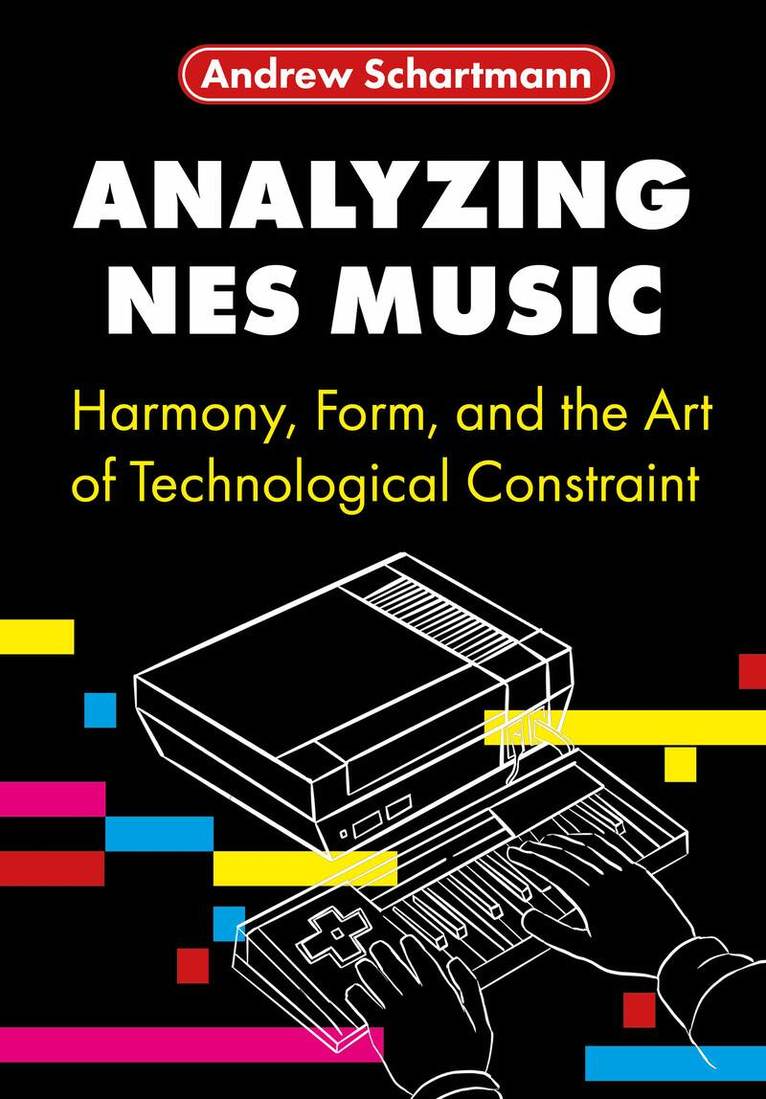
This study of five of Nintendo’s landmark music scores offers new insights into video game music composition and creativity with limited technology.Faced with severe technological constraints on system memory, composers of the Nintendo Entertainment System (NES) sought ways to disguise repetition in music that repeats extensively. Their efforts gave rise to a set of compositional techniques for creating the illusion of variety. Andrew Schartmann distills these techniques into a theory of harmony and form for the analysis of NES music. It then uses this theory to analyze five landmark scores of the NES era: Super Mario Bros., Dragon Warrior, Metroid, Mega Man 2, and Silver Surfer. Both theory and analysis are scaffolded by a detailed description of the NES hardware and its attendant constraints, highlighting the ever-evolving dialogue between technology, commercial demand, and artistic sensibility that characterizes video game music of the 1980s and 1990s.