• Fri frakt över 249 kr
  • •
  • Snabba leveranser
  • •
  • Billiga böcker
Kundservice

Du är på sajten för privatpersoner.

Företag, bibliotek eller offentlig verksamhet?

Du handlar på classic.bokus.com, där alla dina funktioner finns intakta.
Till classic.bokus.com
Bokus logotyp. Gå till startsidan.
  • Erbjudanden
  • Nyheter
  • Student
  • Topplistor
  • Barn & ungdom
  • Bokus Play
  • E-böcker
  • Pocketböcker
  • Spel & pussel

Må bättre, för mindre! Upp till 50% rabatt på hälsoböcker

Sidfot

Mina sidor

    Hjälp

    • Kundservice
    • Vanliga frågor och svar
    • Frakt och leverans
    • Retur vid ångerrätt
    • Reklamera vara
    • Betalning
    • Köpvillkor
    • Allmänna villkor
    • Information om webbplatsens tillgänglighet

    Om Bokus

    • Om oss
    • Pressrum
    • För studenter
    • För företag
    • För bibliotek och offentlig verksamhet
    • För leverantörer
    • Hållbarhet

    Populärt

    • Aktuella erbjudanden
    • Presentkort
    • Studentlitteratur
    • Nya böcker
    • Topplistor
    • Signerade böcker
    • Engelska böcker

    Inspiration

    • Boktips
    • BookTok
    • Populära bokserier
    • Barnbokskaraktärer
    • Populära författare
    Logotyp för Bokus
    Följ oss på Facebook (extern länk)Följ oss på Instagram (extern länk)Följ oss på YouTube (extern länk)Följ oss på TikTok (extern länk)
    bokus @ CookiesAnpassa cookiesIntegritetspolicyKöpvillkor
    Till Citymail hemsida (extern länk)Till Budbee hemsida (extern länk)Till Postnord hemsida (extern länk)Till Schenker hemsida (extern länk)Till Early Bird hemsida (extern länk)Till Walleys hemsida (extern länk)
    1. Kultur
    2. Musikböcker

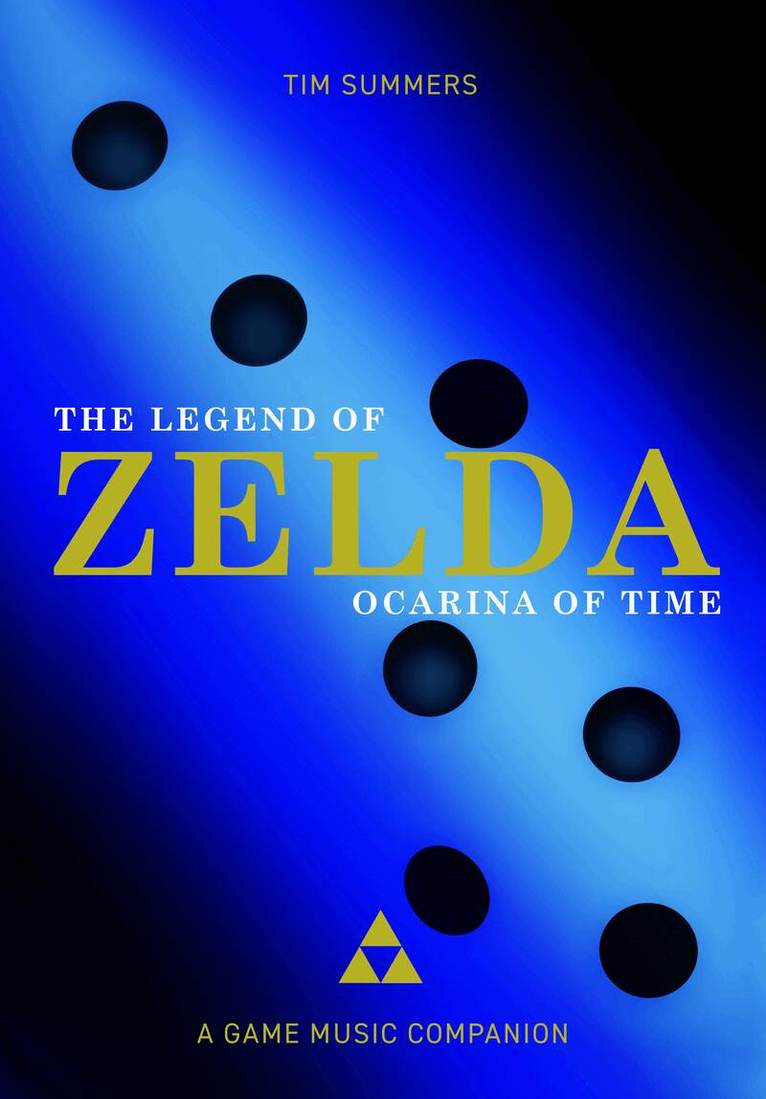
    Legend of Zelda: Ocarina of Time

    A Game Music Companion

    AvTim Summers

    Inbunden, Engelska, 2021

    Del i serien Studies in Game Sound and Music

    1 396 kr

    Beställningsvara. Skickas inom 5-8 vardagar. Fri frakt över 249 kr.

    Fler format och utgåvor

    E-bok

    1 145 kr

    E-bok

    1 145 kr

    Häftad

    434 kr

    Beskrivning

    Some 22 years after its creation, The Legend of Zelda: Ocarina of Time is still held in high critical regard as one of the finest examples of the video game medium. The same is true of the game’s music, whose superlative reception continues to be evident, whether in the context of the game or in orchestral concerts and recordings of the game’s music.Given music’s well-established significance for the video game form, it is no coincidence that music is placed at the forefront of this most lauded and loved of games. In Ocarina of Time, music connects and unifies all aspects of the game, from the narrative conceit to the interactive mechanics, from the characters to the virtual worlds, and even into the activity of legions of fans and gamers, who play, replay and reconfigure the music in an enduring cultural site that has Ocarina of Time at its centre. As video game music studies begins to mature into a coherent field, it is now possible to take the theoretical apparatus and critical approaches that have been developed in antecedent scholarship and put these into practice in the context of an extended concrete game example.The most extensive investigation into the music of a single game yet undertaken, this book serves three important primary purposes: first, it provides a historical-critical account of the music of an important video game text; second, it uses this investigation to explore wider issues in music and media studies (including interactivity, fan cultures, and music and technology); and third, it serves as a model for future in-depth studies of video game music.

    Produktinformation

    • Utgivningsdatum:2021-03-22
    • Mått:170 x 244 x 19 mm
    • Vikt:735 g
    • Format:Inbunden
    • Språk:Engelska
    • Serie:Studies in Game Sound and Music
    • Antal sidor:334
    • Förlag:Intellect
    • ISBN:9781789382273

    Utforska kategorier

    • Musikböcker inom Kultur
    • Medievetenskap inom Samhälle och politik

    Mer om författaren

    Tim Summers is lecturer in music at Royal Holloway, University of London. He is the author of Understanding Video Game Music and a cofounder of the Ludomusicology Research Group.

    Recensioner i media

    'Summers does an excellent job of describing the soundscape of a video game within the confines of print, employing a variety of visual representations to support his prose arguments. [...] The Legend of Zelda: Ocarina of Time: A Game Music Companion offers many things to many people: it is an in-depth analysis of a beloved game, a primer on ludomusicological terminology and concepts, a model analysis, a demonstration of the different things video game music can do, and an explication of how it does them. Summers’s attention to detail, wide-ranging knowledge, and affection and respect for the subject matter are evident throughout, resulting in a superb book.'

    Innehållsförteckning

    • Chapter 1. IntroductionChapter 2. The music of Ocarina of Time in contextNintendo’s game franchisesThe Legend of ZeldaKondo’s approach to music in The Legend of ZeldaMusic on the Nintendo 64Music in Ocarina of TimeChapter 3. The ocarina and Link’s musical performancesThe ocarinaWhy an ocarina?Playing Link’s ocarinaBeyond the four notesLearning the ocarina songsThe songsPlot-advancing and assistance melodiesWarp songsThe Scarecrow’s song and other performancesThe Fabulous Five froggish tenorsThe Skull KidsMusical performance in Ocarina of TimeThe function of musical performance in gamesChapter 4. Location cuesPart I. Hyrule FieldA familiar tuneIntroductionDay tagsReflective tagsBattle tagsMusic, the player and geographyPart II. Location cues featuring ocarina songsEpona’s song and Lon Lon Ranch – Associations of ranch lifeThe Temple of Time and the Song of Time – Cathedral soundscapeWindmill and the Song of Storms – Strange circularitySaria’s song and the Lost Woods – Jolly repetition and misdirectionPart III. Dungeon cuesInside the Deku Tree – Organic timbresDodongo’s Cavern – Audio textures of metal and stoneInside Jabu-Jabu’s belly – Fishy rumblingsForest Temple – Sounds of the forestFire Temple – Voices heard and unheardIce Cavern – Crystalline chimesWater Temple – A dungeon on the Danube?Shadow Temple and the bottom of the well – Voices and drums from the depthsSpirit TempleGanon’s CastlePart IV. TownsKokiri Forest – Optimism and ornamentationCastle Town market – Evoking European traditionsKakariko Village – A wistful safe havenGoron City – Sounding the materials of the mountainZora’s domainGerudo Valley – Hispanic traditions in the desertPart V. Recurring types of locationShops – Hyrule’s consumer soundtrackSideshow minigames – The fairground connectionHouses – A musical starting pointPotion shops, ghost shops and lakeside laboratory – Little shops of horrors?Fairy Fountain/start menu – Angelic harpsMusic for locationsChapter 5. Character themes and cutscenesPart I. Character themesZelda’s theme – Lilting lullabyGanondorf’s theme – Alarming chords and brooding sequencesSheik – Atypical warrior’s themeKaepora Gaebora (the great wise owl) – Authority and levityGreat Deku Tree – Ancient uncertaintyKoume and KotakeA noticeable omissionPart II. Other cutscenesOpening – An unexpected startFlying – Musical sequences for beating wingsLegends, spirits and goddessesRewards and milestonesEnd credits – Finale ultimoOcarina of Time 3DMusic for cutscenesChapter 6. Ludic cuesPart I. Combat musicMusical features of combat cuesImplementation in the gameBoss victory cuePart II. Cues for treasure and challengesAcquisition cuesMusic for puzzlesMusic for losing – Game overMinigames – Frivolous funSpecial sequencesAestheticizing the LudicChapter 7: Interfaces and sound effectsEarcons for interfacesMenus and dialogueTargeting systemMusical sound for interfaces and informationMusicality and magicSound and motionEnemy sound effectsConclusionsChapter 8. Ocarina afterlivesLater gamesParallel world – Majora’s maskSelective franchise continuityDecontextualizing soundA multi-valent musical medium