Studies in Spirituality and Theology – Serie
Visar alla böcker i serien Studies in Spirituality and Theology. Handla med fri frakt och snabb leverans.
10 produkter
10 produkter
Angelic Wisdom
The Cherubim and the Grace of Contemplation in Richard of St. Victor
Inbunden, Engelska, 1995
1 077 kr
Skickas inom 10-15 vardagar
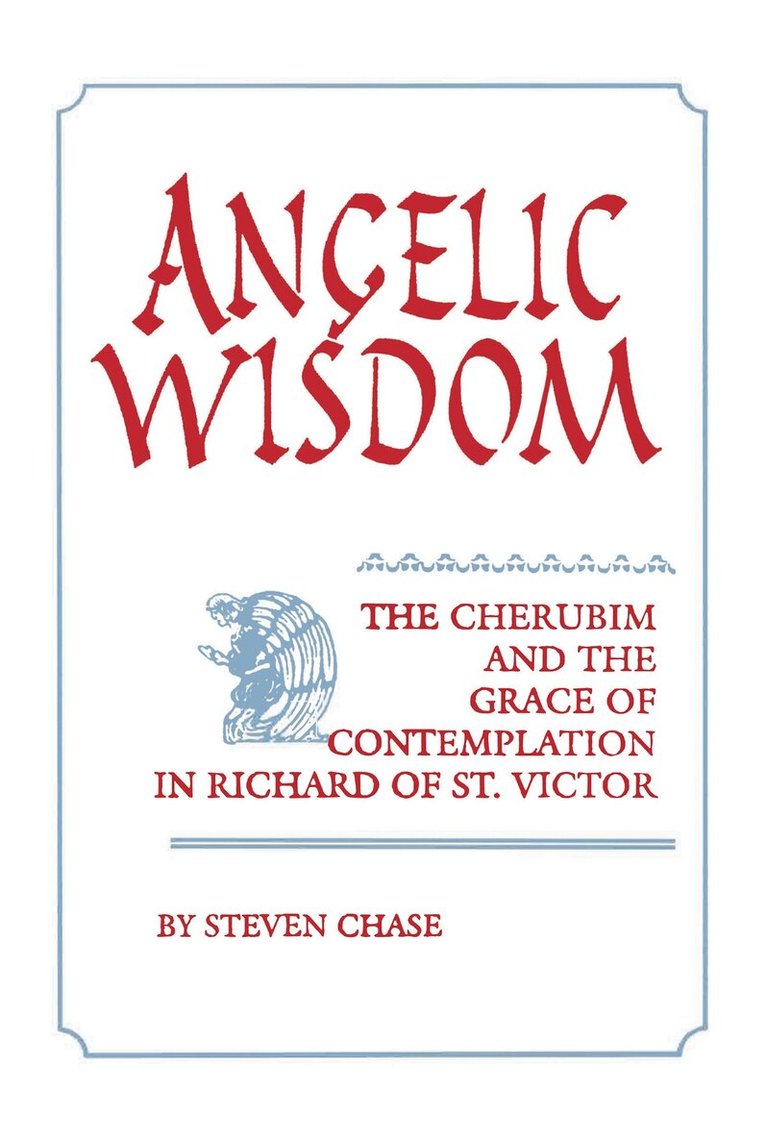
Angelic Wisdom takes readers on a contemplative and theological journey into the angelic wisdom at the heart of the symbol of the cherubim. As a guide for this journey, Chase uses Richard of St. Victor's twelfth-century treatise on contemplation 'De arca mystica.' Angelic Wisdom presents new interpretations and evaluations of medieval spirituality, and serves as a spiritual guide for those who seek God through the grace of contemplation. In this graceful, deeply learned book Steven Chase takes readers on a contemplative and theological journey into the angelic wisdom at the heart of the symbol of the cherubim. Providing the guiding hand for this journey is Richard of St. Victor whose twelfth century treatise on contemplation, De arca mystica, focuses on God's instructions to Moses on the construction of the ark and cherubim in Exodus 25: 18-20. The text from Exodus contains the promise of God to Moses, and finally to us, that atop the ark, between the two cherubim, God will meet with and speak to his people.
Christology from Within
Spirituality and the Incarnation in Hans Urs Von Balthasar
Inbunden, Engelska, 2000
1 077 kr
Skickas inom 10-15 vardagar
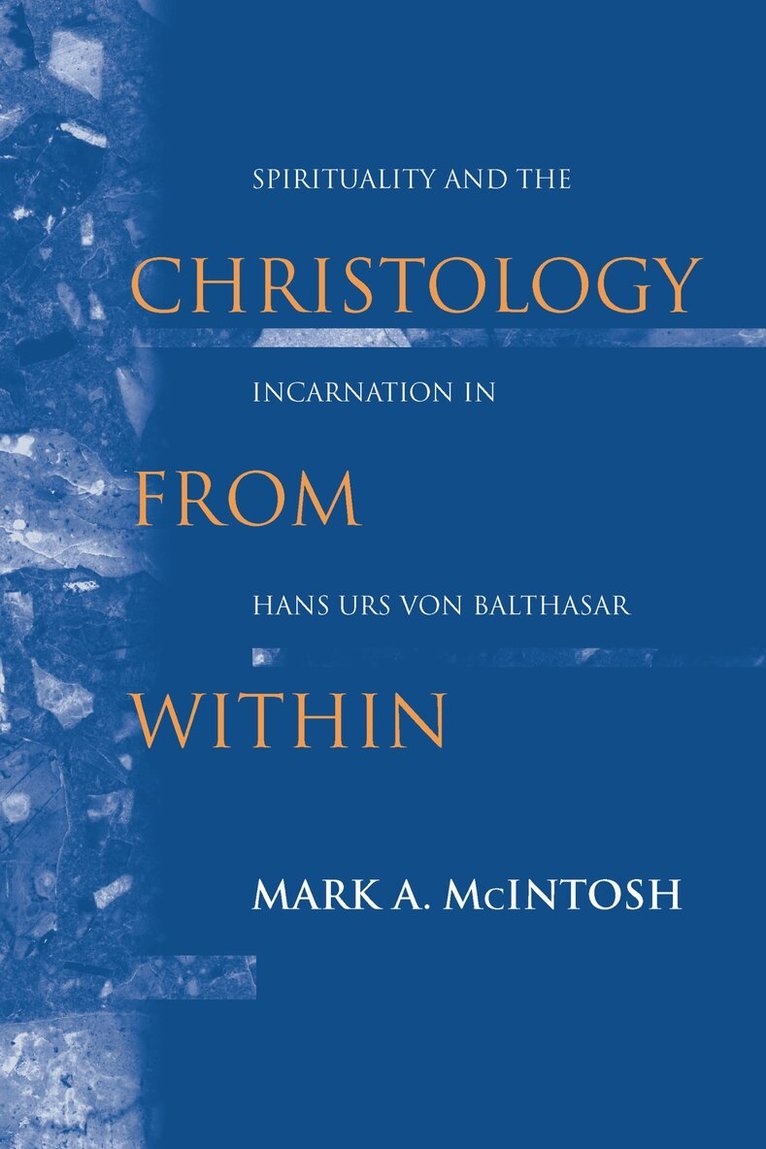
Mark McIntosh's examination of the unique christological thought of twentieth-century theologian Hans Urs von Balthasar provides a valuable example of how christology and spirituality can come together to offer a more humanistic idea of Christ.
1 344 kr
Skickas inom 10-15 vardagar
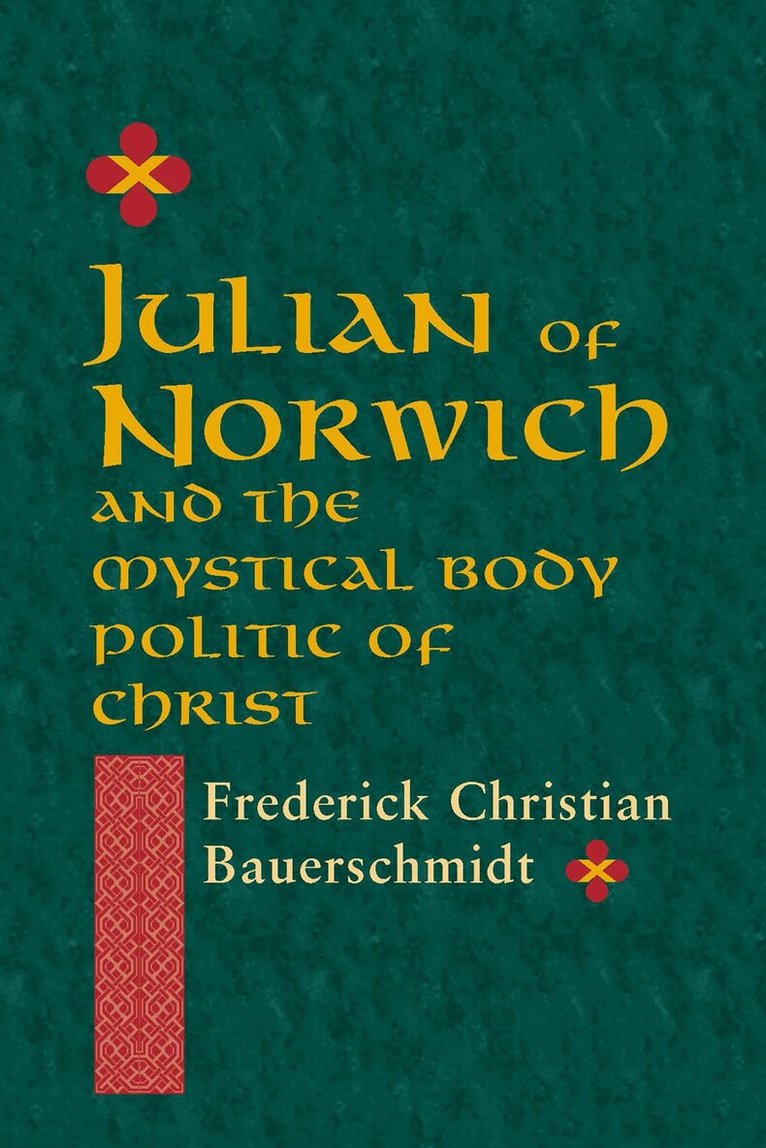
In May 1373, the English mystic Julian of Norwich was healed of a serious illness after experiencing a series of visions of the Blessed Virgin and of Christ's suffering. Her account, A Revelation of Love, is considered one of the most remarkable documents of medieval religious experience. In Julian of Norwich and the Mystical Body Politic of Christ, Frederick Bauerschmidt provides a close and historically sensitive reading of Julian's Revelation of Love that addresses the relationship between our understanding of God and our vision of human community. By locating Julian's images of Christ's body within the context of late medieval debates over the nature and extent of divine power, Bauerschmidt argues that Julian presents an alternative account of divine power in which the crucified body of Christ becomes the locus and shape of divine omnipotence. For Julian, divine power serves as the norm of all human exercise of power, rendering the possibility of the "mystical body politic of Christ"as the exemplary form of human community. In this reading, the theological is irreducibly political and the political is irreducibly theological. As such, Bauerschmidt shows Julian to be both a theologian of the first rank and one who "imagines the political."
Interruptions
Mysticism, Politics, and Theology in the Work of Johann Baptist Metz
Häftad, Engelska, 1998
422 kr
Skickas inom 10-15 vardagar
Johann Baptist Metz is one of the most important Roman Catholic theologians in the post-Vatican II period, however there is no comprehensive overview of his theological career. This book fills that gap. It offers careful analyses and summaries of Metz's work at the various stages of his career, beginning with his work on Heidegger and his collaboration with Karl Rahner.It continues with his work in the nineteen-sixties when he moved off in a radically different direction to found a "new political theology" culminating in his seminal work, Faith in History and Society. Metz addresses themes ranging from the situation of the Church "after Auschwitz," the future of religious life in the Church, and the relationship between religion and politics after the end of the cold war.J. Matthew Ashley covers all of Metz's writings along with his crucial relationships to figure like Karl Rahner, Martin Heidegger, Ernst Bloch, Walter Benjamin and the social critics of the early Frankfurt School. Interruptions shows that despite the dramatic turn in the nineteen-sixties there is an underlying continuity in Metz's thought. Ultimately, however, the underlying continuity in Metz's career is defined by a spirituality, a spirituality that is painfully yet hopefully open to the terrible suffering that characterizes our century, a spirituality founded in the Prophets, in Lamentations, and in the figures of Job and the Jesus of Mark's Gospel.This book shows how Metz has tried to find theological concepts adequate for expressing this spirituality—which he calls a "Mysticism of open Eyes" or of "suffering unto God"—and to work out its political implications. To this end the book has an opening chapter on the relationship between spirituality and theology, and a closing chapter that shows that the most fundamental difference between Rahner and Metz is rooted in the different Christian spiritual traditions out of which the two operate. Interruptions is essential reading for anyone interest in Spirituality and Mysticism and in their relation to political philosophy.
368 kr
Skickas inom 10-15 vardagar
In May 1373, the English mystic Julian of Norwich was healed of a serious illness after experiencing a series of visions of the Blessed Virgin and of Christ's suffering. Her account, A Revelation of Love, is considered one of the most remarkable documents of medieval religious experience. In Julian of Norwich and the Mystical Body Politic of Christ, Frederick Bauerschmidt provides a close and historically sensitive reading of Julian's Revelation of Love that addresses the relationship between our understanding of God and our vision of human community. By locating Julian's images of Christ's body within the context of late medieval debates over the nature and extent of divine power, Bauerschmidt argues that Julian presents an alternative account of divine power in which the crucified body of Christ becomes the locus and shape of divine omnipotence. For Julian, divine power serves as the norm of all human exercise of power, rendering the possibility of the "mystical body politic of Christ"as the exemplary form of human community. In this reading, the theological is irreducibly political and the political is irreducibly theological. As such, Bauerschmidt shows Julian to be both a theologian of the first rank and one who "imagines the political."
Christology from Within
Spirituality and the Incarnation in Hans Urs Von Balthasar
Häftad, Engelska, 1996
301 kr
Skickas inom 10-15 vardagar
Mark McIntosh's examination of the unique christological thought of twentieth-century theologian Hans Urs von Balthasar provides a valuable example of how christology and spirituality can come together to offer a more humanistic idea of Christ.
Angelic Wisdom
The Cherubim and the Grace of Contemplation in Richard of St. Victor
Häftad, Engelska, 1995
277 kr
Skickas inom 5-8 vardagar
Angelic Wisdom takes readers on a contemplative and theological journey into the angelic wisdom at the heart of the symbol of the cherubim. As a guide for this journey, Chase uses Richard of St. Victor's twelfth-century treatise on contemplation 'De arca mystica.' Angelic Wisdom presents new interpretations and evaluations of medieval spirituality, and serves as a spiritual guide for those who seek God through the grace of contemplation. In this graceful, deeply learned book Steven Chase takes readers on a contemplative and theological journey into the angelic wisdom at the heart of the symbol of the cherubim. Providing the guiding hand for this journey is Richard of St. Victor whose twelfth century treatise on contemplation, De arca mystica, focuses on God's instructions to Moses on the construction of the ark and cherubim in Exodus 25: 18-20. The text from Exodus contains the promise of God to Moses, and finally to us, that atop the ark, between the two cherubim, God will meet with and speak to his people.
1 077 kr
Skickas inom 10-15 vardagar
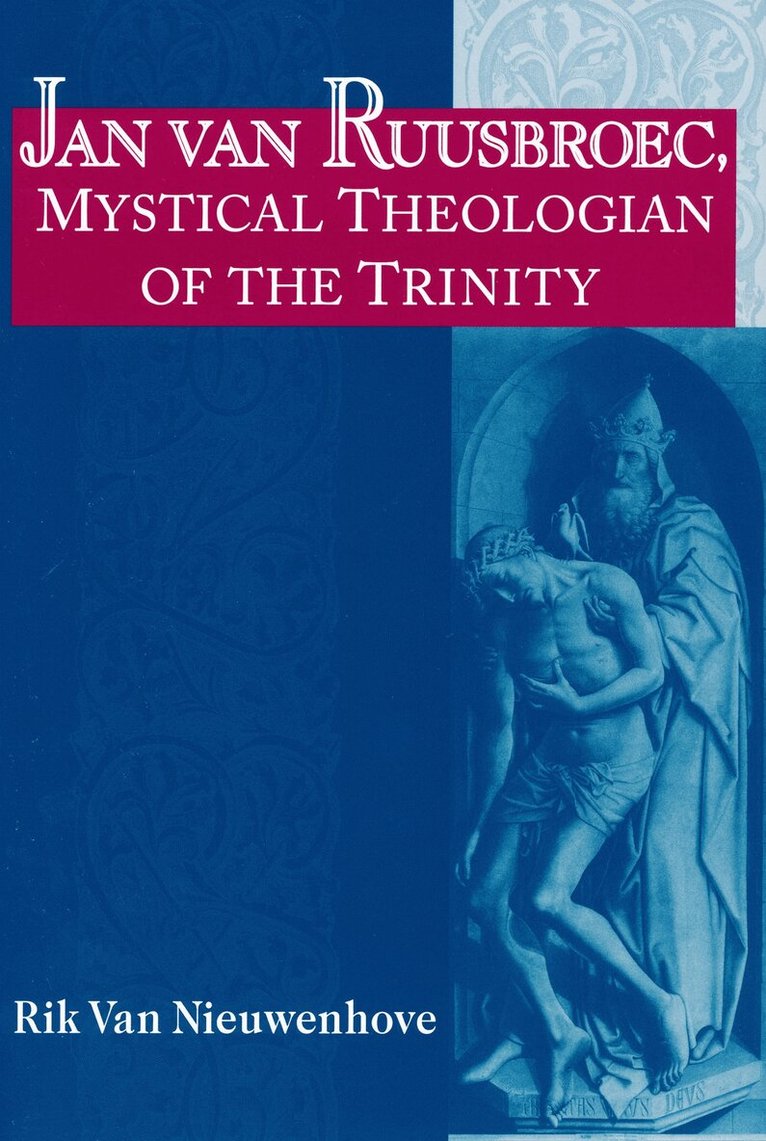
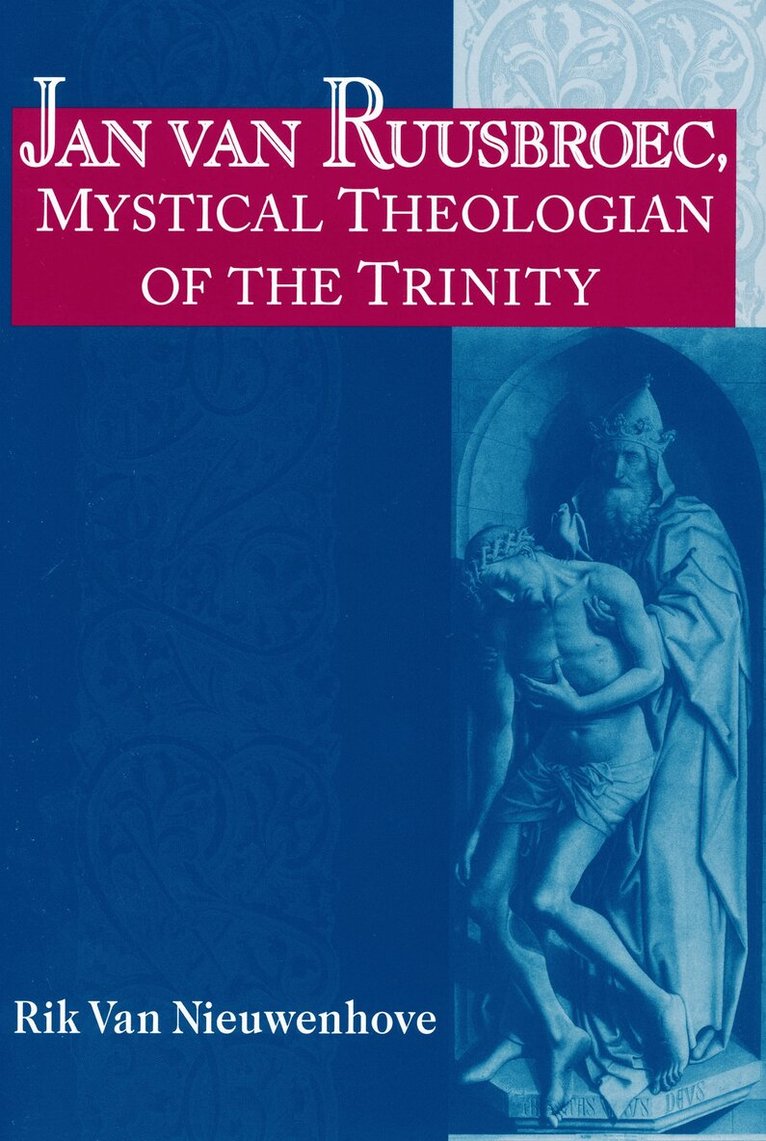
Jan van Ruusbroec (1293–1381), a Flemish mystical theologian, was one of the most original Trinitarian thinkers in the medieval West. Yet, his works—written in Middle-Dutch—have remained relatively unknown. In this book, Rik Van Nieuwenhove presents the first major study in English of Ruusbroec's thought. Van Nieuwenhove explores in detail Ruusbroec's theology of the Trinity, his anthropology, Christology, and his understanding of union with God.Van Nieuwenhove's study reveals that Ruusbroec, while incorporating aspects of the rich theological and spiritual tradition that preceded him, wrote at the beginning of a modern age in which mystical theology changed radically in nature. Ruusbroec claimed that the divine Persons are subject to an eternal dynamic of procession or out-going from the Father, on the one hand, and returning to the shared divine essence, on the other. The human person is called to participate in this continuous ebbing and flowing by leading a life that combines contemplation and charitable activity. Ruusbroec argued that mysticism should be interpreted in terms of a transformation of the human person rather than in terms of an immediate experience of God.Jan van Ruusbroec, Mystical Theologian of the Trinity is an innovative, original study of one of late medieval theology's undiscovered treasures. Written in clear, accessible language, this new interpretation of Ruusbroec's theology will appeal to all those interested in mysticism, medieval theology, and the doctrine of the Trinity.
261 kr
Skickas inom 10-15 vardagar
Jan van Ruusbroec (1293–1381), a Flemish mystical theologian, was one of the most original Trinitarian thinkers in the medieval West. Yet, his works—written in Middle-Dutch—have remained relatively unknown. In this book, Rik Van Nieuwenhove presents the first major study in English of Ruusbroec's thought. Van Nieuwenhove explores in detail Ruusbroec's theology of the Trinity, his anthropology, Christology, and his understanding of union with God.Van Nieuwenhove's study reveals that Ruusbroec, while incorporating aspects of the rich theological and spiritual tradition that preceded him, wrote at the beginning of a modern age in which mystical theology changed radically in nature. Ruusbroec claimed that the divine Persons are subject to an eternal dynamic of procession or out-going from the Father, on the one hand, and returning to the shared divine essence, on the other. The human person is called to participate in this continuous ebbing and flowing by leading a life that combines contemplation and charitable activity. Ruusbroec argued that mysticism should be interpreted in terms of a transformation of the human person rather than in terms of an immediate experience of God.Jan van Ruusbroec, Mystical Theologian of the Trinity is an innovative, original study of one of late medieval theology's undiscovered treasures. Written in clear, accessible language, this new interpretation of Ruusbroec's theology will appeal to all those interested in mysticism, medieval theology, and the doctrine of the Trinity.
Sacrifice and Delight in the Mystical Theologies of Anna Maria Van Schurman and Madame Jeanne Guyon
Häftad, Engelska, 2014
301 kr
Skickas inom 10-15 vardagar
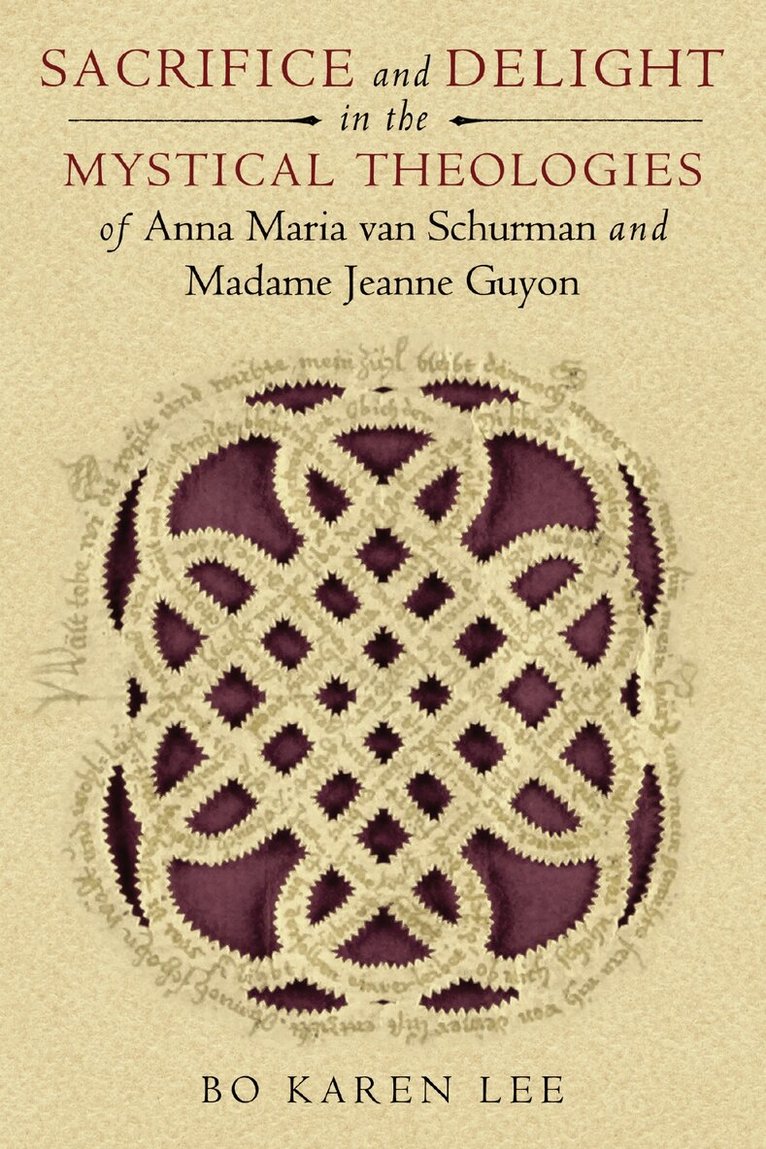
In this compelling study of two seventeenth-century female mystics, Bo Karen Lee examines the writings of Anna Maria van Schurman and Madame Jeanne Guyon, who, despite different religious formations, came to similar conclusions about the experience of God in contemplative prayer. Van Schurman was born into a Dutch Calvinist family and became a superb scriptural commentator before undergoing a dramatic religious conversion and joining the Labadist community, a Pietistic movement. Guyon was a French layperson whose thought would be identified with Quietism—a spiritual path that was looked upon with suspicion both by the French Catholic Church and by Rome.Lee analyzes and compares the themes of self-denial and self-annihilation in the writings of these two mystics. In van Schurman's case, the focus is on the distinction between scholastic knowledge of God and the intima notitia Dei accessible only by radical self-denial. In Guyon's case, it is on the union with God that is accessible only through a painful self-annihilation. For both authors, Lee demonstrates that the desire for enjoyment of God plays an important role as the engine of the soul's progress away from self-centeredness. The appendices offer facing Latin and English translations of two letters by van Schurman and a selection from her Eukleria.