Studies in the Global Nineteenth Century – serie
Visar alla böcker i serien Studies in the Global Nineteenth Century. Handla med fri frakt och snabb leverans.
4 produkter
4 produkter
Cities and Fantasy Across Cultures, 1830–1930
Urban Imaginaries and Transnational Encounters
Inbunden, Engelska, 2026
2 652 kr
Kommande
This innovative collection of essays examines the impact of the city on fantasy and of fantasy on understandings of the city during a period of increased urbanization and cultural connectedness (1830–1930). Technologies such as the railroad, steam power, and the telegraph increased the speed and frequency of both urban migration and urban cross-cultural encounters, alongside conflicts stemming from colonialism, differing ideologies, travel, and trade; these urban experiences generated the need for new and often fantastic literary representations of the city. By juxtaposing different urban spaces for analysis, moving away from (national) periodizations, and highlighting interdisciplinary methods, the essays in this volume uncover a significant transnational dialogue, mediated via the lens of the fantastic, that occurs both within and among cities during this period.Divided into three sections, Urban Histories and Speculative Alternatives, Urban Form and the Fantastic, and Transnational Mobilities and Urban Imaginaries, the book actively puts different cities and fantastic traditions into conversation – in metaphorical, physical, or symbolic terms. The collection’s cross-cultural prisms and interdisciplinary approaches illuminate the global reach of fantasy and the dynamic intersections between the fantastic and cities from a wide range of countries, including Argentina, Chile, China, Egypt, Germany, Ghana, Great Britain, India, Indonesia, Japan, Peru, Russia, Spain, South Africa, Sudan, and the United States.
1 967 kr
Skickas inom 7-10 vardagar
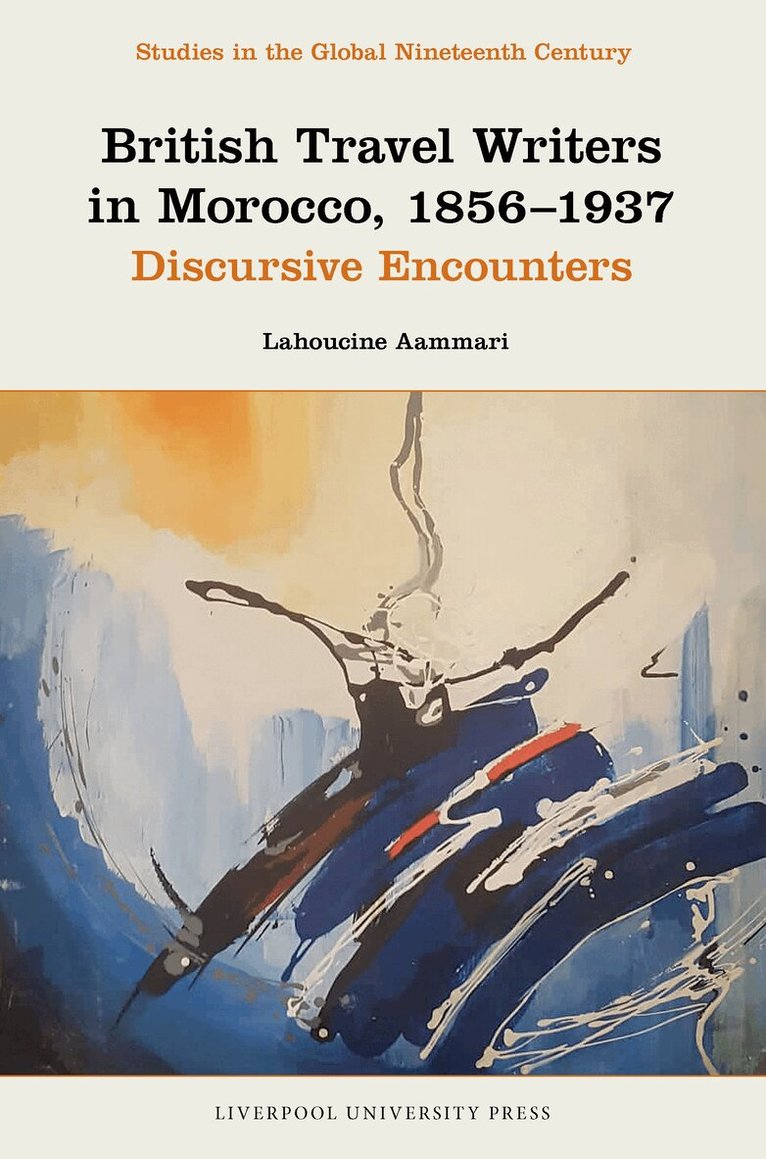
British Travel Writers in Morocco, 1856–1937: Discursive Encounters reflects the growing academic interest in travel writing as a literary genre shaped by colonial and imperial motivations that transcend both literary canons and geographical boundaries. The book offers a compelling overview of British travelogues about Morocco during the late nineteenth and early twentieth centuries, providing new insights for Maghrebi and postcolonial studies. Owing to its interdisciplinary nature, the travelogue genre surpasses traditional borders to present elaborate and critically engaging accounts of the various, though often asymmetric, physical and discursive encounters that occurred during both the pre-colonial and colonial periods. The critical and intellectual significance of this genre is informed by post-structuralist, colonialist, and modernist theories – with their diverse analytical tools – as well as by the postcolonial commitment to interrogate colonial legacies and archives.The book analyzes a group of texts written by British travellers in Morocco between 1856 and 1937, including Walter B. Harris, Robert S. Watson, Joseph Thomson, Hugh Stutfield, Frances Macnab, and Richard C. Woodville, among others. These travel writers provide substantial and heterogenous accounts that meticulously record, describe, and translate the constitution and evolution of Britain’s cultural imaginary and consciousness of Morocco, its ‘dissemiNation’ of human civilisation, and its imperial ambitions, assumptions, and rhetoric.
2 569 kr
Kommande
Icelanders Eastward: Sailors and the Emerging Modern World is the first translation from Icelandic of the narratives of two men – Árni Magnússon and Eiríkur Björnsson – who explored the world in the final years of the eighteenth century, sailing from Iceland to China in the Danish colonial service. During their adventures, they observed the lives of enslaved people in Africa, fought in the Russian–Ottoman wars in the Middle East, worked on fishing and whaling ships in Greenland, and lived in Danish settlements in Tamil Nadu, India. They are on-the-ground witnesses to the expansion of European colonial states and the impact of these states on the lives of the people of Africa, India, and China, and on the Inuit of Greenland. Their stories also illuminate shipboard life for ordinary sailors, demonstrating how European trading companies and their global ambitions were affecting the lives of Europeans at home as well as in the colonies and helping to shape the colonial empire. The book explores how ordinary people gained agency over their lives in the milieux of these trading companies, and how sailors such as Árni and Eiríkur escaped the restrictions of the laws of the state and forged new lives for themselves across the globally connected world.
2 247 kr
Skickas inom 7-10 vardagar
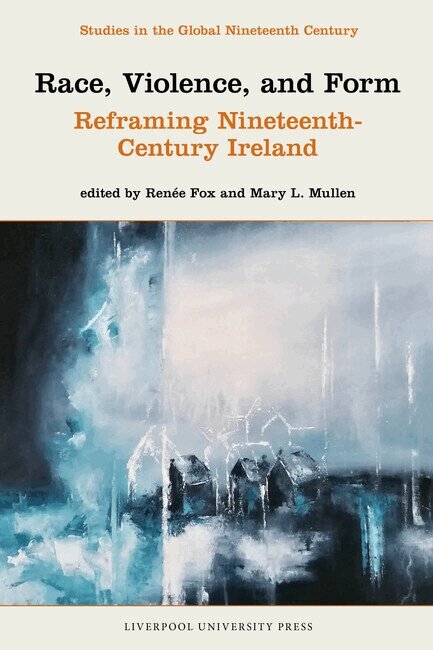
Irish literary studies has long subordinated the nineteenth century to the experimental triumphs of Irish modernism, variously dismissing its achievements as too indebted to British forms to be truly Irish, too transparently rooted in Irish history and politics to be globally or universally relevant, and too aesthetically weak to be worth close formal analysis. Race, Violence, and Form: Reframing Nineteenth-Century Ireland challenges these critical orthodoxies, employing new methodological frameworks that expand how we understand the global, racial, formal, periodized, and political scope of nineteenth-century Irish literature. The essays in the collection move fluidly between history and form, archive and imagination, past and present, and Ireland and elsewhere as they re-examine the genres of nineteenth-century Ireland, coin new aesthetic categories, and theorize Ireland’s mobile place in world networks. Focusing as much on how literary criticism has marginalized and delimited nineteenth-century Irish literature as on the new, more expansive literary and cultural histories that this literature catalyzes, the collection argues that the project of re-reading nineteenth-century Ireland challenges accepted methodologies, imperial hierarchies, and narratives of exceptionalism whose reach extends far beyond Ireland itself. Race, Violence, and Form thus not only offers exciting new directions for Irish studies scholarship, but also models an approach to nineteenth-century literary studies that de-emphasizes insularity in favor of global, collaborative, and open-ended imagining.