Studies of Policy Reform - Böcker
Visar alla böcker i serien Studies of Policy Reform. Handla med fri frakt och snabb leverans.
7 produkter
7 produkter
1 427 kr
Skickas inom 3-6 vardagar
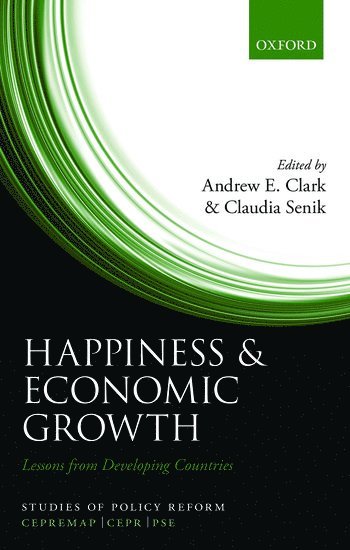
This volume, arising from a PSE-CEPREMAP-DIMeco conference, includes contributions by the some of the best-known researchers in happiness economics and development economics, including Richard Easterlin, who gave his name to the 'Easterlin paradox' that GDP growth does not improve happiness over the long run. Many chapters underline the difficulty of increasing well-being in developing countries, including China, even in the presence of sustained income growth. This is notably due to the importance of income comparisons to others, adaptation (so that we get used to higher income), and the growing inequality of income. In particular, rank in the local income distribution is shown to be important, creating a beggar-thy-neighbour effect in happiness. Wealth comparisons in China are exacerbated by the gender imbalance, as the competition for brides creates a striking phenomenon of conspicuous consumption on the housing market. Policy has to be aware of these effects. This applies in particular to those who try to use self-reported subjective well-being in order to generate a 'social subjective poverty line', which is a key issue in developing countries. However, the news is not only bad from the point of view of developing countries. One piece of good news is that GDP growth often seems to go hand-in-hand with lower happiness inequality, and thereby reduces the risk of extreme unhappiness.
834 kr
Skickas inom 5-8 vardagar
Over the past couple of decades, differentials in the level of private contributions to charitable organizations have become a central matter of public policy. Because private charitable contributions finance many socially valuable activities (for example, education and the arts), many governments have tried to boost private philanthropy through various active policy interventions. Furthermore, the temptation to rely on private contributions to finance the provision of public goods has increased substantially in recent years as fiscal constraints have become tighter. Yet there is little robust quantitative evidence regarding the differentials in private charitable giving across countries, and more importantly very little consensus on why these differentials may exist. This volume provides an original, comparative, and historical analysis of charitable giving and of tax policies towards private philanthropy across different countries. It sheds new light on the determinants of private philanthropy and offers interesting practical insights for improving tax policies towards charitable giving.
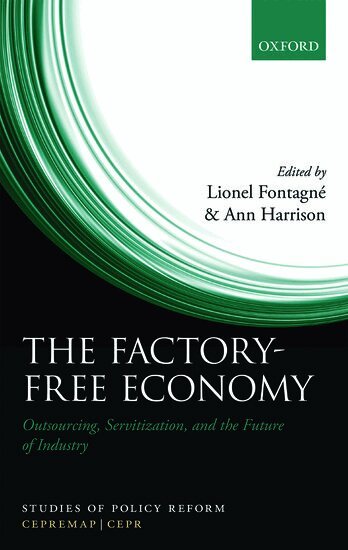
The Factory-Free Economy
Outsourcing, Servitization, and the Future of Industry
Inbunden, Engelska, 2017
1 485 kr
Skickas inom 3-6 vardagar
De-industrialization, accelerated by the financial crisis, is a long term process. The comparative advantage of emerging economies shifted towards more advanced goods and their growing populations commanded an increasing share in global demand. This shift towards a factory-free economy in high income countries has drawn the attention of policy makers in North America and Europe. Some politicians have articulated alarming views, initiating mercantilist or 'beggar-thy-neighbour' cost-competitiveness policies. Yet companies that concentrate research and design innovations at home but no longer have any factories there may be the norm in the future. This volume proposes an economic analysis of this phenomenon and includes 11 contributions which complement each other and tackle the problem from different angles.The evidence in this book suggests that de-industrialization is a process that happens over time in all countries, even China. One implication is that criticism of China is not likely to provide a solution to these long term trends. Another implication is that the distinction between manufacturing and services is likely to become increasingly blurry. More manufacturing firms are engaging in services activities, and more wholesale firms are engaging in manufacturing. One optimistic perspective suggests that industrial country firms may be able to exploit the high-value added and skill-intensive activities associated with design and innovation, as well as distribution, which are all components of the global value chain for manufacturing.Although this ongoing transformation of the industrial economies may be consistent with evolving comparative advantage, it has significant short-run costs and requires far-sighted investments. These include the costs to workers who are caught in the shift from an industrial to a service economy, and the need to invest in new infrastructure and education to prepare coming generations for their changing roles.
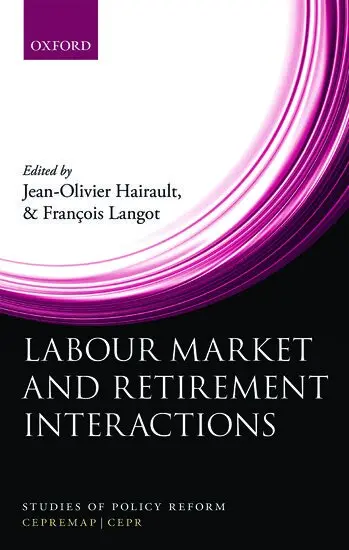
Labour Market and Retirement Interactions
A new perspective on employment for older workers
Inbunden, Engelska, 2016
998 kr
Skickas inom 7-10 vardagar
This volumes examines the interaction of labour market conditions and retirement decisions. Based on French and US data, it provides empirical evidence and quantitative analysis of retirement and labor market flows. It studies the horizon effect and uses French individual data and probit models to show that the horizon effect does matter for the probability of being employed before the early retirement age. It analyses the influence of the retirement age on labour-market equilibrium, as well as the impact of labour market conditions, especially the importance of unemployment risk, on retirement decisions.
1 585 kr
Skickas inom 3-6 vardagar
The 2008 financial crisis put an end to an era of sustained economic growth in Europe. The size of the shock differed across European countries and affected economies in different ways. Yet despite this heterogeneity, most European countries suffered a prolonged period of economic slowdown which raised concerns about the risk of a secular stagnation in Europe. This book focuses on labour productivity in Europe, one of the main drivers of growth and prosperity. Although productivity trends became the focus of policy interest in the immediate aftermath of the recession in the UK, 'productivity puzzles' received much less attention in the rest of Europe. These 'puzzles', which are apparent to greater or lesser extents in most European economies, centre on the marked decline in labour productivity growth which occurred with the on-set of recession. They are puzzles because, in neo-classical economics, firms respond to demand shocks by laying off workers, thus maintaining labour productivity and limiting growth in unit labour costs. Yet this didn't happen in this recession - at least, not to the same extent as in previous recessions, except in Spain. This book brings together contributions from leading European economists who analyse production models and macroeconomic policies, with specific focus on European countries that represent around 60% of the EU GDP. Chapters on France, Germany, the UK, and Spain provide new evidences at the firm/workplace level, and stress the role of transitory labour market mechanisms
1 268 kr
Skickas inom 7-10 vardagar
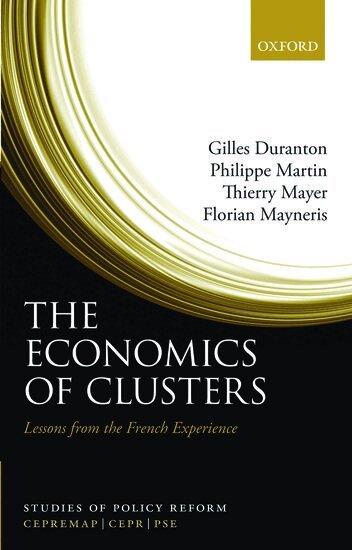
The development of clusters of economic activity is an important feature of industrial policy. Industry clusters have long fascinated economists and geographers alike, the most renowned being Silicon Valley which is seen by many as the blueprint for regional development, innovation, and growth. Several clusters have also developed across Europe, including SiliconFen in Cambridge and Minalogic in Grenoble, and in recent years cluster policies have become popular among policy makers as a useful tool for informing decisions on industrial, regional, and public policy. This book looks at the mechanisms at work behind cluster dynamics, the gains that can be expected from increased clustering, and the determinants of cluster policies. Focusing on France, it provides a theoretical and empirical study of clusters, their success and failures, and the policy lessons that can be applied to the wider international community. France is particularly interesting because there is a long tradition of strong government intervention regarding the location of economic activity, and cluster initiatives are relatively unified across the country. This book shows that, whilst gains from clusters do exist, some firms tend to cluster too much and that spatial agglomeration is only successful to a point, after which congestion effects can offset these gains. It questions the need and the feasibility of cluster policies aimed at interfering directly in the concentration process of firms, and thus looks beyond the general enthusiasm for clusters.
1 391 kr
Skickas inom 5-8 vardagar
This is an open access title available under the terms of a CC BY-NC-ND 3.0 International licence. It is free to read at Oxford Scholarship Online and offered as a free PDF download from OUP and selected open access locations. The concepts of cultural diversity and cultural identity are at the forefront of the political debate in many western societies. In Europe, the discussion is stimulated by the political pressures associated with immigration flows, which are increasing in many European countries. The imperatives that current immigration trends impose on European democracies bring to light a number of issues that need to be addressed. What are the patterns and dynamics of cultural integration? How do they differ across immigrants of different ethnic groups and religious faiths? How do they differ across host societies? What are the implications and consequences for market outcomes and public policy? Which kind of institutional contexts are more or less likely to accommodate the cultural integration of immigrants? All these questions are crucial for policy makers and await answers. This book aims to provide a stepping stone to the debate. Taking an economic perspective, this edited collection presents a current, comparative picture of the process of cultural integration of immigrants across Europe. It documents the main economic debates on the causes and consequences of cultural integration of immigrants, and provides detailed descriptions of the cultural and economic integration process in seven main European countries, including France, Germany, Italy, Spain, Sweden, Switzerland, and the United Kingdom. It also compares the European context with the integration of immigrants in the United States.