Philippe Askenazy – författare
Visar alla böcker från författaren Philippe Askenazy. Handla med fri frakt och snabb leverans.
11 produkter
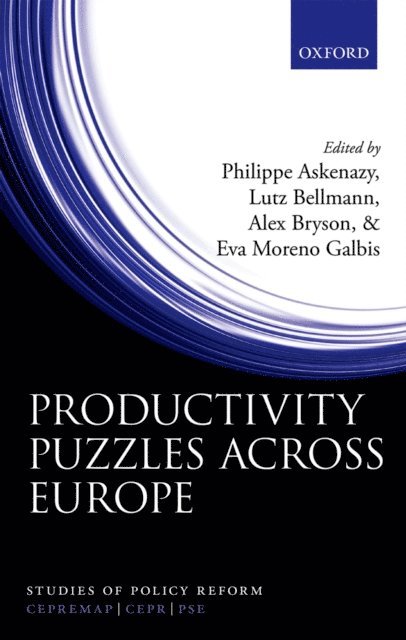
Productivity Puzzles Across Europe
Av Eva Moreno Galbis, Alex Bryson m. fl.
E-bok, 2016
1039 kr
Lägg i varukorg
The 2008 financial crisis put an end to an era of sustained economic growth in Europe. The size of the shock differed across European countries and affected economies in different ways. Yet despite this heterogeneity, most European countries suffered a prolonged period of economic slowdown which …
Productivity Puzzles Across Europe
Av Philippe Askenazy, Philippe Askenazy m. fl.
Inbunden, 2016
1733 kr
Lägg i varukorg
The 2008 financial crisis put an end to an era of sustained economic growth in Europe. The size of the shock differed across European countries and affected economies in different ways. Yet despite this heterogeneity, most European countries suffered a prolonged period of economic slowdown which …
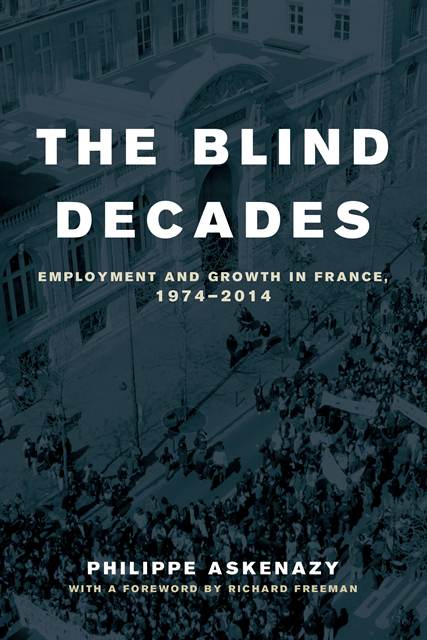
Blind Decades
Employment and Growth in France, 1974-2014
Inbunden, 2014
580 kr
Lägg i varukorg
France is often described as one of the last Western economies unable to reform itself in the face of globalization. Yet its economy has not fallen by the wayside and has even resisted the great recession that began in 2008. By interlinking historical, economic, and political factors and by …
Blind Decades
Employment and Growth in France, 1974-2014
E-bok, 2014
981 kr
Lägg i varukorg
France is often described as one of the last Western economies unable to reform itself in the face of globalization. Yet its economy has not fallen by the wayside and has even resisted the great recession that began in 2008. By interlinking historical, economic, and political factors and by …
Share the Wealth
How to End Rentier Capitalism
Häftad, 2021
43 kr
Lägg i varukorg
How can we reduce inequalities? How can we make work get better recognition and better pay?Philippe Askenazy in this new book shows that the current share of wealth is far from natural; it results from rising rents and their capture by the actors best endowed in the economic game. In this race for …
Share the Wealth
How to End Rentier Capitalism
E-bok, 2021
134 kr
Lägg i varukorg
How can we reduce inequalities? How can we make work get better recognition and better pay? Philippe Askenazy in this new book shows that the current share of wealth is far from natural; it results from rising rents and their capture by the actors best endowed in the economic game. In this race for …
Qualité de l'emploi et productivité
Av Christine Erhel, Philippe Askenazy
E-bok, 2017
89 kr
Lägg i varukorg
En France comme dans la plupart des pays européens, la croissance de la productivité du travail a ralenti depuis 2008, et cette tendance semble désormais toucher aussi les États-Unis. Les explications souvent avancées apparaissent insuffisantes, qu’elles insistent sur les problèmes de mesure liés …
Qualité de l'emploi et productivité
Av Christine Erhel, Philippe Askenazy
E-bok, 2017
89 kr
Lägg i varukorg
En France comme dans la plupart des pays européens, la croissance de la productivité du travail a ralenti depuis 2008, et cette tendance semble désormais toucher aussi les États-Unis. Les explications souvent avancées apparaissent insuffisantes, qu’elles insistent sur les problèmes de mesure liés …
Les soldes de la loi Raffarin : le contrôle du grand commerce alimentaire
Av Katia WEIDENFELD, Philippe Askenazy
E-bok, 2007
34 kr
Lägg i varukorg
L?année 1996 a été marquée par deux lois majeures concernant le commerce en France : d?une part, la loi du 1 er juillet sur la loyauté et l?équilibre des relations commerciales, dite loi Galland, alors ministre délégué aux Finances, qui, entre autres, accentue l?interdiction de la revente a perte ; …
Les soldes de la loi Raffarin : le contrôle du grand commerce alimentaire
Av Katia WEIDENFELD, Philippe Askenazy
E-bok, 2007
33 kr
Lägg i varukorg
L?année 1996 a été marquée par deux lois majeures concernant le commerce en France : d?une part, la loi du 1 er juillet sur la loyauté et l?équilibre des relations commerciales, dite loi Galland, alors ministre délégué aux Finances, qui, entre autres, accentue l?interdiction de la revente a perte ; …
Tous rentiers !
Pour une autre répartition des richesses
E-bok, 2016
195 kr
Lägg i varukorg
Comment réduire les inégalités et mieux répartir les revenus ? Comment faire pour que chacun récupère sa « part de rente » ? Dans ce livre, Philippe Askenazy nous le démontre : la distribution actuelle des richesses est loin d’être naturelle ; elle résulte de l’explosion des rentes et de leur …