SUNY series in the Sociology of Culture – serie
Visar alla böcker i serien SUNY series in the Sociology of Culture. Handla med fri frakt och snabb leverans.
12 produkter
12 produkter
566 kr
Skickas inom 3-6 vardagar
This book interprets popular American belief and sentiment about cities, suburbs, and small towns in terms of community ideologies. Based on in-depth interviews with residents of American communities, it shows how people construct a sense of identity based on their communities, and how they perceive and explain community problems (e.g., why cities have more crime than their suburban and rural counterparts) in terms of this identity.Hummon reveals the changing role of place imagery in contemporary society and offers an interpretation of American culture by treating commonplaces of community belief in an uncommon way-as facets of competing community ideologies. He argues that by adopting such ideologies, people are able to "make sense" of reality and their place in the everyday world.
1 088 kr
Tillfälligt slut
Describes the Russian rock music counterculture and how it is changing in response to Russia's transition from a socialist to a capitalist society. It explores the lived experiences, the thoughts and feelings of the rock musicians as they meet the challenges of change.Notes From Underground offers the first Western sociological study of rock music and counterculture in Russian society. Based on participant observation, in-depth interviews, and life-history analysis, the author provides a detailed ethnographic examination of the origins and local meanings of rock music and the countercultural way of life of rock musicians in St. Petersburg during the socialist period of Russian history. Rock music served as the basis for alternative forms of individual and collective identity which stood as beacons of difference and resistance in the bleak cultural environment of socialist industrial society. Cushman explores the experiences of members of the St. Petersburg musical community after the dissolution of the Soviet Union in order to shed light on the following questions: What happens to oppositional "underground" culture when it "comes up from the underground?" What is the fate of Russian rock music and those who make it under new conditions of the rapid capitalist rationalization of post-Soviet Russian society?The book traces the experiences of musicians in new capitalist culture markets, both in Russia and in Western societies to illustrate the more general process of "commercialization of dissent" which is taking place in post-communist societies. Russia's entrance into the path of Western capitalist modernity is viewed not so much as a path to freedom and cultural autonomy, but as the intersection of two trajectories of modernity that has given rise to new and unique cultural dilemmas. It concludes with an examination of important theoretical issues about the problematic relationship between capitalism, cultural freedom, and democracy in contemporary Russian society.
373 kr
Tillfälligt slut
Describes the Russian rock music counterculture and how it is changing in response to Russia's transition from a socialist to a capitalist society. It explores the lived experiences, the thoughts and feelings of the rock musicians as they meet the challenges of change.Notes From Underground offers the first Western sociological study of rock music and counterculture in Russian society. Based on participant observation, in-depth interviews, and life-history analysis, the author provides a detailed ethnographic examination of the origins and local meanings of rock music and the countercultural way of life of rock musicians in St. Petersburg during the socialist period of Russian history. Rock music served as the basis for alternative forms of individual and collective identity which stood as beacons of difference and resistance in the bleak cultural environment of socialist industrial society. Cushman explores the experiences of members of the St. Petersburg musical community after the dissolution of the Soviet Union in order to shed light on the following questions: What happens to oppositional "underground" culture when it "comes up from the underground?" What is the fate of Russian rock music and those who make it under new conditions of the rapid capitalist rationalization of post-Soviet Russian society?The book traces the experiences of musicians in new capitalist culture markets, both in Russia and in Western societies to illustrate the more general process of "commercialization of dissent" which is taking place in post-communist societies. Russia's entrance into the path of Western capitalist modernity is viewed not so much as a path to freedom and cultural autonomy, but as the intersection of two trajectories of modernity that has given rise to new and unique cultural dilemmas. It concludes with an examination of important theoretical issues about the problematic relationship between capitalism, cultural freedom, and democracy in contemporary Russian society.
Moral Codes and Social Structure in Ancient Greece
A Sociology of Greek Ethics From Homer to the Epicureans and Stoics
Inbunden, Engelska, 1996
1 088 kr
Tillfälligt slut
An exercise in cultural sociology, Moral Codes and Social Structure in Ancient Greece seeks to explicate the dynamic currents of classical Hellenic ethics and social philosophy by situating those idea-complexes in their socio-historical and intellectual contexts. Central to this enterprise is a comprehensive historical-sociological analysis of the Polis form of social organization, which charts the evolution of its basic institutions, roles, statuses, and class relations. From the Dark Age period of "genesis" on to the Hellenistic era of "eclipse" by the emergent forces of imperial patrimonialism, Polis society promoted and sustained corresponding normative codes which mobilized and channeled the requisite emotive commitments and cognitive judgments for functional proficiency under existing conditions of life. The aristocratic warrior-ethos canonized in the Homeric epics; the civic ideology of equality and justice espoused by reformist lawgivers and poets; the democratization of status honor and martial virtue that attended the shift to hoplite warfare; the philosophical exaltation of the Polis-citizen bond as found in the architectonic visions of Plato and Aristotle; and the subsequent retreat from civic virtues and the interiorization of value articulated by the Skeptics, Epicureans, and Stoics, new age philosophies in a world remade by Alexander's conquests-these are the key phases in the evolving currents of Hellenic moral discourse, as structurally framed by transformations within the institutional matrix of Polis society.
Moral Codes and Social Structure in Ancient Greece
A Sociology of Greek Ethics From Homer to the Epicureans and Stoics
Häftad, Engelska, 1996
654 kr
Skickas inom 3-6 vardagar
An exercise in cultural sociology, Moral Codes and Social Structure in Ancient Greece seeks to explicate the dynamic currents of classical Hellenic ethics and social philosophy by situating those idea-complexes in their socio-historical and intellectual contexts. Central to this enterprise is a comprehensive historical-sociological analysis of the Polis form of social organization, which charts the evolution of its basic institutions, roles, statuses, and class relations. From the Dark Age period of "genesis" on to the Hellenistic era of "eclipse" by the emergent forces of imperial patrimonialism, Polis society promoted and sustained corresponding normative codes which mobilized and channeled the requisite emotive commitments and cognitive judgments for functional proficiency under existing conditions of life. The aristocratic warrior-ethos canonized in the Homeric epics; the civic ideology of equality and justice espoused by reformist lawgivers and poets; the democratization of status honor and martial virtue that attended the shift to hoplite warfare; the philosophical exaltation of the Polis-citizen bond as found in the architectonic visions of Plato and Aristotle; and the subsequent retreat from civic virtues and the interiorization of value articulated by the Skeptics, Epicureans, and Stoics, new age philosophies in a world remade by Alexander's conquests-these are the key phases in the evolving currents of Hellenic moral discourse, as structurally framed by transformations within the institutional matrix of Polis society.
515 kr
Tillfälligt slut
Points the way toward a world in which we might feel more connected to and responsible for each other.In a world which often is labeled a "global village," who exactly is our neighbor? Who is My Neighbor? explores the emergence of what is called "social affinity," a concept bridging classical notions of social cohesion with contemporary social psychology. The ideas underlying social affinity focus on the sentiment of moral obligation which holds society together.In order to understand how a sense of social affinity emerges within individuals, the author breaks down the concept into three dimensions-social consciousness, sentiment, and action-and their constitutive elements. These dimensions are then brought together in a single model demonstrating how social affinity and the meaning our values have for us are shaped by our social location and the self-interest which permeates our culture.
1 399 kr
Tillfälligt slut
Explores Americans' increasing attraction to alternative medicine by looking at two alternative health networks, one "New Age," the other conservative Christian.Despite having one of the most advanced systems of medicine in the world, American consumers are increasingly turning to alternative medicine. Through a study of two alternative health networks, one "New Age" and the other conservative Christian, A Diagnosis for Our Times examines the health regimes followed by clients of alternative practitioners, the way people find meaning in non-Western and pre-modern health traditions, and the relationship between alternative health and other movements for change. In sharp contrast with other work on this subject, this book characterizes alternative health as a social movement and a "cultural laboratory" where people discover new values and new ways of living that may have larger implications. The authors discover surprising commonalities between the cultural left and the religious right when it comes to healthcare, and they evaluate the potential of alternative health to contribute to a new healthcare paradigm.
394 kr
Tillfälligt slut
Explores Americans' increasing attraction to alternative medicine by looking at two alternative health networks, one "New Age," the other conservative Christian.Despite having one of the most advanced systems of medicine in the world, American consumers are increasingly turning to alternative medicine. Through a study of two alternative health networks, one "New Age" and the other conservative Christian, A Diagnosis for Our Times examines the health regimes followed by clients of alternative practitioners, the way people find meaning in non-Western and pre-modern health traditions, and the relationship between alternative health and other movements for change. In sharp contrast with other work on this subject, this book characterizes alternative health as a social movement and a "cultural laboratory" where people discover new values and new ways of living that may have larger implications. The authors discover surprising commonalities between the cultural left and the religious right when it comes to healthcare, and they evaluate the potential of alternative health to contribute to a new healthcare paradigm.
1 057 kr
Tillfälligt slut
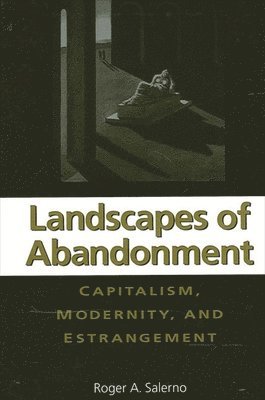
Examines the relationship of modern life, including modern capitalism, to feelings and phenomena of abandonment.Using social theory and cultural analysis, Roger A. Salerno explores the relationship of abandonment to the construction of contemporary capitalistic cultures. Beginning with an array of narratives on the emergence of capitalism in the West and its undermining of traditional social institutions and structures, he provides an overview of both the definition of and reactions to abandonment, analyzing its historical, social, and psychological dimensions. The author contends that abandonment anxiety and feelings of estrangement not only have deep psychological roots, but also important social causes and cultural manifestations such as a quest for security or a hunger for commodities. Salerno surveys important contributions of writers, artists, philosophers, and social scientists and how their work expresses this sense of modern abandonment. He also examines how and why this phenomenon has become a central motif in renderings of community, the environment, and the process of globalization and presents a richer understanding of our modern social condition.
353 kr
Skickas inom 7-10 vardagar
Examines the relationship of modern life, including modern capitalism, to feelings and phenomena of abandonment.Using social theory and cultural analysis, Roger A. Salerno explores the relationship of abandonment to the construction of contemporary capitalistic cultures. Beginning with an array of narratives on the emergence of capitalism in the West and its undermining of traditional social institutions and structures, he provides an overview of both the definition of and reactions to abandonment, analyzing its historical, social, and psychological dimensions. The author contends that abandonment anxiety and feelings of estrangement not only have deep psychological roots, but also important social causes and cultural manifestations such as a quest for security or a hunger for commodities. Salerno surveys important contributions of writers, artists, philosophers, and social scientists and how their work expresses this sense of modern abandonment. He also examines how and why this phenomenon has become a central motif in renderings of community, the environment, and the process of globalization and presents a richer understanding of our modern social condition.
1 057 kr
Tillfälligt slut
Looks at how both anti-gay and AIDS activists use apocalyptic language to describe the AIDS crisis.Since public discourse about AIDS began in 1981, it has characterized AIDS as an apocalyptic plague: a punishment for sin and a sign of the end of the world. Christian fundamentalists had already configured the gay male population most visibly affected by AIDS as apocalyptic signifiers or signs of the "end times." Their discourse grew out of a centuries-old American apocalypticism that included images of crisis, destruction, and ultimate renewal. In this book, Thomas L. Long examines the ways in which gay and AIDS activists, artists, writers, scientists, and journalists appropriated this apocalyptic rhetoric in order to mobilize attention to the medical crisis, prevent the spread of the disease, and treat the HIV infected.Using the analytical tools of literary analysis, cultural studies, performance theory, and social semiotics, AIDS and American Apocalypticism examines many kinds of discourse, including fiction, drama, performance art, demonstration graphics and brochures, biomedical publications, and journalism and shows that, while initially useful, the effects of apocalyptic rhetoric in the long term are dangerous. Among the important figures in AIDS activism and the arts discussed are David Drake, Tim Miller, Sarah Schulman, and Tony Kushner, as well as the organizations ACT UP and Lesbian Avengers.
353 kr
Skickas
Looks at how both anti-gay and AIDS activists use apocalyptic language to describe the AIDS crisis.Since public discourse about AIDS began in 1981, it has characterized AIDS as an apocalyptic plague: a punishment for sin and a sign of the end of the world. Christian fundamentalists had already configured the gay male population most visibly affected by AIDS as apocalyptic signifiers or signs of the "end times." Their discourse grew out of a centuries-old American apocalypticism that included images of crisis, destruction, and ultimate renewal. In this book, Thomas L. Long examines the ways in which gay and AIDS activists, artists, writers, scientists, and journalists appropriated this apocalyptic rhetoric in order to mobilize attention to the medical crisis, prevent the spread of the disease, and treat the HIV infected.Using the analytical tools of literary analysis, cultural studies, performance theory, and social semiotics, AIDS and American Apocalypticism examines many kinds of discourse, including fiction, drama, performance art, demonstration graphics and brochures, biomedical publications, and journalism and shows that, while initially useful, the effects of apocalyptic rhetoric in the long term are dangerous. Among the important figures in AIDS activism and the arts discussed are David Drake, Tim Miller, Sarah Schulman, and Tony Kushner, as well as the organizations ACT UP and Lesbian Avengers.