SUNY series on Religion and the Environment – serie
Visar alla böcker i serien SUNY series on Religion and the Environment. Handla med fri frakt och snabb leverans.
22 produkter
22 produkter
Inbunden, Engelska, 2007
1 042 kr
Skickas inom 5-8 vardagar
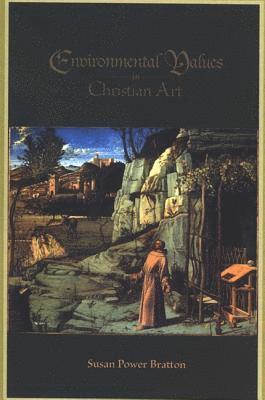
Discusses the expression of environmental values in Christian art as it displaced pagan aesthetics from the third century to the Reformation.This book looks at what art reveals about the environmental values of Christianity. As western Europe transitioned to Christianity, pagan religious aesthetics changed or were displaced. Focusing on Christian art and architecture from early third-century Rome to seventeenth-century Netherlands, Susan Power Bratton examines this transition. She explores the relationship between Christ and nature in emergent Christian art, the role nonhumans play in this art, and how Christian art represents the ownership and management of natural resources.The first section of the book discusses Christian art in imperial Rome and monastic Ireland's contribution-from high crosses to the Book of Kells-and evaluates the claim that Christianity suppressed the positive portrayal of nature in pre-Christian art. The second section investigates changes in cosmology from the early Middle Ages through the Gothic era and examines their implications for environmental economics. The final section analyzes the paintings of the Italian Renaissance and Dutch Golden Age and the impact of an emerging scientific worldview on the spiritual meaning of the landscape.
Häftad, Engelska, 2008
579 kr
Skickas inom 3-6 vardagar
Using scripture and science, a Christian agricultural scientist presents an ethic of farming that promotes good food and a healthy environment.Food, Farming, and Faith looks at agricultural sustainability and Christianity. Using scripture and science, Gary W. Fick-a Christian agricultural scientist-demonstrates that faith can inform decisions about creating, managing, even consuming our food. The book highlights such topics as food and celebration, environmental care, ecology and faith, soil and water stewardship, animal welfare, and the impact of poverty on women and our food supply. Throughout, Fick presents and discusses biblical passages that comment on these areas and provides insight from personal experiences growing up in a ranching family, in teaching sustainable agriculture, and as a scientist. Ultimately, Fick challenges the reader to think about eating more thoughtfully so that we have good food, a healthy environment, and a comfortable lifestyle all at the same time.
Häftad, Engelska, 2011
435 kr
Skickas inom 5-8 vardagar
Challenges readers to reconsider the moral standing of plants.Plants are people too? No, but in this work of philosophical botany Matthew Hall challenges readers to reconsider the moral standing of plants, arguing that they are other-than-human persons. Plants constitute the bulk of our visible biomass, underpin all natural ecosystems, and make life on Earth possible. Yet plants are considered passive and insensitive beings rightly placed outside moral consideration. As the human assault on nature continues, more ethical behavior toward plants is needed. Hall surveys Western, Eastern, Pagan, and Indigenous thought as well as modern science for attitudes toward plants, noting the particular resources for plant personhood and those modes of thought which most exclude plants. The most hierarchical systems typically put plants at the bottom, but Hall finds much to support a more positive view of plants. Indeed, some indigenous animisms actually recognize plants as relational, intelligent beings who are the appropriate recipeints of care and respect. New scientific findings encourage this perspective, revealing that plants possess many of the capacities of sentience and mentality traditionally denied them.
Inbunden, Engelska, 2011
1 216 kr
Skickas inom 5-8 vardagar
Challenges readers to reconsider the moral standing of plants.Plants are people too? No, but in this work of philosophical botany Matthew Hall challenges readers to reconsider the moral standing of plants, arguing that they are other-than-human persons. Plants constitute the bulk of our visible biomass, underpin all natural ecosystems, and make life on Earth possible. Yet plants are considered passive and insensitive beings rightly placed outside moral consideration. As the human assault on nature continues, more ethical behavior toward plants is needed. Hall surveys Western, Eastern, Pagan, and Indigenous thought as well as modern science for attitudes toward plants, noting the particular resources for plant personhood and those modes of thought which most exclude plants. The most hierarchical systems typically put plants at the bottom, but Hall finds much to support a more positive view of plants. Indeed, some indigenous animisms actually recognize plants as relational, intelligent beings who are the appropriate recipeints of care and respect. New scientific findings encourage this perspective, revealing that plants possess many of the capacities of sentience and mentality traditionally denied them.
Häftad, Engelska, 2020
553 kr
Skickas inom 3-6 vardagar
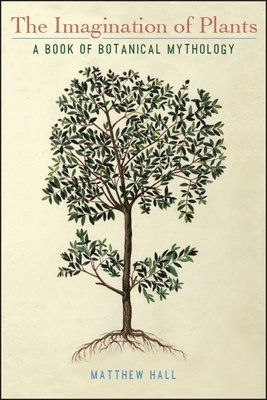
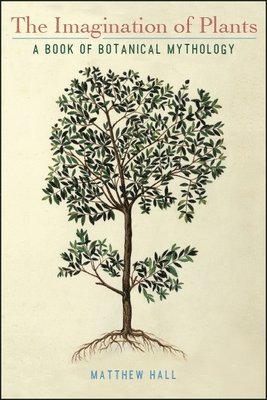
Examines the role of plants in botanical mythology, from Aboriginal Australia to Zoroastrian Persia.Plants have a remarkable mythology dating back thousands of years. From the ancient Greeks to contemporary Indigenous cultures, human beings have told colorful and enriching stories that have presented plants as sensitive, communicative, and intelligent. This book explores the myriad of plant tales from around the world and the groundbreaking ideas that underpin them. Amid the key themes of sentience and kinship, it connects the anemone to the meaning of human life, tree hugging to the sacred basil of India, and plant intelligence with the Finnish epic The Kalevala. Bringing together commentary, original source material, and colorful illustrations, Matthew Hall challenges our perspective on these myths, the plants they feature, and the human beings that narrate them.
Häftad, Engelska, 2022
462 kr
Skickas inom 5-8 vardagar
A cross-case analysis of fifteen faith communities striving to care for the earth and live more sustainably.Faith, Hope, and Sustainability explores the experiences of fifteen faith communities striving to care for the earth and live more sustainably. A church in Maine partners with fishermen to create the first community-supported fishery so they can make a living without overfishing. A Jewish congregation in Illinois raises extra funds to construct a green synagogue that expresses their religious mission to heal the world. Benedictine sisters in Wisconsin adopt caring for the earth as part of their mission and begin restoring one hundred acres of prairie, reviving their community in the process. Presbyterians in Virginia, dismayed by air pollution in Shenandoah National Park, take courage from their conviction that "God does not call us to do little things" and advocate for improved national air pollution policies. Stories such as these highlight the variety of environmental actions that people of faith are enacting through congregational venues.Beyond simply narrating inspiring stories, however, this book compares these case studies to explore in detail the processes through which the communities took action. In addition to examining why faith communities engage in earth care, Cybelle T. Shattuck explores how they put intention into action and how the congregational context affects what they do. She introduces an analytical framework focusing on four domains of activity-champions, faith leaders, congregations, and organizations-to explicate the full range of factors that influence how initiatives develop and whether sustainability becomes embedded in these religious organizations. Both the framework and the information on process presented in this book will be highly useful to scholars and to people of faith interested in implementing an earth-care ethic through sustainability programs.
Inbunden, Engelska, 2021
1 206 kr
Skickas inom 5-8 vardagar
A cross-case analysis of fifteen faith communities striving to care for the earth and live more sustainably.Faith, Hope, and Sustainability explores the experiences of fifteen faith communities striving to care for the earth and live more sustainably. A church in Maine partners with fishermen to create the first community-supported fishery so they can make a living without overfishing. A Jewish congregation in Illinois raises extra funds to construct a green synagogue that expresses their religious mission to heal the world. Benedictine sisters in Wisconsin adopt caring for the earth as part of their mission and begin restoring one hundred acres of prairie, reviving their community in the process. Presbyterians in Virginia, dismayed by air pollution in Shenandoah National Park, take courage from their conviction that "God does not call us to do little things" and advocate for improved national air pollution policies. Stories such as these highlight the variety of environmental actions that people of faith are enacting through congregational venues.Beyond simply narrating inspiring stories, however, this book compares these case studies to explore in detail the processes through which the communities took action. In addition to examining why faith communities engage in earth care, Cybelle T. Shattuck explores how they put intention into action and how the congregational context affects what they do. She introduces an analytical framework focusing on four domains of activity-champions, faith leaders, congregations, and organizations-to explicate the full range of factors that influence how initiatives develop and whether sustainability becomes embedded in these religious organizations. Both the framework and the information on process presented in this book will be highly useful to scholars and to people of faith interested in implementing an earth-care ethic through sustainability programs.
Häftad, Engelska, 2021
381 kr
Skickas inom 5-8 vardagar
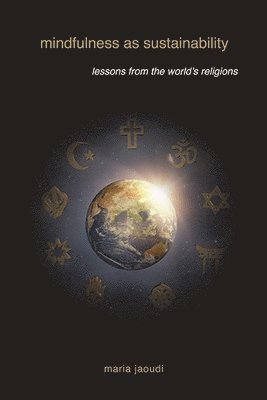
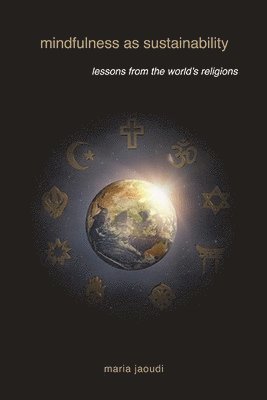
Offers practical and personal ways to help mitigate global climate change while sustaining an emotional and spiritual center through mindfulness practice.The inundation of terrifying environmental news in recent years has left many people exhausted and in despair about our planet's future. In Mindfulness as Sustainability, Maria Jaoudi addresses the need to take care of ourselves intellectually, spiritually, and emotionally during the current global climate crisis. Drawing on specific teachings, stories, and explorations of consciousness and reality from Buddhist, Christian, Daoist, Hindu, Indigenous, Islamic, and Jewish traditions, Jaoudi demonstrates that mindfulness is sustainability, and that mindfulness practice, applied both personally and politically, can help mitigate global climate change and rectify environmental injustice. Through illuminating discussions of primary scriptures, key spiritual figures, discoveries of modern science, and moments of social transformation, she offers practical ways to live our lives mindfully, ethically, and sustainably. Written for students and lay readers, the book makes the case that we can sustain our planet if we maintain our strength, increase our knowledge, and remain sensitive to the beauty and the sentience that is both within us and around us.
Inbunden, Engelska, 2021
1 216 kr
Skickas inom 5-8 vardagar
Offers practical and personal ways to help mitigate global climate change while sustaining an emotional and spiritual center through mindfulness practice.The inundation of terrifying environmental news in recent years has left many people exhausted and in despair about our planet's future. In Mindfulness as Sustainability, Maria Jaoudi addresses the need to take care of ourselves intellectually, spiritually, and emotionally during the current global climate crisis. Drawing on specific teachings, stories, and explorations of consciousness and reality from Buddhist, Christian, Daoist, Hindu, Indigenous, Islamic, and Jewish traditions, Jaoudi demonstrates that mindfulness is sustainability, and that mindfulness practice, applied both personally and politically, can help mitigate global climate change and rectify environmental injustice. Through illuminating discussions of primary scriptures, key spiritual figures, discoveries of modern science, and moments of social transformation, she offers practical ways to live our lives mindfully, ethically, and sustainably. Written for students and lay readers, the book makes the case that we can sustain our planet if we maintain our strength, increase our knowledge, and remain sensitive to the beauty and the sentience that is both within us and around us.
Inbunden, Engelska, 2023
1 216 kr
Skickas inom 5-8 vardagar
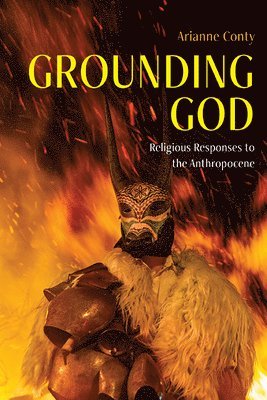
Looks at how different religious traditions (Christian, Buddhist, neopagan, and animist) have attempted to resacralize the earth and provide new values that include the more-than-human world.Now that we have entered the Anthropocene, the geological age in which humans have altered the natural world to such an extent that nature and culture can no longer be separated, the modern dichotomies of mind versus body and culture versus nature have become implausible and need to be replaced. In Grounding God, Arianne Conty argues that it is in the field of religion where we can find a new ontology better suited for the Anthropocene. Conty calls this new religious ontology the grounding of the sacred, in that it seeks to deconstruct the binaries of modernity and provide in their place a revalorization of the immanent earth and the more-than-human beings that inhabit it. Such a grounding of the sacred is a potent means to overcome the exploitation and desecration of the earth and its nonhuman beings and, to provide in its stead, an inclusive cosmopolitics that extends mind into matter and culture into nature. Tracing such a grounding in the Christian, Buddhist, neopagan, and animist traditions, Conty seeks to elaborate an interdisciplinary ecosophy, one that uses philosophy, anthropology, and religious studies to provide new values for the present age.This book is freely available in an open access edition thanks to Knowledge Unlatched-an initiative that provides libraries and institutions with a centralized platform to support OA collections and from leading publishing houses and OA initiatives. Learn more at the Knowledge Unlatched website at https://www.knowledgeunlatched.org.
Inbunden, Engelska, 2025
991 kr
Skickas
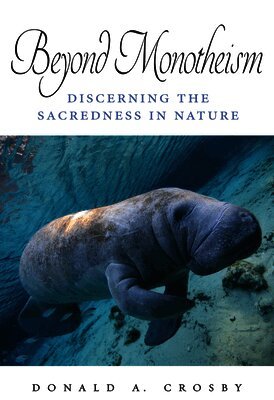
Argues that nature in all of its aspects is its own creative, sustaining, sacred, salvific ground—and is the most appropriate focus today of ardent religious faith.In Beyond Monotheism, Donald A. Crosby carefully and respectfully examines the experiential, rational, moral, religious, philosophical, and scientific reasons alleged by philosophers, theologians, scientists, and others for believing in the existence of a single personal God. He concludes that these reasons, while fascinating and historically important, are neither universally compelling nor, for him, personally convincing. Nor is monotheism an essential feature of all vital religious faith, as the fact of long-lasting, deeply nourishing forms of non-monotheistic faith such as Hinduism, Buddhism, and Daoism convincingly show. Crosby contends, instead, that nature itself in all its grandeur, mystery, and profound workings is inherently sacred and richly deserving of the reverence, faith, and commitment formerly reserved for God—if we have the wit, determination, imagination, and receptivity of heart and mind to search for and find them there. Nature, Crosby argues, is its own basis or ground—and nature, properly understood and revered, is through and through sacred ground and, as such, an appropriate focus of profoundly evocative, hopeful, meaningful, and sustaining religious faith. In the midst of global climate change, widespread species extinctions and endangerments, and fast-approaching earth-wide ecological disaster, Beyond Monotheism calls attention to another religious way of life, one of singular relevance and importance for our time.
Häftad, Engelska, 2026
355 kr
Skickas
Argues that nature in all of its aspects is its own creative, sustaining, sacred, salvific ground—and is the most appropriate focus today of ardent religious faith.In Beyond Monotheism, Donald A. Crosby carefully and respectfully examines the experiential, rational, moral, religious, philosophical, and scientific reasons alleged by philosophers, theologians, scientists, and others for believing in the existence of a single personal God. He concludes that these reasons, while fascinating and historically important, are neither universally compelling nor, for him, personally convincing. Nor is monotheism an essential feature of all vital religious faith, as the fact of long-lasting, deeply nourishing forms of non-monotheistic faith such as Hinduism, Buddhism, and Daoism convincingly show. Crosby contends, instead, that nature itself in all its grandeur, mystery, and profound workings is inherently sacred and richly deserving of the reverence, faith, and commitment formerly reserved for God—if we have the wit, determination, imagination, and receptivity of heart and mind to search for and find them there. Nature, Crosby argues, is its own basis or ground—and nature, properly understood and revered, is through and through sacred ground and, as such, an appropriate focus of profoundly evocative, hopeful, meaningful, and sustaining religious faith. In the midst of global climate change, widespread species extinctions and endangerments, and fast-approaching earth-wide ecological disaster, Beyond Monotheism calls attention to another religious way of life, one of singular relevance and importance for our time.
Inbunden, Engelska, 2007
1 042 kr
Tillfälligt slut
A work of environmental ethics that looks at how "otherkind"—and humankind—contributes to our moral imagination.Moral Habitat explores how our moral imaginations and moral norms have been shaped by and even cocreated with Earth in diverse biotic communities. Weaving together science and religion with indigenous and womanist traditions, Nancie Erhard uses examples from a variety of sources, including post-Cartesian science, the Old Testament, and the Mi´kmaq tribe of Eastern Canada. She demonstrates how each portrays the agency-including the moral agency-of the natural world. From this cross-cultural approach, she recasts the question of how we conceive of humans as moral agents. While written for "the sake of Earth," this thought-provoking book goes well beyond the issue of ecology to show the contribution that such an approach can make to pluralist ethics on a range of timely social issues.
Häftad, Engelska, 2008
473 kr
Tillfälligt slut
A work of environmental ethics that looks at how "otherkind"—and humankind—contributes to our moral imagination.Moral Habitat explores how our moral imaginations and moral norms have been shaped by and even cocreated with Earth in diverse biotic communities. Weaving together science and religion with indigenous and womanist traditions, Nancie Erhard uses examples from a variety of sources, including post-Cartesian science, the Old Testament, and the Mi´kmaq tribe of Eastern Canada. She demonstrates how each portrays the agency-including the moral agency-of the natural world. From this cross-cultural approach, she recasts the question of how we conceive of humans as moral agents. While written for "the sake of Earth," this thought-provoking book goes well beyond the issue of ecology to show the contribution that such an approach can make to pluralist ethics on a range of timely social issues.
Inbunden, Engelska, 2008
1 051 kr
Tillfälligt slut
Using scripture and science, a Christian agricultural scientist presents an ethic of farming that promotes good food and a healthy environment.Food, Farming, and Faith looks at agricultural sustainability and Christianity. Using scripture and science, Gary W. Fick-a Christian agricultural scientist-demonstrates that faith can inform decisions about creating, managing, even consuming our food. The book highlights such topics as food and celebration, environmental care, ecology and faith, soil and water stewardship, animal welfare, and the impact of poverty on women and our food supply. Throughout, Fick presents and discusses biblical passages that comment on these areas and provides insight from personal experiences growing up in a ranching family, in teaching sustainable agriculture, and as a scientist. Ultimately, Fick challenges the reader to think about eating more thoughtfully so that we have good food, a healthy environment, and a comfortable lifestyle all at the same time.
Häftad, Engelska, 2009
377 kr
Tillfälligt slut
Perspectives on genetically modified foods from world religions and indigenous traditions.Modern biotechnology has surpassed science fiction with such feats as putting fish genes in tomatoes to create a more cold-resistant crop. While the environmental and health concerns over such genetically modified foods have been the subject of public debate, religious and spiritual viewpoints have been given short shrift. This book seeks to understand the moral and religious attitudes of groups within pluralistic societies whose traditions and beliefs raise for them unique questions about food and dietary practice. What questions are there for kosher Jews, halal Muslims, and vegetarian Hindus about food products containing transgenes from prohibited sources? How do these foods impact the cultural practices and spiritual teachings of indigenous peoples? Concerns from the above traditions as well as Christianity, Buddhism, Chinese religion, and ethical vegetarianism are included. Contributors look at the ethical context of each tradition and also include information from focus groups. This enlightening work concludes with recommendations for the labeling of genetically modified foods.
Inbunden, Engelska, 2009
1 042 kr
Tillfälligt slut
Perspectives on genetically modified foods from world religions and indigenous traditions.Modern biotechnology has surpassed science fiction with such feats as putting fish genes in tomatoes to create a more cold-resistant crop. While the environmental and health concerns over such genetically modified foods have been the subject of public debate, religious and spiritual viewpoints have been given short shrift. This book seeks to understand the moral and religious attitudes of groups within pluralistic societies whose traditions and beliefs raise for them unique questions about food and dietary practice. What questions are there for kosher Jews, halal Muslims, and vegetarian Hindus about food products containing transgenes from prohibited sources? How do these foods impact the cultural practices and spiritual teachings of indigenous peoples? Concerns from the above traditions as well as Christianity, Buddhism, Chinese religion, and ethical vegetarianism are included. Contributors look at the ethical context of each tradition and also include information from focus groups. This enlightening work concludes with recommendations for the labeling of genetically modified foods.
Häftad, Engelska, 2011
374 kr
Tillfälligt slut
Looks at how ecotheology has created a new vision of the natural world and the place of humans within it.Is there any hope for a more sustainable world? Can we reimagine a way of living in which the nonhuman world matters? Anne Marie Dalton and Henry C. Simmons claim that the ecotheology that arose during the mid-twentieth century gives us reason for hope. While ecotheologians acknowledge that Christianity played a significant role in creating societies in which the nonhuman world counted for very little, these thinkers have refocused religion to include the natural world. To borrow philosopher Charles Taylor's concept, they have created a new "social imaginary," reimagining a better world and a different sense of what is and what should be. A new mindset is emerging, inspired by ecotheological texts and evident in the many diverse movements and activities that operate as if the hope imparted by ecotheology has already been realized. While making this powerful argument, Dalton and Simmons also provide an essential overview of key ecotheological thinkers and texts
Inbunden, Engelska, 2010
1 057 kr
Tillfälligt slut
Looks at how ecotheology has created a new vision of the natural world and the place of humans within it.Is there any hope for a more sustainable world? Can we reimagine a way of living in which the nonhuman world matters? Anne Marie Dalton and Henry C. Simmons claim that the ecotheology that arose during the mid-twentieth century gives us reason for hope. While ecotheologians acknowledge that Christianity played a significant role in creating societies in which the nonhuman world counted for very little, these thinkers have refocused religion to include the natural world. To borrow philosopher Charles Taylor's concept, they have created a new "social imaginary," reimagining a better world and a different sense of what is and what should be. A new mindset is emerging, inspired by ecotheological texts and evident in the many diverse movements and activities that operate as if the hope imparted by ecotheology has already been realized. While making this powerful argument, Dalton and Simmons also provide an essential overview of key ecotheological thinkers and texts
Häftad, Engelska, 2018
377 kr
Tillfälligt slut
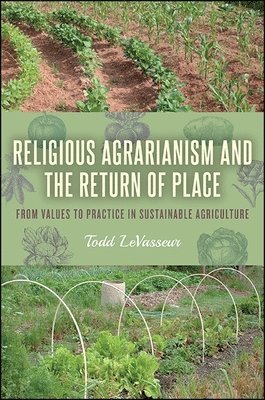
Examines religious communities as advocates of environmental stewardship and sustainable agriculture practices.Gold Medalist, 2018 Independent Publisher Book Awards in the Religion Category Finalist for the 2017 Foreword INDIES Book of the Year Award in the Religion category Writing at the interface of religion and nature theory, US religious history, and environmental ethics, Todd LeVasseur presents the case for the emergence of a nascent "religious agrarianism" within certain subsets of Judaism and Christianity in the United States. Adherents of this movement, who share an environmental concern about the modern industrial food economy and a religiously grounded commitment to the values of locality, health, and justice, are creating new models for sustainable agrarian lifeways and practices. LeVasseur explores this greening of US religion through an extensive engagement with the scholarly literature on lived religion, network theory, and grounded theory, as well as through ethnographic case studies of two intentional communities at the vanguard of this movement: Koinonia Farm, an ecumenical Christian lay monastic community, and Hazon, a progressive Jewish environmental group.
Inbunden, Engelska, 2017
1 051 kr
Tillfälligt slut
Examines religious communities as advocates of environmental stewardship and sustainable agriculture practices.Gold Medalist, 2018 Independent Publisher Book Awards in the Religion Category Finalist for the 2017 Foreword INDIES Book of the Year Award in the Religion category Writing at the interface of religion and nature theory, US religious history, and environmental ethics, Todd LeVasseur presents the case for the emergence of a nascent "religious agrarianism" within certain subsets of Judaism and Christianity in the United States. Adherents of this movement, who share an environmental concern about the modern industrial food economy and a religiously grounded commitment to the values of locality, health, and justice, are creating new models for sustainable agrarian lifeways and practices. LeVasseur explores this greening of US religion through an extensive engagement with the scholarly literature on lived religion, network theory, and grounded theory, as well as through ethnographic case studies of two intentional communities at the vanguard of this movement: Koinonia Farm, an ecumenical Christian lay monastic community, and Hazon, a progressive Jewish environmental group.
Inbunden, Engelska, 2019
1 051 kr
Tillfälligt slut
Examines the role of plants in botanical mythology, from Aboriginal Australia to Zoroastrian Persia.Plants have a remarkable mythology dating back thousands of years. From the ancient Greeks to contemporary Indigenous cultures, human beings have told colorful and enriching stories that have presented plants as sensitive, communicative, and intelligent. This book explores the myriad of plant tales from around the world and the groundbreaking ideas that underpin them. Amid the key themes of sentience and kinship, it connects the anemone to the meaning of human life, tree hugging to the sacred basil of India, and plant intelligence with the Finnish epic The Kalevala. Bringing together commentary, original source material, and colorful illustrations, Matthew Hall challenges our perspective on these myths, the plants they feature, and the human beings that narrate them.