
Taymā’: Multidisciplinary Series on the Results of the Saudi-German Archaeological Project – serie
Visar alla böcker i serien Taymā’: Multidisciplinary Series on the Results of the Saudi-German Archaeological Project. Handla med fri frakt och snabb leverans.
3 produkter
3 produkter
Del 1 - Taymā’: Multidisciplinary Series on the Results of the Saudi-German Archaeological Project
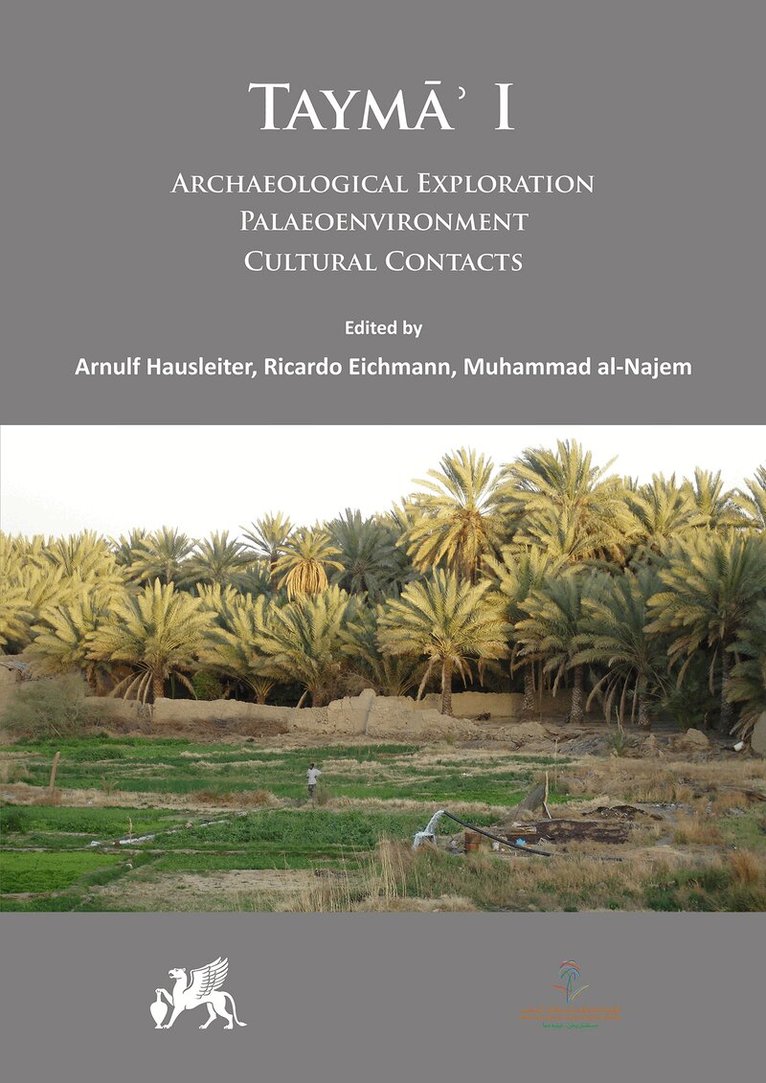
Taymā’ I: Archaeological Exploration, Palaeoenvironment, Cultural Contacts
Inbunden, Engelska, 2019
979 kr
Skickas
Archaeological investigations in the north-western part of the Arabian Peninsula has increased during the last 15 years. One of the major sites in the region is the ancient oasis of Taymā’, known as a commercial hub on the so-called Incense Road connecting South Arabia with the Eastern Mediterranean. In the context of this new research a multidisciplinary project by the Saudi Commission for Tourism and National Heritage (SCTH) and the Orient Department of the German Archaeological Institute (DAI) has been investigating the archaeology and ancient environment of Taymā’ since 2004. A major aim of this project was the development of new perspectives of the site and the region, characterised by elaborating the local socio-cultural and economic contexts. So far, Taymā’ has been known mainly through exogenous sources.The present volume is the first of the publication series of the Saudi-German archaeological project and focuses on three fundamental aspects of research at Taymā’: the current archaeological exploration of the oasis is contextualised with previous and ongoing research within the region, while at the same time offering a first overview of the settlement history of the site, which may have started as early as more than 6000 years ago. New information on the palaeoenvironment has been provided by multiproxy- analysis of sediments from a palaeolake immediately north of the settlement. The results indicate an Early Holocene humid period in the region that is shorter than the so-called African Humid Period. The abrupt aridification at around 8 ka BP, known from other regions in the Near East, is also attested in north-western Arabia. The reconstruction of the past vegetation of the site and its surroundings demonstrates that oasis cultivation at Taymā’ started during the 5th millennium BCE with grapes and figs, rather than with the date palm. According to hydrological investigations on water resources, groundwater aquifers provided the main source of local water supply. These were exploited through wells, some of which have been identified in the area of the ancient oasis. Finally, since the time of early travellers to Northwest Arabia evidence of cultural contacts has been observed in the records from the site, which had been occupied by the last Babylonian king, Nabonidus (556–539 BCE) for ten years. A historical-archaeological essay on Egypt and Arabia as well as a study on the ambiguous relationship between Assyria and Arabia – characterised by conflict and commerce – shed new light on the foreign relations of ancient Taymā’.
Del 2 - Taymā’: Multidisciplinary Series on the Results of the Saudi-German Archaeological Project
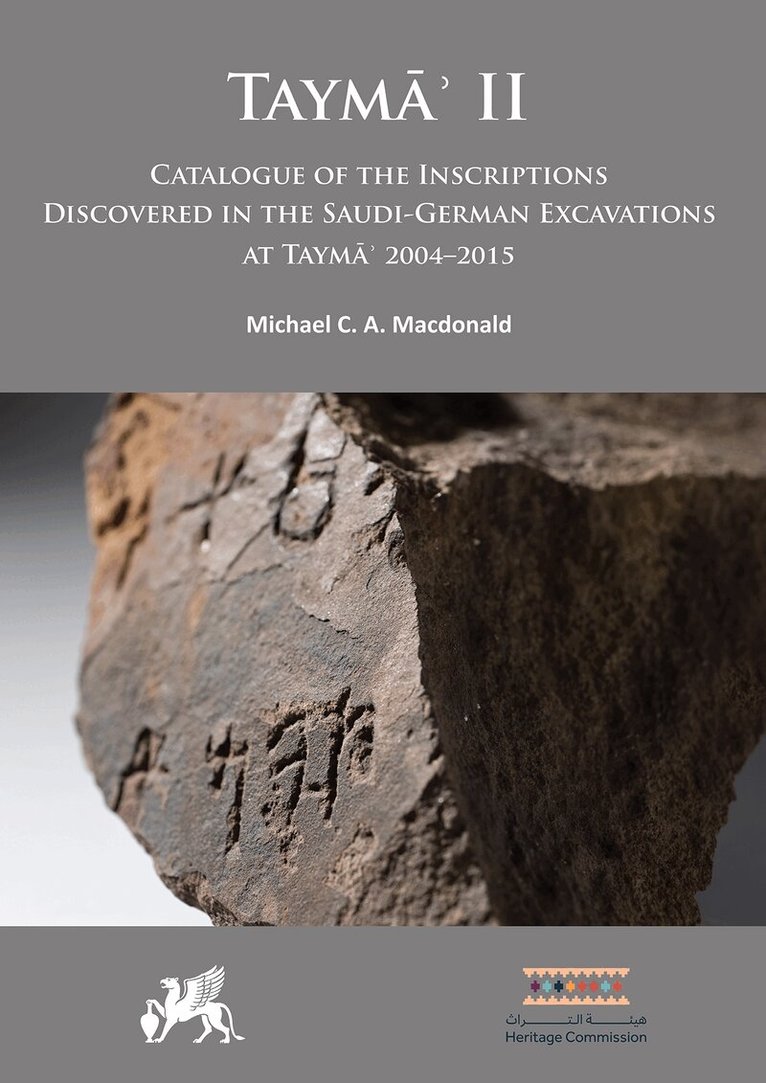
Taymāʾ II: Catalogue of the Inscriptions Discovered in the Saudi-German Excavations at Taymāʾ 2004–2015
Inbunden, Engelska, 2021
979 kr
Skickas
Taymāʾ II is a Catalogue which contains all the inscriptions discovered during the 24 seasons of the Saudi- German excavations at Taymāʾ from 2004–15 which were funded by the German Research Foundation (DFG). The 113 objects carry inscriptions in different languages and scripts, illustrating the linguistic diversity of the oasis through time. Although the majority are fragmentary, they provide an important source for the history of the oasis in ancient and mediaeval times.The Babylonian cuneiform inscriptions in this volume confirm for the first time the ten-year sojourn at Taymāʾ of the last Babylonian king Nabû-na’id (556–539 BC). In addition, Imperial Aramaic inscriptions dated by the reigns of Lihyanite kings, based at Dadan (modern al-ʿUlā), reveal for the first time that they ruled Taymāʾ at a period in the second half of the first millennium BC.As well as editing the volume, Michael C. A. Macdonald edited the Imperial Aramaic inscriptions found from 2010–15, plus those in the form of the Aramaic script which developed in Taymāʾ, and the Nabataean, Dadanitic, and Taymanitic texts. In addition, Hanspeter Schaudig edited the cuneiform inscriptions; Peter Stein, the Imperial Aramaic texts found from 2004–09; and Frédéric Imbert, the Arabic inscriptions. Arnulf Hausleiter and Francelin Tourtet provided archaeological contributions, while Martina Trognitz curated the virtual edition of many of the texts recorded by RTI. The indexes contain the words and names from all known texts from the oasis, including those in the Taymāʾ Museum and other collections which will be published as Taymāʾ III.
Del 3 - Taymā’: Multidisciplinary Series on the Results of the Saudi-German Archaeological Project
Taymāʾ III: Catalogue of the Inscriptions in the Taymāʾ Museum and Other Collections
Catalogue of the Inscriptions in the Tayma' Museum and Other Collections
Inbunden, Engelska, 2025
1 129 kr
Skickas
Taymāʾ III presents a catalogue of the inscriptions which were kept in the Taymāʾ Museum until 2017 as well as all known inscriptions from Taymāʾ in other collections, such as the National Museum in Riyāḏ and the Musée du Louvre in Paris. The catalogue contains 102 inscriptions from the Taymāʾ Museum in various languages and scripts, as well as 29 other inscriptions.Michael C.A. Macdonald has not only edited the volume, but also the inscriptions in Imperial Aramaic, Taymāʾ Aramaic, Nabataean, and the Taymanitic language and script. With Peter Stein’s updated reading of the Taymāʾ stone and Jérôme Norris’ new edition of the Qaṣr al-Ḥamrā stele, the two most important monuments for the religious history of Taymāʾ in the mid-1st millennium BC are also included in this volume. Frédéric Imbert has edited the Arabic inscriptions from the Taymāʾ Museum.The indices contain the words and names of all known texts from the Taymāʾ oasis, i.e. those discovered during the Saudi-German excavations between 2004 and 2015 (published in Taymāʾ II, including the cuneiform inscriptions of King Nabonidus of Babylon) and those edited in this volume.With these two volumes of the Taymāʾ excavation series, all currently accessible inscriptions that originate from this major north-west Arabian oasis, or very likely from there, are published in printed and digital form.