Technology in Motion - Böcker
Visar alla böcker i serien Technology in Motion. Handla med fri frakt och snabb leverans.
4 produkter
4 produkter
323 kr
Skickas inom 7-10 vardagar
New perspectives on how envirotech can help us engage with the surrounding world in ways that are more sustainable for humanity—and the planet.Today's scientists, policymakers, and citizens are all confronted by numerous dilemmas at the nexus of technology and the environment. Every day seems to bring new worries about the dangers posed by carcinogens, "superbugs," energy crises, invasive species, genetically modified organisms, groundwater contamination, failing infrastructure, and other troubling issues. In Technology and the Environment in History, Sara B. Pritchard and Carl A. Zimring adopt an analytical approach to explore current research at the intersection of environmental history and the history of technology—an emerging field known as envirotech. Technology and the Environment in History They discuss the important topics, historical processes, and scholarly concerns that have emerged from recent work in thinking about envirotech. Each chapter focuses on a different urgent topic: • Food and Food Systems: How humans have manipulated organisms and ecosystems to produce nutrients for societies throughout history.• Industrialization: How environmental processes have constrained industrialization and required shifts in the relationships between human and nonhuman nature.• Discards: What we can learn from the multifaceted forms, complex histories, and unexpected possibilities of waste.• Disasters: How disaster, which the authors argue is common in the industrialized world, exposes the fallacy of tidy divisions among nature, technology, and society.• Body: How bodies reveal the porous boundaries among technology, the environment, and the human.• Sensescapes: How environmental and technological change have reshaped humans' (and potentially nonhumans') sensory experiences over time.Using five concepts to understand the historical relationships between technology and the environment—porosity, systems, hybridity, biopolitics, and environmental justice—Pritchard and Zimring propose a chronology of key processes, moments, and periodization in the history of technology and the environment. Ultimately, they assert, envirotechnical perspectives help us engage with the surrounding world in ways that are, we hope, more sustainable and just for both humanity and the planet. Aimed at students and scholars new to environmental history, the history of technology, and their nexus, this impressive synthesis looks outward and forward—identifying promising areas in more formative stages of intellectual development and current synergies with related areas that have emerged in the past few years, including environmental anthropology, discard studies, and posthumanism.
333 kr
Skickas inom 7-10 vardagar
Does the Military-Industrial Complex as we understand it still exist? If so, how has it changed since the end of the Cold War?First named by President Dwight D. Eisenhower in his farewell address, the Military-Industrial Complex, originally an exclusively American phenomenon of the Cold War, was tailored to develop and produce military technologies equal to the existential threat perceived to be posed by the Soviet Union. An informal yet robust relationship between the military and industry, the MIC pursued and won a qualitative, technological arms race but exacted a high price in waste, fraud, and abuse. Today, although total US spending on national security exceeds $1 trillion a year, it accounts for a smaller percentage of the federal budget, the national GDP, and world military spending than during the Cold War. Given this fact, is the MIC as we commonly understand it still alive? If so, how has it changed in the intervening years?In Delta of Power, Alex Roland tells the comprehensive history of the MIC from 1961, the Cold War, and the War on Terror, to the present day. Roland argues that the MIC is now significantly different than it was when Eisenhower warned of its dangers, still exerting a significant but diminished influence in American life. Focusing intently on the three decades since the end of the Cold War in 1991, Roland explains how a lack of cohesion, rapid change, and historical contingency have transformed America's military-industrial institutions and infrastructure. Roland addresses five critical realms of transformation: civil-military relations, relations between industry and the state, among government agencies, between scientific-technical communities and the state, and between technology and society. He also tracks the way in which America's arsenal has evolved since 1991. The MIC still merits Eisenhower's warning of political and moral hazard, he concludes, but it continues to deliver, by a narrower margin, the world's most potent arsenal. An authoritative account of America's evolving arsenal since World War II, Delta of Power is a dynamic exploration of military preparedness and current events.
510 kr
Skickas inom 5-8 vardagar
Explores the role of technology in the larger political and economic fabric of Southeast Asia.In Technology in Southeast Asian History, Suzanne Moon explores the profound entanglement of technology with Southeast Asian politics, social life, economics, and culture over its long history. Moon offers a unique framework for understanding the place of technology in this region and its pivotal role in the emergence of the modern technological world.Synthesizing scholarship from the fields of history, archaeology, and anthropology, Moon examines and links technological stories from prehistory to the mid-twentieth century. She uses analytics in the history of technology—such as circulation, coproduction, and assemblage—to highlight the processes and evolving patterns of technological dynamism that characterize the region. Drawing on research focused on specific technologies, including temple construction, rice agriculture, weaving, and shipbuilding, Moon investigates the interconnectedness of these technologies within the larger political and economic fabric of Southeast Asian history. In contrast with portrayals of Southeast Asia as technologically deficient, Moon demonstrates the richness of this region's technological cultures. She rejects polarizing binaries such as traditional and modern or indigenous and foreign, instead underscoring Southeast Asia's role as a dynamic cocreator of the modern technological world. Technology has contributed to the creation and disruption of social and political orders; shaped engagements across barriers of distance, culture, and language; and produced and reproduced diverse cultures in this region. This narrative of technological change offers students, scholars, and readers critical new perspectives on both technological history and Southeast Asian history.
550 kr
Skickas inom 7-10 vardagar
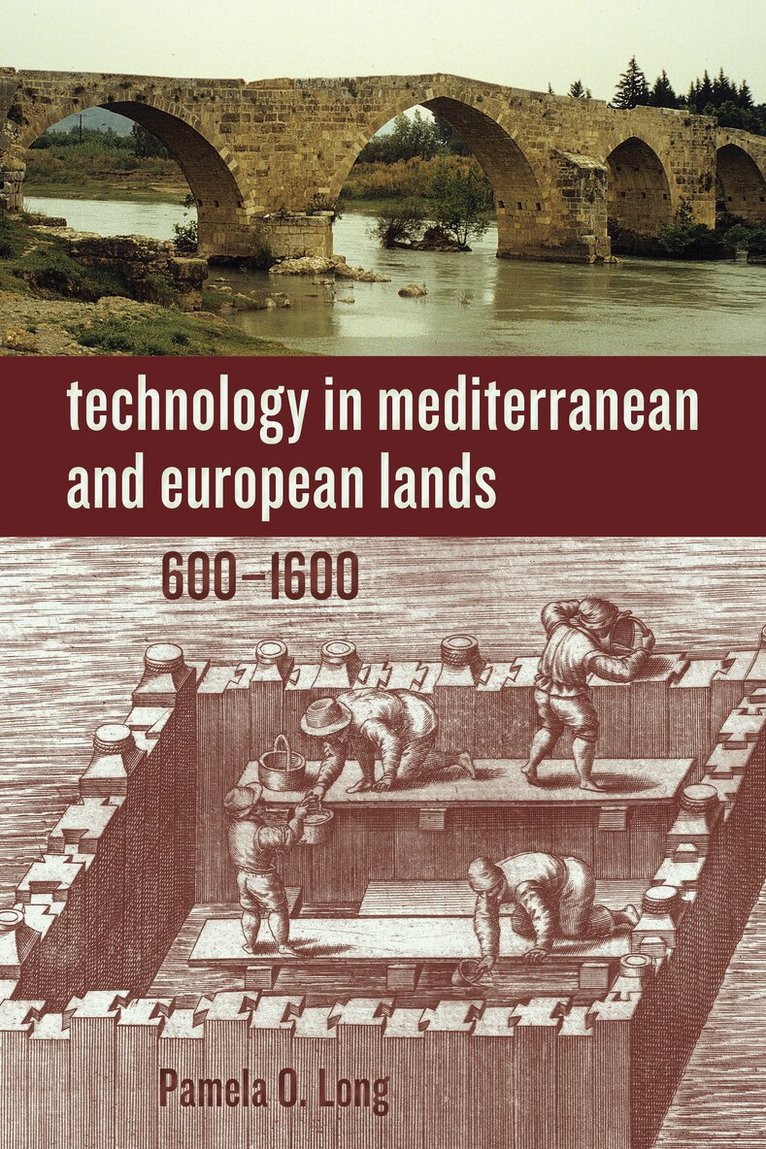
How medieval and Renaissance technology shaped Mediterranean and European society across a millennium.In Technology in Mediterranean and European Lands, 600-1600, Pamela O. Long explores the intricate web of technological advancements that shaped Mediterranean and European societies during the medieval and early modern periods. From the essential crafts of ploughing and tailoring to the sophisticated hydraulic systems and monumental building constructions, Long illuminates how ordinary people harnessed and transformed their world.Drawing on recent scholarship on environmental history and the history of technology—as well as materials, object biographies, and the circulation of objects—Long examines the circulation of ideas and technologies in Europe and the Mediterranean. The book covers the evolution of food production, transportation, and communication, as well as the crafting of pottery, weapons, and machines. This in-depth historical analysis shows how these technological advancements had profound social and economic impacts on everyday life. Long's meticulous research and engaging narrative bring to light the interconnectedness of various crafts and their contributions to the broader tapestry of human history. By integrating archaeological findings, historical texts, and modern scientific methods, the book offers an interdisciplinary perspective on the technological practices of the pre-modern world. Perfect for scholars, students, and history enthusiasts, Technology in Mediterranean and European Lands, 600-1600 emphasizes the ingenuity and resilience of past civilizations and the enduring legacy of technological innovation.