Ten Years that Changed a City - Böcker
Visar alla böcker i serien Ten Years that Changed a City. Handla med fri frakt och snabb leverans.
9 produkter
9 produkter
178 kr
Skickas inom 11-20 vardagar
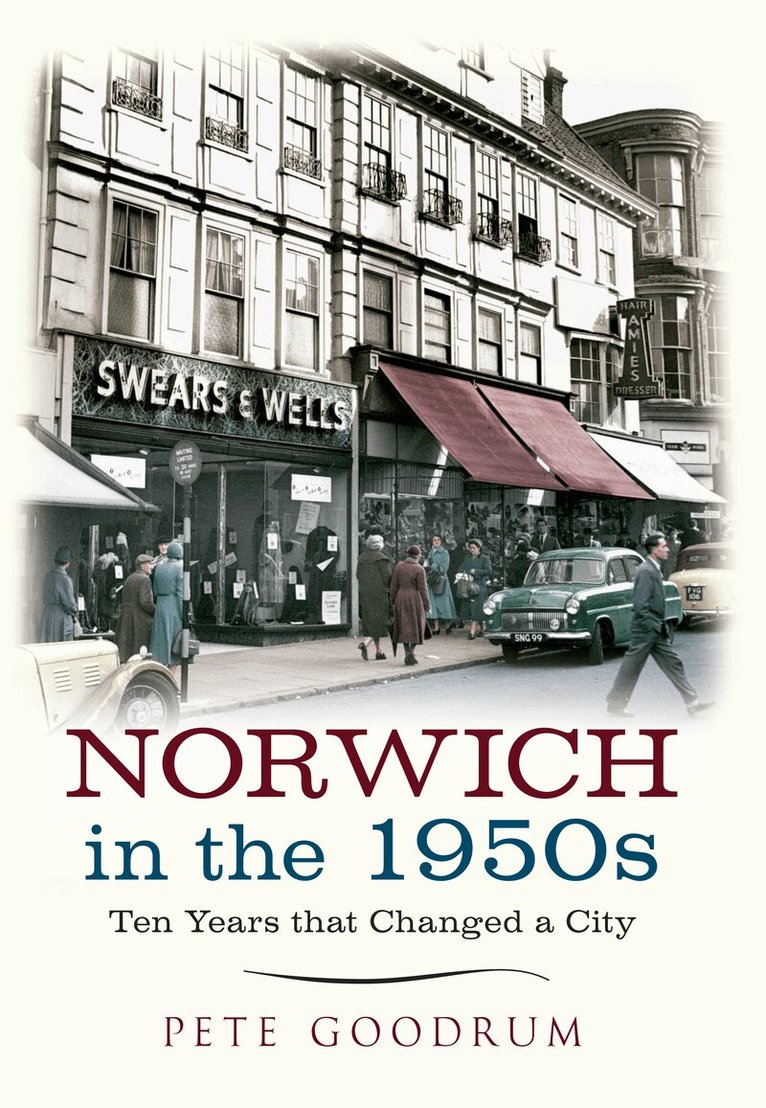
Norwich in 1950 was a different place. Still scarred by war the city was coming to terms with itself. Children played in the rubble of bomb sites, and workers strove to build a prosperous peace on building sites. By the end of the decade the retail heart of the city would be reconstructed, new building programmes would be changing domestic life, and the manufacturing industries would be making world-class products with household names. Birthplace of Barclays, Aviva, Start-Rite and Colmans, the city was ready to embark on another chapter in its long history of commercial and cultural development. From post-war austerity to the threshold of the consumer society, Norwich embraced the 1950s as a decade of change.
178 kr
Skickas inom 11-20 vardagar
Changed by the 1950s, Norwich was to alter even more during the 1960s. Increased traffic would be met with widened roads and a new flyover, while London Street became pedestrians only. After centuries of trading there the cattle market would move out of the city centre. Bigger buildings changed its skyline and the city gained a university and a new library. THE BEATLES PLAYED HERE, SECRET CHEMICAL TESTS WERE CARRIED OUT THERE AND PLANS TO MODERNISE WERE EVERYWHERE. In this sequel to his hugely popular book Norwich in the 1950s, Pete Goodrum takes a fascinating look at the ten years in which the baby boomers came into their own. As the fifties faded away and sixties style arrived, this was the decade that altered the face of the city.
178 kr
Skickas inom 11-20 vardagar
Chester is well known as a Roman city, and has seen significant change over the centuries. This has been done sympathetically for the most part, and in keeping with the general antiquity of the surrounding buildings and streets.Chester in the 1950s was a time of reawakening following the dark years of the Second World War. The city was lucky to miss much damage during the conflict, but like the rest of Britain the residents suffered from privation and rationing, not to mention the boys and men who would never return to their hometown.From post-war austerity to the threshold of consumer society, Chester embraced the 1950s as a decade of renewal and opportunity.
172 kr
Skickas inom 11-20 vardagar
EDINBURGH in the 1950s was a very different place. After the ravages of war, the International Festival and Military Tattoo was introduced as an antidote to post-war austerity, the new Civic Survey and Plan put forward grandiose recommendations for change, and a new young Queen visited the city. This was a time when slum housing was a blight on many people's lives, but there was a real sense of community that was ultimately lost in the move to sparkling, modern homes in the new housing estates. People continued to use the trams to travel to work in the many factories or make trips to Portobello for a day of fun, but they were slowly usurped by the car. It was a glory period for the local football teams, and nights spent dancing or at the pictures were a weekly event. There was still the horse-drawn milk float and children played in streets that were lit by gas. Beautifully illustrated with many previously unpublished photographs, Edinburgh in the 1950s provides an exceptional insight into a time now acknowledged as the end of an era in Edinburgh - for good and for bad.
178 kr
Skickas
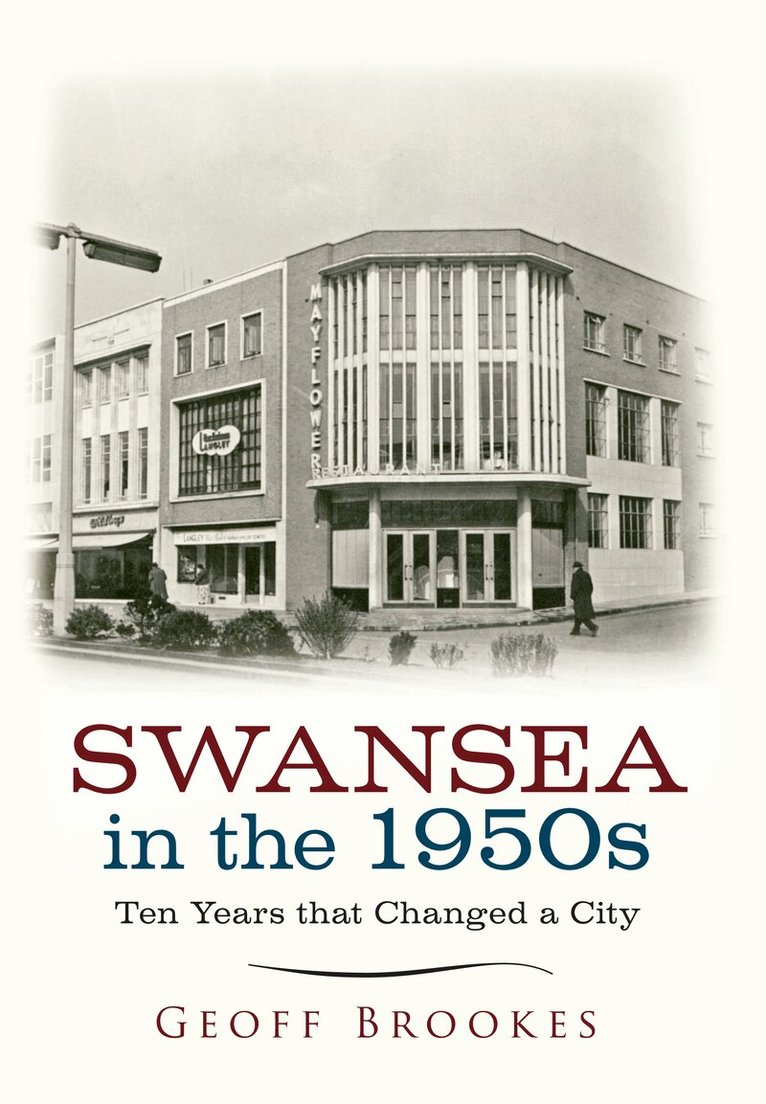
The 1950s. The mid-point of the twentieth century. When those born in the nineteenth century met their grandchildren who would live in the twenty-first. A pivotal moment, certainly. And is it really true? Had we ‘never had it so good’, as Prime Minister Macmillan said?This book is the story of Swansea in those years, when post-war austerity moved towards the indulgence of the sixties. A period of affluence and full employment, a time of increased confidence and optimism. A time when Swansea began to rebuild itself after terrible wartime devastation and looked to a bright future, despite an exhausted valley where the trains crept slowly between the twisted slag heaps alongside a poisoned river. Everything would soon be so much better. The future was so bright…Swansea in the 1950s follows the development of Swansea through this momentous decade. The story of how Swansea played its own part in the big news of the era – the Coronation, the Atom Bomb, Rock Around the Clock, the Korean War, Sputnik, the Suez Crisis and television, – and how it managed its own triumphs and disasters.
178 kr
Skickas inom 11-20 vardagar
For the people of Leicester, the 1960s was a decade of great social and economic change. It was to see a revolution in social attitudes reflected in the popular music of the time, in fashion, and in the print and broadcast media.Life changed for everyone. Railway stations closed as the motor vehicle grew in popularity. National Service ended, the pirate radio stations were scuppered, colour television became available, and the fashion garments manufactured by Leicester’s giant textile companies were very different and sometimes extreme as hemlines rose dramatically. Changing attitudes led to social conflict between parents and children, teachers and pupils.Meanwhile, the teenagers danced at Il Rondo to The Who and Fleetwood Mac, and swooned to The Beatles at the De Montfort Hall. In Leicester in the 1960s, Stephen Butt charts the excitement and vibrancy of the ‘Swinging Sixties’ and reflects also on the economic and social problems that were just beneath the surface.
178 kr
Skickas inom 11-20 vardagar
The 1970s was a decade of change. Supermarkets began to take over from traditional stores, high-rise office blocks appeared on the skyline, and Leicester’s first shopping centre replaced familiar Victorian shops and hotels. It was a time of industrial unrest. The lights went out as coal stocks diminished. Pay packets were depleted as Leicester’s workers faced a three-day week, prices in the shops began to soar, and we all shivered during the ‘winter of discontent’.It was a turning point in the way we viewed ourselves and the world. Social attitudes to mental health, homosexuality and feminism were still rooted in the past, but the world was changing. People took to Leicester’s streets to support anti-racism, and we began to clean up our environment.In Leicester in the 1950s Stephen Butt remembers what made the decade so special for so many, but also the events which were to change significantly the course of Leicester’s future.
178 kr
Skickas inom 11-20 vardagar
Throughout the 1960s, there was a feeling of prosperity and progress in Preston. A Lancashire town throwing off the shackles of the cotton trade, it took other industrial and commercial challenges on board. Better roads and transport, improved housing and revolutionised shopping outlets all reflected the feeling of progress. The poverty of Preston seemed to be in decline, and the churches were helping to shape a brighter future with spiritual and practical help.In many ways, Preston mirrored national trends and teenagers began to play their part with music and leisure pursuits for pleasure. Yes, there were still crimes, criminals, tragedy and trauma, yet among it all there was triumph, be it socially or in the sporting arenas – enough to ensure the pride was still in Preston.A decade that appeared to begin in black and white was to end in glorious technicolour – or so it seems on reflection.
178 kr
Tillfälligt slut
For some the 1970s meant punk rock and political unrest. For others it was a time of ABBA and affluence. The decade’s dual identity was as striking in Norwich as it was nationally. While once-familiar streets were demolished, new buildings sprang up. Different brand names appeared in the city centre and with them came a new era of shopping and eating out. For those who remember the steakhouses and nightclubs, the football and the fashions of the 1970s, this book is a fascinating flashback to a different Norwich. Following his incredibly popular Norwich in the 1950s and Norwich in the 1960s, Pete Goodrum’s look at the 1970s shines a light on another decade in the city’s history.From the ‘old’ Odeon to the Garlands fire, from Bonds to the ‘Berni’, this is how we lived in Norwich in the 1970s.