Texas Archaeology and Ethnohistory Series - Böcker
Visar alla böcker i serien Texas Archaeology and Ethnohistory Series. Handla med fri frakt och snabb leverans.
13 produkter
13 produkter
374 kr
Skickas inom 7-10 vardagar
Around 11,000 years ago, a Paleoindian culture known to us as "Clovis" occupied much of North America. Considered to be among the continent's earliest human inhabitants, the Clovis peoples were probably nomadic hunters and gatherers whose remaining traces include camp sites and caches of goods stored for utilitarian or ritual purposes. This book offers the first comprehensive study of a little-known aspect of Clovis culture-stone blade technology. Michael Collins introduces the topic with a close look at the nature of blades and the techniques of their manufacture, followed by a discussion of the full spectrum of Clovis lithic technology and how blade production relates to the production of other stone tools. He then provides a full report of the discovery and examination of fourteen blades found in 1988 in the Keven Davis Cache in Navarro County, Texas. Collins also presents a comparative study of known and presumed Clovis blades from many sites, discusses the Clovis peoples' caching practices, and considers what lithic technology and caching behavior can add to our knowledge of Clovis lifeways. These findings will be important reading for both specialists and amateurs who are piecing together the puzzle of the peopling of the Americas, since the manufacture of blades is a trait that Clovis peoples shared with the Upper Paleolithic peoples in Europe and northern Asia.
269 kr
Skickas inom 10-15 vardagar
San Antonio Conservation Society Citation, 2009In the early part of the eighteenth century, the Spanish colonial mission EspÍritu Santo de ZÚÑiga was relocated from far south Texas to a site along the Guadalupe River in Mission Valley, Victoria County. This mission, along with a handful of others in south Texas, was established by the Spaniards in an effort to Christianize and civilize the local Native American tribes in the hopes that they would become loyal Spanish citizens who would protect this new frontier from foreign incursions. With written historical records scarce for EspÍritu Santo, Tamra Walter relies heavily on material culture recovered at this site through a series of recent archaeological investigations to present a compelling portrait of the Franciscan mission system. By examining findings from the entire mission site, including the compound, irrigation system, quarry, and kiln, she focuses on questions that are rarely, if ever, answered through historical records alone: What was daily life at the mission like? What effect did the mission routine have on the traditional lifeways of the mission Indians? How were both the Indians and the colonizers changed by their frontier experiences, and what does this say about the missionization process? Walter goes beyond simple descriptions of artifacts and mission architecture to address the role these elements played in the lives of the mission residents, demonstrating how archaeology is able to address issues that are not typically addressed by historians. In doing so, she presents an accurate portrait of life in South Texas at this time. This study of Mission EspÍritu Santo will serve as a model for research at similar early colonial sites in Texas and elsewhere.
214 kr
Skickas inom 10-15 vardagar
Beginning over 10,000 years ago and continuing until the arrival of the Spanish in the 1500s, hunter and gatherer societies occupied the Edwards Plateau of central Texas. Archaeological studies over the past eighty years have reconstructed their subsistence, technology, and settlement patterns, but until now little information has been available on their burial practices, due to the scarcity of known burial sites. This detailed archaeological report describes the human skeletal remains, burial furnishings, and fauna recovered from Bering Sinkhole in Kerr County, the first carefully excavated hunter-gatherer burial site in central Texas.The remains in Bering Sinkhole were deposited from 7,500 to 2,000 years ago. Leland Bement's analysis reveals a growing elaboration in burial rituals during the period and also uncovers important data on the diet and health of the hunter-gatherers. He discusses climate change based on faunal remains and compares burial goods such as bone, antler, freshwater shell, marine shell, turtle, and stone artifacts with those found at other Texas mortuary sites and with deposits at hunter-gatherer habitation sites in Central Texas.
324 kr
Skickas inom 10-15 vardagar
The Northeastern Trans-Pecos region of Texas is an unforgiving environment for anyone living off the land, yet nomadic hunters and gatherers roamed its deserts and mountains and sheltered in caves and sinkholes from around AD 200 to 1450. This book provides detailed insights into the lifeways of these little-known prehistoric peoples. It places their occupation of the region in a wider temporal and cultural framework through a comprehensive description and analysis of the archaeological remains excavated by Donny L. Hamilton at Granado Cave in 1978.Hamilton begins with a brief overview of the geology and environment of the Granado Cave area and reviews previous archaeological investigations. Then he and other researchers present detailed analyses of the burials and other material remains found in the cave, as well as the results of radiocarbon dating. From these findings, he reconstructs the subsistence patterns and burial practices of these Native Americans, whom he identifies as a distinct group that was pushed into the environment by surrounding peoples. He proposes that they should be represented by a new archaeological phase, thus helping to clarify the poorly understood late prehistory of the Trans-Pecos.
351 kr
Skickas inom 10-15 vardagar
Why and when human societies shifted from nomadic hunting and gathering to settled agriculture engages the interest of scholars around the world. One of the most fruitful areas in which to study this issue is the North American Southwest, where Late Archaic inhabitants of the Sonoran and Chihuahuan Deserts of Mexico, Arizona, and New Mexico turned to farming while their counterparts in Trans-Pecos and South Texas continued to forage. By investigating the environmental, biological, and cultural factors that led to these differing patterns of development, we can identify some of the necessary conditions for the rise of agriculture and the corresponding evolution of village life. The twelve papers in this volume synthesize previous and ongoing research and offer new theoretical models to provide the most up-to-date picture of life during the Late Archaic (from 3,000 to 1,500 years ago) across the entire North American Borderlands. Some of the papers focus on specific research topics such as stone tool technology and mobility patterns. Others study the development of agriculture across whole regions within the Borderlands. The two concluding papers trace pan-regional patterns in the adoption of farming and also link them to the growth of agriculture in other parts of the world.
207 kr
Skickas inom 10-15 vardagar
The Comanche Vocabulary collected in Mexico during the years 1861-1864 by Manuel GarcÍa RejÓn is by far the most extensive Comanche word list compiled before the establishment of the Kiowa-Comanche-Apache Reservation in 1867. It preserves words and concepts that have since changed or even disappeared from the language, thus offering a unique historical window on earlier Comanche culture.This translation adds the English equivalents to the original Spanish-Comanche list of 857 words, as well as a Comanche-English vocabulary and comparisons with later Comanche word lists. Daniel J. Gelo's introduction discusses the circumstances in which GarcÍa RejÓn gathered his material and annotates significant aspects of the vocabulary in light of current knowledge of Comanche language and culture. The book also includes information on pictography, preserving a rare sample of Comanche scapula drawing.This information will help scholars understand the processes of language evolution and cultural change that occurred among all Native American peoples following European contact. The Comanche Vocabulary will also hold great interest for the large public fascinated by this once-dominant tribe.
Indians of the Rio Grande Delta
Their Role in the History of Southern Texas and Northeastern Mexico
Häftad, Engelska, 1990
207 kr
Skickas inom 10-15 vardagar
Indians of the Rio Grande Delta is the first single-volume source on these little-known peoples. Working from innumerable primary documents in various Texan and Mexican archives, Martin Salinas has compiled data on more than six dozen named groups that inhabited the area in the sixteenth through the eighteenth centuries. Depending on available information, he reconstructs something of their history, geographical range and migrations, demography, language, and culture. He also offers general information on various unnamed groups of Indians, on the lifeways of the indigenous peoples, and on the relations between the Indian groups and the colonial Spanish missions in the region.
324 kr
Skickas inom 10-15 vardagar
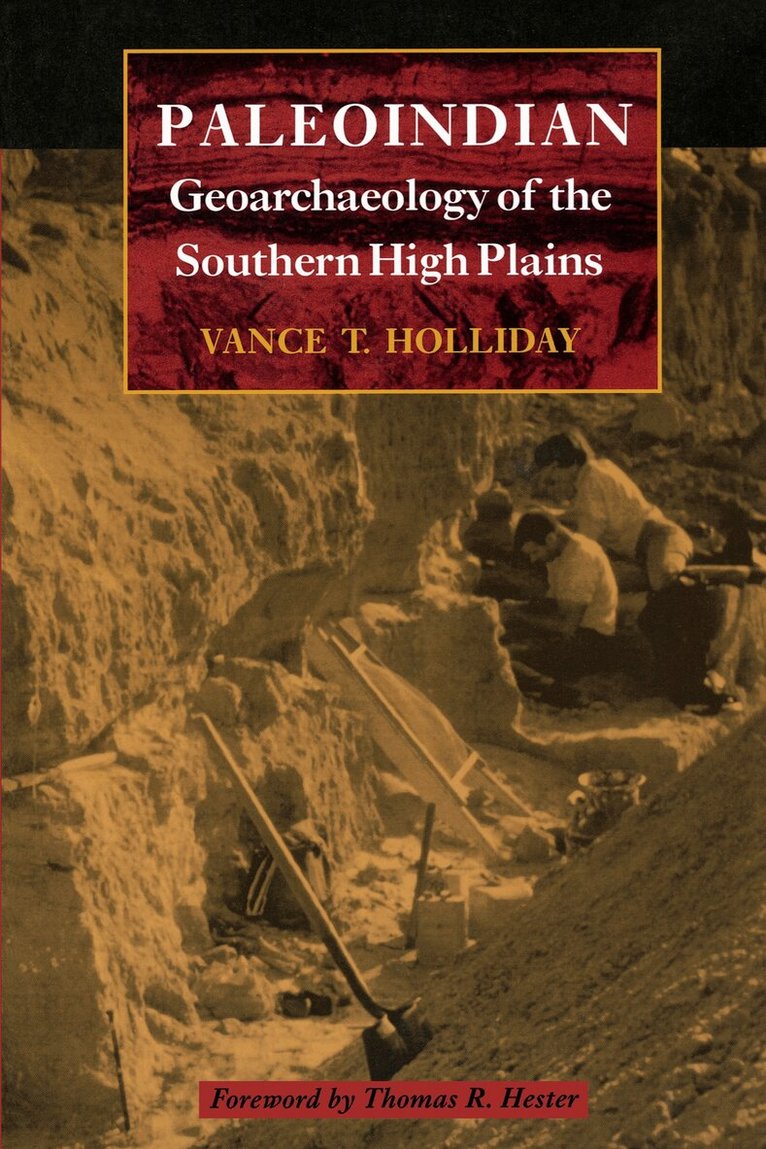
The Southern High Plains of northwestern Texas and eastern New Mexico are rich in Paleoindian archaeological sites, including such well-known ones as Clovis, Lubbock Lake, Plainview, and Midland. These sites have been extensively researched over decades, not only by archaeologists but also by geoscientists, whose studies of soils and stratigraphy have yielded important information about cultural chronology and paleoenvironments across the region.In this book, Vance T. Holliday synthesizes the data from these earlier studies with his own recent research to offer the most current and comprehensive overview of the geoarchaeology of the Southern High Plains during the earliest human occupation. He delves into twenty sites in depth, integrating new and old data on site geomorphology, stratigraphy, soils, geochronology, and paleoenvironments. He also compares the Southern High Plains sites with other sites across the Great Plains, for a broader chronological and paleoenvironmental perspective.With over ninety photographs, maps, cross sections, diagrams, and artifact drawings, this book will be essential reading for geoarchaeologists, archaeologists, and Quaternary geoscientists, as well as avocational archaeologists who take part in Paleoindian site study throughout the American West.
351 kr
Skickas inom 10-15 vardagar
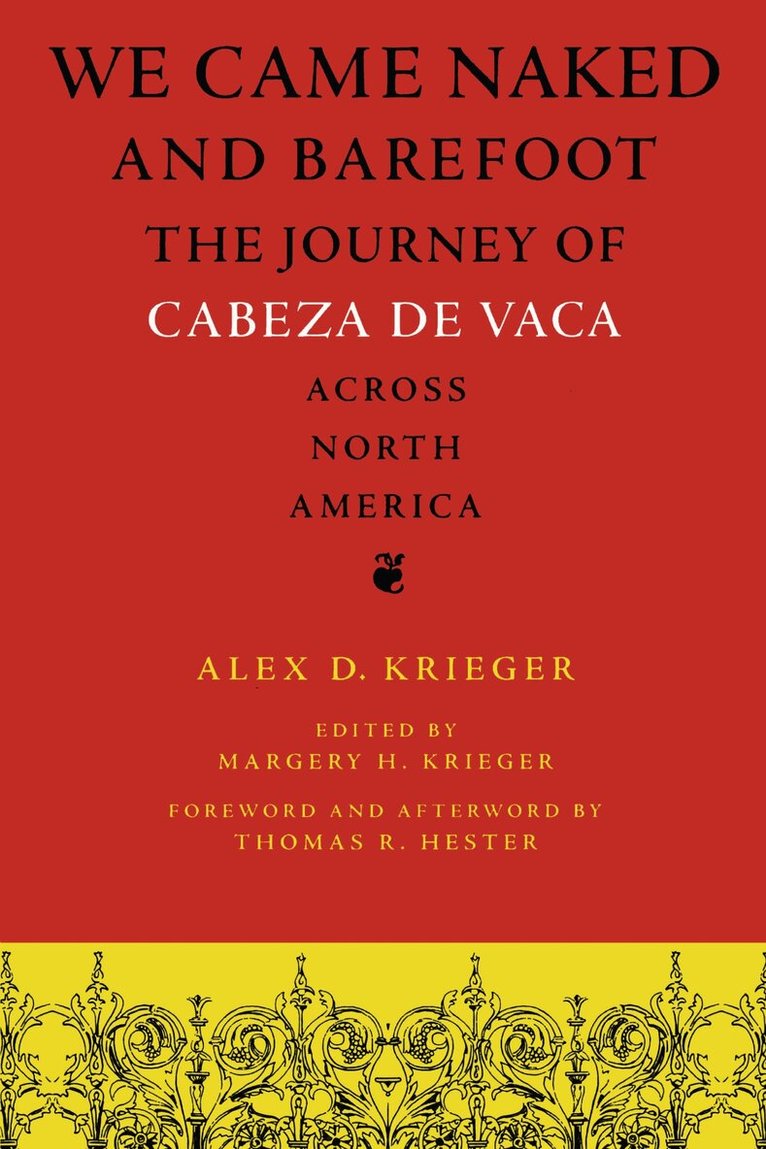
Second place, Presidio La Bahia Award, Sons of the Republic of Texas, 2003Perhaps no one has ever been such a survivor as Álvar NÚÑez Cabeza de Vaca. Member of a 600-man expedition sent out from Spain to colonize "La Florida" in 1527, he survived a failed exploration of the west coast of Florida, an open-boat crossing of the Gulf of Mexico, shipwreck on the Texas coast, six years of captivity among native peoples, and an arduous, overland journey in which he and the three other remaining survivors of the original expedition walked some 1,500 miles from the central Texas coast to the Gulf of California, then another 1,300 miles to Mexico City. The story of Cabeza de Vaca has been told many times, beginning with his own account, RelaciÓn de los naufragios, which was included and amplified in Gonzalo Fernando de Oviedo y VÁldez's Historia general de las Indias. Yet the route taken by Cabeza de Vaca and his companions remains the subject of enduring controversy. In this book, Alex D. Krieger correlates the accounts in these two primary sources with his own extensive knowledge of the geography, archaeology, and anthropology of southern Texas and northern Mexico to plot out stage by stage the most probable route of the 2,800-mile journey of Cabeza de Vaca. This book consists of several parts, foremost of which is the original English version of Alex Krieger's dissertation (edited by Margery Krieger), in which he traces the route of Cabeza de Vaca and his companions from the coast of Texas to Spanish settlements in western Mexico. This document is rich in information about the native groups, vegetation, geography, and material culture that the companions encountered. Thomas R. Hester's foreword and afterword set the 1955 dissertation in the context of more recent scholarship and archaeological discoveries, some of which have supported Krieger's plot of the journey. Margery Krieger's preface explains how she prepared her late husband's work for publication. Alex Krieger's original translations of the Cabeza de Vaca and Oviedo accounts round out the volume.
269 kr
Skickas inom 10-15 vardagar
On a remote mountainside 2,000 meters above sea level in the northern Sierra Madre Oriental, the rockshelter at La Calsada has yielded basic archaeological data for one of the least understood regions of prehistoric North America, the state of Nuevo LeÓn in northern Mexico. This comprehensive site report, with detailed information on artifacts and stratigraphy, provides baseline data for further explorations in the region and comparisons with other North American hunter-gatherer groups.Radiocarbon dating traces the earliest component at the site to 8600-7500 B.C., giving La Calsada arguably the earliest well-dated lithic complex in Mexico. Nance describes some 1,140 recovered stone tools, with comparisons to the archaeology of southern and southwestern Texas, as well as reported sites in Tamaulipas, Coahuila, and Nuevo LeÓn, Mexico.From the lithic and stratigraphic analysis, Nance deduces occupational patterns at the site, beginning with Paleo-Indian cultures that lived in the area until about 7500 B.C. Through changes in tool technology, he follows the rise of the Abasolo tradition around 3000 B.C. and the appearance of a new culture with a radically different lithic industry around 1000 A.D.
324 kr
Skickas inom 10-15 vardagar
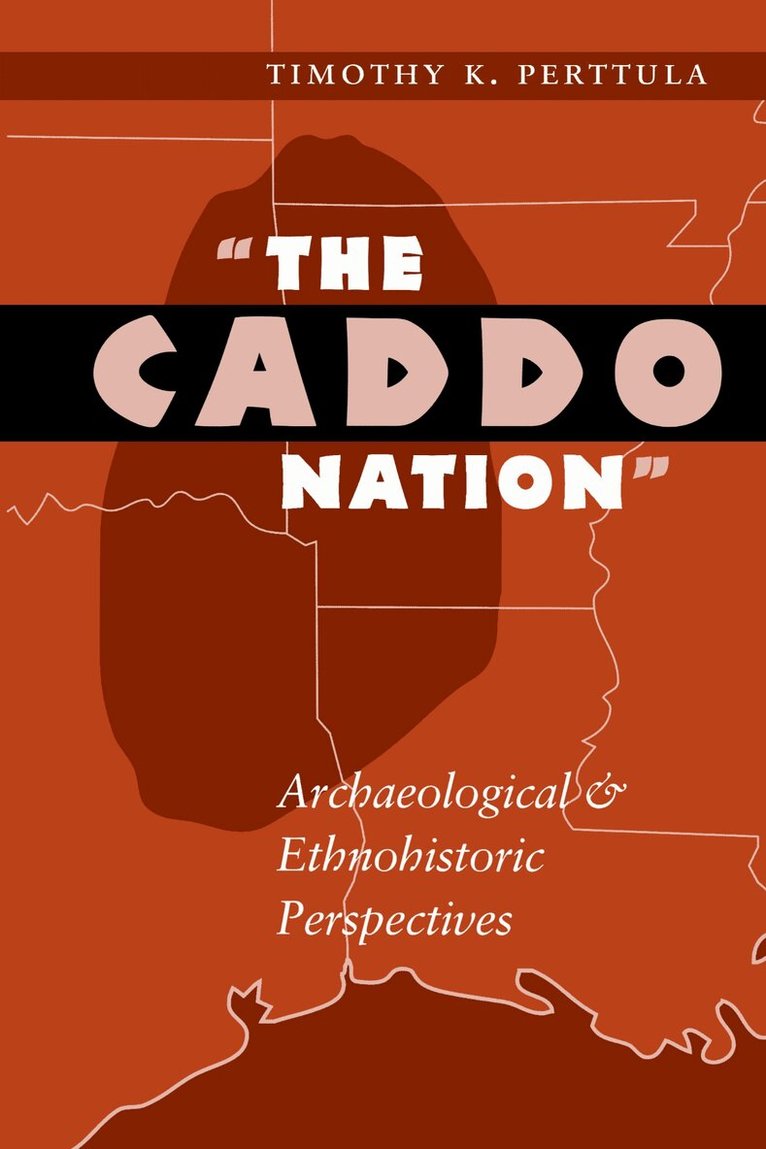
First published in 1992 and now updated with a new preface by the author and a foreword by Thomas R. Hester, "The Caddo Nation" investigates the early contacts between the Caddoan peoples of the present-day Texas, Louisiana, Oklahoma, and Arkansas region and Europeans, including the Spanish, French, and some Euro-Americans.Perttula's study explores Caddoan cultural change from the perspectives of both archaeological data and historical, ethnographic, and archival records. The work focuses on changes from A.D. 1520 to ca. A.D. 1800 and challenges many long-standing assumptions about the nature of these changes.
Karankawa Indians of Texas
An Ecological Study of Cultural Tradition and Change
Häftad, Engelska, 1996
269 kr
Skickas inom 10-15 vardagar
Popular lore has long depicted the Karankawa Indians as primitive scavengers (perhaps even cannibals) who eked out a meager subsistence from fishing, hunting and gathering on the Texas coastal plains. That caricature, according to Robert Ricklis, hides the reality of a people who were well-adapted to their environment, skillful in using its resources, and successful in maintaining their culture until the arrival of Anglo-American settlers.The Karankawa Indians of Texas is the first modern, well-researched history of the Karankawa from prehistoric times until their extinction in the nineteenth century. Blending archaeological and ethnohistorical data into a lively narrative history, Ricklis reveals the basic lifeway of the Karankawa, a seasonal pattern that took them from large coastal fishing camps in winter to small, dispersed hunting and gathering parties in summer. In a most important finding, he shows how, after initial hostilities, the Karankawa incorporated the Spanish missions into their subsistence pattern during the colonial period and coexisted peacefully with Euroamericans until the arrival of Anglo settlers in the 1820s and 1830s. These findings will be of wide interest to everyone studying the interactions of Native American and European peoples.
462 kr
Skickas inom 10-15 vardagar
2003 – Texas Old Missions and Forts Restoration Association Book Award Winner – Texas Catholic Historical Society2004 – Finalist: Friends of the Dallas Public Library Award for Book Making the Most Significant Contribution to Knowledge – Texas Institute of LettersThe region that now encompasses Central Texas and northern Coahuila, Mexico, was once inhabited by numerous Native hunter-gather groups whose identities and lifeways we are only now learning through archaeological discoveries and painstaking research into Spanish and French colonial records. From these key sources, Maria F. Wade has compiled this first comprehensive ethnohistory of the Native groups that inhabited the Texas Edwards Plateau and surrounding areas during most of the Spanish colonial era.Much of the book deals with events that took place late in the seventeenth century, when Native groups and Europeans began to have their first sustained contact in the region. Wade identifies twenty-one Native groups, including the Jumano, who inhabited the Edwards Plateau at that time. She offers evidence that the groups had sophisticated social and cultural mechanisms, including extensive information networks, ladino cultural brokers, broad-based coalitions, and individuals with dual-ethnic status. She also tracks the eastern movement of Spanish colonizers into the Edwards Plateau region, explores the relationships among Native groups and between those groups and European colonizers, and develops a timeline that places isolated events and singular individuals within broad historical processes.