TEXTURES: Philosophy / Literature / Culture - Böcker
Visar alla böcker i serien TEXTURES: Philosophy / Literature / Culture. Handla med fri frakt och snabb leverans.
7 produkter
7 produkter
699 kr
Skickas inom 10-15 vardagar
Dramas of Culture is shaped by twelve carefully interwoven interdisciplinary essays on the role of performance as inscribed within contemporary cultural debate. Part One addresses the recent cultural turn in scholarship and public affairs and offers three provocative discussions of its genealogy, goals, and shortcomings. Underpinning these arguments are the key dramatic elements of language, performativity, and spectacle. Part Two stresses the constitutive roles of scene and setting, melodrama, and tragic conflict for literary theory, political thought, and dialectical philosophy, each with direct bearings on contemporary cultural studies. Parts Three and Four turn to the intellectual and cultural significance of specific plays in the Western repertoire. Part Three examines several major efforts to rethink the nature of tragedy as a dramatic genre, emphasizing its capacity to reveal the fragility and provisionality of culture, while Part Four focuses on prominent examples of the shifting relations among drama, history, and processes of cultural change.
1 343 kr
Skickas inom 10-15 vardagar
Bringing together an international and interdisciplinary group of scholars, Intermedialities: Philosophy, Arts, Politics is a comprehensive collection devoted to the new field of research called "intermedialities." The concept of intermedialities stresses the necessity of situating philosophical and political debates on social relations in the divergent contexts of media theories, avant-garde artistic practices, continental philosophy, feminism, and political theory. The "intermedial" approach to social relations does not focus on the shared identity but instead on the epistemological, ethical, and political status of inter (being-in-between). At stake here are the political analyses of new modes of being in common that transcend national boundaries, the critique of the new forms of domination that accompany them, and the search for new emancipatory possibilities. Opening a new approach to social relations, intermedialities investigates not only engagements between already constituted positions but even more the interval, antagonism, and differences that form and decenter these positions. Consequently, in opposition to the resurgence of cultural and ethnic particularisms and to the leveling of difference produced by globalization, the political and ethical analysis of the "in-between" enables a conception of community based on difference, exposure, and interaction with others rather than on an identification with a shared identity. Investigations of "in-betweenness," both as medium specific and between heterogeneous "sites" of inquiry, range here from philosophical conceptuality to artistic practices, from the political circulation of money and power to the operation of new technologies. They inevitably invoke the crucial role of embodiment in creative thought and collective acting. As a mediating instance between the psyche and society, matter and spirit, nature and culture, and biology and technology, the body is another interval forming and informed by socio-linguistic relations. As these com
675 kr
Skickas inom 10-15 vardagar
Bringing together an international and interdisciplinary group of scholars, Intermedialities: Philosophy, Arts, Politics is a comprehensive collection devoted to the new field of research called "intermedialities." The concept of intermedialities stresses the necessity of situating philosophical and political debates on social relations in the divergent contexts of media theories, avant-garde artistic practices, continental philosophy, feminism, and political theory. The "intermedial" approach to social relations does not focus on the shared identity but instead on the epistemological, ethical, and political status of inter (being-in-between). At stake here are the political analyses of new modes of being in common that transcend national boundaries, the critique of the new forms of domination that accompany them, and the search for new emancipatory possibilities. Opening a new approach to social relations, intermedialities investigates not only engagements between already constituted positions but even more the interval, antagonism, and differences that form and decenter these positions. Consequently, in opposition to the resurgence of cultural and ethnic particularisms and to the leveling of difference produced by globalization, the political and ethical analysis of the "in-between" enables a conception of community based on difference, exposure, and interaction with others rather than on an identification with a shared identity. Investigations of "in-betweenness," both as medium specific and between heterogeneous "sites" of inquiry, range here from philosophical conceptuality to artistic practices, from the political circulation of money and power to the operation of new technologies. They inevitably invoke the crucial role of embodiment in creative thought and collective acting. As a mediating instance between the psyche and society, matter and spirit, nature and culture, and biology and technology, the body is another interval forming and informed by socio-linguistic relations. As these com
1 142 kr
Skickas inom 10-15 vardagar
The concept of chiasm has played major role in continental philosophy, where it has referred to various phenomenological and hermeneutic structures of reversibility, intertwining, and encounter. In Chiasmatic Encounters: Art, Ethics, Politics, fourteen international contributors representing various fields of expertise analyze this central concept and its significance for contemporary cultural theory. The authors discuss the work of major philosophers like Merleau-Ponty, Beauvoir, Habermas, Levinas, Derrida, and Deleuze, adapting their ideas of chiasmatic relations to cultural analysis.As the internal and external horizons of perception and experience are intertwined and reversed, various cultural texts, like a Vermeer painting, a symphony of Sibelius, a David Lynch movie, or a young girl walking in her summer dress, are seen from new and unexpected angles. The book also addresses the chiasmatic crossing between ethics and politics-- between unconditional ethical responsibility and always conditional political choices. Representing the cutting edge of contemporary cultural theory and interdisciplinary thinking, Chiasmatic Encounters is essential reading for anyone working in continental philosophy, aesthetics, or political theory.
1 142 kr
Skickas inom 10-15 vardagar
De-Signing Design: Cartographies of Theory and Practice throws new light on the terrain between theory and practice in transdisciplinary discourses of design and art. The editors, Elizabeth Grierson, Harriet Edquist, and Hélène Frichot, bring together diverse approaches to design theory, practice, and philosophy from leading scholars in Australia, New Zealand, Japan, and the United Kingdom. Themes include spatiality, difference, cultural aesthetics, and identity in the expanded field of place-making and being. The concept that design can be de-signed is presented as a way of exploring different approaches to an experimental and experiential thinking-doing that promises to further open up research possibilities in the fields of design and art thinking and practice. The book enacts a series of cartographic devices to articulate the spaces between theory and practice.
1 698 kr
Skickas inom 10-15 vardagar
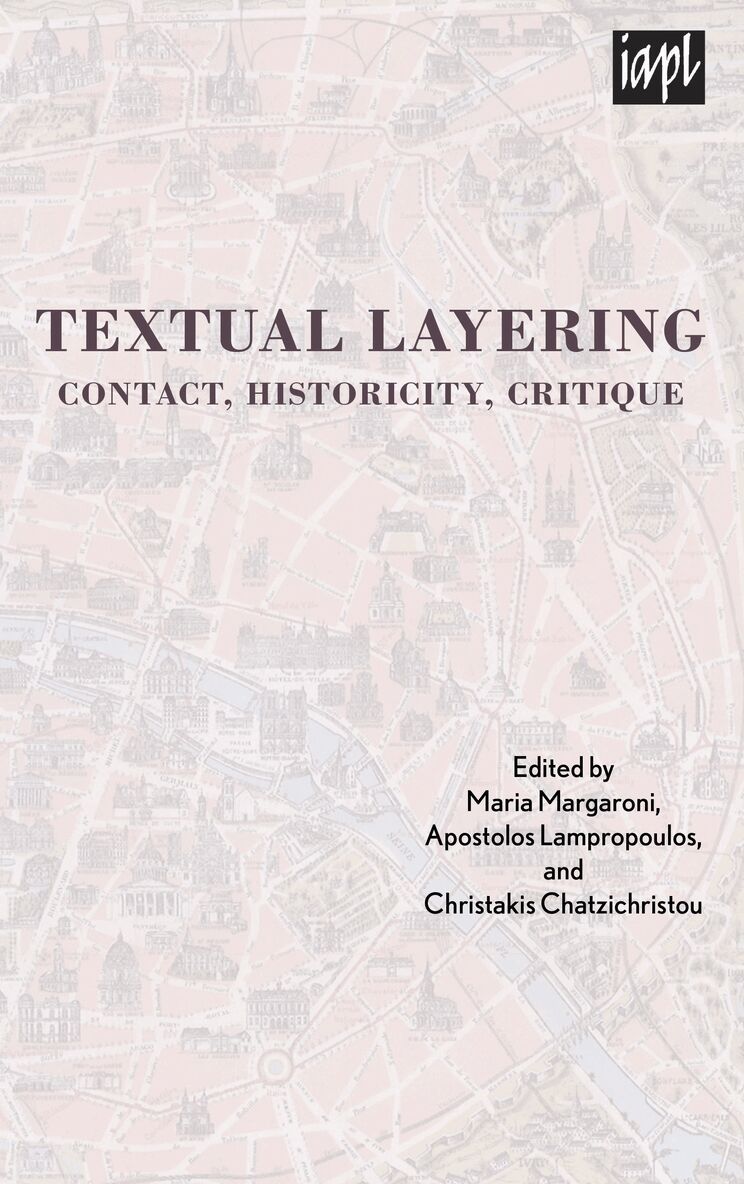
Textual Layering: Contact, Historicity, Critique sets out to rethink our relation to textual tradition against the background of several contemporary developments, including the emergence of digital culture, the increasing spectacularization of psychic as well as social life, the renegotiation of historical thinking, and the precarious position of the theoretical humanities within academia. To this end, the volume re-invests the concept of “layering,” a concept currently used in a wide range of fields, including metaphor studies and linguistics, cybernetics, the social sciences, art, and architecture. Drawing on existing definitions of “layering,” the chapters in this book return to and re-appraise some of the most crucial concerns in the post-1960s theoretical scene: that is, concerns over the strained interplay between writing and the body; textuality and history; critique, différance and the feminine; memory, trace, and the immemorial. The aim of the diverse—often polemical—analyses carried out in this volume is to reactivate the critical force of textual tradition today through a renewed appreciation of its historical embeddedness, its libidinal sources, as well as its complex economy of separation and contact, diachronicity and synchronicity, (re)layering and de-layering. This collection will be of interest to scholars of continental philosophy, literary theory, gender studies, architecture, film and visual culture studies, psychoanalysis, postmodernism, post-colonial studies, and political and social theory.
1 544 kr
Skickas inom 10-15 vardagar
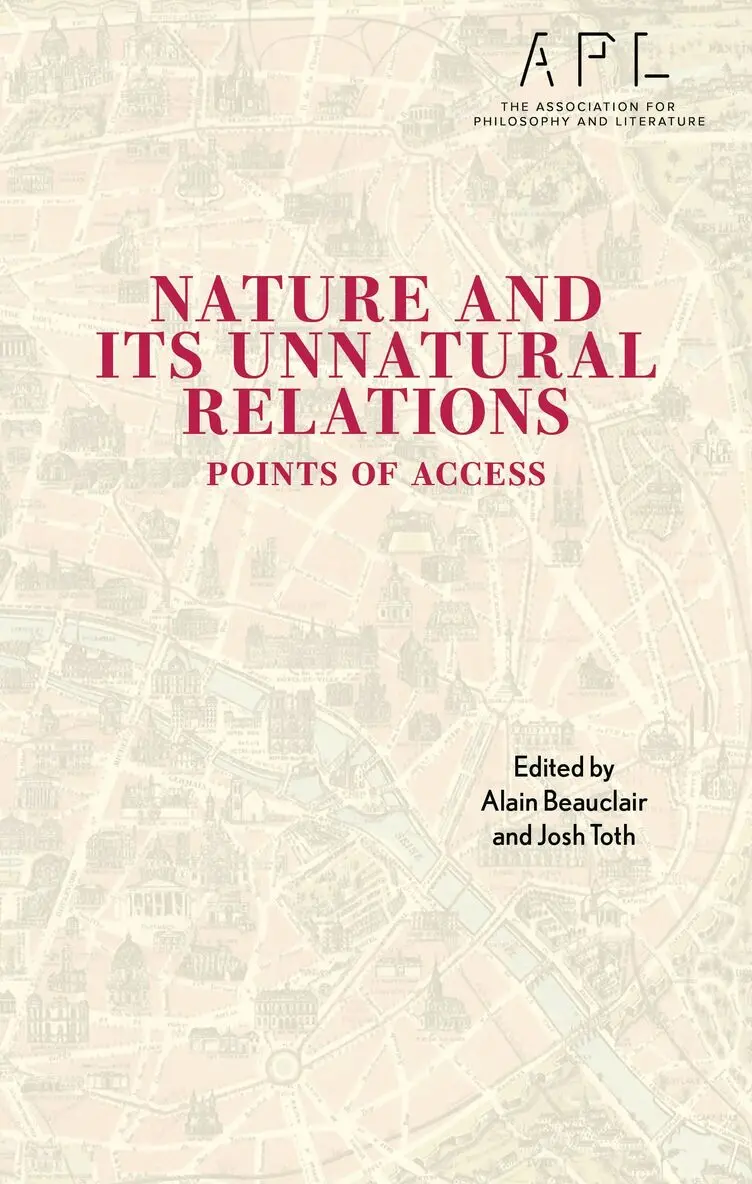
Consisting of contributions from a host of international scholars (in fields as diverse as literature, architecture, philosophy, and education), Alain Beauclair and Josh Toth’s Nature and Its Unnatural Relations: Points of Access intercedes in ongoing debates about accessing, defining, and respecting a world humans continue to misuse and misunderstand—and that, as a result, is becoming increasingly inhospitable. The chapters shuttle between a variety of aesthetic and philosophical concerns—from theology and Biblical interpretation to colonialism, hermeneutics, phenomenology, worlding, posthumanism, and speculative realism. These varied approaches are united by a single aporetic thread: efforts to surmount the problem of “human access” invariably risk repeating (ever more blindly) the violence and immorality of anthropocentrism. We seem trapped in the cul-de-sac of the Anthropocene. To discover potential new exits, the contributors consider whether it is possible or advisable to abandon so-called “correlationism”—of art, of literature, of technology. If it is, then how? If not, how might we more ethically reembrace our innately corruptive relations with a world of non-human others? How might we free “nature” (finally) from the demands of human action and human thought without mendaciously reinscribing humanity’s distance from it or denying a proximity that is only traversable by artificial means?