The Henry E. Sigerist Series in the History of Medicine – serie
Visar alla böcker i serien The Henry E. Sigerist Series in the History of Medicine. Handla med fri frakt och snabb leverans.
5 produkter
5 produkter
Subjected to Science
Human Experimentation in America before the Second World War
Häftad, Engelska, 1998
343 kr
Skickas inom 7-10 vardagar
Long before the U.S. government began conducting secret radiation and germ-warfare experiments, and long before the Tuskegee syphilis experiments, medical professionals had introduced-and hotly debated the ethics of-the use of human subjects in medical experiments. In Subjected to Science, Susan Lederer provides the first full-length history of biomedical research with human subjects in the earlier period, from 1890 to 1940. Lederer offers detailed accounts of experiments-benign and otherwise-conducted on both healthy and unhealthy men, women, and children, including the yellow fever experiments (which ultimately became the subject of a Broadway play and Hollywood film), Udo Wile's "dental drill" experiments on insane patients, and Hideyo Noguchi's syphilis experiments, which involved injecting a number of healthy children and adults with the syphilis germ, luetin.
406 kr
Skickas inom 5-8 vardagar
In The Empty Cradle, Margaret Marsh and Wanda Ronner delve into the origins of the many misconceptions surrounding infertility as they explore how medical and cultural beliefs emerged throughout its controversial history. Drawing on a wide variety of sources-including intimate diaries and letters, patient records, memoirs, medical literature, and popular magazines- The Empty Cradle investigates the social, cultural, scientific, and medical dimensions of infertility over the past three hundred years. Marsh and Ronner explore reactions-among both physicians and husbands-to the emerging scientific evidence that infertility was a condition for which men and women bear equal responsibility. The book concludes that infertility is still a subject affected by myth and misunderstanding. A lively and compelling history of a complex medical and cultural phenomenon, The Empty Cradle brings a valuable perspective to current debates about how we should think about and address the experience of infertility in our own time.
282 kr
Tillfälligt slut
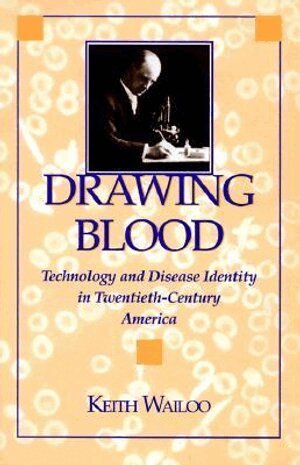
In Drawing Blood, medical historian Keith Wailoo uses the story of blood diseases to explain how physicians in this century wielded medical technology to define disease, carve out medical specialties, and shape political agendas. As Wailoo's account makes clear, the seemingly straightforward process of identifying disease is invariably influenced by personal, professional, and social factors-and as a result produces not only clarity and precision but also bias and outright error. Drawing Blood reveals the ways in which physicians and patients as well as the diseases themselves are simultaneously shaping and being shaped by technology, medical professionalization, and society at large. This thought-provoking cultural history of disease, medicine, and technology offers an important perspective for current discussions of HIV and AIDS, genetic blood testing, prostate-specific antigen, and other important issues in an age of technological medicine. "Makes clear that the high stakes involved in medical technology are not just financial, but moral and far reaching.They have been harnessed to describe clinical phenomena and to reflect social and cultural realities that influence not only medical treatment but self-identity, power, and authority."-Susan E. Lederer, H-Net Humanities & Social Sciences On Line "Wailoo's masterful study of hematology and its disease discourse is a model of interdisciplinarity, combining cultural analysis, social history, and the history of medical ideas and technology to produce a complex narrative of disease definition, diagnosis, and treatment...He reminds us that medical technology is a neutral artifact of history. It can be, and has been, used to clarify and to cloud the understanding of disease, and it has the potential both to constrain and to emancipate its subjects."-Regina Morantz-Sanchez, Journal of Interdisciplinary History
454 kr
Skickas inom 5-8 vardagar
Although the physicians and surgeons of eighteenth-century Germany have attracted previous scholarly inquiry, little is known about their day-to-day activities-and even less about the ways in which those activities fit into the economic, political, and social structures of the time. In this groundbreaking work, Mary Lindemann brings together the scholarly traditions of the history of structures, mentalities, and everyday life to shed light on this complex relationship. Opening with a discussion of the interplay of state and society in the independent German state of Braunschweig-Wolfenbuttel, Lindemann explains how medical policy was "made" at all levels. She describes the striking array of healers active in the eighteenth century: from physicians to all those consulted in medical situations-friends and neighbors, executioners and barber-surgeons, bathmasters, midwives, and apothecaries. She surveys the available vital statistics and more personal narrative accounts, such as reports on the "Increase and Decrease of the Inhabitants," and medical topographies.Lindemann also examines the process of becoming a patient and explores the effects of the social, economic, political, and cultural milieus on how medicine was practiced in the everyday world of the village, the neighborhood, and the town.
365 kr
Skickas inom 7-10 vardagar
In The Citizen-Patient in Revolutionary and Imperial Paris, Dora B. Weiner examines the experiences of the sick and handicapped indigent men, women, and children in Paris during the French Revolution and Empire. Weiner argues that significant groups of Revolutionary physicians and reformers interpreted equality to include every citizen's right to health care. These reformers faced political, religious, and professional opposition, and daunting problems of funding. And they needed the participation of the poor as "citizen-patients," patients with both rights and duties, who acted as responsible partners in the pursuit and maintenance of public and personal health. Weiner surveys the 20,000 patients institutionalized in twenty Paris hospitals and hospices and explains how the Revolution changed the status and work of nurses, pharmacists, midwives, and students, as well as doctors. Clinical teaching, professional specialization, and approaches to public health were all affected. Weiner emphasizes health care for children, deaf and blind people, and mentally ill patients and underscores the role of women as administrators and dispensers of hospital care.