• Fri frakt över 249 kr
  • •
  • Snabba leveranser
  • •
  • Billiga böcker
Kundservice

Du är på sajten för privatpersoner.

Företag, bibliotek eller offentlig verksamhet?

Du handlar på classic.bokus.com, där alla dina funktioner finns intakta.
Till classic.bokus.com
Bokus logotyp. Gå till startsidan.
  • Erbjudanden
  • Nyheter
  • Student
  • Topplistor
  • Barn & ungdom
  • Bokus Play
  • E-böcker
  • Pocketböcker
  • Spel & pussel

10% rabatt på allt med kod NYSTART10 →

Sidfot

Mina sidor

    Hjälp

    • Kundservice
    • Vanliga frågor och svar
    • Frakt och leverans
    • Retur vid ångerrätt
    • Reklamera vara
    • Betalning
    • Köpvillkor
    • Allmänna villkor
    • Information om webbplatsens tillgänglighet

    Om Bokus

    • Om oss
    • Pressrum
    • För studenter
    • För företag
    • För bibliotek och offentlig verksamhet
    • För leverantörer
    • Hållbarhet

    Populärt

    • Aktuella erbjudanden
    • Presentkort
    • Studentlitteratur
    • Nya böcker
    • Topplistor
    • Signerade böcker
    • Engelska böcker

    Inspiration

    • Boktips
    • BookTok
    • Populära bokserier
    • Barnbokskaraktärer
    • Populära författare
    Logotyp för Bokus
    Följ oss på Facebook (extern länk)Följ oss på Instagram (extern länk)Följ oss på YouTube (extern länk)Följ oss på TikTok (extern länk)
    bokus @ CookiesAnpassa cookiesIntegritetspolicyKöpvillkor
    Till Citymail hemsida (extern länk)Till Budbee hemsida (extern länk)Till Postnord hemsida (extern länk)Till Schenker hemsida (extern länk)Till Early Bird hemsida (extern länk)Till Walleys hemsida (extern länk)
    1. Medicin
    2. Medicin: allmänt
    3. Medicinhistoria

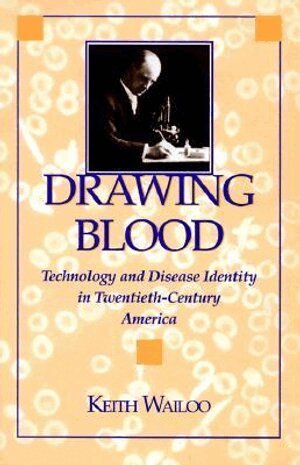
    Drawing Blood

    Technology and Disease Identity in Twentieth-Century America

    AvKeith Wailoo

    Häftad, Engelska, 1999

    Del i serien The Henry E. Sigerist Series in the History of Medicine

    282 kr

    Tillfälligt slut

    Beskrivning

    In Drawing Blood, medical historian Keith Wailoo uses the story of blood diseases to explain how physicians in this century wielded medical technology to define disease, carve out medical specialties, and shape political agendas. As Wailoo's account makes clear, the seemingly straightforward process of identifying disease is invariably influenced by personal, professional, and social factors-and as a result produces not only clarity and precision but also bias and outright error. Drawing Blood reveals the ways in which physicians and patients as well as the diseases themselves are simultaneously shaping and being shaped by technology, medical professionalization, and society at large. This thought-provoking cultural history of disease, medicine, and technology offers an important perspective for current discussions of HIV and AIDS, genetic blood testing, prostate-specific antigen, and other important issues in an age of technological medicine. "Makes clear that the high stakes involved in medical technology are not just financial, but moral and far reaching.They have been harnessed to describe clinical phenomena and to reflect social and cultural realities that influence not only medical treatment but self-identity, power, and authority."-Susan E. Lederer, H-Net Humanities & Social Sciences On Line "Wailoo's masterful study of hematology and its disease discourse is a model of interdisciplinarity, combining cultural analysis, social history, and the history of medical ideas and technology to produce a complex narrative of disease definition, diagnosis, and treatment...He reminds us that medical technology is a neutral artifact of history. It can be, and has been, used to clarify and to cloud the understanding of disease, and it has the potential both to constrain and to emancipate its subjects."-Regina Morantz-Sanchez, Journal of Interdisciplinary History

    Produktinformation

    • Utgivningsdatum:1999-04-16
    • Mått:152 x 229 x 19 mm
    • Vikt:425 g
    • Format:Häftad
    • Språk:Engelska
    • Serie:The Henry E. Sigerist Series in the History of Medicine
    • Antal sidor:304
    • Förlag:Johns Hopkins University Press
    • ISBN:9780801861819
    • Utmärkelser:Winner of Arthur Viseltear Prize 2003 (United States)

    Utforska kategorier

    • Medicinhistoria inom Medicin
    • Hematologi inom Medicin
    • Samhällsmedicin och preventiv medicin inom Medicin

    Mer om författaren

    Keith Wailoo is an associate professor in the Department of Social Medicine and the Department of History at the University of North Carolina at Chapel Hill.

    Recensioner i media

    Wailoo's analysis breaks new ground... he uses a wide array of sources and types of data to carry out an insightful analysis of a diverse sample of 20th-century hematologic diseases. -- Robert A. Aronowitz, M.D. New England Journal of Medicine This book is a marvelous example of how many threads can be spun together to create a compelling narrative. It interweaves histories of disease over the past century, of technology, of hematology, and of medicine in the broadest sense...This book [is] a fine history of the practice of medicine... Drawing Blood is first-class history at many levels and can be read with profit and pleasure by the clinician, historian, non-medical scientist, and interested layperson. Science Boldly and skillfully, Wailoo analyzes not only the role of physicians but of research hospitals and pharmaceutical companies. In addition, he shows how things like race, gender, and lifestyle influenced how physicians defined and responded to the very diseases that were called into existence by the new technologies they employed. American Historical Review Makes clear that the high stakes involved in medical technology are not just financial, but moral and far reaching. They have been harnessed to describe clinical phenomena and to reflect social and cultural realities that influence not only medical treatment but self-identity, power, and authority. -- Susan E. Lederer H-Sci-Med-Tech, H-Net Wailoo's masterful study of hematology and its disease discourse is a model of interdisciplinarity, combining cultural analysis, social history, and the history of medical ideas and technology to produce a complex narrative of disease definition, diagnosis, and treatment... He reminds us that medical technology is a neutral artifact of history. It can be, and has been, used to clarify and to cloud the understanding of disease, and it has the potential both to constrain and to emancipate its subjects. -- Regina Morantz-Sanchez Journal of Interdisciplinary History Pain: A Political History isn't your usual medical focus, but provides socio-political emphasis on compassionate relief and society's liberal trends and conservative actions, discussing the development of pain theories in politics, law and social circles and how the evolution of a post-war pain relief economy in response to recovering soldiers fostered the rise of a liberal pain standard and changing attitudes about pain's realities and limitations. Its wide-ranging and unusual focus makes this a "must" not necessarily for health holdings, but for those looking at the bigger picture. -- James A Cox The Midwest Book Review ... a lively and readable account of the complex and evolving interplay between pain medicine, public policy and politics in the United States... Medical History

    Innehållsförteckning

    • PrefaceAcknowledgementsIntroduction: Putting the Question to TechnologyChapter 1. "Chlorosis" Remembered: Disease and the Moral Management of American WomenChapter 2. The Rise and Fall of Splenic Anemia: Surgical Identity and Ownership of a Blood Disease Chapter 3. Blood Work: The Scientific Management of Aplastic Anemia and Industrial Poisoning Chapter 4. The Corporate "Conquest" of Pernicious Anemia: Technology, Blood Researchers, and the ConsumerChapter 5. Detecting "Negro Blood": Black and White Identities and the Reconstruction of Sickle Cell AnemiaChapter 6. "The Forces That Are Molding Us": The National Politics of Blood and Disease After World War IIConclusion: Disease Identity in the Age of Technological MedicineNotesIndex