The Literary Agenda - Böcker
Visar alla böcker i serien The Literary Agenda. Handla med fri frakt och snabb leverans.
13 produkter
13 produkter
271 kr
Skickas inom 5-8 vardagar
Discusses how young adult fiction offers new ways of thinking about climate change and definitions of citizenship.The Necessity of Young Adult Fiction argues that YA fiction helps us to think about some of most pressing problems of the twenty-first century by offering imaginative reconceptualizations about identity, nation, family, and the human relationship to the planet. Using examples from YA fiction that range from the Harry Potter series to Nnedi Okorafor's trilogy set in contemporary Nigeria, this book argues that the cultural work of YA fiction shapes readers perceptions, making them receptive to--and invested in--the possibility of positive social change.The novels examined could all be considered "fantastical," but they offer insights into the real world that all readers--and particularly young adult readers--might draw on in order to reimagine social structures and the well-being of the planet. The book is designed to bring readers into the conversation about how we might create cosmopolitan societies that are shaped around conversation and engagement rather than fear and isolation. Each of these novels, in different ways, illustrate the dangers inherent in fundamentalist visions of the world.Through its discussions about the relationships between reading and citizenship, monsters and families, the local and the global, The Necessity of Young Adult Fiction demonstrates that YA fiction is doing some of the most important and creative work in literature today.
302 kr
Skickas inom 5-8 vardagar
The Literary Agenda is a series of short polemical monographs about the importance of literature and of reading in the wider world and about the state of literary education inside schools and universities. The category of 'the literary' has always been contentious. What is clear, however, is how increasingly it is dismissed or is unrecognised as a way of thinking or an arena for thought. It is sceptically challenged from within, for example, by the sometimes rival claims of cultural history, contextualized explanation, or media studies. It is shaken from without by even greater pressures: by economic exigency and the severe social attitudes that can follow from it; by technological change that may leave the traditional forms of serious human communication looking merely antiquated. For just these reasons this is the right time for renewal, to start reinvigorated work into the meaning and value of literary reading.For the Internet and digitial generation, the most basic human right is the freedom to read. The Web has indeed brought about a rapid and far-reaching revolution in reading, making a limitless global pool of literature and information available to anyone with a computer. At the same time, however, the threats of censorship, surveillance, and mass manipulation through the media have grown apace. Some of the most important political battles of the twenty-first century have been fought--and will be fought--over the right to read. Will it be adequately protected by constitutional guarantees and freedom of information laws? Or will it be restricted by very wealthy individuals and very powerful institutions? And given increasingly sophisticated methods of publicity and propaganda, how much of what we read can we believe?This book surveys the history of independent sceptical reading, from antiquity to the present. It tells the stories of heroic efforts at self-education by disadvantaged people in all parts of the world. It analyzes successful reading promotion campaigns throughout history (concluding with Oprah Winfrey) and explains why they succeeded. It also explores some disturbing current trends, such as the reported decay of attentive reading, the disappearance of investigative journalism, 'fake news', the growth of censorship, and the pervasive influence of advertisers and publicists on the media--even on scientific publishing. For anyone who uses libraries and Internet to find out what the hell is going on, this book is a guide, an inspiration, and a warning.
363 kr
Skickas
The Literary Agenda is a series of short polemical monographs about the importance of literature and of reading in the wider world and about the state of literary education inside schools and universities. The category of 'the literary' has always been contentious. What is clear, however, is how increasingly it is dismissed or is unrecognised as a way of thinking or an arena for thought. It is sceptically challenged from within, for example, by the sometimes rival claims of cultural history, contextualized explanation, or media studies. It is shaken from without by even greater pressures: by economic exigency and the severe social attitudes that can follow from it; by technological change that may leave the traditional forms of serious human communication looking merely antiquated. For just these reasons this is the right time for renewal, to start reinvigorated work into the meaning and value of literary reading.Being Literate in the 21st Century wrestles with critical, timely questions for 21st-century society. How does literacy change the human brain? What does it mean to be a literate or a non-literate person in the present digital culture: for example, what will be lost in the present reading brain, and what will be gained with different mediums than print? What are the consequences of a digital reading brain for the literary mind and for writing itself ? Can knowledge about the reading brain and advances in technology offer new forms of literacy and new forms of knowledge to the peoples in remote regions of the world who would never otherwise become literate? By using both research from cognitive neuroscience, psycholinguistics, child development, and education, and considering literary examples from world literature, Maryanne Wolf plots a course that seeks to preserve the deepest forms of reading from the past, while developing the cognitive skills necessary for this century's next generation.
312 kr
Skickas inom 5-8 vardagar
The Literary Agenda is a series of short polemical monographs about the importance of literature and of reading in the wider world and about the state of literary education inside schools and universities. The category of 'the literary' has always been contentious. What is clear, however, is how increasingly it is dismissed or is unrecognised as a way of thinking or an arena for thought. It is sceptically challenged from within, for example, by the sometimes rival claims of cultural history, contextualized explanation, or media studies. It is shaken from without by even greater pressures: by economic exigency and the severe social attitudes that can follow from it; by technological change that may leave the traditional forms of serious human communication looking merely antiquated. For just these reasons this is the right time for renewal, to start reinvigorated work into the meaning and value of literary reading. Medical Humanities comprises disciplines as diverse as literature, the visual and performing arts, the history of medicine, bioethics. It claims a vast range of philosophical and political agendas, goals and purposes, including the education of medical students in areas of clinical empathy, critical thinking, ethical awareness, gender and race issues and cross-cultural medicine. Josie Billington argues that in so far as literature is offered as adding value to medical education in health training and practice, that defence tends to become instrumental in nature, whether consciously and explicitly, or otherwise. This book is interested, more widely, in the power of the arts as a remedial force. Following an introduction surveying the idea of the Medical Humanities, its history, and its development, the book's four chapters will look at illness and health as defined in medical terms and as complicated within the field of imaginative literature; at narrative and storytelling within the therapeutic meeting of medical and literary approaches; at reading groups and private reading, considering contemporary models of literary reading as a template for redefining literature's place and power not only within the discipline of Medical Humanities but within the wider world in relation to concerns of mental wellbeing that affect us all.
337 kr
Skickas inom 5-8 vardagar
The Literary Agenda is a series of short polemical monographs about the importance of literature and of reading in the wider world and about the state of literary education inside schools and universities. The category of 'the literary' has always been contentious. What is clear, however, is how increasingly it is dismissed or is unrecognised as a way of thinking or an arena for thought. It is sceptically challenged from within, for example, by the sometimes rival claims of cultural history, contextualized explanation, or media studies. It is shaken from without by even greater pressures: by economic exigency and the severe social attitudes that can follow from it; by technological change that may leave the traditional forms of serious human communication looking merely antiquated. For just these reasons this is the right time for renewal, to start reinvigorated work into the meaning and value of literary reading.We live in days, no leaving them or choosing them. What's in a day? With their natural narrative arc they begin and they end, and in between we talk about how they are going or wonder 'where' they have gone. They each have their small stories, non-stories, ephemeral stories. So every day slips by, most days much like most other days. We eat, we sleep, we go to work; we endure, enjoy, continue. Day after day, day before day, it is the recurring of no particular story in endless, beginningless succession. At the same time, any single day is also a unique date, with its multi-digit identity, its moment-at last, and never again-of here and now, today. And on longer scales, the slow small shifts of ordinary days and their surrounding stories will eventually remake the days that have been and gone as the times that are no more. An ordinary day from decades, let alone centuries ago must now be a 'once' long passed away, the old days to be regretted-or to be revived in all the curiosity of their historical difference.Everyday Stories makes us think again about the ordinary life we are in, day after day and day by day: always the same, and always slightly changing. Entering into the single day, drawing out the stories that surround us, this book goes into everyday stories of many descriptions, old and new: both in literature and in that story-laden place and time we call real life.
337 kr
Skickas inom 5-8 vardagar
The Literary Agenda is a series of short polemical monographs about the importance of literature and of reading in the wider world and about the state of literary education inside schools and universities. The category of 'the literary' has always been contentious. What is clear, however, is how increasingly it is dismissed or is unrecognised as a way of thinking or an arena for thought. It is sceptically challenged from within, for example, by the sometimes rival claims of cultural history, contextualized explanation, or media studies. It is shaken from without by even greater pressures: by economic exigency and the severe social attitudes that can follow from it; by technological change that may leave the traditional forms of serious human communication looking merely antiquated. For just these reasons this is the right time for renewal, to start reinvigorated work into the meaning and value of literary reading.Seth Lerer presents an original take on tradition in the literary imagination. He asks how we can have an unironic, affective relationship to the literary past in an age marked by historical self-consciousness, critical distance, and shifts in cultural literacy. Tradition: A Feeling for the Literary Past ranges through a set of fiction, poetry, and criticism that makes up our inherited traditions and that also confronts the question of a literary canon and its personal and historical meaning. How are we taught to have a felt experience of literary objects? How do we make our personal anthologies of reading to shape social selves? Why should we care about what literature does both to and for us? This book affirms the value of close and nuanced reading for our understanding of both past and present. Its larger goal is to explore the ways in which the literary past makes us, and in the process, how we create canons for reading, teaching, and scholarship. The writers discussed here were all great readers. Dickens and Orwell, Rushdie and Bradbury, Dickinson and Frost, Anne Bradstreet and Gjertrud Schnackenberg, Chaucer, Dante, Virgil--they all built their literary structures on the scaffold of their bookshelves. Lerer demonstrates how reading the past generates the literary present, and imagines our literate future.
376 kr
Skickas inom 7-10 vardagar
The Literary Agenda is a series of short polemical monographs about the importance of literature and of reading in the wider world and about the state of literary education inside schools and universities. The category of 'the literary' has always been contentious. What is clear, however, is how increasingly it is dismissed or is unrecognised as a way of thinking or an arena for thought. It is sceptically challenged from within, for example, by the sometimes rival claims of cultural history, contextualized explanation, or media studies. It is shaken from without by even greater pressures: by economic exigency and the severe social attitudes that can follow from it; by technological change that may leave the traditional forms of serious human communication looking merely antiquated. For just these reasons this is the right time for renewal, to start reinvigorated work into the meaning and value of literary reading.This short but thought-provoking volume asks the question 'What is it that tragedy makes us know?'. The focus is on tragedy as a mode of representing the experience of radical suffering, pain, or loss, a mode of narrative through which we come to know certain things about ourselves and our world--about its fragility and ours. Through a mixture of historical discussion and close reading of a number of dramatic texts--from Sophocles to Sarah Kane--the book addresses a wide range of debates: how tragedy is defined, whether there is such a thing as 'absolute tragedy', various modern attempts to rework the classical heritage and the relation of comedy to tragedy. There is also a fresh discussion of whether religious--particularly Christian--discourse is inimical to the tragic, and of the necessary tension between tragic narrative and certain kinds of political as well as religious rhetoric. Rowan Williams argues that tragic drama both articulates failure and frailty and, in affirming the possibility of narrating the story of traumatic loss, refuses to settle for passivity, resignation, or despair. In this sense, it still shows the trace of its ritual and religious roots. And in challenging two-dimensional models of society, power, humanity and human knowing, it remains an intrinsic part of any fully humanist culture.
384 kr
Skickas inom 7-10 vardagar
The Literary Agenda is a series of short polemical monographs about the importance of literature and of reading in the wider world and about the state of literary education inside schools and universities. The category of 'the literary' has always been contentious. What is clear, however, is how increasingly it is dismissed or is unrecognised as a way of thinking or an arena for thought. It is sceptically challenged from within, for example, by the sometimes rival claims of cultural history, contextualized explanation, or media studies. It is shaken from without by even greater pressures: by economic exigency and the severe social attitudes that can follow from it; by technological change that may leave the traditional forms of serious human communication looking merely antiquated. For just these reasons this is the right time for renewal, to start reinvigorated work into the meaning and value of literary reading.The Novel: A Survival Skill is the fruit of a lifetime's search for a different, more immediate, but again systematic and serious way of talking about literature. Developed over many years, it offers a completely new account of the relationship between a writer, his or her work, and the reader. As such it radically undermines traditional literary criticism and the various criteria used for evaluating a work of fiction. Drawing on ideas from systemic psychology, Tim Parks suggest that both the content and style of a novelist's work, the kind of stories told and the way in which they are told, form part of a more general strategy or simply habit of communication that the novelist has learned within his or her family of origin. The reader reacts to these in very much the same way he or she would react to the same communicative strategy in a real life encounter, different readers reacting differently depending on their own backgrounds and habits of communication. Looking at the different value structures that can dominate in any family--good/evil, independence/dependence, success/failure, belonging/exclusion--this book looks at how a number of major writers position themselves within these value structures, how this positioning is manifest in their writing, and how readers have responded to this depending on their own positioning in the same semantics. Thomas Hardy, for example, a man eager to believe himself courageous but terrified of the consequences of any socially 'unacceptable' behaviour, constructs stories which are courageous in their willingness to debate difficult issues, but which constantly suggest that any attempt to behave courageously is condemned to disaster. Hardy as it were imprisons himself in a world where it is folly to take risks. He is thus exceedingly conservative in his life, while at the same time able to think of himself as courageous in his writing. The Novel: A Survival Skill looks at the way different readers in different periods respond to this depending on their own position with regard to fear, courage, social convention and so on.
302 kr
Skickas inom 5-8 vardagar
The Literary Agenda is a series of short polemical monographs about the importance of literature and of reading in the wider world and about the state of literary education inside schools and universities. The category of 'the literary' has always been contentious. What is clear, however, is how increasingly it is dismissed or is unrecognised as a way of thinking or an arena for thought. It is sceptically challenged from within, for example, by the sometimes rival claims of cultural history, contextualized explanation, or media studies. It is shaken from without by even greater pressures: by economic exigency and the severe social attitudes that can follow from it; by technological change that may leave the traditional forms of serious human communication looking merely antiquated. For just these reasons this is the right time for renewal, to start reinvigorated work into the meaning and value of literary reading.We think of the humanities as a cluster of specialized academic activities. So they are. But they also belong to the ordinary world, the world where students and faculty make connections and careers; where they eat and drink and fret; where they move through new buildings and old seminar rooms. In The Humanities and Everyday Life Michael Levenson places academic humanities within this field of daily life, where abstract thought stands alongside material need. The humanities also live outside the university in activities that have been overlooked or undervalued: in book clubs, in historical re-enactments, in visits to museums and libraries, in private collections, in contributions to Wikipedia, and in amateur genealogy. These activities belong to the humanities, quite as much as research published in specialty journals. The Humanities and Everyday Life addresses both the university and the world beyond, to see where they meet and fail to meet, and to argue that the walls between them should lower. At the centre of the book is an account of experts and expertise, a controversial topic that poses questions about professionals versus amateurs and what constitutes expertise. Drawing on the recent rejection of political elite expertise, as seen in the Brexit referendum and the American election campaign, as well as examples from science and medicine, the volume reveals the unsteady boundary between specialized knowledge and public curiosity.The Humanities and Everyday Life asks us to accept that the humanities are as enduring as religion, are indeed both rival and complement to religion; and to acknowledge that despite imperfections, they give an image of many-dimensioned life. The humanities are worth improving on their own terms, but also because, just often enough, they constitute an exemplary micro-society, one that will illuminate still more widely when academic thought meets the light of the everyday.
271 kr
Skickas inom 5-8 vardagar
A defence of the importance of poetry that studies one of the greatest poets of the English tradition: John Milton.The Literary Agenda is a series of short polemical monographs about the importance of literature and of reading in the wider world and about the state of literary education inside schools and universities. The category of 'the literary' has always been contentious. What is clear, however, is how increasingly it is dismissed or is unrecognised as a way of thinking or an arena for thought. It is sceptically challenged from within, for example, by the sometimes rival claims of cultural history, contextualized explanation, or media studies. It is shaken from without by even greater pressures: by economic exigency and the severe social attitudes that can follow from it; by technological change that may leave the traditional forms of serious human communication looking merely antiquated. For just these reasons this is the right time for renewal, to start reinvigorated work into the meaning and value of literary reading.Why would anyone read John Milton today? To many, poetry in general is an irrelevant and even irresponsible luxury that we cannot afford in a time of environmental and social crisis. The work of a seventeenth-century 'Puritan' might seem especially obscure and out of touch with our needs. But this book argues that Milton offers us one of the most powerful arguments for the importance of poetry today, both representing in his poetry and demonstrating through his own life, the transformative and sustaining force of the human imagination even in times of greatest upheaval. Writing out of his own experience of loss and disappointment, he insists that poetry is a form of knowledge, a way of seeing and understanding the world around us, others, and indeed ourselves. He uses the resources of poetry--its language, imagery, and forms--to challenge and shake us up, making us think in unfamiliar ways and expanding our imagination and our sense of the possibilities in our lives. Milton insists that poetry gives us knowledge of truths we otherwise would never apprehend; it enriches the experience of both writers and readers and makes us creative and fully realized human beings.
271 kr
Skickas inom 5-8 vardagar
A comprehensive overview into digital literary studies that equips readers to navigate the difficult contentions in this space.The Literary Agenda is a series of short polemical monographs about the importance of literature and of reading in the wider world and about the state of literary education inside schools and universities. The category of 'the literary' has always been contentious. What is clear, however, is how increasingly it is dismissed or is unrecognised as a way of thinking or an arena for thought. It is sceptically challenged from within, for example, by the sometimes rival claims of cultural history, contextualized explanation, or media studies. It is shaken from without by even greater pressures: by economic exigency and the severe social attitudes that can follow from it; by technological change that may leave the traditional forms of serious human communication looking merely antiquated. For just these reasons this is the right time for renewal, to start reinvigorated work into the meaning and value of literary reading.You may have heard of the digital humanities--and what you may have heard may not have been good. Yet like an oncoming storm, the relentless growth of the use of digital methods for the study of literature seems inevitable. This book gives an insight into the ways in which digital approaches can be used to study literature and the ways in which humanistic study can be used to explore digital literature. Examining its subject across the axes of authorship, space, and visualization, maps and place, distance and history, and ethical approaches to the digital humanities, this book introduces newcomers to the topic while also offering plenty for seasoned digital humanities pros. Combining original research with third-party case studies and examples, this book will appeal both to students and researchers across all levels who wish to learn about digital literary studies.
249 kr
Skickas inom 5-8 vardagar
Acclaimed novelist and academic Tabish Khair argues that literature as a distinct mode of thinking can counteract fundamentalism.Literature is a mode of thinking, stories being one of the oldest thinking 'devices' known to humankind. The ways in which literature enables us to think are distinctive and necessary, because of the relationships between its material ('language') and its subject matter ('reality'). Although present in oral literature, these relationships are exposed in their full complexity with the rise of literature as a distinct form of writing. Literature Against Fundamentalism argues that literature enables us to engage with reality in language and language in reality, where both are mutually constitutive, constantly changing, and partly elusive.Tabish Khair defines this mode of engagement as essentially an agnostic one, resistant to simple dogma. Hence, literature can provide an antidote to fundamentalism. Khair argues that reading literature as literature--and not just as material for aesthetic, sociological, political, and other theoretical discourses--is essential for humanity. In the process, he offers a radical re-definition of literature, an illuminating engagement with religion and fundamentalism, a revaluation of the relationship between the sciences and humanities, and, finally, a call to literature as in 'a call to arms'.
337 kr
Skickas inom 5-8 vardagar
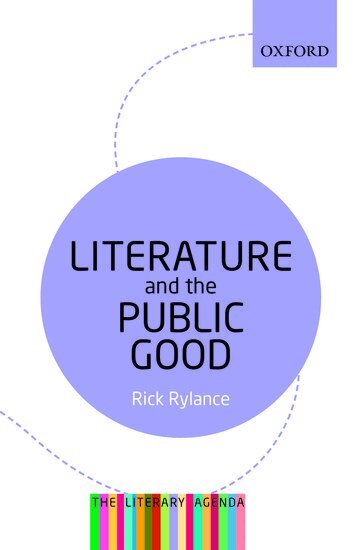
The Literary Agenda is a series of short polemical monographs about the importance of literature and of reading in the wider world and about the state of literary education inside schools and universities. The category of 'the literary' has always been contentious. What is clear, however, is how increasingly it is dismissed or is unrecognised as a way of thinking or an arena for thought. It is sceptically challenged from within, for example, by the sometimes rival claims of cultural history, contextualized explanation, or media studies. It is shaken from without by even greater pressures: by economic exigency and the severe social attitudes that can follow from it; by technological change that may leave the traditional forms of serious human communication looking merely antiquated. For just these reasons this is the right time for renewal, to start reinvigorated work into the meaning and value of literary reading.Rick Rylance addresses the debate over the public value of literary studies in a book which starts from the widely-remarked predicament of the humanities in modern times. By comparison with science, technology, engineering, and mathematics, the humanities can be negatively characterised as at best optional extras; at worst, frivolous and wasteful. Funders and policy-makers can question their value in terms of utility, vocational prospects and intrinsic worth, while journalists and commentators predict extinction.So what is the justification for literature at the present time? Rylance argues that literature's value lies in its enormous public presence and its contribution to the public good. Far from being apologetic for our investment in literature, he argues for its value to all parts of our society from economic productivity to personal and social wellbeing. He examines discussion of literature's public role over time, taking in key moments of self-reflection such as Sir Philip Sidney's 'Defense of Poesy' (1581) and work by John Mill and Ruskin. He reviews current arguments about how culture creates value: from the idea of 'public goods' in economics to the value of reading for social consciousness in cognitive psychology. The book makes strong claims for the importance and urgency of reading literature today.