Topics in Environmental Physiology and Medicine – Serie
Visar alla böcker i serien Topics in Environmental Physiology and Medicine. Handla med fri frakt och snabb leverans.
10 produkter
10 produkter
1 094 kr
Skickas inom 10-15 vardagar
High altitude physiology and medicine has again become important. The excep tional achievements of mountaineers who have climbed nearly all peaks over 8,000 m without breathing equipment raise the question of maximal adaptation ca pacity of man to low oxygen pressures. More importantly, the increase in tourism in the Andes and the Himalayas brings over 10,000 people to sites at altitudes above 4,000 and 5,000 m each year. At such heights several kinds of high alti tude diseases are likely to occur, and these complications require detailed medical investigations. Medical authorities need to inform both mountaineers and tourists as to how great a physical burden can be taken in the mountain environment without risk to health. Physicians need to know what kind of prophylaxis is to be employed at high altitudes to prevent the development of diseases and what therapeutic measures should be used once high altitude diseases have occurred. Moreover, the physical condition of the indigenous population living at higher altitudes such as the Andes and the Himalayas, who are exposed continuously to the stress of high altitude, requires our attention. We have become familiar with symptoms characteristic of chronic high-altitude disease: under special conditions this popu lation has a tendency to develop pulmonary hypertension, which is associated with pulmonary edema, pulmonary congestion, and right heart failure.
550 kr
Skickas inom 10-15 vardagar
The recent surge of interest in designing, validating, and implementing short-term tests for carcinogens has been spurred by the fairly convincing correlation be tween the carcinogenicity and mutagenicity of chemicals and physical agents and by the assumption that DNA alteration, mutations, and chromosome aberrations are somehow involved in neoplastic transformation. Moreover, it has been tacitly assumed that the mutagenic capacity alone of compounds would induce regulatory agencies to pass rules for their removal from the environment and would lead the public to avoid them. The actual response, however, is quite different. Governmental departments shy away from making any decisions on the basis of in vitro test systems. The public at large is becoming irritated by daily an nouncements that many of their cherished habits could adversely affect their health. Industry appears to feel threatened and may reduce its search for new beneficial chemicals. The reluctance to accept wholeheartedly the mutagenicity tests for the detection of carcinogens is partly due to uncertainty about the in volvement of mutations in neoplastic transformation, partly due to the present difficulty of extrapolating results from various endpoints obtained on numerous organisms to man, and partly due to a multitude of complex events that lead in vivo to the evolvement of benign or malignant tumors.
1 637 kr
Skickas inom 10-15 vardagar
ARCHIVE COpy DO NOT REMOVE The public in industrialized countries shows a mounting concern about biological effects of electrical and magnetic fields. As a result, experimental studies on this subject are being published in increasing numbers throughout the world. Prof. H. L. Konig, of the Technical University of Munich, West Germany, a leading expert and pioneer in this field, has written an authoritative text in a lucid style which makes the material also accessible to lay readers. The book describes the effects of natural as well as artificial electromagnetic energies covering the en tire measurable frequency range from the highest frequencies, x-rays, through microwaves, radio waves, and finally extremely low frequency (ELF) waves. Cit ing the evidence from scientific studies in various countries, Konig also appraises the biologic effects of microwaves and high tension power lines, which have become controversial issues in recent years. Other contributions to the book have been made by Prof. Albert P. Krueger, University of California, Berkeley, on air ionization effects and by the mete orologist Walter Sonning on biometeorology, documenting the influence of atmo spheric electrical currents on health and disease. Moreover, the late Dr. Siegnot Lang, a former coworker of Dr. Konig, has contributed to this book.
1 637 kr
Skickas inom 10-15 vardagar
The field of oxygen study is immense. No single work on the subject can be comprehensive, and this volume makes no such claim. Indeed, coverage here is selective and the selection is somewhat personal. However, the choice of topics is vast There are chapters on the history of oxygen, oxygen in the universe, the biochemistry of oxygen, and clinical uses of oxygen. An alternate title could have been, "Some things you always wanted to know about oxygen, but didn't know where to find them easily." Some information in this wide-ranging work can not be found elsewhere. This book is intended not only for specialists, but also for nonspecialists engaged in or curious about any field of oxygen study, particularly if they wish to know more about other fields of oxygen. Thus, those who are interested in oxygen and are historians, astronomers, chemists, geochemists, evolutionists, biochemists, physiolo gists, pathologists, or clinicians will find here much of extreme value. It is intended to be read and understood at the graduate or advanced undergraduate level. This volume is divided into four parts. The first constitutes the background for Parts II and III, and the last integrates the preceding material with an overall perspective on oxygen in living organisms.
2 723 kr
Skickas inom 10-15 vardagar
This book was written to show that light is a primal element of life. All life originates and develops under the influence of the light of the sun, that "super terrestrial natural force" (Goethe). Sunlight influences the vital processes not onlyofthe plant (e. g. , heliotropism, photosynthesis) and the animal (e. g. , color change, maturation of the gonads) but of man as well. The human organism too reacts "heliotropically," as the 24 hour rhythm of the sleep-waking cycle demonstrates. of Artists have always perceived clearly the intensive stimulatory effect sunlight on their activity. One is reminded here ofCesare Lombroso, who wrote to his daughter "that thoughts come in the greatest profusion when (my) room is flooded with the sun's rays. " Richard Wagner exclaimed: "Ifonly the sun would come out, I would have the score finished in no time. " Bernard Shaw had a little cottage where he worked that could be turned according to the position of the sun. The composer Humperdinck wrote: "The sun is indispensable for my work; that is why it is important for me to have my study face east or south. " As these few examples indicate, it is above all those active in the arts who intuitively grasp the positive influence of sunlight on the psycho-physical effi ciency of their organism. In an age, however, when fluorescent lighting turns night into day, we are in danger of forgetting that man is a creature of nature as well as of culture.
2 180 kr
Skickas inom 10-15 vardagar
Biological rhythmicity has been a subject of scientific research for a relatively short time. In the special case of daily, or circadian rhythms, it is only during the past twenty years that rapidly increasing efforts have been undertaken in evaluat ing properties and mechanisms. As a consequence of these efforts, the study of biological and, in particular, circadian rhythmicity is no longer a somewhat dubious occupation but rather a serious branch of science which combines the interdisciplinary efforts of numerous researchers around the world. The general result of these efforts is that many features of circadian rhythms of many different species of living beings are well known today. In addition to studies with lower organisms, the evaluation of human circadian rhythms was originally more or less a compulsory exercise done in order to extend the "catalogue of species"; of course, the work was of unusual impor tance due to the special position of man in biology. In the course of the very first experimental series, it became clear that humans possess an "internal clock" as had been established in various organisms, protists, plants, and animals, and that human circadian rhythms fit the general regularities of biological rhythms known at that time. However, it soon became apparent that circadian rhythmicity of man shows, additionally, particularities of great general interest, for practical and theoretical reasons.
Stress, Health, and the Social Environment
A Sociobiologic Approach to Medicine
Häftad, Engelska, 2011
1 094 kr
Skickas inom 10-15 vardagar
The mastery of a variety of biomedical They avoided the self-destruction and dis techniques has led our society to the solu ease that can so readily follow the escalation tion of the problems in environmental con of social disorder in an isolated colony. By trol imposed by space flight. By an unparal following a "code of civility" that may be as leled social cooperative effort, man has much a part of man's biologic inheritance as launched himself successfully on the path of his speech, they established cultures in interplanetary exploration and space travel. which power was exercised with sufficient By a like synthesis of knowledge available to respect to establish a consensus. They fol him, Stone Age man kept a foothold on tiny lowed revered cultural canons, using an Pacific atolls for the better part of a thousand accumulation of rational empiric data from years, despite obliterating hurricanes and social experience to modify and control the inherited biogrammar. This we often fail to limited resources. By combining empiric do. There is growing evidence that it is phys navigational skills, such as the sighting of stars with intuitive feeling for ocean swells iologically possible for the left hemisphere of and other subtle cues, tiny populations were the brain, which deals with logic and lan maintained in communication over vast dis guage, to be cut off from the right hemi tances.
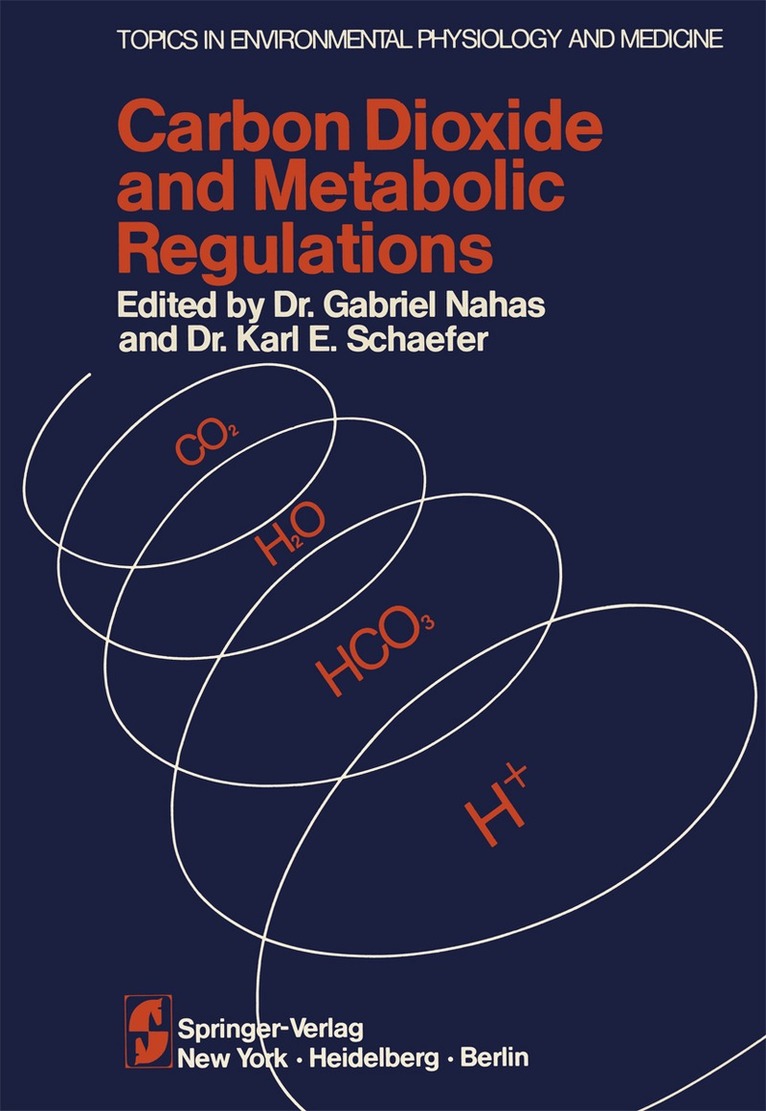
Carbon Dioxide and Metabolic Regulations
Satellite Symposium of the XXV INTERNATIONAL CONGRESS OF PHYSIOLOGY, July 20 – 21 – 22, 1971 International Conference Monte-Carlo, Monaco
Häftad, Engelska, 2011
550 kr
Skickas inom 10-15 vardagar
Wallace O. Fenn (1893-1971) The proceedings of the satellite sym encompass the whole of physiology. His con posium of the XXV International Congress tributions over 50 years covered four main of Physiology on "C0 and Metabolic eras in the development of physiology: 2 Regulations" are dedicated to Wallace muscle, electrolyte, respiratory, and hyper Osgood Fenn. Dr. Fenn had agreed to be baric study. honorary conference chairman of this meet The study of muscle contraction started ing, but was unable to attend because of the in 1922 when Fenn became the first American to work in A. V. Hill's laboratory. Fenn illness from which he died two months later concluded this work by saying, " ... There on September 20, 1971. Wallace O. Fenn was born of an old is a fairly good quantitative relation between New England family in Lanesboro, Massa the heat production of muscles and the work chusetts on August 27, 1893. His father was which they perform; and a muscle which does dean of the Divinity School at Harvard ~ork liberates, ipso facto, an extra supply of University. It was at Harvard that Fenn energy which does not appear in an isometric received his A.B. (1914) and his M.S. (1916). contraction." (Fenn [1923]). A. V. Hill referred to this as the "Fenn effect," and so He then started his Ph.D. thesis there under the plant physiologist W. J. V. Osterhout, it has been known ever since.
550 kr
Skickas inom 10-15 vardagar
Die Naturwissenschaften; Edward Arnold Co.; Research in Veterinary Science; Ltd.; Farm Mechanization and Buildings; Springer Verlag; The Ciba Foundation Ltd.; Journal of Agricultural Science; Journal of The Institute of Biology; The Lancet; The Reproduction and Fertility; Lea and Febiger; Physiological Society (G. B.); The Royal Masson et Cie, Paris; MacMillan Publishing Society; University of Chicago Press; Uni- Co., Inc.; National Academy of Science, versity of Rhodesia; Verhandlungen der U.S.; National Research Council of Canada; Deutschen Gesellschaft fur KreislautJorsch- Nature, London; North Holland Publishing ung; Waverly Press; and W. B. Saunders. Co.; Oxford University Press; Pergamon Press; Physiology and Behavior; Poultry D. L. INGRAM Science Association; Reinhold Publishing L. E.MOUNT Contents Preface Chapter 1 The Thermal Eml'ironment 1 Hot, Thermally Neutral, and Cold Environments 1 Development of Climatic Physiology 3 Physical Principles Chapter 2 Heat Exchange between Animal and Environment 5 Metabolic Heat and Its Dissipation 5 Body Temperature 6 Poikilotherm and Homeotherm 7 Heat Flow 8 Sensible Heat Transfer 9 Evaporative Heat Transfer 16 Calorimetry 21 Chapter 3 Metabolic Rate, Thermal Insolation, and the Assessment of Environment 24 Metabolic Rate and Heat Loss at High Temperatures 24 Thermal Conductance and Insulation 27 Evaporative Heat Loss 31 The Assessment of Thermal Environment 34 Responses of Different Species to High Temperatures 37 Physiological Mechanisms Chapter 4 Evaporative Heat Loss 39 Evaporative Loss from the Respiratory Tract 39 ix x Contents Conservation of Water Loss from the Respiratory 40 Tract in a Hot Dry Climate
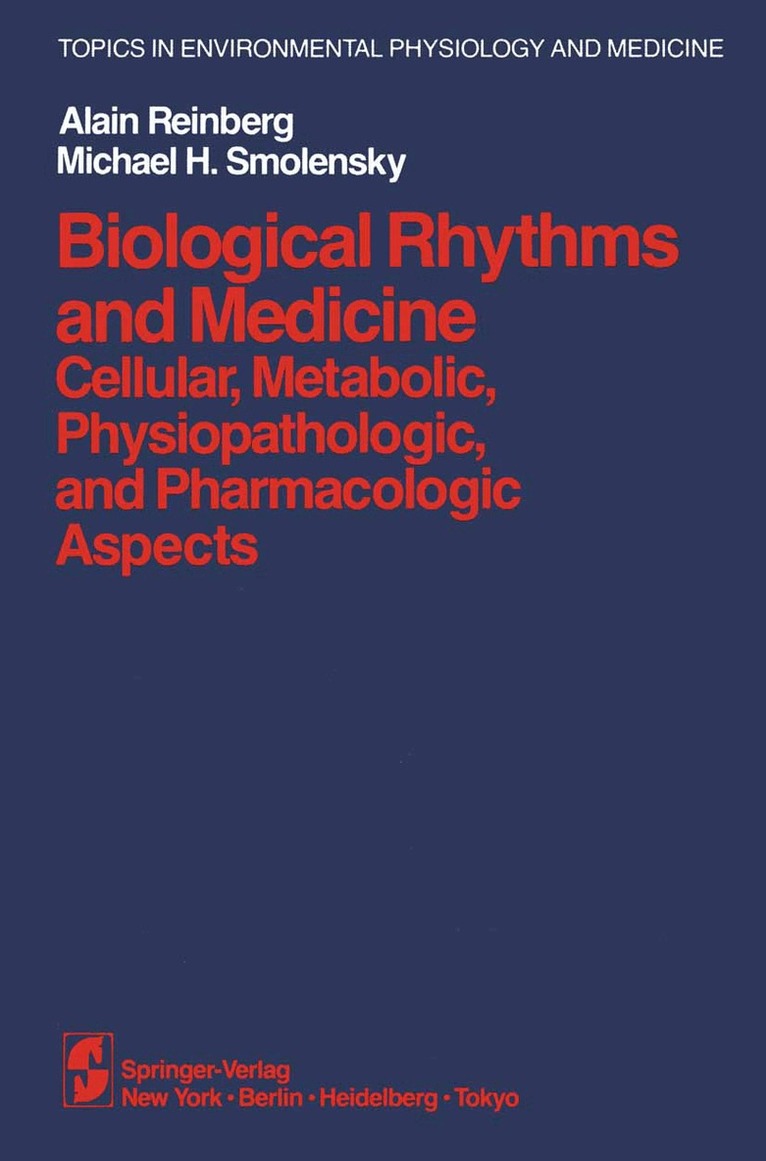
Biological Rhythms and Medicine
Cellular, Metabolic, Physiopathologic, and Pharmacologic Aspects
Häftad, Engelska, 2011
1 094 kr
Skickas inom 10-15 vardagar
During the past decade many review papers and books have been devoted to descriptions and analyses of biological rhythms (chronobiology) in plants and animals. These contributed greatly to demonstrating the impor tance of bioperiodicities in living beings in general. However, the practi cal aspects of chronobiology with regard to human health and improving the treatment of disease have not yet been a major focus of publication. One of our aims is to establish the relevance of biological rhythms to the practice of medicine. Another is to organize and convey in a simple fashion information pertinent to health- and life-science professionals so that students, researchers, and practitioners can achieve a clear and pre cise understanding of chronobiology. We have limited scientific jargon to unavoidable basic and well-defined terms and we have emphasized illus trative examples of facts and concepts rather than theories or hypotheti cal mechanisms. This volume is divided into seven chapters, each of which is compre hensive in its treatment and includes an extensive bibliography. The book is organized to serve as a textbook and/or reference handbook of modem applied chronobiology. Chapter 1 describes the historical development of chronobiology and reviews why, when, and how major concepts were introduced, accepted, and transformed.