Topics in General Psychiatry - Böcker
Visar alla böcker i serien Topics in General Psychiatry. Handla med fri frakt och snabb leverans.
8 produkter
8 produkter
1 636 kr
Skickas inom 10-15 vardagar
xii the evaluations, techniques, and outcome have helped to document the efficacy of their therapeutic modalities. In addition, many good books and articles have been published introducing new concepts, such as the importance of systematic case studies and personality styles by Horowitz, a variety of brief therapies by Budman, and an integrating model of time-limited psychotherapy by Strupp, to men tion only a few. The investigation of the efficacy of short-term anxiety-provoking psychotherapy (STAPP), which is the subject of this book, has con tinued during the last eight years, particularly in reference to pa tients with unresolved Oedipal conflicts. The chapter on outcome has therefore been expanded to include some of our findings. Cautious attempts have also been made to utilize focal and in novating techniques for the treatment of individuals with borderline as well as compulsive personalities. In this second edition an effort has been made to present the specific technical factors which seem to have a therapeutic effect, such as problem solving, self-understanding, and new learning, and which are utilized by the patients to solve new emotional conflicts long after the end of their treatment. Chapters on the treatment of elderly patients and the handling of individuals with physical symptomatology have been added; a history of the extensive treatment of a male patient has been pre sented to complement the discussion of the therapy of my female patient which appears in Appendix I.
550 kr
Skickas inom 10-15 vardagar
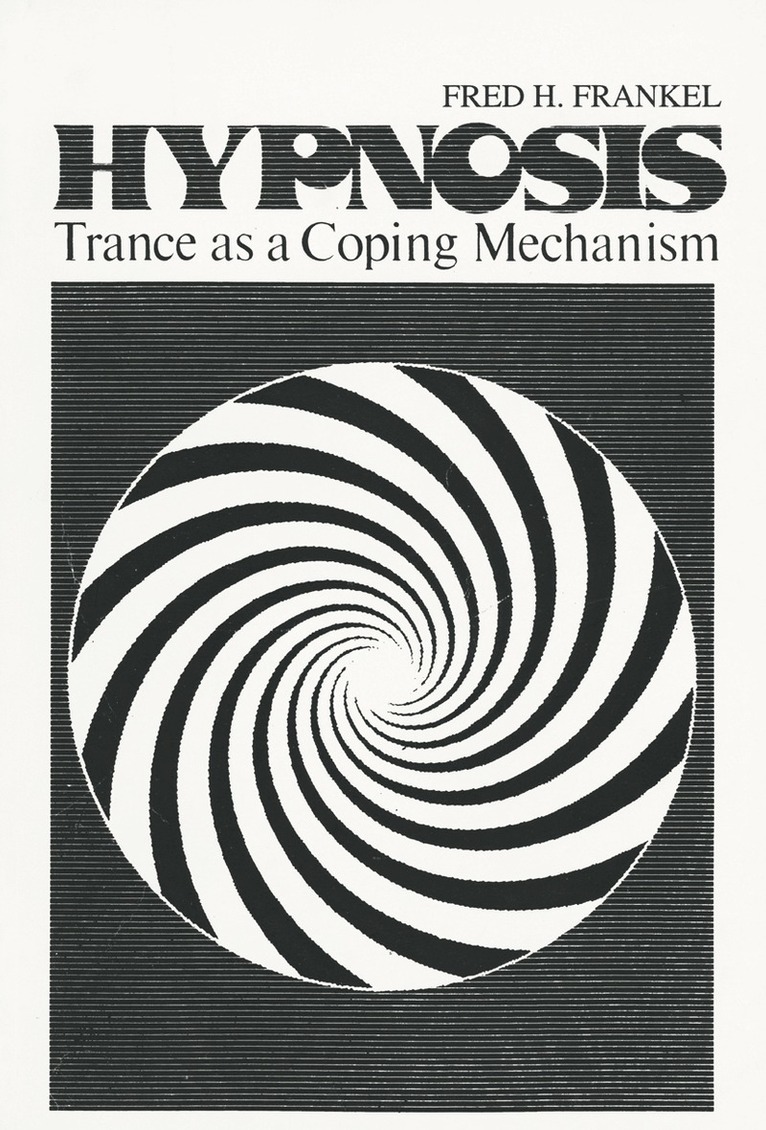
"Hypnotism," asserted Durand de Gros in 1860, "provides psychology with an experimental basis, from which point on it becomes a positive sci ence and takes its place in the larger sphere of animal physiology. " At the time it was written, this pronouncement was perhaps more wish than fact, but it was accurately prophetic of many of the developments in clinical psychiatry in the decades that lay ahead. Charcot was the pioneering pathfinder. With his colleagues at the Salpetriere in Paris, he employed hypnosis as an investigative tool to explore the psychology of patients with major hysteria. The discovery of the role of unconscious pathogenic ideas in the production of hysterical symptoms provided a basis for theoretical formulations that reached an apogee in the voluminous writings of Pierre Janet. For Janet, dissociation of mental functions became a central concept, and at the turn of the century, numerous clinical investigators in Europe and America were engaged in a study of its mechanisms and clinical mani festations. Among those early investigators was Sigmund Freud, who after a visit to Charcot's clinic, initially turned his attention to dissociative phenomena. His interest, however, was soon drawn to the nature and source of the dissociated (repressed) mental contents and away from the mechanism of dissociation itself.
519 kr
Skickas inom 10-15 vardagar
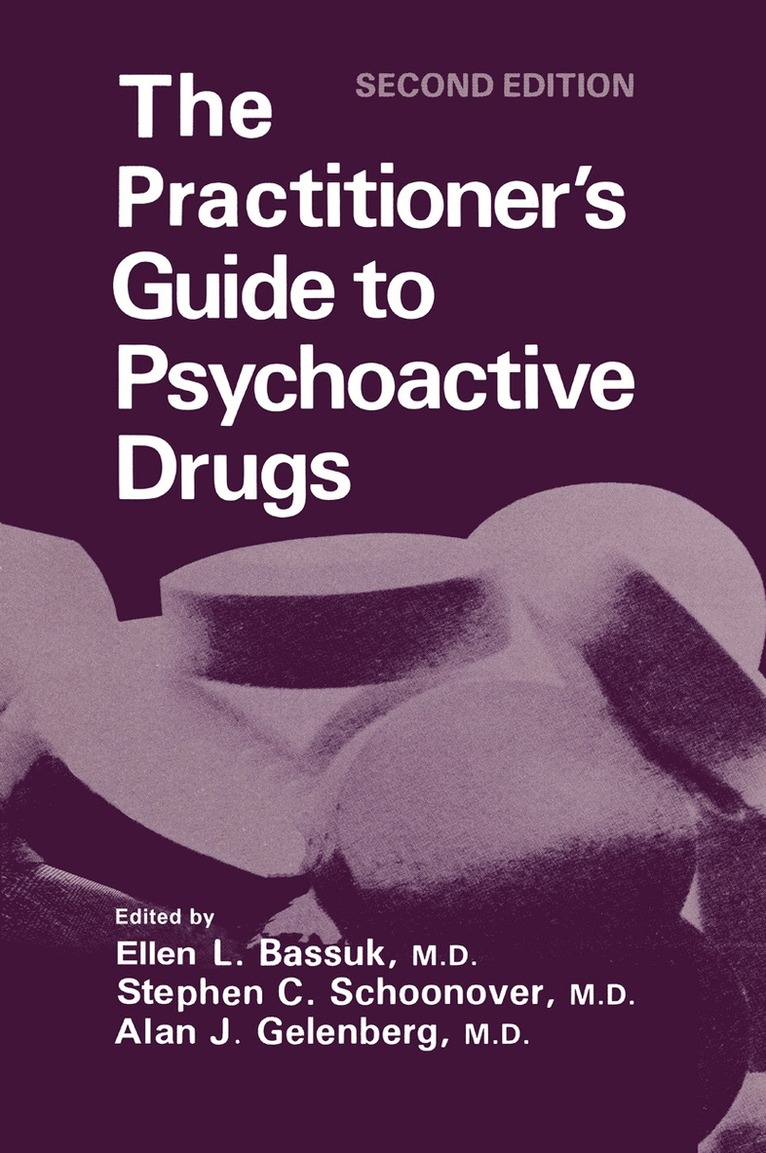
Books, like people, are born, and, if they survive the trauma of birth, mature in response to a changing environment. This volume is no exception. It imme diately proved its usefulness to psychiatric clinicians upon its publication six years ago, and it is not surprising to find it now entering a new phase of life in a second edition. The many and significant changes that the reader will find herein reflect not only the rapid growth of knowledge in the field of psy chopharmacology but also the editors' wise awareness of the need to incorpo rate that knowledge into clinical practice. Important new sections have been added on the management of elderly patients, on the pharmacological approach to those with temporal lobe epilepsy, and on the use of psychoactive medications during pregnancy. The existing clinical sections have been expanded, and the format has been altered to make the volume more practi cally useful for the harried clinician. Most important of all, the discussions of individual drugs have been carefully revised to update information about those medications that have stood the test of time and to include those newer pharmacological agents that have appeared on the clinical scene since the publication of the first edition. This last task has been significantly aided by the addition of Dr. Alan J. Gelenberg to the family of editors; his clinical and scientific knowledge nicely complements that of Drs. Bassuk and Schoonover, and its influence is evident throughout.
Frontier of Brief Psychotherapy
An Example of the Convergence of Research and Clinical Practice
Häftad, Engelska, 2012
550 kr
Skickas inom 10-15 vardagar
When I was a psychiatric resident not long after the end of World War II, any patient with the wits to get himself to a psychiatric clinic was taken into long-term dynamically oriented psychotherapy. Regardless of his diagnosis or clinical need, he was seen once, twice, sometimes even more frequently a week in fifty-minute sessions. Face-to-face with the therapist, he was urged to free associate and to express his dreams, fantasies, and emotions to a usually passive listener in what often appeared to be a caricature of psychoanalysis. It was not psychoanaly sis, of course (although the differences were sometimes hard to define), but the aims were the same-to resolve psychic conflicts through in sight and to bring about an internal psychological change that would allow the individual to work more effectively and to make healthier and happier relationships. Enough patients improved with these techniques to reinforce our penchant for using them. We were somehow able to ignore the fact that because of the limitations of time many patients withered on the waiting list. And we were able to blame our frequent therapeutic f~ilures, not to mention the damaging regressions our narrowly re stricted techniques often induced, on the patient's unwillingness to cooperate. Procrustes's couch was as inflexible as his bed. Old customs die hard, and the mindless application of long-term therapy is still found in clinical situations where it is inappropriate or contraindicated. But change is in the air.
1 094 kr
Skickas inom 10-15 vardagar
For the past decade and more, American psychiatry has been at sea on the adventurous if uncontrolled odyssey of community psychiatry. The voyage has often coursed through uncharted oceans, and for many the purpose and destination of the journey have been obscure. Even among those whose sights are clearer, there is growing concern that the ship will be becalmed by inadequate funding or run aground on the shoals of bureaucratic anarchy. For all of these voyagers this volume should come as a welcome compass. The authors' review of their subject is encyclopedic. They have not only traced the origins of modem concepts and studies back to their historical roots, but have drawn their material widely from the work of investigators throughout the world to illustrate current trends and prob lems. The novice will find their discussion of epidemiology a clearly written and useful introduction to one of the scientific foundations of social psychiatry, and novice and expert alike can profit from their thoughtful and critical assessment of basic terms and concepts, including illuminating chapters on stress, genetics, psychophysiologic disorders, and cultural psychiatry. The volume ends on a personal note as the authors present their views of the current state of social psychiatry and suggest ways in which its theoretical structure might be strengthened. Too often the plight of the individual is overlooked in the concern with impersonal numbers and surveys that preoccupy epidemiologists and social scientists.
1 094 kr
Skickas inom 10-15 vardagar
Short-term psychotherapy, although brief, is not ephemeral. In the decade or two of its existence, it has grown into a sturdy tree, and a sign of its maturity is the fact that it is now the subject of an increasing number of overview articles summarizing its literature and findings. Yet it remains a young and vigorous discipline. Its pioneers have not been elevated to a pantheon of venerable but mute immortals; on the contrary, they are to be found at the forefront of the field, actively contributing to the development of its theory and practice. This volume is ample testimony to their continued creativity. Dr. Sifneos has lectured and written extensively about short-term anxiety-provoking psychotherapy (STAPP). Based on psychoanalytic principles, STAPP aims to resolve pathological psychic conflicts and help those suffering from them to learn new ways of being in their most intimate relationships. It does so by actively focusing the patients' sights on their Oedipal problems, and its effectiveness (given a proper selection of subjects by specific criteria) has been amply documented in controlled clinical studies.
1 094 kr
Skickas inom 10-15 vardagar
1 637 kr
Skickas inom 10-15 vardagar
xii the evaluations, techniques, and outcome have helped to document the efficacy of their therapeutic modalities. In addition, many good books and articles have been published introducing new concepts, such as the importance of systematic case studies and personality styles by Horowitz, a variety of brief therapies by Budman, and an integrating model of time-limited psychotherapy by Strupp, to men tion only a few. The investigation of the efficacy of short-term anxiety-provoking psychotherapy (STAPP), which is the subject of this book, has con tinued during the last eight years, particularly in reference to pa tients with unresolved Oedipal conflicts. The chapter on outcome has therefore been expanded to include some of our findings. Cautious attempts have also been made to utilize focal and in novating techniques for the treatment of individuals with borderline as well as compulsive personalities. In this second edition an effort has been made to present the specific technical factors which seem to have a therapeutic effect, such as problem solving, self-understanding, and new learning, and which are utilized by the patients to solve new emotional conflicts long after the end of their treatment. Chapters on the treatment of elderly patients and the handling of individuals with physical symptomatology have been added; a history of the extensive treatment of a male patient has been pre sented to complement the discussion of the therapy of my female patient which appears in Appendix I.