• Fri frakt över 249 kr
  • •
  • Snabba leveranser
  • •
  • Billiga böcker
Kundservice

Du är på sajten för privatpersoner.

Företag, bibliotek eller offentlig verksamhet?

Du handlar på classic.bokus.com, där alla dina funktioner finns intakta.
Till classic.bokus.com
Bokus logotyp. Gå till startsidan.
  • Erbjudanden
  • Nyheter
  • Student
  • Topplistor
  • Barn & ungdom
  • Bokus Play
  • E-böcker
  • Pocketböcker
  • Spel & pussel

10% rabatt på allt med kod: NYSTART10 →

Sidfot

Mina sidor

    Hjälp

    • Kundservice
    • Vanliga frågor och svar
    • Frakt och leverans
    • Retur vid ångerrätt
    • Reklamera vara
    • Betalning
    • Köpvillkor
    • Allmänna villkor
    • Information om webbplatsens tillgänglighet

    Om Bokus

    • Om oss
    • Pressrum
    • För studenter
    • För företag
    • För bibliotek och offentlig verksamhet
    • För leverantörer
    • Hållbarhet

    Populärt

    • Aktuella erbjudanden
    • Presentkort
    • Studentlitteratur
    • Nya böcker
    • Topplistor
    • Signerade böcker
    • Engelska böcker

    Inspiration

    • Boktips
    • BookTok
    • Populära bokserier
    • Barnbokskaraktärer
    • Populära författare
    Logotyp för Bokus
    Följ oss på Facebook (extern länk)Följ oss på Instagram (extern länk)Följ oss på YouTube (extern länk)Följ oss på TikTok (extern länk)
    bokus @ CookiesAnpassa cookiesIntegritetspolicyKöpvillkor
    Till Citymail hemsida (extern länk)Till Budbee hemsida (extern länk)Till Postnord hemsida (extern länk)Till Schenker hemsida (extern länk)Till Early Bird hemsida (extern länk)Till Walleys hemsida (extern länk)
    1. Medicin
    2. Andra medicinska specialiteter
    3. Psykiatri

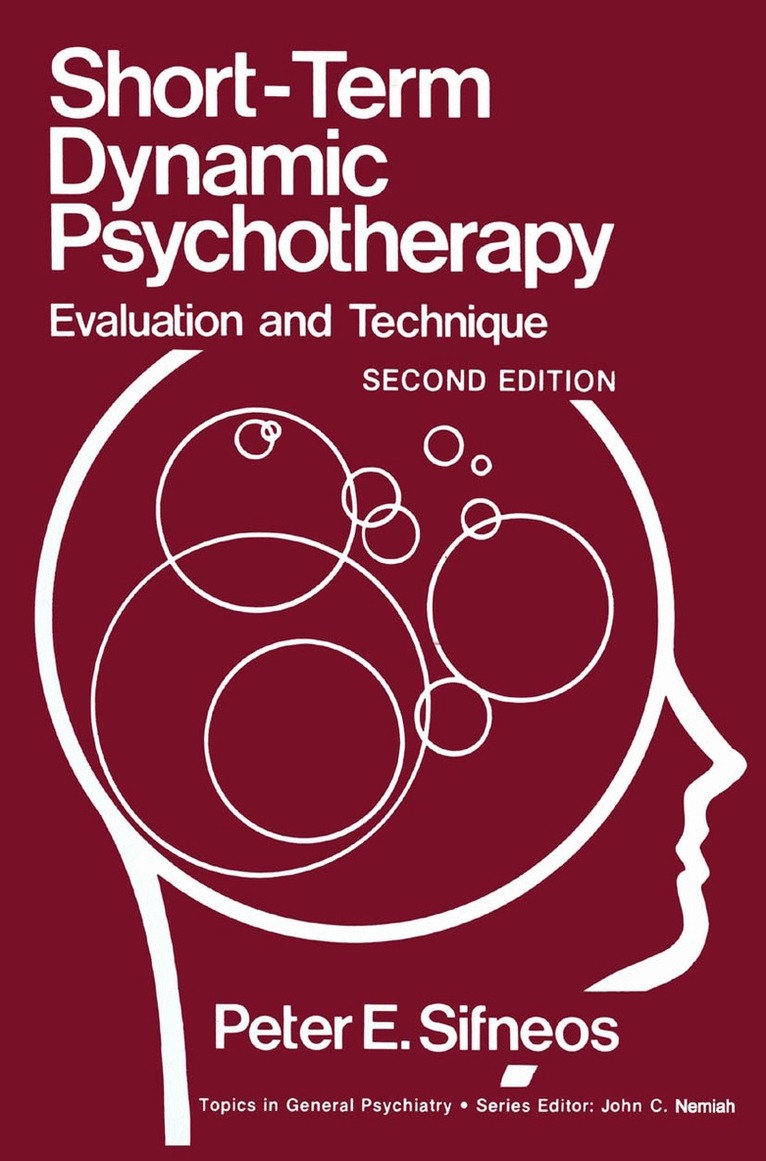
    Short-Term Dynamic Psychotherapy

    Evaluation and Technique

    AvPeter E. Sifneos

    Inbunden, Engelska, 1987

    Del i serien Topics in General Psychiatry

    1 673 kr

    Beställningsvara. Skickas inom 10-15 vardagar. Fri frakt över 249 kr.

    Fler format och utgåvor

    E-bok

    2 105 kr

    Häftad

    1 673 kr

    Beskrivning

    xii the evaluations, techniques, and outcome have helped to document the efficacy of their therapeutic modalities. In addition, many good books and articles have been published introducing new concepts, such as the importance of systematic case studies and personality styles by Horowitz, a variety of brief therapies by Budman, and an integrating model of time-limited psychotherapy by Strupp, to men­ tion only a few. The investigation of the efficacy of short-term anxiety-provoking psychotherapy (STAPP), which is the subject of this book, has con­ tinued during the last eight years, particularly in reference to pa­ tients with unresolved Oedipal conflicts. The chapter on outcome has therefore been expanded to include some of our findings. Cautious attempts have also been made to utilize focal and in­ novating techniques for the treatment of individuals with borderline as well as compulsive personalities. In this second edition an effort has been made to present the specific technical factors which seem to have a therapeutic effect, such as problem solving, self-understanding, and new learning, and which are utilized by the patients to solve new emotional conflicts long after the end of their treatment. Chapters on the treatment of elderly patients and the handling of individuals with physical symptomatology have been added; a history of the extensive treatment of a male patient has been pre­ sented to complement the discussion of the therapy of my female patient which appears in Appendix I.

    Produktinformation

    • Utgivningsdatum:1987-05-31
    • Mått:156 x 234 x 24 mm
    • Vikt:694 g
    • Format:Inbunden
    • Språk:Engelska
    • Serie:Topics in General Psychiatry
    • Antal sidor:324
    • Upplaga:2
    • Förlag:Springer Science+Business Media
    • ISBN:9780306423413

    Utforska kategorier

    • Psykiatri inom Medicin

    Innehållsförteckning

    • One: The Psychiatric Evaluation.- 1. Certain Common Complaints of Prospective STAPP Patients.- 2. History Taking and Reformulation of the Presenting Complaints.- 3. Criteria for Selection for STAPP.- 4. The Psychological Evaluation Process: Part III.- Two: Technique.- 5. The Opening Phase of STAPP.- 6. Early Therapeutic Considerations.- 7. An Example of an Early STAPP Interview.- 8. The Height of STAPP.- 9. The Height of the Therapy: A Case Example.- 10. The Last Phase of STAPP: An Example of a Typical Interview.- 11. The Terminal Phase.- Three: Results.- 12. Instruction in STAPP.- 13. The Outcome of STAPP.- 14. STAPP for Older Patients and Individuals with Physical Symptomatology.- 15. Epilogue.- Appendix I.- Evaluation Interview.- First Therapy Interview.- Second Interview.- Third Interview.- Fourth Interview.- Fifth Interview.- Sixth Interview.- Seventh Interview.- Eighth Interview.- Ninth Interview.- Tenth Interview.- Eleventh Interview.- Follow-Up Interview.- Appendix II.- Evaluation Interview.- First Interview.- Second Interview.- Third Interview.- Fourth Interview.- Fifth Interview.- Sixth Interview.- Seventh Interview.- Eighth Interview.- Ninth Interview.- Tenth Interview.- Thirteenth Interview.- Follow-Up Interview.- References.