Towns & Cities in World War Two - Böcker
Visar alla böcker i serien Towns & Cities in World War Two. Handla med fri frakt och snabb leverans.
17 produkter
17 produkter
163 kr
Skickas
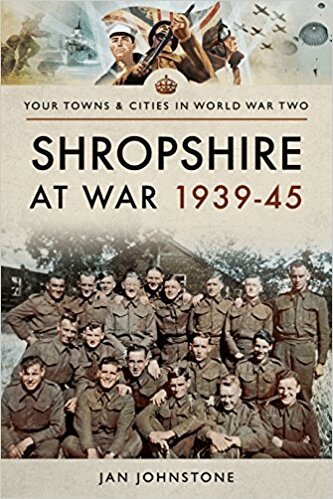
With the outbreak of the Second World War, Shropshire authorities immediately implemented pre-arranged plans to cope with the approaching conflict on the Home Front, including the building of air raid shelters and pillboxes and the renovation of redundant camps and disused airfields.Men not eligible for the services volunteered for the LDV (later the Home Guard), the AFS and the ARP. Women were recruited for a variety of other posts, with members of the WVS dealing with a massive influx of evacuees from Merseyside and Smethwick right from the start.Shropshire's factories turned to armament production, coal mines increased their output and farmers cultivated more acreage (an extra 47,000 acres ploughed for food production in the first year of the war).PoW Camps sprang up, with prisoners frequently seen being transported to work on local farms, while uniformed servicemen and women from Britain, the Commonwealth and America became familiar sights on the streets.Using a variety of sources, including newspapers and verbal testimonies, the author paints a picture of the effect that six years of war had on those Salopians who, when others marched away, remained on the Home Front. Their struggles, acceptance of shortages, hardships and determination not to give in are reflected throughout this book.
301 kr
Tillfälligt slut
As in the Great War, Hull was a prime target for the bombs of the German air force when the Second World War began, particularly as it was common knowledge that prior to September 1939, German planes had over flown the city taking pictures, and German sailors had visited the port and city. Throughout the war, each night the citizens of the city waited for the sound of the sirens telling them to get to their shelters. There were many false alarms but there were also many raids, so many that Hull has the dubious distinction of being the most bombed city in the country, after London, but compared to its size, the damage and number of casualties were even more devastating.In the book are numerous photographs, many never previously published, which detail the effects of the raid on the city. Also included are extensive lists of the casualties caused by the bombing and by the blackout. This book is the first to detail every known raid and provides new evidence about previously unreported attacks using contemporary documents. Some parts of the story of the raids are harrowing and show the perils of daily life in a city during the blitz.
163 kr
Skickas
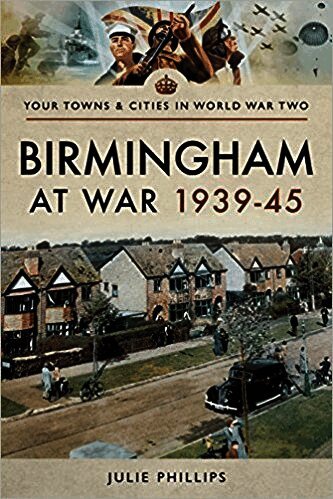
Barely 17 years after the Great War that had brought Britain to its knees, the country was once again asked to make sacrifices and give their all to the war effort. With its strong industrial background, Birmingham was already geared to help manufacture the vehicles that could be adapted for war use, and with the threat of the German Luftwaffe screaming across the skies, it was only right that the production of planes, most notably the spitfire, was ramped up to help protect the British public.While many of its men and women were involved in the forces abroad, many more stayed behind to defend the city, with inhabitants risking their lives by taking up fire hoses, first aid kits, manning anti-aircraft guns and positioning barrage balloons in order to save others from the devastating destruction of the Blitz. Meanwhile, the city's children were separated from their families to escape the worst of the bombing and would return from their adventures changed: not all host evacuee families were as kind or as welcoming to their charges as it would appear.Yet not everyone was so patriotic and keen to do their bit, and the opportunity for crime and to fiddle the rations with black market goods was rife. Not even Government issue equipment was off limits, as one Birmingham gang of sandbag thieves demonstrated.For Birmingham, the Second World War was a time of great hardship and sacrifice and the hard work continued for many years after, as its people painstakingly rebuilt parts of the bomb-damaged city.
163 kr
Skickas
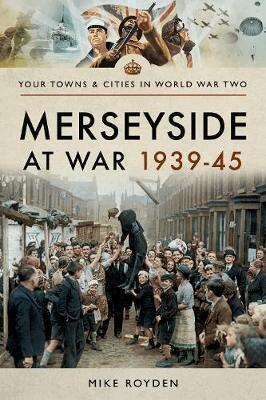
Merseyside played a unique role during the Second World War, which directly led to the area being a major enemy target in an attempt to put the port completely out of action. Consequently, Merseyside became the most heavily bombed area outside of the capital. Despite the considerable damage, the campaign failed, and the port continued as a centre of operations for Western Approaches Command, controlling the safe passage of supply convoys into the Mersey, providing an essential lifeline to the success of the war effort.Rare insights into the life of war-torn Merseyside are included, along with untold stories from those who witnessed the events first hand, including the Blitz, the defence of the port, and the grim conditions in one of the largest prisoner of war and internment camps in the country in Huyton.A broad spectrum of life on the Home Front is recounted through memories, newspaper stories and personal memoirs to bear witness to the profound trials of courage and fortitude of ordinary people enduring this desperate struggle to survive the war years. This fraught resilience was not always a united front, and controversial topics are also studied, such as conscientious objectors, racism, strike action, and crime, plus the issue of the Spirit of the Blitz - was it a myth or reality?This book therefore is an attempt to cover the full period of the war on the Home Front, in all its aspects, from the day war was declared, to the wild celebrations on the streets at the cessation of hostilities, plus the immediate post war problems.
152 kr
Tillfälligt slut
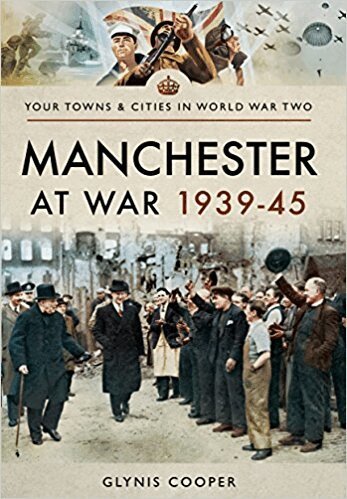
Few could believe that within twenty years of the war to end all wars being wonthe world was once more at war. Veterans of the Great War feared going throughthe same horrific experience again and, even worse, many knew that this time theirchildren would also be involved in the fighting. What had all the sacrifice been for?Manchester had been badly hit by the Great War with many lives lost, familiesripped apart, industries destroyed. The cotton industry never recovered; especiallysince Japan, China and India offered cheaper cotton goods. Building and economicrecovery had been hindered by the Great Depression.The city was not ready to face another war, nor for the ferocity of the aerial attacksunleashed, nor for the treachery of the Black-Shirts. Yet somehow Manchester foundthe strength to unite against the enemy once more and ensure that Germany wouldnever be victorious.This book chronicles the difficulties, hardships, restrictions and morale of thecity year by year as the war dragged on, and is a timely reminder of how the localcommunity strived to fight the odds that were stacked against them.
183 kr
Skickas
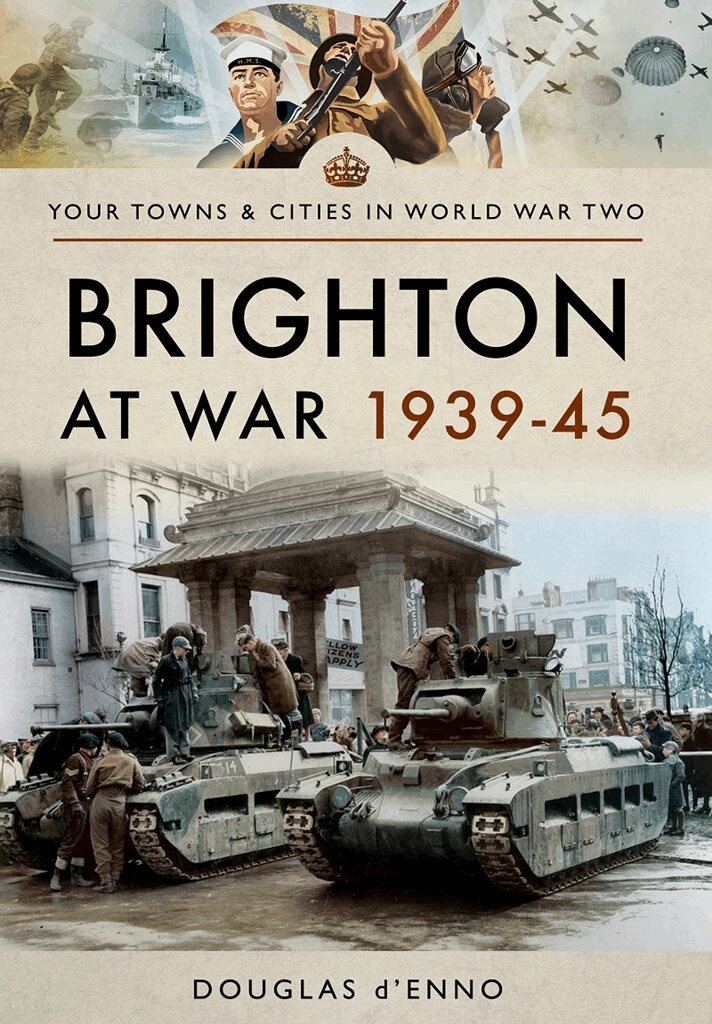
Long before war was declared on 3 September 1939, Brighton had steadily and carefully prepared for the coming conflict by building shelters, organising defence and rescue services, and providing the population with advice of its own or from government sources. These precautions stood the town in good stead when the first bombs fell on it in mid-1940 and during the many subsequent attacks.The resort did not, admittedly, suffer as grievously as some others on the South Coast, yet civilian casualties totalled nearly 1,000, of whom over 200 were killed, 357 were seriously injured and 433 slightly injured.This is not the first book to reveal the toll of the bombs locally, but it is the first to describe, in parallel, day-to-day events and societal responses during the nearly six years of conflict. As elsewhere, restrictions often made life arduous for residents. Yet despite the hardship, the town's citizens even marshalled sufficient resources to 'adopt' two battleships and generously saved towards assisting with other wartime causes, such as help to our ally, Russia.The hospitality trade and resort-related services suffered greatly during the periods when the defence ban on entering the town was enforced. In many respects, however, life went on largely as before, particularly in the spheres of entertainment, leisure and some sports.Douglas d'Enno, an authority on the history of Brighton and environs, shows in meticulous detail, in absorbing text and numerous pictures, how life in wartime Brighton was a struggle for many, but never dull.
168 kr
Skickas
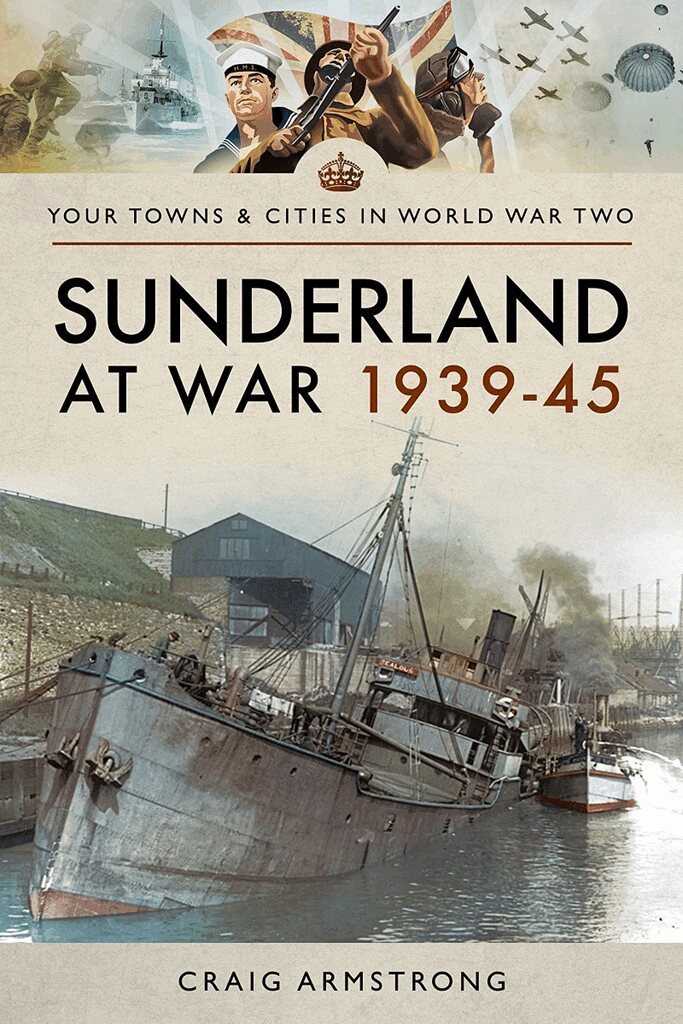
Sunderland was a key shipbuilding and repair facility with a long history of providing vessels for the British Merchant Navy. As well as its shipbuilding industry, the town also possessed other important industries such as paint manufacturing and extensive industries connected with shipbuilding and coal mining. The port town, on the banks of the strategically important River Wear, was also a main hub, along with its northerly neighbour the River Tyne, for coal exports, with much of the coal produced in the huge Durham coalfield being dispatched south via the Wear. All of this meant that the town found itself on the front lines of the war effort and marked it as a prime target for the Luftwaffe.The town experienced several heavy air raids, including one which caused a great deal of damage to both housing and key industries, as well as resulting in serious casualties to the civilian population. The considerable disruption and dislocation caused meant that the authorities struggled to provide adequate shelters and to fill the gaps within what were to become vital Air Raid Precautions services. When the bombing came, these volunteers were to make a vital contribution.Sunderland also had a proud tradition of military service and many of her men and women volunteered for service in the armed forces, with many paying the ultimate price in defence of freedom. A large number of Sunderland men served in the Merchant Navy, while the Royal Navy also boasted many Wearsiders. The local Army regiment, the famed Durham Light Infantry, also boasted many Wearsiders and the regiment saw action in almost every theatre of the war. For other Wearsiders, the attraction of flight drew them to service in the ranks of the RAF, for some, service in Bomber Command was motivated by a thirst for vengeance after witnessing the bombing of their home town.
163 kr
Skickas
More than 350 bombs fell on Wimbledon during the Second World War, killing 150 residents and injuring a further 1,071\. Around 12,000 houses were damaged and 810 destroyed.Notable people discussed in this fascinating book include Ernest Leonard Harvey, who was onboard HMS Suffolk on the night Bismarck was spotted; Peter Walley, who died when he steered his crashing aircraft away from housing in the area; Pat Reid, Colditz Castle escapee; PoW Ernest Colman's "Wimbledon Variation"; casualties of the Burma-Thailand railway; and the members of the Mitcham Home Guard who were killed when a German parachute mine hit the Tower Creameries site on Wednesday, 16 April 1941 (after a relatively quiet couple of weeks).This well-researched book also includes a list of the lost hospitals of Wimbledon, as well as war memorials in the London Borough of Merton - findings which have since been added to the Imperial War Museum's website, www.iwm.org.uk. It also provides an insight into factory worker jobs that have long-since bitten the dust. Tri-ang in South Wimbledon was a national by-word for toys - until it started making munitions for real. And, with the outbreak of war, Vortexion of The Broadway, Wimbledon - a manufacturer of public address amplifiers - found itself under the direction of the Government for war work.Overall, this is a poignant testimony to the momentous efforts, bravery, self-sacrifice and determination of the people of Wimbledon during the Second World War, who sought to find normality in a reality so far removed from anything they had ever known.
163 kr
Skickas
Scotland was of grave strategic importance during the war due to its geographical position, while its capital was the location of a significant number of important military and civil organisations. Aberdeen possessed important shipbuilding facilities, including Hall, Russell & Co., which built a number of vessels during the war, such as corvettes and frigates, resulting in the yard being targeted by the Luftwaffe on a number of occasions.The fishing fleet was also of prime importance in supplying food for a war-starved Britain and many Aberdeenshire men constantly risked their lives putting out to sea in order to land fish. Many were killed in attacks by enemy aircraft or mines.No member of the population of Aberdeen escaped the war, whether it was the huge numbers of men and women from the area who came forward for service in the military or in roles such as the Home Guard, ARP services, nursing, working in vital war industries, or struggling to maintain a household under strict rationing and the stresses of wartime life. Evacuation proved a thorny issue as Aberdeen was originally classed as a neutral area' and no plans were made for evacuation. By 1940, however, there was anger and frustration as several groups petitioned for this classification to be changed.These petitioners were probably proved correct as Aberdeen went on to become the most frequently raided city (after London) in Britain suffering 32 attacks and 364 air raid warnings earning the city the nickname the Siren City'. Aberdeen also suffered the final Luftwaffe attack on Scottish soil when a concerted attack was made on 21 April 1943, resulting in 125 deaths and an estimated 12,000 houses being either destroyed or damaged.Aberdeenshire also played a significant role in the war effort in the air. It was ideally placed to enable the RAF to patrol not only the north-east of Scotland, but also the North Sea and the vital approaches to the naval base at Orkney, while the RAF also launched raids on occupied Norway and enemy shipping.Aberdeen at War 1939-1945 poignantly commemorates the efforts and achievements of Aberdeen: workers, fighters, families divided, all surviving astounding tests.
163 kr
Tillfälligt slut
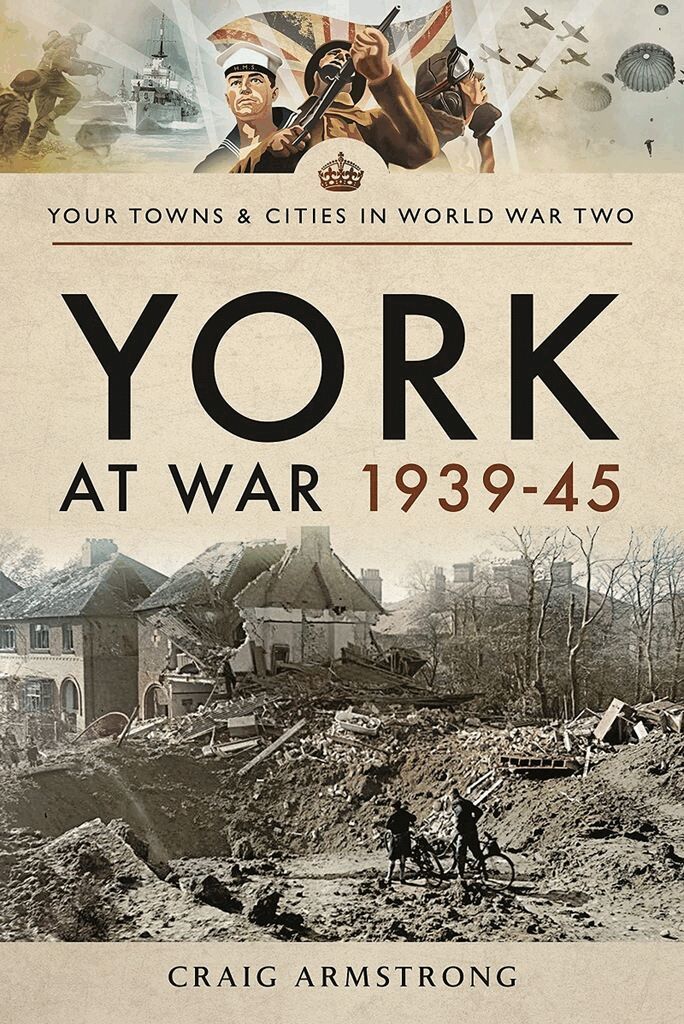
York has often been overlooked when it comes to Britain's wartime experience. The city was not though to have many industries of great wartime importance and it was not a part of the initial evacuation scheme. Yet this does not accurately reflect the wartime contributions of the city, as several of its large confectionary factories were converted to wartime use, while it was also a key rail hub, forming a vital link in the national network.Unbeknownst to the people of the city, York had been selected as the latest target in the Luftwaffe's Baedeker Raids. In a short, sharp, blitz raid in the early hours of 29 April 1942, more than 3,000 houses were destroyed or damaged and almost 100 people killed while others were left seriously injured.Wartime York had a particularly close connection with the RAF as the city was surrounded by airbases. People became very used to seeing the uniforms of men and women from Bomber Command and the city was to prove very popular with airmen seeking relaxation. Places such as Betty's Bar became infamous as airmen of almost every Allied nationality came to blew off steam. The nearby presence of the airfields also meant that the people of York and the surrounding area were witnesses to tragedies when aircraft crashed on their return to the bases.
157 kr
Skickas
Middlesbrough was of vital importance to Britain's war effort. The town, and its surrounding area, contained a number of vital industries including shipbuilding, chemicals, iron, steel and other metals, and engineering, as well as a joinery firm that played a leading role in the wartime aviation industry. The ICI plant at nearby Billingham also played a leading role in the creation of petrochemicals and explosives.As with many communities, the start of the war saw Middlesbrough faced with hastily having to bring its Air Raid Precautions and civil defence services up to full strength. With its strategic importance it was believed that Middlesbrough would be an obvious target for the Luftwaffe. As a result, schoolchildren and other vulnerable people were evacuated from the town at the very start of the war in a scheme that did not prove entirely successful.Middlesbrough became the first built-up urban area in mainland Britain to be bombed. In the event, Middlesbrough was raided periodically throughout the war with the worst coming on the night of 25/26 July 1942, when waves of Luftwaffe bombers dropped almost 30 tons of bombs on the town. The raid killed sixteen people and caused very extensive property damage. Meanwhile, just days later, bombs fell on the town's railway station as a train was waiting at the platform there. The pictures of the resulting damage were wired around the world.
163 kr
Skickas
During the Second World War, Darlington had a number of industries that were important to the war effort. With its historic links to the railway industry, the town possessed several engineering firms, as well as a number of companies that produced iron and steel products, and many of these companies switched some or all of their production over to wartime demands. The town also had an extensive rural hinterland and the farmers of Teesdale were faced with a barrage of new demands and regulations governing their vital work.Many residents of the area served as members of the armed forces and losses were grievous: the number of Darlington men killed while serving with the RAF was particularly high, with the impact of these losses spreading throughout the community.Despite many setbacks, Darlington was very efficient in bring its Air Raid Precautions and civil defence services up to full strength. With Britain facing invasion in 1940, many older men in the area, along with those younger men who were in reserved occupations, volunteered to serve in the Local Defence Volunteers (later the Home Guard) and one man was still serving at the age of 89.Thankfully, Darlington did not see the heavy bombing that many other communities in the North East of England suffered. However, there were still a large number of accidents in the area caused by the blackout, resulting in a number of fatalities. Locals also had to deal with rationing and not all were willing to pull together, seeing the wartime conditions, instead, as an opportunity to make illegal profits.
163 kr
Skickas
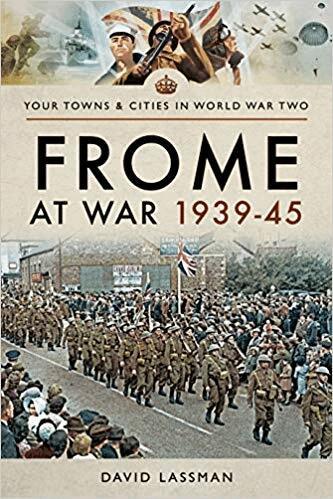
Frome at War 1939-1945 is a comprehensive account of this Somerset market town's experience of the conflict, covering in detail life on the Home Front set against the background of the wider theatres of war.The narrative of that global struggle is given with a focus on the ordeals endured by the people of Frome, as they cheered their men and women fighters off to war, welcomed hundreds of evacuated men, women and children to the town, and contributed their part to the fight against Hitler and the Nazi threat.Rare insights into the life of the town are included, along with seldom told stories from the footnotes of history; from Frome's part within the secret underground resistance movement and the national fight for women's equality, to the gradual influx of American GIs and Field-Marshall Montgomery's stay in the aftermath of Dunkirk.The book incorporates memoirs and memories, along with in depth research from official records and newspaper accounts, which allow the reader to see the war not only from ordinary people's perceptive, but the military experiences of Frome's heroic men and women - and in many cases their tragic sacrifices - as well.More controversial aspects are also touched on, including injustice, espionage, racism and politics, to give a full and fascinating picture of a town facing profound trials of endurance and courage, but at the same time revealing the characteristics that have sustained Frome throughout its illustrious and turbulent history.
152 kr
Tillfälligt slut
Bath at War 1939-45 is a comprehensive account of the city's experience of the conflict, covering in detail life on the Home Front set against the background of the wider theatres of war.The narrative of that global struggle is given with a focus on the ordeals endured by the people of Bath, as they cheered their men and women fighters off to war, welcomed thousands of evacuated men, women and children to the city, and faced the full might of Hitler's Luftwaffe.Rare insights into the life of the war-torn city are included, along with untold stories from the footnotes of history, from the Bath blitz to the influx of American GIs. The book incorporates memoirs and memories, along with in depth research from official records and newspaper accounts, so the reader sees the war from the perspective of ordinary people, although the military experiences of Bath's citizens - and in many cases their tragic sacrifices - are also included.More controversial topics are also touched upon, such as civil defence, military injustice, racism and local politics, to give a full and fascinating picture of a great city facing profound trials of endurance and courage, thus revealing the many characteristics which has sustained Bath throughout its illustrious history.
163 kr
Tillfälligt slut
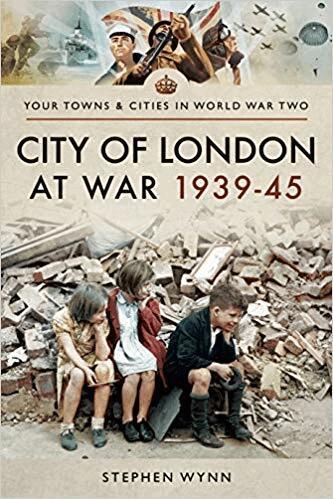
The City of London was always going to be an obvious target for German bombers during the Second World War. What better way for Nazi Germany to spread fear and panic amongst the British people than by attacking their capital city?Although not vastly populated in the same way that a bigger city or larger town would be, there were still enough people working there during the day for attacks on it to take their toll. The city's ancient and iconic buildings also bore the brunt of the German bombs, including churches designed by Sir Christopher Wren after the Great Fire in 1666.The book looks at the effects of war on the City of London, including the damage caused by the 8 months of the Blitz between September 1940 and May 1941. The most devastating of the raids took place on 29 December 1940, with both incendiary and explosive bombs causing a firestorm so intense it was known as the Second Great Fire of London.It also looks at the bravery of the staff at St Bart's Hospital, which was one of the medical facilities that remained open during the course of the war. Other stories include the sterling work carried out by the City's civilian population and the different voluntary roles that they performed to help keep the city safe, including the Home Guard and the Fire Watchers, who spent their nights on the city's rooftops looking out for incendiary devices dropped by the German Luftwaffe.Despite the damage to its buildings and its population, by the end of the war the City of London was able to rise, like a phoenix, from the flames of destruction, ready to become the vibrant and flourishing borough that it is today.
152 kr
Skickas
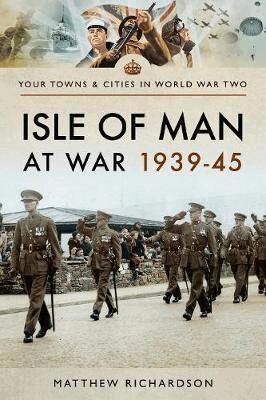
Isle of Man at War 1939-45 presents the remarkable story of the Manx people, and their homeland, in the most destructive conflict of the twentieth century.Few people are now aware of the extraordinary role that this small island played in assisting the allied war effort. Yet for six years, a place best known for motorcycle racing and as a holiday playground became a heavily armed fortress. Hundreds of airmen, soldiers and sailors were trained in readiness for combat. Thousands of enemy aliens were imprisoned behind the barbed wire of its camps, alongside those of British birth who were deemed to be a threat to security.Top secret radar was developed, and the Island's merchant fleet played a vital role at Dunkirk and D-Day. On battlefields around the world, gallant Manxmen fought bravely, whilst at home, in spite of the pressures which total war brought to society, there was a perhaps surprising tolerance for those with pacifist beliefs. Likewise, though there was increased government control in almost all areas of life, these were times of great advancement for Manx democracy.The story is told in the words of those who were there - some of these eyewitnesses speaking for the first time about their experiences, and among them the last survivors of that generation. Their accounts bring a freshness and immediacy to this remarkably vivid narrative.
163 kr
Tillfälligt slut
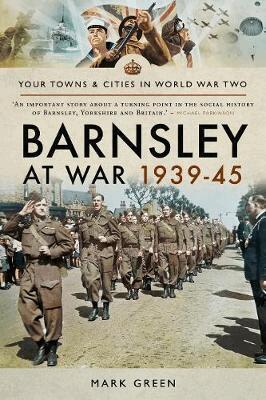
The 'eleventh hour of the eleventh day of the eleventh month' of 1918 was supposed to be the conclusion of the 'war to end all wars'.Just twenty-one years after the armistice was signed, Barnsley, its borough and the world braced itself for a global conflict that history would eventually testify to be deadlier than the war that destroyed a generation of Barnsley men and boys.After the Great War, the famous market town stumbled into a new era that promised social change, including universal suffrage, economic and political stability and establishments of new international organisations such as the League of Nations to steer the masses. In reality, the town suffered in poverty, endured pit disasters, countless industrial deaths all the while still lamenting its lost generation, mercilessly butchered on The Somme.The books narrative explains in detail Barnsley's transition from its interwar years, to the euphoria of victory in 1945, supported by a timeline of national events that helped shape the town. It steers away from the common two-dimensional viewpoints some people had on the Home Front and the endless reusing of the same themes - 'the Great British spirit', Churchillian greatness, D-Day, Dunkirk and VE day. Although one cannot dismiss those remarkable qualities the town developed during the war, it also explores controversial topics such as social impacts, the rise in juvenile delinquency, misplaced optimism, increase in crime and the acceptance of the status quo by some members of the ruling council.Indeed, Barnsley rose to the challenge as it did years earlier, women once again revealed their rightful place in society as equals, miners smashed productivity records, men and women took up arms in anticipation of invasion.The Second World War had arguably the same impacts on Barnsley as the Great War, further local names etched on the memorials as a timeless reminder of the men, women and children who died or gave their life for their town, county and country. Never to be forgotten.