Understanding Modern European and Latin American Literature – serie
Visar alla böcker i serien Understanding Modern European and Latin American Literature. Handla med fri frakt och snabb leverans.
13 produkter
13 produkter
300 kr
Skickas inom 10-15 vardagar
531 kr
Skickas inom 10-15 vardagar
490 kr
Skickas inom 10-15 vardagar
An overview of the work of Uwe Johnson, concentrating on five of his novels, including ""Ingrid Babendererde"" and ""Two Views"". A chapter dedicated to his life describes the themes that concerned Johnson in his scandalized existence in both Germanys, the USA and Great Britain.
523 kr
Skickas inom 7-10 vardagar
This volume provides a dissection of W.G. Sebald's fiction and his acclaim. A German writer who taught in England for 30 years, he published four novels, first in German and then in English. His work gained even greater acclaim after his death in 2001, just months after the publication of his title ""Austerlitz"". This companion to his fiction investigates the secret behind his universal appeal and explores themes, issues, and influences that dominate the writer's oeuvre. It suggests that Sebald essentially had two literary careers - as his works appeared in German-speaking Europe and then in the English speaking world. It outlines the writer's reception in his homeland and in translation. It illuminates the vast knowledge of European literatures that Sebald drew upon in composing his narratives and also sheds light on the interconnections that lurk beneath the surface of the writer's landscapes and memoirs.
554 kr
Skickas inom 7-10 vardagar
Understanding Thomas Mann offers a comprehensive guide to the novels, short stories, novellas, and nonfiction of one of the most renowned and prolific German writers. In addition to analyzing Mann's most famous works, including Buddenbrooks, Death in Venice, The Magic Mountain, and Doctor Faustus, Hannelore Mundt introduces readers to lesser-known works, among them Joseph and His Brothers, Lotte in Weimar, and The Black Swan. In close readings, Mundt illustrates how Mann's masterly prose captures both his time and the complexities of human existence with a unique blend of humor, compassion, irony, and ambiguity. Mundt takes readers chronologically from Mann's literary beginnings in 1894 to his last novel, Confessions of Felix Krull, Confidence Man. She considers the influence of Arthur Schopenhauer and Friedrich Nietzsche on the emergence of Mann's literary voice, his conflicted feelings about his bourgeois background, and his life as Germany's representative writer in the Weimar Republic and in exile. Mundt places Mann's works in the realistic and modern traditions and discusses his recurring thematic concerns - the individual's rebellion against oppressive bourgeois conventions and antihumanistic principles, the need for an unremitting questioning of authority and ostensibly absolute truths, and the antagonism between individualistic freedom and social responsibility. In light of the recent publication of Mann's diaries, disclosing his homosexual inclinations, Mundt also identifies the textual strategies he adopted for revealing and simultaneously masking his secret sexuality. Mann emerges from Mundt's analysis as a writer who plays with opposing perspectives in his fictional renderings of both the alienated individual and Germany's cultural and political history. Mundt suggests that the openness of his works, paired with his deep insights into human existence, explains his stature as a literary figure whose importance extends worldwide.
285 kr
Skickas inom 10-15 vardagar
This is a thorough introduction to an author who mixes devotion to art and science with the harrowing experiences of Auschwitz.Primo Levi emerged from the Holocaust as one of the most powerful voices to bear witness to the atrocities of the Nazi concentration camps. Italian by birth and Jewish by ancestry, this young chemist survived Auschwitz and later, with his sober retelling of the horrific experience, consecrated the memory of millions who perished there. In this companion to his works, Nicholas Patruno analyzes Levi's novels, short stories, and essays to reveal a writer who eloquently evoked the soul of the persecuted Jew but who never came to terms with the guilt of his own survival.Patruno contents that while Jewish themes recur throughout Levi's work, labeling him narrowly as an ethnic writer would be inaccurate. Rather, Patruno echoes Italo Calvino in defining Levi as a writer of 'encyclopedic vein' and argues that Levi's significance as artist and communicator lies in the fusion of his scientific sensibilities and literary creativity. Patruno examines the synthesis of science and art in ""The Periodic Table"", considered by many to be Levi's greatest work. He also critiques ""The Monkey's Wrench"", Levi's short fiction and essays, the four books created directly from his Holocaust experience, and ""If Not Now, When?"", perhaps Levi's only truly conventional novel. Patruno shows that although Levi wrote absorbingly about a variety of topics, his work was always informed by his Holocaust experiences.
777 kr
Skickas inom 10-15 vardagar
This book contains deft analysis of the fiction, theater, and essays of the author of ""The Man without Qualities"". In this critical introduction to the major works of Austrian modernist writer Robert Musil (1880-1942), Allen Thiher maps Musil's development as a writer, illustrating how his work evolved in response to catastrophic historical events such as World War I, the collapse of the Austro-Hungarian Empire, and Hitler's seizure of power. Following his service in World War I, Musil began to view writing as his vocation, and, during this early period in his literary career, he produced short fiction, plays, and some of the most interesting essays on politics, ethics, and literature to be published during the Weimar era. In exploring these writings as well as ""The Man without Qualities"", a work left unfinished upon Musil's death in exile during World War II, Thiher's study plumbs the depths of Musil's ambition and accomplishments and presents a concise interpretation of the lasting significance of the writer's interrogations of the foundations of modern European culture.
269 kr
Skickas inom 10-15 vardagar
Understanding Samuel Beckett presents an overview of the work of the Irish author whose most famous novels and plays?Molloy, Malone Dies, The Unnamable, Waiting for Godot, and Endgame?are discussed in depth, alongside some less known earlier texts and later, shorter pieces. Alan Astro pays particular attention to Beckett's relationship with other authors (Dante, Joyce, Proust), his debt to philosophers (Sartre, Descartes, Pascal), his bilingualism, the psychoanalytic texture of his writing, and his manipulation of the first-person pronoun. Readers will see how Beckett's characters who wish to narrate their own deaths incorporate silence into their speech. Astro concludes with a discussion of Stirrings Still, Beckett's last text, in which he evokes his own impending demise.
725 kr
Skickas inom 11-20 vardagar
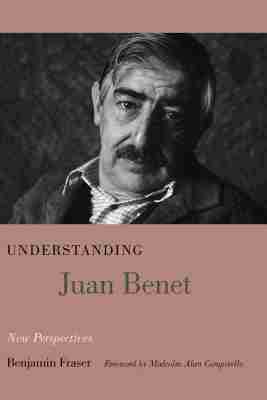
Benjamin Fraser offers an engaging interdisciplinary approach to understanding the literary achievements of Spanish writer Juan Benet (1927-1993) that explores how Benet's intertwined perspectives as author and civil engineer collectively shape his worldview. Benet's intellectual range spanned not only novels, plays, short stories, and essays but also incorporated dams, bridges, canals, and other public works. Fraser offers a fresh vantage point on Benet's writing as invested in both literary and concrete landscapes. Fraser begins his study by grounding readers of Benet's work in the fundamental importance of understanding the Spanish Civil War. Subsequent chapters offer new perspectives on Benet's literary and essayistic production, first viewing Benet's work through the lens of his profession as a civil engineer and exploring lesser known engineering texts and essays in relation to his creative and literary vision, then mapping the influence of French philosopher Henri Bergson (1859-1941) on the Spanish writer's oeuvre. Fraser also harnesses the development of cultural geography and spatial theory to explore the roles of place and space in Benet's novels--highlighting in particular the elaborate spatial dimensions of Benet's own invented cartography of the novelistic place he called ""Regi'n.""Understanding Juan Benet ventures beyond traditional literary study, pursuing the interdisciplinary conversations central to Benet's creative work in which history, fiction, engineering, philosophy, and cultural geography all interact. This introduction to Benet's writing also includes a foreword by Malcolm Alan Compitello, professor of Spanish and head of the Department of Spanish and Portuguese at the University of Arizona, author of Ordering the Evidence: Volver's a Regin and Civil War Fiction and coeditor of Critical Approaches to the Writing of Juan Benet.
600 kr
Skickas inom 11-20 vardagar
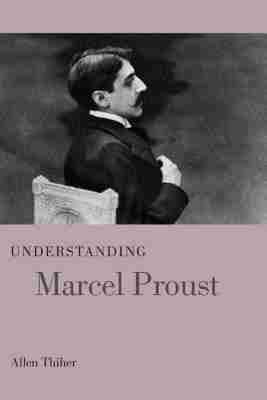
Understanding Marcel Proust includes an overview of Marcel Proust's development as a writer, addressing works both published and unpublished in his lifetime, and then offers an in-depth interpretation of Proust's major novel, In Search of Lost Time, relating it to the Western literary tradition while also demonstrating its radical newness as a narrative.In his introduction Allen Thiher outlines Proust's development in the context of the political and artistic life of the Third Republic, arguing that everything Proust wrote before In Search of Lost Time was an experiment in sorting out whether he wanted to be a writer of critical theory or of fiction. Ultimately, Thiher observes, all these experiments had a role in the elaboration of the novel. Proust became both theorist and fiction writer by creating a bildungsroman narrating a writer's education. What is perhaps most original about Thiher's interpretation, however, is his demonstration that Proust removed his aged narrator from the novel's temporal flow to achieve a kind of fictional transcendence. Proust never situates his narrator in historical time, which allows him to demonstrate concretely what he sees as the function of art: the truth of the absolute particular removed from time's determinations. The artist that the narrator hopes to become at the end of the novel must pursue his own individual truths - those in fact that the novel has narrated, for him and the reader, up to the novel's conclusion. Written in a language accessible to upper-level undergraduates as well as literate general readers, Understanding Marcel Proust simultaneously addresses a scholarly public aware of the critical arguments that Proust's work has generated. Thiher's study should make Proust's In Search of Lost Time more widely accessible by explicating its structure and themes.
756 kr
Skickas inom 11-20 vardagar
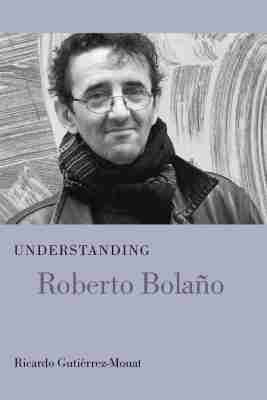
In Understanding Roberto Bolano, Ricardo Gutiérrez-Mouat offers a comprehensive analysis of this critically acclaimed Chilean poet and novelist whose work brought global attention to Latin American literature in the 1960s unseen since the rise of Garcia Marquez and magic realism. Best known for The Savage Detectives, winner of the Romulo Gallegos Prize; the novella By Night in Chile; and the posthumously published novel 2666, winner of the National Book Critics Circle Award, Bolano died in 2003 just as his reputation was becoming established. After a brief biographical sketch, Gutiérrez-Mouat chronologically contextualizes literary interpretations of Bolano's work in terms of his life, cultural background, and political ideals. Gutiérrez-Mouat explains Bolano's work to an English-speaking audience--including his relatively neglected poetry--and conveys a sense of where Bolano fits in the Latin American tradition. Since his death, eleven of novels, four short story collections, and three poetry collections have been translated into English.The afterword addresses Bolano's status as a Latin American writer, as the former literary editor of El Pais claimed, ""neither magical realist, nor baroque nor localist, but [creator of] an imaginary, extraterritorial mirror of Latin America, more as a kind of state of mind than a specific place.
569 kr
Skickas inom 11-20 vardagar
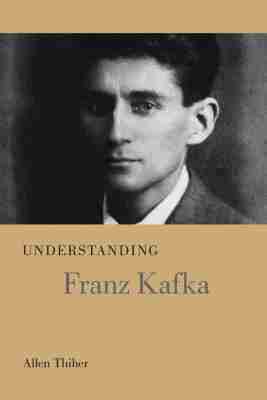
Franz Kafka is without question one of the most influential writers of the twentieth century despite the fact that much of his work remained unpublished when he died at a relatively young age in 1924. Kafka’s eccentric methods of composition and his diffident attitude toward publishing left most of his writing to be edited and published after his death by his literary executor, Max Brod. In Understanding Franz Kafka, Allen Thiher addresses the development of Kafka’s work by analyzing it in terms of its chronological unfolding, emphasizing the various phases in Kafka’s life that can be discerned in his constant quest to find a meaning for his writing. Thiher also shows that Kafka’s work, frequently self-referential, explores the ways literature can have meaning in a world in which writing is a dubious activity.After outlining Kafka’s life using new biographical information, Thiher examines Kafka’s first attempts at writing, often involving nearly farcical experiments. The study then shows how Kafka’s work developed through twists and turns, beginning with the breakthrough stories The Judgment and The Metamorphosis, continuing with his first attempt at a novel with Amerika, and followed by Kafka’s shifting back and forth between short fiction and two other unpublished novels, The Trial and The Castle.Thiher also calls on Kafka’s notebooks and diaries. These help demonstrate that Kafka never stopped experimenting in his attempt to find a literary form that might satisfy his desire to create some kind of transcendental literary text in an era in which the transcendent is at best an object of nostalgia or of comic derision. In short, Thiher contends, Kafka constantly sought the grounds for writing in a world in which all appears groundless.
569 kr
Skickas inom 11-20 vardagar
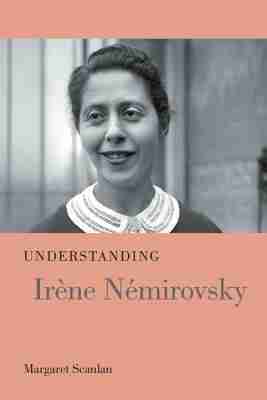
A sympathetic, nuanced exploration of the fiction and turbulent life of this best-selling authorA best-selling novelist in the 1930s, Irène Némirovsky (1903–1942) was rediscovered in 2004, when her Suite Française, set during the fall of France and the first year of German occupation, became a popular and critical success both in France and in the United States. Surviving in manuscript form for sixty years after the author’s deportation to Auschwitz, the work drew respectful attention as the voice of an early Holocaust victim. However, as remaining portions of Némirovsky’s oeuvre returned to print, many twenty-first-century readers were appalled. Works such as David Golder and The Ball were condemned as crudely anti-Semitic, and when biographical details such as her 1938 conversion to Catholicism became known, hostility toward this “self-hating” Jew deepened.Countering such criticisms, Understanding Irène Némirovsky offers a sympathetic, nuanced reading of Némirovsky’s fiction. Margaret Scanlan begins with an overview of the writer’s life—her upper-class Russian childhood, her family’s immigration to France, her troubled relationship with her neglectful mother—and then traces how such experiences informed her novels and stories, including works set in revolutionary Russia, among the nouveau riche on the Riviera, and in struggling French families and failing businesses during the Depression. Scanlan examines the Suite Française and other works that address the rise of fascism and anti-Semitism. Viewing Némirovsky as a major talent with a distinctive style and voice, Scanlan argues for Némirovsky’s keen awareness of the unsettled times in which she lived and examines the ways in which even her novels of manners analyze larger social issues.The Russian Revolution had convinced Némirovsky that violent liberations led to further violence and repression, that interior freedom required political stability. In 1940, when French democracy had collapsed and many seemed reconciled to the Vichy state, Némirovsky’s idea of private freedom faltered—a recognition that her last work, Suite Française, for all its seeming reticence, makes poignantly clear.