Ver - Böcker
Visar alla böcker i serien Ver. Handla med fri frakt och snabb leverans.
7 produkter
7 produkter
318 kr
Skickas inom 7-10 vardagar
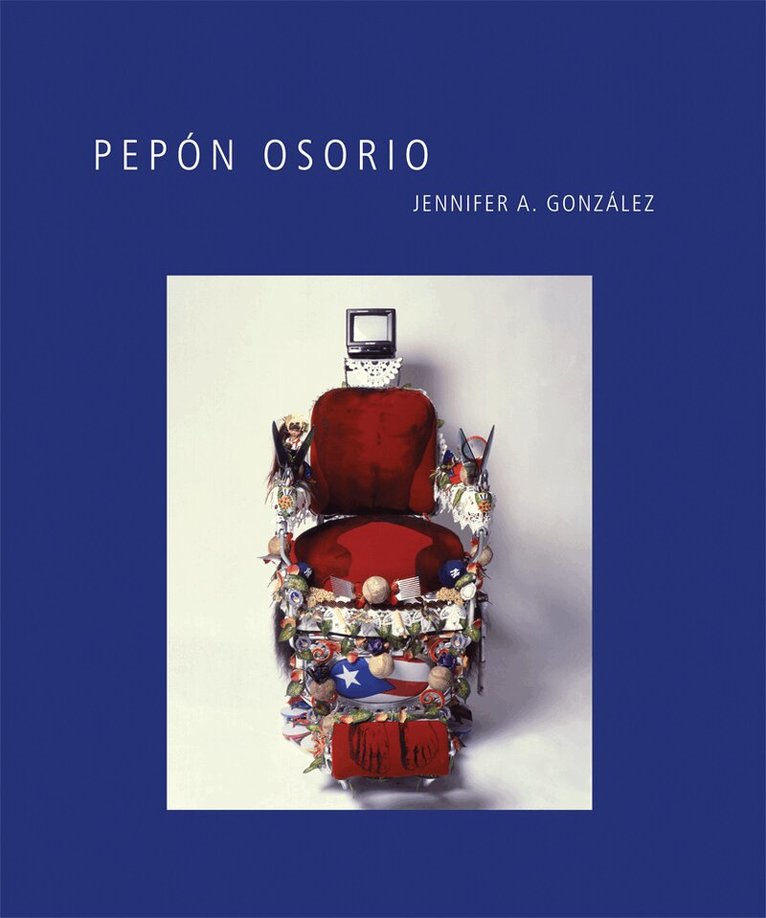
PepÓn Osorio is an internationally recognized artist whose richly detailed installations challenge the stereotypes and misconceptions that shape our view of social institutions and human relationships. Osorio’s colorful, often riotous installations are constructed from found objects and things that he customizes or creates. With a wry sense of humor, he probes sober topics, including prison life, domestic violence, AIDS, and poverty.Osorio’s collaborative site-based works develop from his immersion into a community-residents of urban ethnic neighborhoods, employees who provide social services, children in foster care-and the discussions that result. As he addresses difficult themes such as race and gender, death and survival, and alienation and belonging, Osorio asks his audience to reconsider their assumptions and biases. In this book, Jennifer A. GonzÁlez shows that although Osorio draws on his Puerto Rican background and the immigrant experience for inspiration, his artistic statements bridge geographical barriers and class divides. Osorio’s installations have been exhibited internationally, and his work is represented at the Smithsonian American Art Museum in Washington, D.C., the Museo de Arte de Puerto Rico in San Juan, the Whitney Museum of American Art in New York, and other major museums. He has received numerous awards, including a MacArthur Foundation Fellowship in 1999.
318 kr
Skickas inom 7-10 vardagar
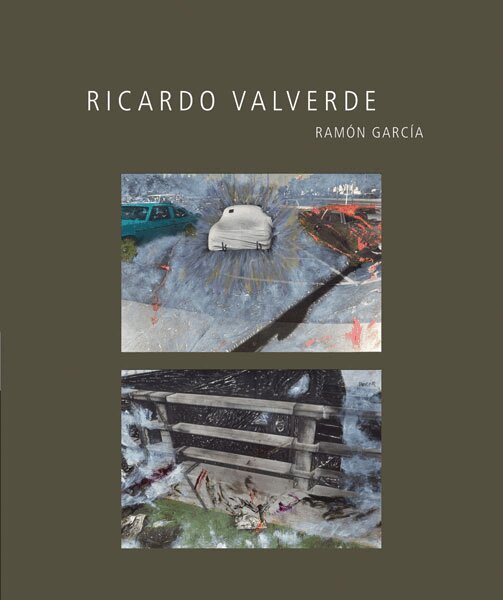
At his untimely death in 1998, photographer Ricardo Valverde (b. 1946) had for almost three decades documented the various communities and social spaces of Los Angeles. Though he began this lifelong pursuit while still in college, capturing the streets of his South Central neighborhood and the urban landscape of downtown Los Angeles, it wasn’t until the Watts Riots of 1965 that Valverde and his work became deeply political. But if his work became more political, it did so within an aesthetic that grew ever more critical of the tropes and institutions of documentary art.Featuring more than one hundred illustrations, this book-in the landmark A Ver: Revisioning Art History series-records the unfolding of Valverde’s vision, from his first photographs of L.A. streets as repositories of the city’s social history, to his socially and politically acute portraiture, to his surrealist-inflected mixed-media work late in his career, to his role in the formation of the community-based arts groups Self-Help Graphics & Art, Ojos, and Chicano Art Collectors Anonymous. RamÓn GarcÍa’s essay offers a clear framework for understanding Valverde’s art and life, along with a sense of the personal and social politics and history that influenced both so thoroughly.
656 kr
Skickas inom 7-10 vardagar
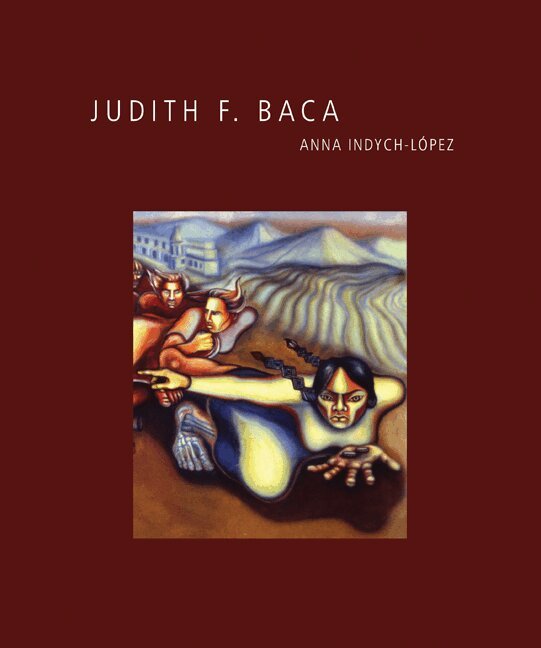
Behind the fascinating public artist’s practice of collaborationJudith F. Baca is best known for the Great Wall of Los Angeles (1976–83), a vibrant 2,740-foot mural in Los Angeles that presents an alternative history of California-one that focuses on the contributions of marginalized and underrepresented communities. The mural is emblematic of Baca’s pioneering approach to creating public art, a process in which members of the community are essential contributors to the conception and realization of the work.Anna Indych-LÓpez explores Baca’s oeuvre, from early murals painted with local gang members in the Boyle Heights neighborhood of Los Angeles to more recently commissioned works. She looks in depth at the Great Wall and considers the artist’s ongoing work with the Social and Public Art Resource Center (SPARC) in Venice, California, a nonprofit group founded by Baca in 1976. Throughout, Indych-LÓpez assesses what she calls Baca’s “public art of contestation” and discusses how ideas of collaboration and authorship and issues of race, class, and gender have influenced and sustained Baca’s art practice.
318 kr
Skickas inom 7-10 vardagar
Behind the fascinating public artist’s practice of collaborationJudith F. Baca is best known for the Great Wall of Los Angeles (1976–83), a vibrant 2,740-foot mural in Los Angeles that presents an alternative history of California-one that focuses on the contributions of marginalized and underrepresented communities. The mural is emblematic of Baca’s pioneering approach to creating public art, a process in which members of the community are essential contributors to the conception and realization of the work.Anna Indych-LÓpez explores Baca’s oeuvre, from early murals painted with local gang members in the Boyle Heights neighborhood of Los Angeles to more recently commissioned works. She looks in depth at the Great Wall and considers the artist’s ongoing work with the Social and Public Art Resource Center (SPARC) in Venice, California, a nonprofit group founded by Baca in 1976. Throughout, Indych-LÓpez assesses what she calls Baca’s “public art of contestation” and discusses how ideas of collaboration and authorship and issues of race, class, and gender have influenced and sustained Baca’s art practice.
318 kr
Skickas inom 7-10 vardagar
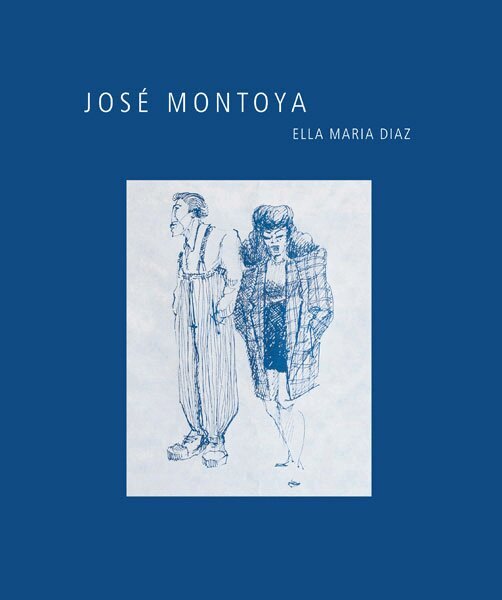
A generously illustrated account of the life and work of the prominent Chicano artist, educator, and activistJosÉ Montoya (1932–2013) was a leading figure in bilingual and bicultural expression drawn from barrio life as a defining feature of U.S. culture. As an artist, poet, and musician, he produced iconic works depicting pachuco and pachuca culture based on his own experiences as a youth after World War II. These include the poem “El Louie” as well as thousands of political posters and masterful sketches. Montoya cofounded the art collective Royal Chicano Air Force and helped organize for the United Farm Workers. An influential educator, he established the Barrio Art Program in the early 1970s, and taught at California State University, Sacramento.Author Ella Maria Diaz examines a remarkable career that traversed decades, languages, media, and genres. This book is illustrated with reproductions of Montoya’s art from rarely seen archival slides and documents, as well as from private collections and the Montoya estate. Through oral histories and archival research, Diaz proposes a new model for the study of Latina/o/x artists who reject the boundaries between visual art, poetry, music, education, and community activism.This book is distributed for the Chicano Studies Research Center at UCLA.
656 kr
Skickas inom 7-10 vardagar
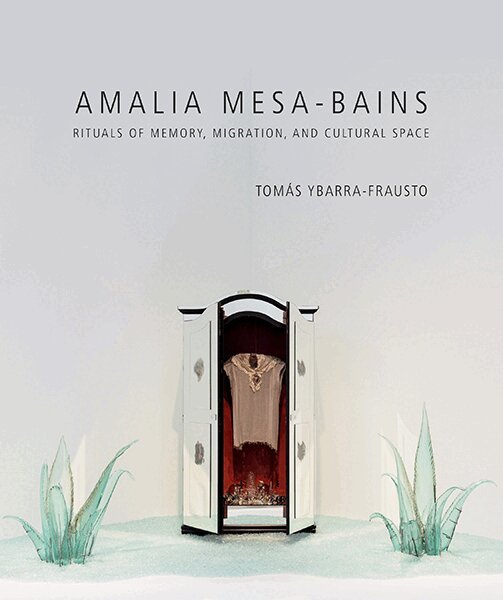
The life and work of a celebrated multimedia artist, cultural and feminist theorist, and community organizerAmalia Mesa-Bains has garnered international recognition for multimedia installations that evoke the Chicana experience. This lively book recounts pivotal moments from her life, career, and collaborations, examining the intertwined worlds of Latinx culture, social movements, and contemporary art. Esteemed cultural historian TomÁs Ybarra-Frausto relates Mesa-Bains’s life to contemporary events and her artistic and intellectual production to her concept of domesticana (a feminist interpretation of rasquachismo) and her mestiza identity. He demonstrates how the Chicano Movement attuned the artist to her Mexican heritage, sparking her interest in the traditional home altars that became the aesthetic and cultural inspiration for her installation art. Employing detailed descriptions and analyses of key works, this book is an “art historical biography-memoire,” offering a uniquely personal understanding of Mesa-Bains’s prolific artistic practice and situating her life and art in the cultural and political milieu of the United States since the 1960s. Distributed for UCLA Chicano Studies Research Center Press.
318 kr
Skickas inom 7-10 vardagar
The life and work of a celebrated multimedia artist, cultural and feminist theorist, and community organizerAmalia Mesa-Bains has garnered international recognition for multimedia installations that evoke the Chicana experience. This lively book recounts pivotal moments from her life, career, and collaborations, examining the intertwined worlds of Latinx culture, social movements, and contemporary art. Esteemed cultural historian TomÁs Ybarra-Frausto relates Mesa-Bains’s life to contemporary events and her artistic and intellectual production to her concept of domesticana (a feminist interpretation of rasquachismo) and her mestiza identity. He demonstrates how the Chicano Movement attuned the artist to her Mexican heritage, sparking her interest in the traditional home altars that became the aesthetic and cultural inspiration for her installation art. Employing detailed descriptions and analyses of key works, this book is an “art historical biography-memoire,” offering a uniquely personal understanding of Mesa-Bains’s prolific artistic practice and situating her life and art in the cultural and political milieu of the United States since the 1960s. Distributed for UCLA Chicano Studies Research Center Press.