Verso's Southern Questions - Böcker
Visar alla böcker i serien Verso's Southern Questions. Handla med fri frakt och snabb leverans.
8 produkter
8 produkter
204 kr
Skickas inom 7-10 vardagar
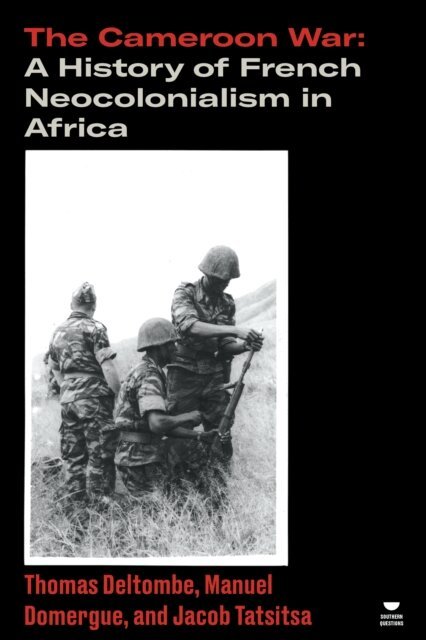
According to conventional wisdom, France's empire in sub- Saharan Africa ended peacefully. But this book tells a different story. The shocking violence of a secret war roiled Cameroon in the 1950s and '60s. A mass movement for self-determination had emerged under the leadership of the Union of the Peoples of Cameroon (UPC), and France responded with brutal repression. As in Algeria, French forces waged a bloody counterinsurgency campaign. They eventually eradicated the opposition and installed a client dictatorship in the capital, Yaoundé.With the world focused on the Algerian bloodbath, the conflict in Cameroon received little attention at the time. Its devastating aftermath - and tens of thousands of victims - were intentionally obscured by French authorities and their local collaborators. The Cameroon War uncovers this hidden history. It illuminates a forgotten struggle for decolonisation at the origin of neocolonial rule in Francophone Africa, a story that is still unfolding today.
204 kr
Skickas inom 7-10 vardagar
In this groundbreaking work, the essayist and critic Adewale Maja-Pearce delivers a mordant verdict on Nigeria's crisis of democracy. A mosaic of ethnic and religious groups, the most populous country in Africa was fabricated by British colonizers at the turn of the twentieth century. In the years since its independence in 1960, Nigeria spent an unbroken quarter century as a military dictatorship. Yet the blessings of today's democracy are unclear to many, especially among the more than half of the population living in extreme poverty. Buffeted by unemployment, saddled with debt, menaced by bandits and Islamic fundamentalists, Nigeria faces the threat of disintegration.Maja-Pearce shows that recent mobilizations against police brutality, sexism, and homophobia reveal a powerful undercurrent of discontent, especially among the country's youth. If Nigeria has a future, he shows here, it is in the hands of young people unwilling to go on as before.
297 kr
Skickas inom 7-10 vardagar
Acclaimed worldwide, Everybody Loves a Good Drought is the acknowledged classic on rural poverty in India. Three decades after publication, it remains unsurpassed in the scope and depth of its reportage, providing an intimate view of the daily struggles of the poor and the efforts, often ludicrous, made to uplift them.The Indian poor are too often reduced to statistics. In the dry language of development reports and economic projections, the true misery of the hundreds of millions living below the poverty line gets overlooked. In this thoroughly researched study of the poorest of the poor, we see how they manage and what sustains them. The people in this book typify the lives and aspirations of a large section of Indian society, and their stories give a glimpse into the true face of development.
306 kr
Kommande
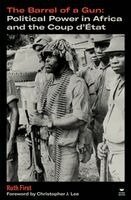
A classic study of the role coups d'état played in postcolonial Africa, Ruth First's The Barrel of a Gun is being republished for the first time in 50 years with a critical introduction from Christopher J. Lee. If Frantz Fanon had not died in 1961, what might a sequel to The Wretched of the Earth have looked like? Ruth First's The Barrel of a Gun provides a possible answer by addressing one of the most notorious and complicated phenomena in postcolonial Africa-the coup d'état. Written at a time when the fervor of decolonization and independence was receding, and the vulnerabilities and violent realities of postcolonial state power were being confronted, The Barrel of a Gun remains a foundational work on the topic of postcolonial coups and state power.
254 kr
Kommande
In 1960, as the Algerian War for Independence entered its sixth year, 22-year-old Djamila Boupacha was arrested for allegedly planting a bomb in a university cafeteria. While in custody, she was tortured and raped by French soldiers. Her case would have been buried like countless others had it not been for the efforts of her lawyer, Gisèle Halimi, and the philosopher Simone de Beauvoir to transform it into an international cause célèbre. Djamila Boupacha is the culmination of this campaign to expose the systemic violence of colonial rule. "To protest in the name of morality against 'excesses' or 'abuses,'" Beauvoir writes, "is an error which hints at active complicity. There are no 'abuses' or 'excesses' here, simply an all-pervasive system."More than a historical document, the book is a profound exploration of morality, complicity and resistance. A classic text of anticolonialism, this is a story that demands to be read-and remembered.
388 kr
Kommande
Algeria 1962: A People's History offers a gripping portrait of one of the twentieth-century's most dramatic turning points-the birth of independent Algeria. Malika Rahal immerses us in the tumultuous year when, after more than a century of French settler rule and eight years of war, Algerians claimed their freedom. The result is a history alive with the voices, emotions and experiences of those who lived it.In March 1962, the Évian Accords recognised Algeria's independence. Yet the months that followed were far from peaceful. Colonialist dead-enders launched a scorched-earth campaign of terrorist violence, nationalist factions fought for supremacy, and returning refugees and released prisoners reshaped the social landscape. At the same time, millions poured into the streets in unprecedented celebration, reclaiming public space and imagining new futures.Rahal's history traces how independence was lived and remembered through rumour and ritual, joy and grief, the redistribution of land and the reopening of mosques, episodes that continue to resonate in today's Algeria. Sweeping yet intimate, Algeria 1962 redefines how we think about decolonisation, revealing it as both rupture and reinvention, a story written not only by victors but by an entire people.
385 kr
Kommande
Examining a range of novelists and critics during the decades of decolonization, the cold war and globalization-from Naipaul to Susan Sontag, Fanon to Edward Said-Pankaj Mishra uncovers two divergent trends: while writers in the global south could not but describe individual fates in their relation to coercive power, political intelligence and literary sensibility became gradually disjunct in Anglo-American fiction and criticism. Modern literature has recorded, from the nineteenth century onwards, the determining influence of ideas and ideology on private experience. But social and political conflict became conspicuous by its absence in much contemporary fiction and literary criticism in the United States and Britain. Literature at the End of History makes clear how impoverished the West's literary culture is as a result-with vanishingly few exceptions-and where the great literature of the world really comes from.
242 kr
Skickas
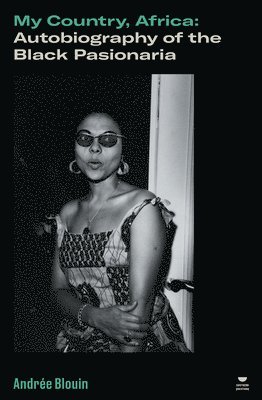
Andrée Blouin-once called the most dangerous woman in Africa-played a leading role in the struggles for decolonization that shook the continent in the 1950s and '60s, advising the postcolonial leaders of Algeria, both Congos, Ivory Coast, Mali, Guinea, and Ghana.In this autobiography, Blouin retraces her remarkable journey as an African revolutionary. Born in French Equatorial Africa and abandoned at the age of three, she endured years of neglect and abuse in a colonial orphanage, which she escaped after being forced by nuns into an arranged marriage at fifteen. She later became radicalized by the death of her two-year-old son, who was denied malaria medication by French officials because he was one-quarter African.In Guinea, where Blouin was active in Sékou Touré's campaign for independence, she came into contact with leaders of the liberation movement in the Belgian Congo. Blouin witnessed the Congolese tragedy up close as an adviser to Patrice Lumumba, whose arrest and assassination she narrates in unforgettable detail.Blouin offers a sweeping survey of pan-African nationalism, capturing the intricacies of revolutionary diplomacy, comradeship, and betrayal. Alongside intimate portraits of the movement's leaders, Blouin provides insights into the often-overlooked contribution of African women in the struggle for independence.