Virtual Laboratory - Böcker
Visar alla böcker i serien Virtual Laboratory. Handla med fri frakt och snabb leverans.
4 produkter
4 produkter
974 kr
Skickas inom 10-15 vardagar
Covering algebriac and differential geometry, the concept of Lie groups, and the relation of Lie groups to planar kinematics, line geometry and representation theory, this work deals with the application of these geometrical methods to robotics, in the areas of statics, dynamics, gripping solid objects, posture and screw systems.
1 800 kr
Skickas inom 10-15 vardagar
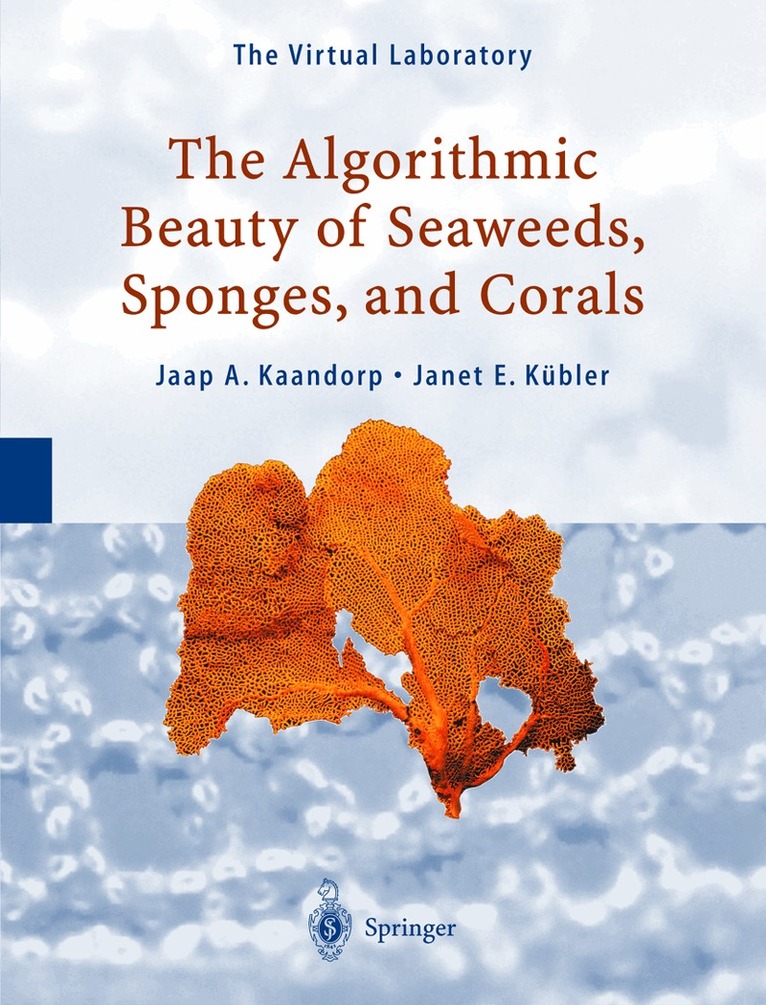
rowth and form of marine organisms inhabiting hard substrata, the G"marine sessile organisms", ischaracterized by anumber ofremarkable properties. One remarkable feature of these organisms is that many ofthem can be characterizedasmodularorganisms. Modularorganisms are typically built ofrepeated units, the modules, which might be a polyp in a coral colony or afrond in seaweeds. In most cases,the modulehas adistinctive form, while the growth form of the entire colony is frequently an indeterminate form. Indeterminategrowthindicatesthatthe same growthprocess mayresult in an infinite numberofdifferentrealizations ofthe growthform.This isincontrast to unitaryorganisms such asvertebrates and insects, in which a single-celled stage develops into a well-defined, determinate structure. In many cases the growth process in modular organisms leads to complex shapes, which are often quite difficult to describe in words. In most of the biological literature these forms are only described in qualitativeand rather vague terms, such as "thinlybranching","tree-shaped" and "irregularlybranching".Anothermajor characteristic ofmarine sessile organisms is that there is frequentlyastrongimpactofthe physical environmenton the growthprocess, leading to a variety of growth forms. Growth by accumulation of modules allows the organism to fit its shape to its environment i.e., have plasticity. In many seaweeds, sponges, and corals, differences in exposure to water movement cause significant changes in morphology. Agood example of this plasticity is the Indo-Pacific stony coral Pocillopora damicornis(Veron and Pichon 1976) shown in Plg.r.i. In very sheltered environments, this species has a thin-branching growth form. The growth form gradually transforms to a more compact shape when the exposure to water movement increases.
772 kr
Skickas inom 10-15 vardagar
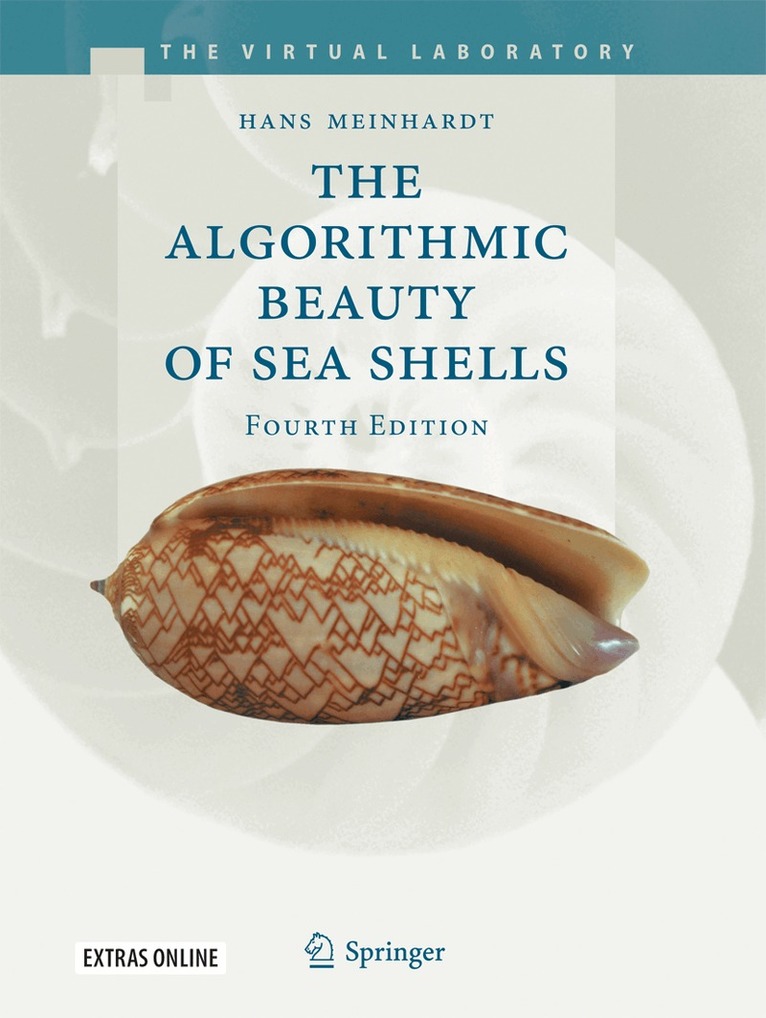
The pigment patterns on tropical shells are of great beauty and diversity. Their mixture of regularity and irregularity is fascinating. A particular pattern seems to follow particular rules but these rules allow variations. No two shells are identical. The motionless patterns appear to be static, and, indeed, they consist of calci?ed material. However, as will be shown in this book, the underlying mechanism that generates this beauty is eminently dynamic. It has much in common with other dynamic systems that generate patterns, such as a wind-sand system that forms large dunes, or rain and erosion that form complex rami?ed river systems. On other shells the underlying mechanism has much in common with waves such as those commonly observed in the spread of an epidemic. A mollusk can only enlarge its shell at the shell margin. In most cases, only at this margin are new elements of the pigmentation pattern added. Therefore, the shell pattern preserves the record of a process that took place over time in a narrow zone at the growing edge. A certain point on the shell represents a certain moment in its history. Like a time machine one can go into the past or the future just by turning the shell back and forth. Having this complete historical record opens the possibility of decoding the generic principles behind this beauty.
1 800 kr
Skickas inom 10-15 vardagar
rowth and form of marine organisms inhabiting hard substrata, the G"marine sessile organisms", ischaracterized by anumber ofremarkable properties. One remarkable feature of these organisms is that many ofthem can be characterizedasmodularorganisms. Modularorganisms are typically built ofrepeated units, the modules, which might be a polyp in a coral colony or afrond in seaweeds. In most cases,the modulehas adistinctive form, while the growth form of the entire colony is frequently an indeterminate form. Indeterminategrowthindicatesthatthe same growthprocess mayresult in an infinite numberofdifferentrealizations ofthe growthform.This isincontrast to unitaryorganisms such asvertebrates and insects, in which a single-celled stage develops into a well-defined, determinate structure. In many cases the growth process in modular organisms leads to complex shapes, which are often quite difficult to describe in words. In most of the biological literature these forms are only described in qualitativeand rather vague terms, such as "thinlybranching","tree-shaped" and "irregularlybranching".Anothermajor characteristic ofmarine sessile organisms is that there is frequentlyastrongimpactofthe physical environmenton the growthprocess, leading to a variety of growth forms. Growth by accumulation of modules allows the organism to fit its shape to its environment i.e., have plasticity. In many seaweeds, sponges, and corals, differences in exposure to water movement cause significant changes in morphology. Agood example of this plasticity is the Indo-Pacific stony coral Pocillopora damicornis(Veron and Pichon 1976) shown in Plg.r.i. In very sheltered environments, this species has a thin-branching growth form. The growth form gradually transforms to a more compact shape when the exposure to water movement increases.