W.H. Auden: Critical Editions - Böcker
Visar alla böcker i serien W.H. Auden: Critical Editions. Handla med fri frakt och snabb leverans.
7 produkter
7 produkter
369 kr
Skickas inom 7-10 vardagar
You know the terror that for poets lurks Beyond the ferry when to Minos brought. Poets must utter their Collected Works, Including Juvenilia...--from "Letter to Lord Byron" (1936) Regardless of how poets feel about their youthful attempts at verse, their early poems not only enrich our understanding of their artistic growth, but also reveal much about the nature of literary genius. No other twentieth-century poet has left behind such a wealth of early poetry as did W. H. Auden. By bringing together for the first time all the poems written by Auden between the ages of fifteen and twenty-one (1922-1928), this book allows us a rare, detailed look at the literary personality, development, and preoccupations of a major poet. Auden's readers will be fascinated to find in these poems the earliest evidence of his interest in psychoanalysis, his conflicted attitude toward his homosexuality, his self-conscious approach to poetry, and his life-long journey toward a religious sense of the world. This collection includes over two hundred poems, most of them never published before, concluding with the contents of Auden's privately printed volume, Poems (1928).The poems are generously annotated with information on Auden's education, reading, literary concerns, and personal life. In her introduction, Katherine Bucknell traces important themes relating to the poet's entire career, and describes crucial but hitherto unknown aspects of his youth during his years at Gresham's School and at Christ Church, Oxford. Throughout this work we see in Auden an admirable instinct for experiment, a thorough testing of tradition, and a gathering mastery of technique and thematic argument.
317 kr
Skickas inom 7-10 vardagar
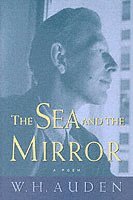
Written in the midst of World War II after its author emigrated to America, "The Sea and the Mirror" is not merely a great poem but ranks as one of the most profound interpretations of Shakespeare's final play in the twentieth century. As W. H. Auden told friends, it is "really about the Christian conception of art" and it is "my Ars Poetica, in the same way I believe The Tempest to be Shakespeare's." This is the first critical edition. Arthur Kirsch's introduction and notes make the poem newly accessible to readers of Auden, readers of Shakespeare, and all those interested in the relation of life and literature--those two classic themes alluded to in its title. The poem begins in a theater after a performance of The Tempest has ended. It includes a moving speech in verse by Prospero bidding farewell to Ariel, a section in which the supporting characters speak in a dazzling variety of verse forms about their experiences on the island, and an extravagantly inventive section in prose that sees the uncivilized Caliban address the audience on art--an unalloyed example of what Auden's friend Oliver Sachs has called his "wild, extraordinary and demonic imagination."Besides annotating Auden's allusions and sources (in notes after the text), Kirsch provides extensive quotations from his manuscript drafts, permitting the reader to follow the poem's genesis in Auden's imagination. This book, which incorporates for the first time previously ignored corrections that Auden made on the galleys of the first edition, also provides an unusual opportunity to see the effect of one literary genius upon another.
286 kr
Skickas inom 7-10 vardagar
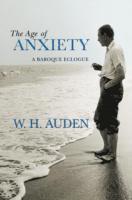
When it was first published in 1947, The Age of Anxiety--W. H. Auden's last, longest, and most ambitious book-length poem--immediately struck a powerful chord, capturing the imagination of the cultural moment that it diagnosed and named. Beginning as a conversation among four strangers in a barroom on New York's Third Avenue, Auden's analysis of Western culture during the Second World War won the Pulitzer Prize and inspired a symphony by Leonard Bernstein as well as a ballet by Jerome Robbins. Yet reviews of the poem were sharply divided, and today, despite its continuing fame, it is unjustly neglected by readers. This volume--the first annotated, critical edition of the poem--introduces this important work to a new generation of readers by putting it in historical and biographical context and elucidating its difficulties. Alan Jacobs's introduction and thorough annotations help today's readers understand and appreciate the full richness of a poem that contains some of Auden's most powerful and beautiful verse, and that still deserves a central place in the canon of twentieth-century poetry.
206 kr
Skickas inom 7-10 vardagar
For the Time Being is a pivotal book in the career of one of the greatest poets of the twentieth century. W. H. Auden had recently moved to America, fallen in love with a young man to whom he considered himself married, rethought his entire poetic and intellectual equipment, and reclaimed the Christian faith of his childhood. Then, in short order, his relationship fell apart and his mother, to whom he was very close, died. In the midst of this period of personal crisis and intellectual remaking, he decided to write a poem about Christmas and to have it set to music by his friend Benjamin Britten. Applying for a Guggenheim grant, Auden explained that he understood the difficulty of writing something vivid and distinctive about that most cliched of subjects, but welcomed the challenge. In the end, the poem proved too long and complex to be set by Britten, but in it we have a remarkably ambitious and poetically rich attempt to see Christmas in double focus: as a moment in the history of the Roman Empire and of Judaism, and as an ever-new and always contemporary event for the believer.For the Time Being is Auden's only explicitly religious long poem, a technical tour de force, and a revelatory window into the poet's personal and intellectual development. This edition provides the most accurate text of the poem, a detailed introduction by Alan Jacobs that explains its themes and sets the poem in its proper contexts, and thorough annotations of its references and allusions.
221 kr
Skickas inom 7-10 vardagar
From one of the great modern writers, the acclaimed lectures in which he draws on a lifetime of experience to take the measure of Shakespeare's plays and sonnets "W. H. Auden, poet and critic, will conduct a course on Shakespeare at the New School for Social Research beginning Wednesday. Mr. Auden . . . proposes to read all Shakespeare's plays in chronological order." So the New York Times reported on September 27, 1946, giving notice of a rare opportunity to hear one of the century's great poets discuss at length one of the greatest writers of all time. Reconstructed by Arthur Kirsch, these lectures offer remarkable insights into Shakespeare's plays and sonnets while also adding immeasurably to our understanding of Auden.
215 kr
Skickas inom 7-10 vardagar
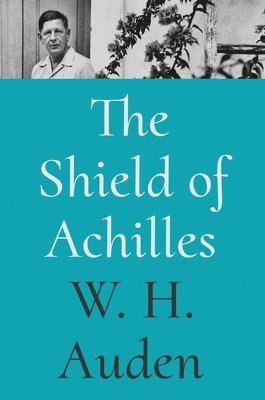
Back in print for the first time in decades, Auden’s National Book Award–winning poetry collection, in a critical edition that introduces it to a new generation of readersThe Shield of Achilles, which won the National Book Award in 1956, may well be W. H. Auden’s most important, intricately designed, and unified book of poetry. In addition to its famous title poem, which reimagines Achilles’s shield for the modern age, when war and heroism have changed beyond recognition, the book also includes two sequences—“Bucolics” and “Horae Canonicae”—that Auden believed to be among his most significant work. Featuring an authoritative text and an introduction and notes by Alan Jacobs, this volume brings Auden’s collection back into print for the first time in decades and offers the only critical edition of the work.As Jacobs writes in the introduction, Auden’s collection “is the boldest and most intellectually assured work of his career, an achievement that has not been sufficiently acknowledged.” Describing the book’s formal qualities and careful structure, Jacobs shows why The Shield of Achilles should be seen as one of Auden’s most central poetic statements—a richly imaginative, beautifully envisioned account of what it means to live, as human beings do, simultaneously in nature and in history.
204 kr
Kommande
Back in print for the first time in decades, Auden’s National Book Award–winning poetry collection, in a critical edition that introduces it to a new generation of readersThe Shield of Achilles, which won the National Book Award in 1956, may well be W. H. Auden’s most important, intricately designed, and unified book of poetry. In addition to its famous title poem, which reimagines Achilles’s shield for the modern age, when war and heroism have changed beyond recognition, the book also includes two sequences—“Bucolics” and “Horae Canonicae”—that Auden believed to be among his most significant work. Featuring an authoritative text and an introduction and notes by Alan Jacobs, this volume brings Auden’s collection back into print for the first time in decades and offers the only critical edition of the work.As Jacobs writes in the introduction, Auden’s collection “is the boldest and most intellectually assured work of his career, an achievement that has not been sufficiently acknowledged.” Describing the book’s formal qualities and careful structure, Jacobs shows why The Shield of Achilles should be seen as one of Auden’s most central poetic statements—a richly imaginative, beautifully envisioned account of what it means to live, as human beings do, simultaneously in nature and in history.