William James Lectures - Böcker
Visar alla böcker i serien William James Lectures. Handla med fri frakt och snabb leverans.
4 produkter
4 produkter
Del 1 - William James Lectures
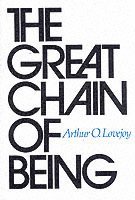
Great Chain of Being
A Study of the History of an Idea
Häftad, Engelska, 2010
302 kr
Skickas inom 10-15 vardagar
From later antiquity down to the close of the eighteenth century, most philosophers and men of science and, indeed, most educated men, accepted without question a traditional view of the plan and structure of the world.In this volume, which embodies the William James lectures for 1933, Arthur O. Lovejoy points out the three principles—plenitude, continuity, and graduation—which were combined in this conception; analyzes their origins in the philosophies of Plato, Aristotle, and the Neoplatonists; traces the most important of their diverse samifications in subsequent religious thought, in metaphysics, in ethics and aesthetics, and in astronomical and biological theories; and copiously illustrates the influence of the conception as a whole, and of the ideas out of which it was compounded, upon the imagination and feelings as expressed in literature.
250 kr
Skickas inom 7-10 vardagar
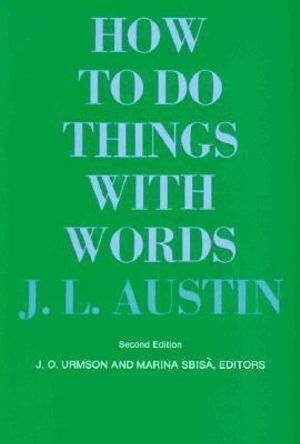
John L. Austin was one of the leading philosophers of the twentieth century. The William James Lectures presented Austin’s conclusions in the field to which he directed his main efforts on a wide variety of philosophical problems. These talks became the classic How to Do Things with Words.For this second edition, the editors have returned to Austin’s original lecture notes, amending the printed text where it seemed necessary. Students will find the new text clearer, and, at the same time, more faithful to the actual lectures. An appendix contains literal transcriptions of a number of marginal notes made by Austin but not included in the text. Comparison of the text with these annotations provides new dimensions to the study of Austin’s work.
382 kr
Skickas inom 10-15 vardagar
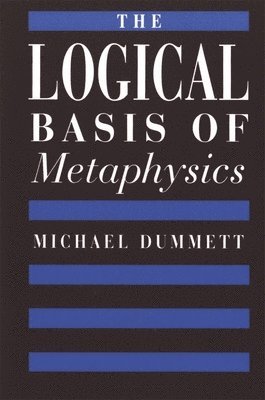
Michael Dummett’s new book is the greatly expanded and recently revised version of his distinguished William James Lectures, delivered in 1976. Dummett regards the construction of a satisfactory theory of meaning as the most pressing task of contemporary analytical philosophy. He believes that the successful completion of this difficult assignment will lead to a resolution of problems before which philosophy has been stalled, in some instances for centuries. These problems turn on the correctness or incorrectness of a realistic view of one or another realm—the physical world, the mind, the past, mathematical reality, and so forth. Rejection of realism amounts to adoption of a variant semantics, and often of a variant logic, for the statements in a certain sector of our language. Dummett does not assume the correctness of any one logical system but shows how the choice between different logics arises at the level of the theory of meaning and depends upon the choice of one or another general form of meaning-theory. In order to determine the correct shape for a meaning-theory, we must attain a clear conception of what a meaning-theory can be expected to do. Such a conception, says Dummett, will form “a base camp for an assault on the metaphysical peaks: I have no greater ambition in this book than to set up a base camp.”
404 kr
Skickas inom 7-10 vardagar
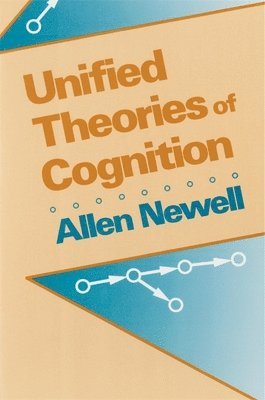
Psychology is now ready for unified theories of cognition—so says Allen Newell, a leading investigator in computer science and cognitive psychology. Not everyone will agree on a single set of mechanisms that will explain the full range of human cognition, but such theories are within reach and we should strive to articulate them.In this book, Newell makes the case for unified theories by setting forth a candidate. After reviewing the foundational concepts of cognitive science—knowledge, representation, computation, symbols, architecture, intelligence, and search—Newell introduces Soar, an architecture for general cognition. A pioneer system in artificial intelligence, Soar is the first problem solver to create its own subgoals and learn continuously from its own experience.Newell shows how Soar’s ability to operate within the real-time constraints of intelligent behavior, such as immediate-response and item-recognition tasks, illustrates important characteristics of the human cognitive structure. Throughout, Soar remains an exemplar: we know only enough to work toward a fully developed theory of cognition, but Soar’s success so far establishes the viability of the enterprise.Given its integrative approach, Unified Theories of Cognition will be of tremendous interest to researchers in a variety of fields, including cognitive science, artificial intelligence, psychology, and computer science. This exploration of the nature of mind, one of the great problems of philosophy, should also transcend disciplines and attract a large scientific audience.