Arthur O. Lovejoy - Böcker
Visar alla böcker från författaren Arthur O. Lovejoy. Handla med fri frakt och snabb leverans.
11 produkter
11 produkter
Del 1 - William James Lectures
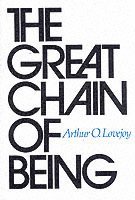
Great Chain of Being
A Study of the History of an Idea
Häftad, Engelska, 2010
302 kr
Skickas inom 10-15 vardagar
From later antiquity down to the close of the eighteenth century, most philosophers and men of science and, indeed, most educated men, accepted without question a traditional view of the plan and structure of the world.In this volume, which embodies the William James lectures for 1933, Arthur O. Lovejoy points out the three principles—plenitude, continuity, and graduation—which were combined in this conception; analyzes their origins in the philosophies of Plato, Aristotle, and the Neoplatonists; traces the most important of their diverse samifications in subsequent religious thought, in metaphysics, in ethics and aesthetics, and in astronomical and biological theories; and copiously illustrates the influence of the conception as a whole, and of the ideas out of which it was compounded, upon the imagination and feelings as expressed in literature.
394 kr
Skickas inom 7-10 vardagar
Primitivism and Related Ideas in Antiquity was intended to be the first volume of a four-part series of books covering the history of primitivism and related ideas, but the outbreak of World War II, and, later, Lovejoy's death, prevented the other books from being published as originally conceived by the two authors. A documentary and analytical record, the book presents the classical background of primitivism and anti-primitivism in modern literature, historiography, and social and moral philosophy, and comprises chapters that center around particular ancient concepts and authors, including cynicism, stoicism, epicureanism, Plato, Aristotle, Lucretius, and Cicero. According to the authors in their preface, "there is some reason to think that this background is not universally familiar to those whose special field of study lie within the period of the Renaissance to our own time"; this book, in which the original Greek and Latin sources stand side by side with their English translations, will prove useful to scholars from a variety of disciplines who study this period.
380 kr
Skickas inom 5-8 vardagar
272 kr
Skickas inom 5-8 vardagar
2 103 kr
Skickas inom 10-15 vardagar
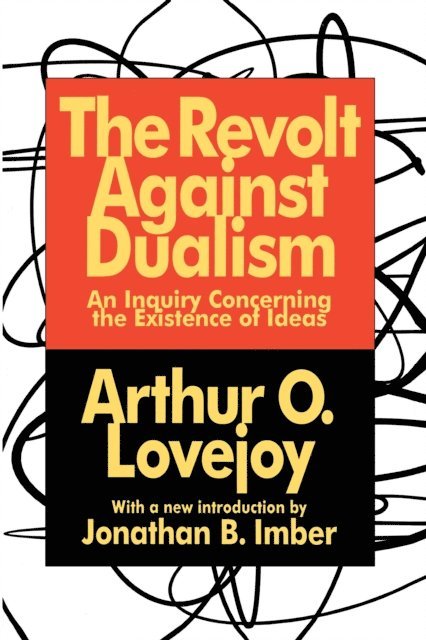
The Revolt Against Dualism, first published in 1930, belongs to a tradition in philosophical theorizing that Arthur O. Lovejoy called "descriptive epistemology." Lovejoy's principal aim in this book is to clarify the distinction between the quite separate phenomena of the knower and the known, something regularly obvious to common sense, if not always to intellectual understanding. This work is as much an argument about the ineluctable differences between subject and object and between mentality and reality, as it is a subtle polemic against those who would stray far from acknowledging these differences. With a resolve that lasts over three hundred pages, Lovejoy offers candid evaluations of a generation's worth of philosophical discussions that address the problem of epistemological dualism.In his stunning new introduction, Jonathan B. Imber offers a reassessment of Lovejoy's career as a thinker and as an active participant in the worldly affairs of academic life. He introduces to a new generation of readers some enduring principles of the vocation of the scholar to which Lovejoy not only subscribed but to which he also gave substance through his activities as an academic man. The opening statement provides both a fit tribute to a great pioneer in the history of ideas, and an example of intellectual history in its own right. The Revolt Against Dualism will be a significant addition to the libraries of philosophers, sociologists, and history of ideas scholars.
378 kr
Skickas inom 5-8 vardagar
562 kr
Skickas inom 7-10 vardagar
Originally published in 1948. In the first essay of this collection, Lovejoy reflects on the nature, methods, and difficulties of the historiography of ideas. He maps out recurring phenomena in the history of ideas, which the essays illustrate. One phenomenon is the presence and influence of the same presuppositions or other operative "ideas" in very diverse provinces of thought and in different periods. Another is the role of semantic transitions and confusions, of shifts and of ambiguities in the meanings of terms, in the history of thought and taste. A third phenomenon is the internal tensions or waverings in the mind of almost every individual writer—sometimes discernible even in a single writing or on a single page—arising from conflicting ideas or incongruous propensities of feeling or taste to which the writer is susceptible. These essays do not contribute to metaphysical and epistemological questions; they are primarily historical.
588 kr
Skickas inom 5-8 vardagar
Originally published in 1961. Arthur O. Lovejoy, beginning with his book The Great Chain of Being, helped usher in the discipline of the History of Ideas in America. In Reflections on Human Nature, Lovejoy devotes particular attention to influential figures such as Hobbes, Locke, Bishop Butler, and Mandeville, tracing developments and changes in the concept of human nature through the seventeenth and eighteenth centuries. He also discusses the theory of human nature held by the founders of the American Constitution, giving special attention to James Madison and the "Federalist Papers."
509 kr
Skickas inom 7-10 vardagar
Originally published in 1963. The essays in this volume are critical and, with one exception, directed against the philosophic movement of pragmatism. "The Thirteen Pragmatisms" is an exercise in logical analysis and is a challenge to a group of philosophers who have taken on a collective name to show how their apparent diversities are to be reconciled. Few philosophers would call themselves orthodox followers of this train of thought, so these essays can be studied without a sense of personal injury that deadens the critical faculty and obscures insight. In The Thirteen Pragmatisms and Other Essays, logical technique is on display: the author's keenness in spotting double meanings and his ability to rephrase them in univalent form. This collection of essays should afford students of philosophy a set of cases in which they need not take sides but which give them an analytical method they can practice themselves on contemporary issues. The fact that these essays are on the whole critical gives them a heuristic value that dogmatic or expository essays would not have.
576 kr
Skickas inom 3-6 vardagar
710 kr
Skickas inom 10-15 vardagar
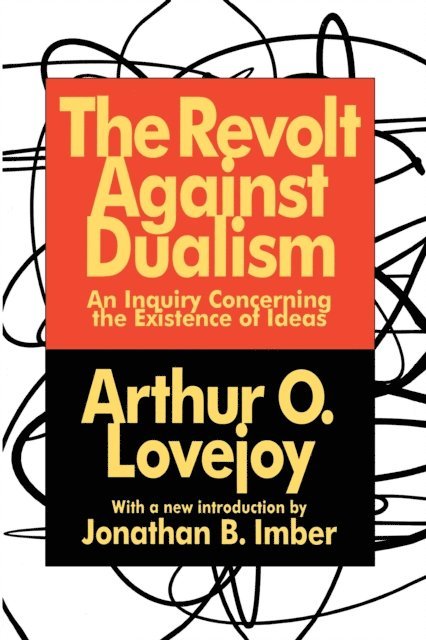
The Revolt Against Dualism, first published in 1930, belongs to a tradition in philosophical theorizing that Arthur O. Lovejoy called "descriptive epistemology." Lovejoy's principal aim in this book is to clarify the distinction between the quite separate phenomena of the knower and the known, something regularly obvious to common sense, if not always to intellectual understanding. This work is as much an argument about the ineluctable differences between subject and object and between mentality and reality, as it is a subtle polemic against those who would stray far from acknowledging these differences. With a resolve that lasts over three hundred pages, Lovejoy offers candid evaluations of a generation's worth of philosophical discussions that address the problem of epistemological dualism.In his stunning new introduction, Jonathan B. Imber offers a reassessment of Lovejoy's career as a thinker and as an active participant in the worldly affairs of academic life. He introduces to a new generation of readers some enduring principles of the vocation of the scholar to which Lovejoy not only subscribed but to which he also gave substance through his activities as an academic man. The opening statement provides both a fit tribute to a great pioneer in the history of ideas, and an example of intellectual history in its own right. The Revolt Against Dualism will be a significant addition to the libraries of philosophers, sociologists, and history of ideas scholars.