Witness to Ancient History – Serie
Visar alla böcker i serien Witness to Ancient History. Handla med fri frakt och snabb leverans.
10 produkter
10 produkter
580 kr
Skickas inom 11-20 vardagar
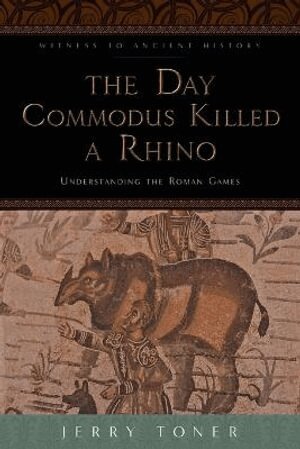
The Roman emperor Commodus wanted to kill a rhinoceros with a bow and arrow, and he wanted to do it in the Colosseum. Commodus' passion for hunting animals was so fervent that he dreamt of shooting a tiger, an elephant, and a hippopotamus; his prowess was such that people claimed he never missed when hurling his javelin or firing arrows from his bow. For fourteen days near the end of AD 192, the emperor mounted one of the most lavish and spectacular gladiatorial games Rome had ever seen. Commodus himself was the star attraction, and people rushed from all over Italy to witness the spectacle. But this slaughter was simply the warm-up act to the main event: the emperor was also planning to fight as a gladiator. Why did Roman rulers spend vast resources on such over-the-top displays - and why did some emperors appear in them as combatants? Why did the Roman rabble enjoy watching the slaughter of animals and the sight of men fighting to the death? And how best can we in the modern world understand what was truly at stake in the circus and the arena?In The Day Commodus Killed a Rhino, Jerry Toner set out to answer these questions by vividly describing what it would have been like to attend Commodus' fantastic shows and watch one of his many appearances as both hunter and fighter. Highlighting the massive logistical effort needed to supply the games with animals, performers, and criminals for execution, the book reveals how blood and gore were actually incidental to what really mattered. Gladiatorial games played a key role in establishing a forum for political debate between the rulers and the ruled. Roman crowds were not passive: they were made up of sophisticated consumers with their own political aims, which they used the games to secure. In addition, the games also served as a pure expression of what it meant to be a true Roman. Drawing on notions of personal honor, manly vigor, and sophisticated craftsmanship, the games were a story that the Romans loved to tell themselves about themselves.
289 kr
Skickas inom 7-10 vardagar
The Roman emperor Commodus wanted to kill a rhinoceros with a bow and arrow, and he wanted to do it in the Colosseum. Commodus' passion for hunting animals was so fervent that he dreamt of shooting a tiger, an elephant, and a hippopotamus; his prowess was such that people claimed he never missed when hurling his javelin or firing arrows from his bow. For fourteen days near the end of AD 192, the emperor mounted one of the most lavish and spectacular gladiatorial games Rome had ever seen. Commodus himself was the star attraction, and people rushed from all over Italy to witness the spectacle. But this slaughter was simply the warm-up act to the main event: the emperor was also planning to fight as a gladiator. Why did Roman rulers spend vast resources on such over-the-top displays - and why did some emperors appear in them as combatants? Why did the Roman rabble enjoy watching the slaughter of animals and the sight of men fighting to the death? And how best can we in the modern world understand what was truly at stake in the circus and the arena?In The Day Commodus Killed a Rhino, Jerry Toner set out to answer these questions by vividly describing what it would have been like to attend Commodus' fantastic shows and watch one of his many appearances as both hunter and fighter. Highlighting the massive logistical effort needed to supply the games with animals, performers, and criminals for execution, the book reveals how blood and gore were actually incidental to what really mattered. Gladiatorial games played a key role in establishing a forum for political debate between the rulers and the ruled. Roman crowds were not passive: they were made up of sophisticated consumers with their own political aims, which they used the games to secure. In addition, the games also served as a pure expression of what it meant to be a true Roman. Drawing on notions of personal honor, manly vigor, and sophisticated craftsmanship, the games were a story that the Romans loved to tell themselves about themselves.
Battle of Arginusae
Victory at Sea and Its Tragic Aftermath in the Final Years of the Peloponnesian War
Inbunden, Engelska, 2015
457 kr
Tillfälligt slut
A pivotal skirmish involving nearly three hundred Athenian and Spartan ships toward the end of the Peloponnesian War, the Battle of Arginusae was at the time the largest naval battle ever fought between warring Greeks. It was a crucial win for the Athenians, since losing the battle would have led to their total defeat by Sparta and, perhaps, the slaughter and enslavement of their entire population. Paradoxically, the win at Arginusae resulted in one of the worst disasters to befall the Athenians during the brutal twenty-seven-year war. Due to a combination of factors-incompetent leadership, the weariness of the sailors, a sudden storm-the commanders on the scene failed to rescue the crews of twenty-five Athenian ships that had been disabled during the battle. Thousands of men, many of them injured, were left clinging to the wreckage of their ships awaiting help that never came. When the Athenians back home heard what had happened, they deposed the eight generals who had been in command during the battle. Two of these leaders went into exile; the six who returned to Athens were tried and eventually executed.The Battle of Arginusae describes the violent battle and its horrible aftermath. Debra Hamel introduces readers to Athens and Sparta, the two thriving superpowers of the fifth century B.C. She provides a summary of the events that caused the long war and discusses the tactical intricacies of Greek naval warfare. Recreating the claustrophobic, unhygienic conditions in which the ships' crews operated, Hamel unfolds the process that turned this naval victory into one of the most infamous chapters in the city-state's history. Aimed at classics students and general readers, the book also provides an in-depth examination of the fraught relationship between Athens' military commanders and its vaunted sovereign democracy.
Battle of Arginusae
Victory at Sea and Its Tragic Aftermath in the Final Years of the Peloponnesian War
Häftad, Engelska, 2015
208 kr
Skickas inom 11-20 vardagar
A pivotal skirmish involving nearly three hundred Athenian and Spartan ships toward the end of the Peloponnesian War, the Battle of Arginusae was at the time the largest naval battle ever fought between warring Greeks. It was a crucial win for the Athenians, since losing the battle would have led to their total defeat by Sparta and, perhaps, the slaughter and enslavement of their entire population. Paradoxically, the win at Arginusae resulted in one of the worst disasters to befall the Athenians during the brutal twenty-seven-year war. Due to a combination of factors-incompetent leadership, the weariness of the sailors, a sudden storm-the commanders on the scene failed to rescue the crews of twenty-five Athenian ships that had been disabled during the battle. Thousands of men, many of them injured, were left clinging to the wreckage of their ships awaiting help that never came. When the Athenians back home heard what had happened, they deposed the eight generals who had been in command during the battle. Two of these leaders went into exile; the six who returned to Athens were tried and eventually executed.The Battle of Arginusae describes the violent battle and its horrible aftermath. Debra Hamel introduces readers to Athens and Sparta, the two thriving superpowers of the fifth century B.C. She provides a summary of the events that caused the long war and discusses the tactical intricacies of Greek naval warfare. Recreating the claustrophobic, unhygienic conditions in which the ships' crews operated, Hamel unfolds the process that turned this naval victory into one of the most infamous chapters in the city-state's history. Aimed at classics students and general readers, the book also provides an in-depth examination of the fraught relationship between Athens' military commanders and its vaunted sovereign democracy.
504 kr
Tillfälligt slut
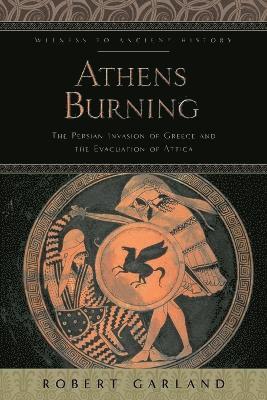
Between June 480 and August 479 BC, tens of thousands of Athenians evacuated, following King Xerxes' victory at the Battle of Thermopylae. Abandoning their homes and ancestral tombs in the wake of the invading Persian army, they sought refuge abroad. Women and children were sent to one safe haven, the elderly to another, while all men of military age were conscripted into the fleet. During this difficult year of exile, the city of Athens was set on fire not once, but twice. In Athens Burning, Robert Garland explores the reasons behind the decision to abandon Attica, the peninsular region of Greece that includes Athens, while analyzing the consequences, both material and psychological, of the resulting invasion. Garland introduces readers to the contextual background of the Greco-Persian wars, which include the famous Battle of Marathon. He describes the various stages of the invasion from both the Persian and Greek point of view and explores the siege of the Acropolis, the defeat of the Persians first by the allied Greek navy and later by the army, and, finally, the return of the Athenians to their land.Taking its inspiration from the sufferings of civilians, Athens Burning also works to dispel the image of the Persians as ruthless barbarians. Addressing questions that are largely ignored in other accounts of the conflict, including how the evacuation was organized and what kind of facilities were available to the refugees along the way, Garland demonstrates the relevance of ancient history to the contemporary world. This compelling story is especially resonant in a time when the news is filled with the suffering of nearly 5 million people driven by civil war from their homes in Syria. Aimed at students and scholars of ancient history, this highly accessible book will also fascinate anyone interested in the burgeoning fields of refugee and diaspora studies.
289 kr
Skickas inom 7-10 vardagar
Between June 480 and August 479 BC, tens of thousands of Athenians evacuated, following King Xerxes' victory at the Battle of Thermopylae. Abandoning their homes and ancestral tombs in the wake of the invading Persian army, they sought refuge abroad. Women and children were sent to one safe haven, the elderly to another, while all men of military age were conscripted into the fleet. During this difficult year of exile, the city of Athens was set on fire not once, but twice. In Athens Burning, Robert Garland explores the reasons behind the decision to abandon Attica, the peninsular region of Greece that includes Athens, while analyzing the consequences, both material and psychological, of the resulting invasion. Garland introduces readers to the contextual background of the Greco-Persian wars, which include the famous Battle of Marathon. He describes the various stages of the invasion from both the Persian and Greek point of view and explores the siege of the Acropolis, the defeat of the Persians first by the allied Greek navy and later by the army, and, finally, the return of the Athenians to their land.Taking its inspiration from the sufferings of civilians, Athens Burning also works to dispel the image of the Persians as ruthless barbarians. Addressing questions that are largely ignored in other accounts of the conflict, including how the evacuation was organized and what kind of facilities were available to the refugees along the way, Garland demonstrates the relevance of ancient history to the contemporary world. This compelling story is especially resonant in a time when the news is filled with the suffering of nearly 5 million people driven by civil war from their homes in Syria. Aimed at students and scholars of ancient history, this highly accessible book will also fascinate anyone interested in the burgeoning fields of refugee and diaspora studies.
504 kr
Tillfälligt slut
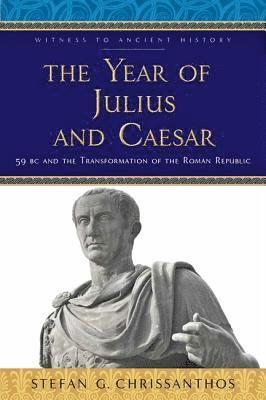
How Caesar's attack on Bibulus marked the beginning of the end of the Roman free state and the descent of the Republic into violence and civil war.The year 59 BC—when Gaius Julius Caesar and Marcus Calpurnius Bibulus served as joint consuls—marked a major turning point in the history of the Roman Republic. It was a dramatic and momentous time of political intrigue, bloodshed, and murder, one that boasted some of the most famous personalities ever to grace the Roman historical stage. Arguing that this pivotal year demands extended study, Stefan G. Chrissanthos's The Year of Julius and Caesar is the first focused investigation of the period.Chrissanthos uses a single event as his centerpiece: the violent attack orchestrated by Caesar and the "First Triumvirate" on Bibulus and his followers in the Forum on April 4. Before that day, he reveals, 59 had been a typical year, one that provides valuable insight into Roman government and political gamesmanship. But the assault on Bibulus changed everything: the consul retired to his house for the rest of the year, allowing Caesar and his allies to pass legislation that eventually enabled Caesar to take complete control of the Roman state. This detailed reconstruction draws on archeological and literary evidence to describe a watershed year in the history of the late Roman Republic, establish an accurate chronology, and answer many of the important historical questions surrounding the year 59. Written in an engaging and accessible style, The Year of Julius and Caesar will appeal to undergraduates and scholars alike and to anyone interested in contemporary politics, owing to the parallels between the Roman and American Republics.
289 kr
Skickas inom 7-10 vardagar
How Caesar's attack on Bibulus marked the beginning of the end of the Roman free state and the descent of the Republic into violence and civil war.The year 59 BC—when Gaius Julius Caesar and Marcus Calpurnius Bibulus served as joint consuls—marked a major turning point in the history of the Roman Republic. It was a dramatic and momentous time of political intrigue, bloodshed, and murder, one that boasted some of the most famous personalities ever to grace the Roman historical stage. Arguing that this pivotal year demands extended study, Stefan G. Chrissanthos's The Year of Julius and Caesar is the first focused investigation of the period.Chrissanthos uses a single event as his centerpiece: the violent attack orchestrated by Caesar and the "First Triumvirate" on Bibulus and his followers in the Forum on April 4. Before that day, he reveals, 59 had been a typical year, one that provides valuable insight into Roman government and political gamesmanship. But the assault on Bibulus changed everything: the consul retired to his house for the rest of the year, allowing Caesar and his allies to pass legislation that eventually enabled Caesar to take complete control of the Roman state. This detailed reconstruction draws on archeological and literary evidence to describe a watershed year in the history of the late Roman Republic, establish an accurate chronology, and answer many of the important historical questions surrounding the year 59. Written in an engaging and accessible style, The Year of Julius and Caesar will appeal to undergraduates and scholars alike and to anyone interested in contemporary politics, owing to the parallels between the Roman and American Republics.
Monument to Dynasty and Death
The Story of Rome's Colosseum and the Emperors Who Built It
Häftad, Engelska, 2019
289 kr
Skickas inom 7-10 vardagar
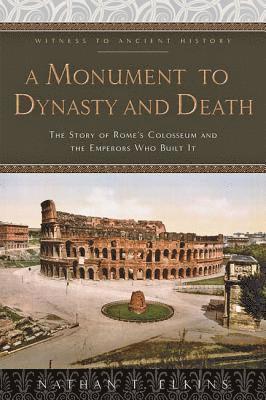
Go behind the scenes to discover why the Colosseum was the king of amphitheaters in the Roman world—a paragon of Roman engineering prowess.Early one morning in 80 CE, the Colosseum roared to life with the deafening cheers of tens of thousands of spectators as the emperor, Titus, inaugurated the new amphitheater with one hundred days of bloody spectacles. These games were much anticipated, for the new amphitheater had been under construction for a decade. Home to spectacles involving exotic beasts, elaborate executions of criminals, gladiatorial combats, and even—when flooded—small-scale naval battles, the building itself was also a marvel. Rising to a height of approximately 15 stories and occupying an area of 6 acres—more than four times the size of a modern football field—the Colosseum was the largest of all amphitheaters in the Roman Empire. In A Monument to Dynasty and Death, Nathan T. Elkins tells the story of the Colosseum's construction under Vespasian, its dedication under Titus, and further enhancements added under Domitian. The Colosseum, Elkins argues, was far more than a lavish entertainment venue: it was an ideologically charged monument to the new dynasty, its aspirations, and its achievements. A Monument to Dynasty and Death takes readers on a behind-the-scenes tour of the Colosseum from the subterranean tunnels, where elevators and cages transported gladiators and animals to the blood-soaked arena floor, to the imperial viewing box, to the amphitheater's decoration and amenities, such as fountains and an awning to shade spectators. Trained as an archaeologist, an art historian, and a historian of ancient Rome, Elkins deploys an interdisciplinary approach that draws on contemporary historical texts, inscriptions, archaeology, and visual evidence to convey the layered ideological messages communicated by the Colosseum. This engaging book is an excellent resource for classes on Roman art, architecture, history, civilization, and sport and spectacle.
289 kr
Skickas inom 7-10 vardagar
A thrilling and momentous account of the Great Fire of Rome and how a modern city arose from its embers.Peril was everywhere in ancient Rome, but the Great Fire of 64 CE was unlike anything the city had ever experienced. No building, no neighborhood, no person was safe from conflagration. When the fire finally subsided—after burning for nine days straight—vast swaths of Rome were in ruins. The greatest city of the ancient world had endured its greatest blow. In The Great Fire of Rome, Joseph J. Walsh tells the true story of this deadly episode in Rome's history. He explains why Rome was such a vulnerable tinderbox, outlines the difficulties of life in that exciting and dangerous city, and recounts the fire's aftermath and legacy—a legacy that includes the transformation of much of ancient Rome into a modern city. Situating the fire within the context of other perils that residents of Rome faced, including frequent flooding, pollution, crime, and dangerously shoddy construction, he highlights the firefighting technology of the period and examines the ways in which the city's architecture and planning contributed to the severity of the blaze. Introducing readers to the grim realities of life in that overwhelming and overwhelmed city while chronicling its later glories, The Great Fire of Rome is grounded in the latest scholarship on fire analysis and forensics. Walsh's multifaceted analysis, balanced insights, and concise, accessible prose make this book a versatile teaching tool. Readers interested in ancient (and modern) Rome, urban life, and civic disasters, among other things, will be fascinated by this book.