Women in Ancient Cultures – serie
Visar alla böcker i serien Women in Ancient Cultures. Handla med fri frakt och snabb leverans.
8 produkter
8 produkter
2 018 kr
Skickas inom 5-8 vardagar
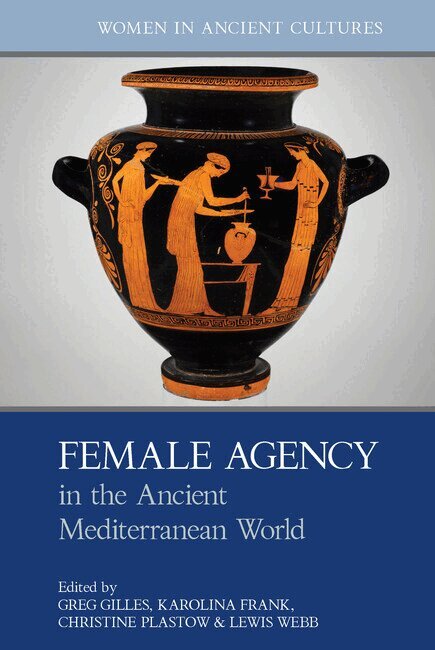
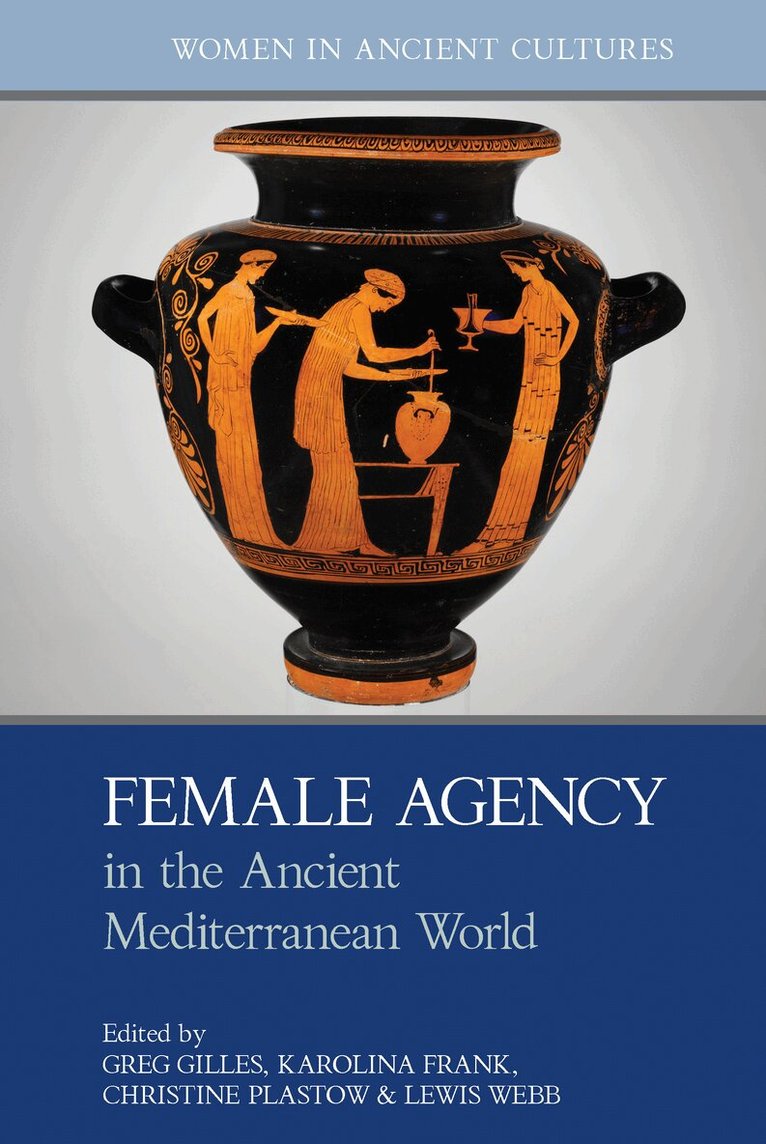
Ebook available to libraries exclusively as part of the JSTOR Path to Open initiative.Female agency in the ancient world has long been implicitly, and on a few occasions explicitly, examined in classical scholarship, but few of these studies begin with a unified theoretical framework or set of approaches (with some notable exceptions). Female Agency in the Ancient Mediterranean World departs from these important studies by beginning with a definition of the aforementioned concept of ‘female agency’ that acknowledges that all social agents, female and otherwise, were and are relational and multidimensional beings, and that agency was and is relational. This volume’s conceptual points of departure allow contributors to consider women as social agents in ancient cultures and as relationally embedded and integrated in various cultural systems, even under conditions of oppression, by providing contextualised examples of women acting on their varying degrees of agency.Contributions are organised broadly chronologically in order to trace the breadth and shifting patterns of female agency throughout the ancient Mediterranean world from the 7th century BCE to the 6th century CE. Case studies include Katherine McDonald on the dynamics of female agency in pre-Roman through a close examination of the epigraphic record; Karolina Frank on women’s oracular inquiries at Dodona and Brenda Longfellow on how Pompeian women, through their funerary inscriptions, can show, from different angles, the needs, desires, and agency of women from a range of social circumstances.
1 884 kr
Skickas inom 5-8 vardagar
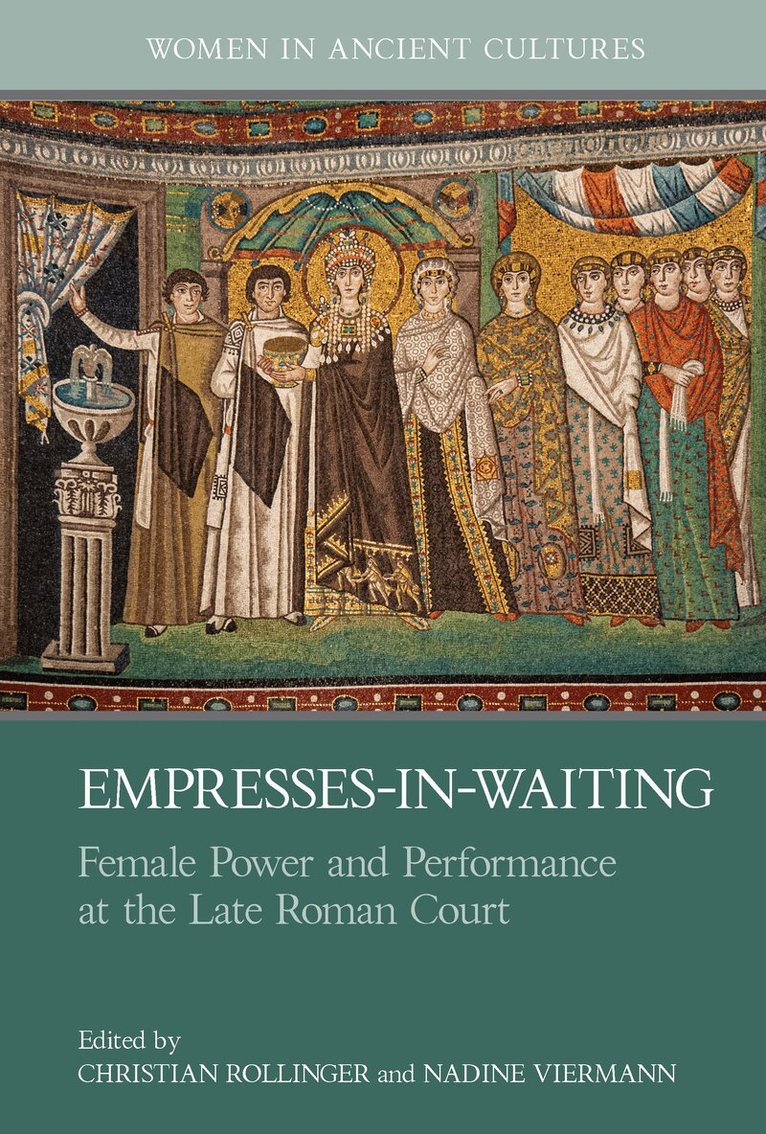
Empresses-in-Waiting comprises case studies of late antique empresses, female members of imperial dynasties, and female members of the highest nobility of the late Roman empire, ranging from the fourth to the seventh centuries AD. Situated in the context of the broader developments of scholarship on late antique and byzantine empresses, this volume explores the political agency, religious authority, and influence of imperial and near-imperial women within the Late Roman imperial court, which is understood as a complex spatial, social, and cultural system, the centre of patronage networks, and an arena for elite competition. The studies explore female performance and representation in literary and visual media as well as in court ceremonial, and discuss the opportunities and constraints of female power within a male dominated court environment and the broader realms of imperial activity. By focusing on imperial women, the volume not only addresses questions of gendered rhetoric and agency but throws into relief general dynamics in the exercise of imperial power during a period in which the classical Mediterranean world at large, as well as the Roman monarchy, underwent crucial transformations.An Open Access version of the Lewis Dagnall's chapter The Empress Sophia and East Roman Foreign Policy will be available on publication on the Liverpool University Press website.
Khitan and Mongol Imperial Women in the Chinese Imagination
Ming Fantasies About Conquest Dynasty Harems
Inbunden, Engelska, 2025
1 972 kr
Skickas inom 5-8 vardagar
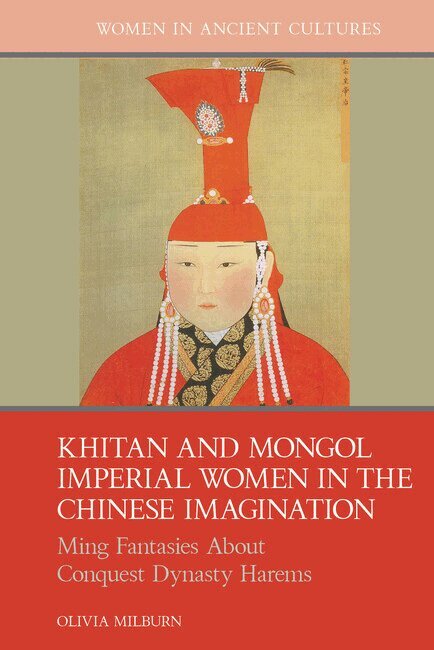
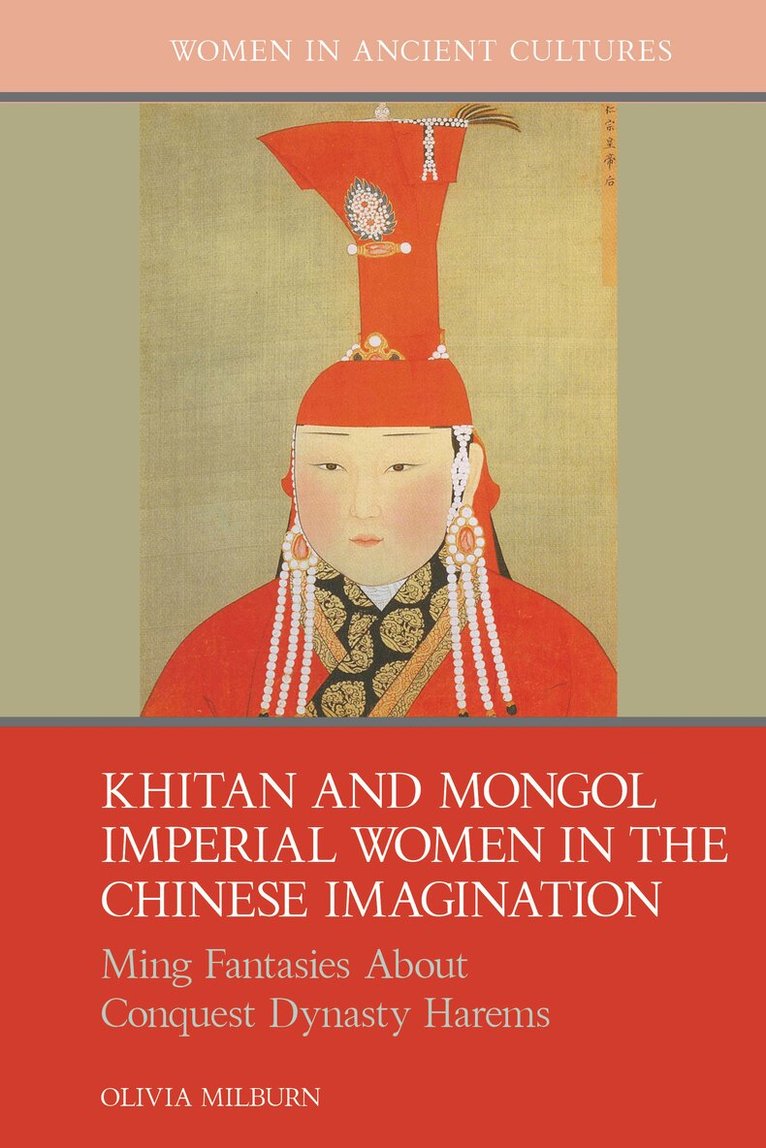
Ebook available to libraries exclusively as part of the JSTOR Path to Open intiative.Khitan and Mongol Imperial Women in the Chinese Imagination is a study and translation of two classic Chinese texts about the lives of Khitan and Mongol empresses and imperial consorts, never before translated into English. In 1075, Empress Xuanyi of the Liao dynasty was accused of adultery and forced to commit suicide. An Account of Burned Pepper (Fenjiao lu) purports to be an eyewitness account penned by a Liao government official of the conspiracy against the lovely and talented empress, who became tragically embroiled in a vicious court intrigue. Meanwhile, Yuan Dynasty Records of the Lateral Courts (Yuanshi yeting ji) claims to tell the true story of life in the imperial harem in the final years of Emperor Shun (r. 1333-1368), as he ceased participating in the government of the country, preferring instead to spend his time enjoying louche pleasures in the luxurious surroundings of his Beijing palace. Both these highly influential accounts have shaped understandings of the role of women in conquest dynasty courts for centuries, yet both can be shown to be forgeries, dating to the late Ming dynasty. This book offers a groundbreaking new assessment of the history of the Liao and Yuan dynasties, and the way in which our understanding of these regimes has been defined by early seventeenth century literary forgeries.
447 kr
Skickas inom 5-8 vardagar
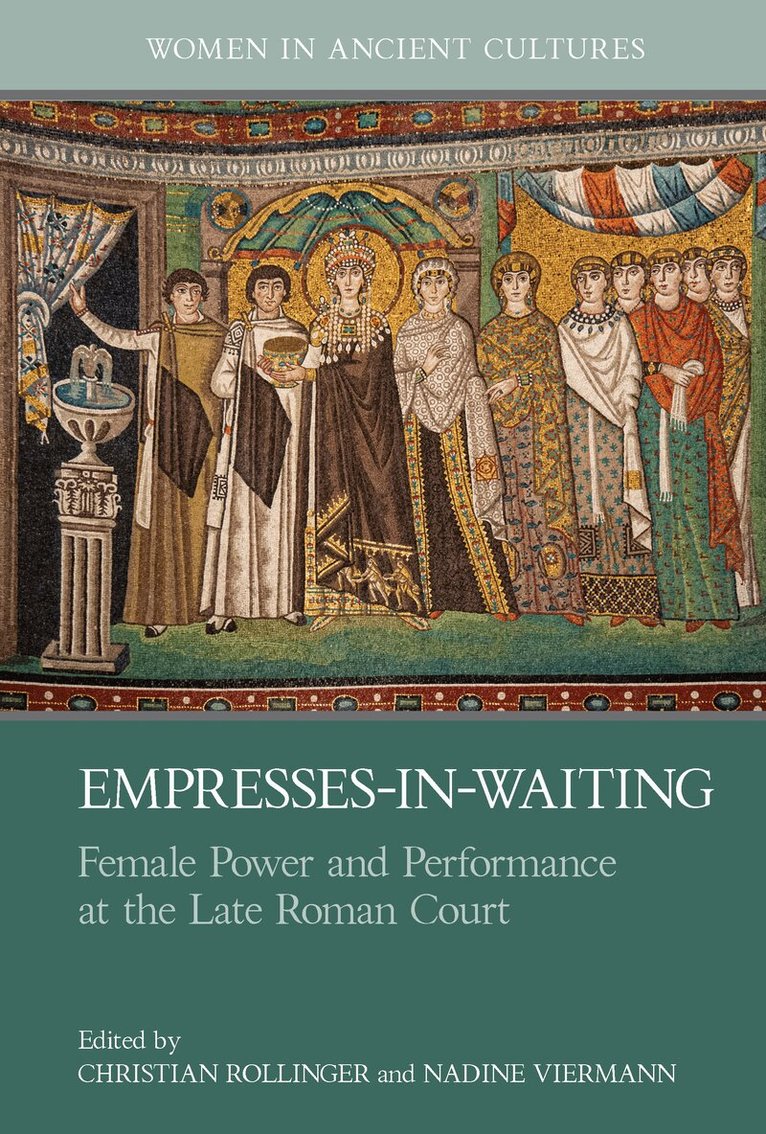
Empresses-in-Waiting comprises case studies of late antique empresses, female members of imperial dynasties, and female members of the highest nobility of the late Roman empire, ranging from the fourth to the seventh centuries AD. Situated in the context of the broader developments of scholarship on late antique and byzantine empresses, this volume explores the political agency, religious authority, and influence of imperial and near-imperial women within the Late Roman imperial court, which is understood as a complex spatial, social, and cultural system, the centre of patronage networks, and an arena for elite competition. The studies explore female performance and representation in literary and visual media as well as in court ceremonial, and discuss the opportunities and constraints of female power within a male dominated court environment and the broader realms of imperial activity. By focusing on imperial women, the volume not only addresses questions of gendered rhetoric and agency but throws into relief general dynamics in the exercise of imperial power during a period in which the classical Mediterranean world at large, as well as the Roman monarchy, underwent crucial transformations.An Open Access version of the Lewis Dagnall's chapter The Empress Sophia and East Roman Foreign Policy will be available on publication on the Liverpool University Press website.
418 kr
Skickas inom 5-8 vardagar
Ebook available to libraries exclusively as part of the JSTOR Path to Open initiative.Female agency in the ancient world has long been implicitly, and on a few occasions explicitly, examined in classical scholarship, but few of these studies begin with a unified theoretical framework or set of approaches (with some notable exceptions). Female Agency in the Ancient Mediterranean World departs from these important studies by beginning with a definition of the aforementioned concept of ‘female agency’ that acknowledges that all social agents, female and otherwise, were and are relational and multidimensional beings, and that agency was and is relational. This volume’s conceptual points of departure allow contributors to consider women as social agents in ancient cultures and as relationally embedded and integrated in various cultural systems, even under conditions of oppression, by providing contextualised examples of women acting on their varying degrees of agency.Contributions are organised broadly chronologically in order to trace the breadth and shifting patterns of female agency throughout the ancient Mediterranean world from the 7th century BCE to the 6th century CE. Case studies include Katherine McDonald on the dynamics of female agency in pre-Roman through a close examination of the epigraphic record; Karolina Frank on women’s oracular inquiries at Dodona and Brenda Longfellow on how Pompeian women, through their funerary inscriptions, can show, from different angles, the needs, desires, and agency of women from a range of social circumstances.
2 961 kr
Kommande
This richly illustrated collection of essays, accompanied by a substantial introduction, investigates the international reception of the women (not goddesses) of the Aeneid from medieval times to the present. Across an expansive range of media and genres—academic criticism, opera, theatre, burlesque, fiction, poetry, fine art, cinema, and computer games—the volume traces how heroines such as Dido, Lavinia, Creusa, Camilla, Silvia and many others have been reimagined, contested, and reclaimed.The essays are united by sustained engagement with colonialist, nationalist, and anti-colonialist appropriations of the poem, as well as with evolving discourses on gender and sexuality. Particular attention is paid to the use of satire and parody in self-conscious responses to this canonical text, and to the diverse techniques through which later writers and artists have amplified voices marginalised or nearly silenced in the original epic.Grounded in historically and culturally attentive contextualisation, and informed by narrative theory, orality studies, feminism, and postcolonial thought, the collection offers a revelatory account of the enduring challenge posed to male-dominated and Eurocentric narrative in classical works. Authored by an unusually diverse community of scholars, it makes a significant contribution to the study of this seminal work’s reception and cultural influence.
Khitan and Mongol Imperial Women in the Chinese Imagination
Ming Fantasies About Conquest Dynasty Harems
Häftad, Engelska, 2026
469 kr
Kommande
Ebook available to libraries exclusively as part of the JSTOR Path to Open intiative.Khitan and Mongol Imperial Women in the Chinese Imagination is a study and translation of two classic Chinese texts about the lives of Khitan and Mongol empresses and imperial consorts, never before translated into English. In 1075, Empress Xuanyi of the Liao dynasty was accused of adultery and forced to commit suicide. An Account of Burned Pepper (Fenjiao lu) purports to be an eyewitness account penned by a Liao government official of the conspiracy against the lovely and talented empress, who became tragically embroiled in a vicious court intrigue. Meanwhile, Yuan Dynasty Records of the Lateral Courts (Yuanshi yeting ji) claims to tell the true story of life in the imperial harem in the final years of Emperor Shun (r. 1333-1368), as he ceased participating in the government of the country, preferring instead to spend his time enjoying louche pleasures in the luxurious surroundings of his Beijing palace. Both these highly influential accounts have shaped understandings of the role of women in conquest dynasty courts for centuries, yet both can be shown to be forgeries, dating to the late Ming dynasty. This book offers a groundbreaking new assessment of the history of the Liao and Yuan dynasties, and the way in which our understanding of these regimes has been defined by early seventeenth century literary forgeries.
2 651 kr
Kommande
Women and Justice brings together classicists, historians, theologians, scholars of Judaism and of early Islam to examine female legal agency in late antiquity and the early Middle Ages in an interdisciplinary fashion. Based on careful readings of laws and legal commentary in combination with historical narratives, polemical treatises, private letters, hagiography, papyri, epigraphy and religious texts, the book uncovers how far women of diverse social and regional backgrounds were able to act on behalf of their own and others’ interests to pursue legal or financial objectives. Together, its chapters investigate the role women played in the application of law in civil and criminal affairs as well as in dealings with central state powers in the period of late antiquity broadly conceived, that is, in the late Roman empire and the post-Roman West, as well as in Jewish, Byzantine and early Muslim communities between the third and twelfth centuries CE.