World Crop Series - Böcker
Visar alla böcker i serien World Crop Series. Handla med fri frakt och snabb leverans.
13 produkter
13 produkter
3 149 kr
Skickas inom 10-15 vardagar
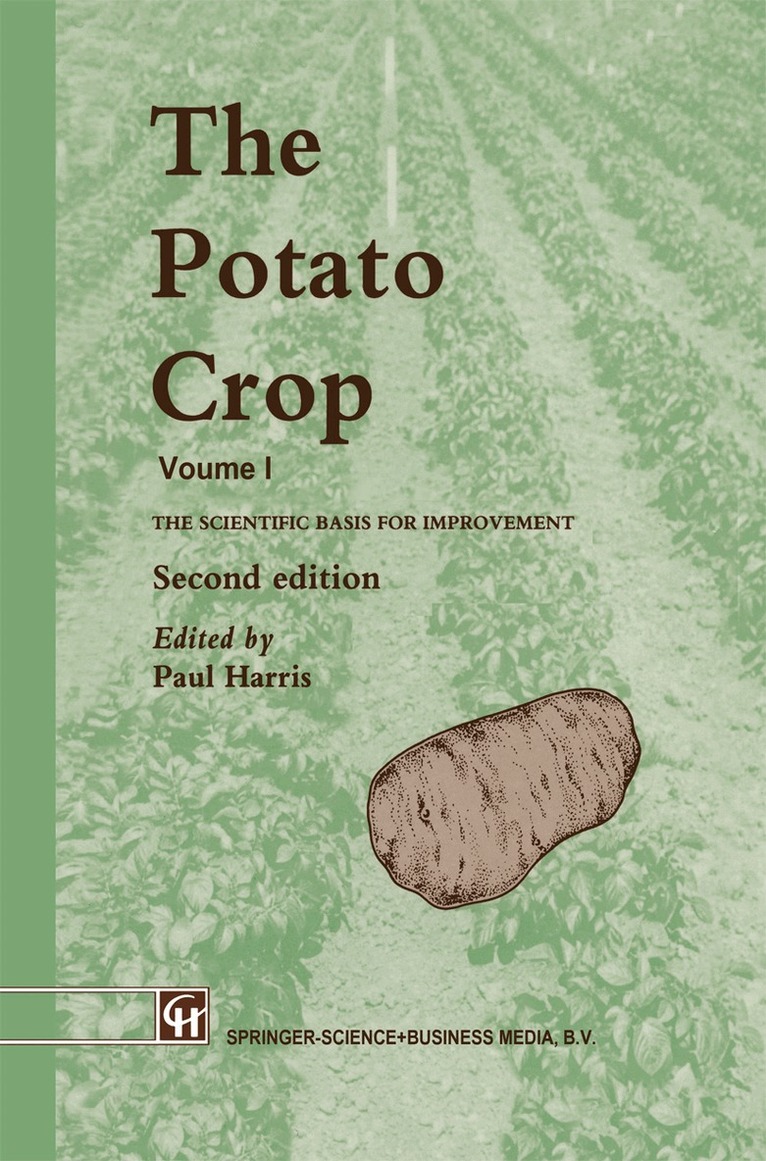
"The Potato Crop" is concerned with the principles which underlie the attainment of high yields and quality in the potato crop. While potatoes are normally associated with the agriculture of temperate regions, the exploitation of the crop is rapidly expanding in both the upland and lowland tropics, an expansion which is attributable to the potential of the crop to produce yields of edible carbohydrate and protein at rates which few other crops can match. In temperate regions, where a high proportion of the crop is processed into products such as chips (crisps) or french fries, quality requirements present exacting production and storage problems. In addition, there is a universal concern to achieve high yields and quality without damaging the environment through the excessive use of crop production and protection chemicals. These problems can only be tackled through the application of research carried out by a wide range of scientific disciplines. By bringing together contributors of wide experience and excellent reputation, this book provides a thorough account of this knowledge."The Potato Crop" should be of value to research workers in the fields of plant, and crop science, plant breeding, genetics, agronomy, crop protection and food storage and processing.
3 149 kr
Skickas inom 10-15 vardagar
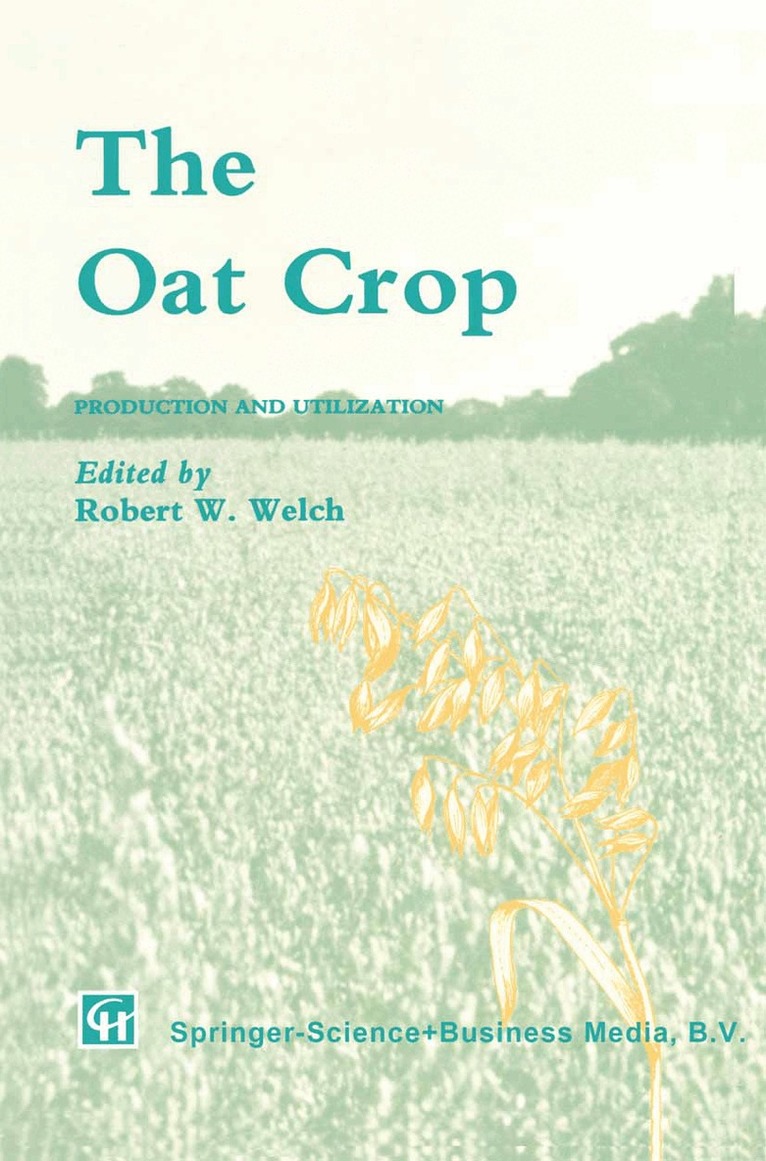
The oat crop is the sixth most important cereal crop in the world and the third most important temperate cereal (only wheat and barley being more important in temperate latitudes). Because of health issues, including the link between oats and blood cholesterol reduction, and the increasing importance of low-input agriculture, there is a greatly increasing interest in the wider potential for this crop. The editor of this book, Dr Rob Welch, has drawn together a list of international contributors, each respected for their work with oats. The book contains 17 chapters including coverage of the history of the crop, production and trade, botany and breeding, agronomy, harvesting and processing, and food uses of oats. This book should be of interest to agricultural scientists, growers, plant breeders, food scientists, nutritionists and animal feed specialists.
3 149 kr
Skickas inom 10-15 vardagar
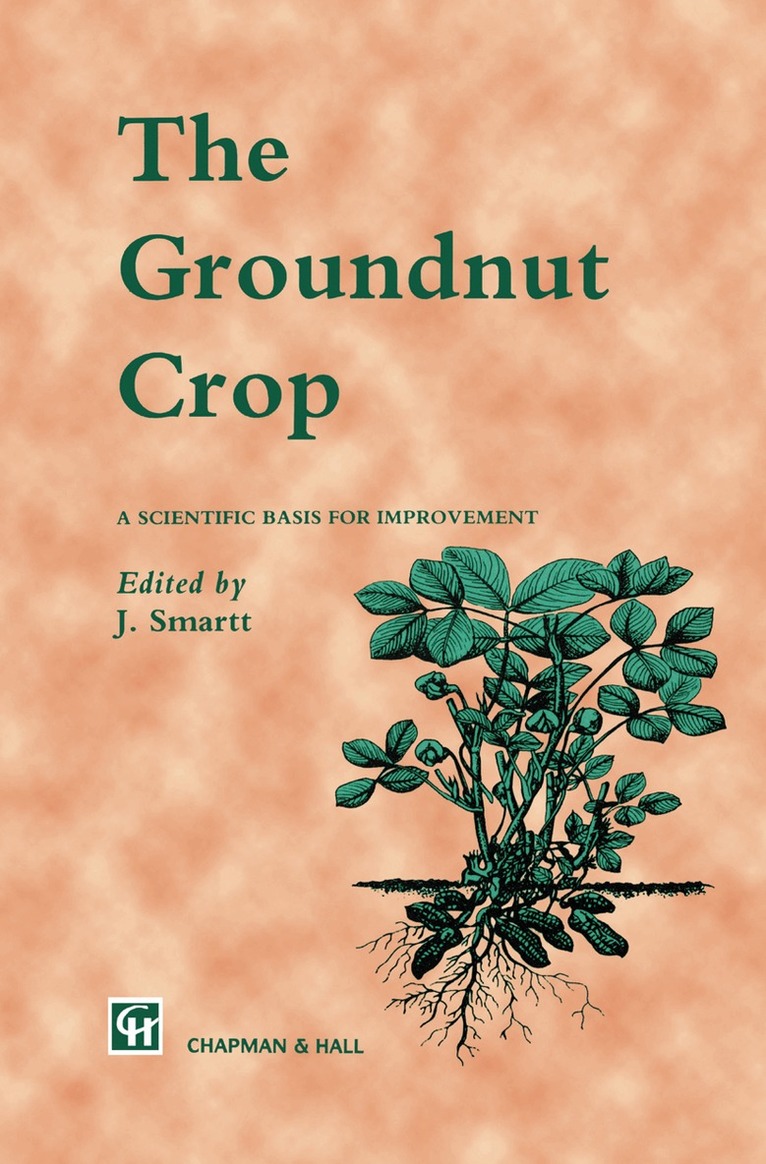
This book should be of interest to agricultural scientists, plant scientists, food and feed scientists and technologists.
1 276 kr
Skickas inom 10-15 vardagar
The purpose of this four volume series is to make available for college teachers and students samples of important and realistic applications of mathematics which can be covered in undergraduate programs. The goal is to provide illustrations of how modem mathematics is actually employed to solve relevant contemporary problems. Although these independent chapters were prepared primarily for teachers in the general mathematical sciences, they should prove valuable to students, teachers, and research scientists in many of the fields of application as well. Prerequisites for each chapter and suggestions for the teacher are provided. Several of these chapters have been tested in a variety of classroom settings, and all have undergone extensive peer review and revision. Illustrations and exercises be covered in one class, are included in most chapters. Some units can whereas others provide sufficient material for a few weeks of class time. Volume 1 contains 23 chapters and deals with differential equations and, in the last four chapters, problems leading to partial differential equations. Applications are taken from medicine, biology, traffic systems and several other fields. The 14 chapters in Volume 2 are devoted mostly to problems arising in political science, but they also address questions appearing in sociology and ecology. Topics covered include voting systems, weighted voting, proportional representation, coalitional values, and committees. The 14 chapters in Volume 3 emphasize discrete mathematical methods such as those which arise in graph theory, combinatorics, and networks.
528 kr
Skickas inom 10-15 vardagar
ROBERT J. LEFKOWITZ, M. D. Receptor Regulation (Receptors and Recognition, Series B, Volume 13) Edited by R. J. Lefkowitz Published in 1981 by Chapman and Hall, 11 New Fetter Lane, London EC4P 4EE © 1981 Chapman and Hall The study of hormone and drug receptors has become one of the most excit ing and rapidly moving areas of biomedical research. Elucidation of receptor mechanisms and receptor structure has become the common goal of many scientists from diverse backgrounds. The rapid advances achieved have been due, in large part, to the concentrated effort of workers from a variety of disciplines including classical pharmacology, biochemistry, endocrinology, cell biology, genetics' and molecular biology, among others. Hormone and drug receptors appear to be of three major types, which may be classified by their cellular locations. Found in the plasma membranes of cells are the receptors for a wide variety of polypeptide hormones, catecholamines and a variety of neurotransmitters. Included within this group are those receptors coupled to the enzyme adenylate cyclase. The second group of receptors are the soluble cytoplasmic receptors for the steroid hormones. A third type of hormone receptor is the receptor for the thyroid hormones which appears to be confined to the nucleus. Not only may these different types of receptor be distinguished in terms of their cellular locations but also by their mechanisms of action.
528 kr
Skickas inom 10-15 vardagar
Hardly a decade ago, membrane receptors were an attractive but largely unproven concept. Since that time enormous progress has been made, and we are now able to consider receptors much more concretely. Their existence has been established, their binding properties have been determined, and in some cases, they have been highly purified and their physical-chemical properties studied. It is now even possible to visualize microscopically some receptors. This progress has resulted largely from the development of highly powerful methods. These methods are the subject of this volume. Although considerably diverse, different receptors share certain common pro perties, and common problems are encountered in their study. Consequently, a small number of techniques are particularly useful in studying different types of receptors. Thus, it makes sense to speak about membrane receptor methodology. A very apparent problem in the study of membrane receptors is their presence in exceedingly small quantities and in a highly impure state. Therefore, very sensitive and specific techniques are required for their detection, characterization and purification. Such sensitivity and specificity is provided by the ability of receptors to bind certain ligands with very high affmity, and it is not surprising that most of the methods described in this volume depend upon this high affinity binding. The antigen-antibody interaction is of comparable sensitivity and speci ficity. Recently, a number of anti-receptor antibodies have been produced or found to occur spontaneously in auto-immune diseases. Undoubtedly, more will be produced in the future.
528 kr
Skickas inom 10-15 vardagar
The Major Histocompatibility Complex (MHC) was discovered as a con sequence of the chronic problem encountered by cancer biologists in the early years of this century: the failure to maintain tumor lines by serial passage in outbred mice. A number of observations pointed to genetic similarity being a prerequisite for successful transplantation and they were incorporated into a genetic theory of transplantation by C.C. Little. This prompted scientists like Little to initiate breeding experiments designed to test his hypothesis and produce genetically identical mice which would permit the growth of trans planted tumors. Most inbred strains of mice commonly used in immunology derive from those efforts. Transplantation of normal tissues obeyed the same rules found for malignant tissues and rejection was shown to be an immunological phenomenon. G.D. Snell showed that a single genetic locus determined rapid rejection of skin grafts. This was initially called the Major Histocompatibility Locus but was subsequently shown to include many functionally related genes and renamed the Major Histocompatibility Complex (MHC). In mouse this is the H-2 complex and man the HLA complex. During this same period P.A.
3 149 kr
Skickas inom 10-15 vardagar
Dr Samuel Johnson, that famous eighteenth century lexicographer, said of oats 'A grain which in England is generally given to horses but in Scotland supports the people'. And presumably it was a Scotsman who riposted 'But what people and what horses!' That exchange encapsulates much of the history and role of oats - a cereal, once important as human food in parts of northern Europe but latterly used mainly as animal feed, especially favoured for horses. Although no longer a major food anywhere, oats still have a special and favoured niche in the cuisine of people living in the cooler and wetter regions of some parts of northern Europe. However, there is currently a resurgence of interest in the crop, because there is now considerable scientific evidence to support the view of Scotsmen who never doubted its dietary value. This book - very much an international effort, carefully orchestrated by Robert Welch - traces the origin, history and scientific progress which forms a sound basis for any further crop improvement and for broadening the utilization and marketing of oat products. Should rational consider ations lead to an increase in the importance of this cereal, I, for one, would be glad since I believe the rural landscape is the poorer for the increased rarity of golden fields of rippling oats which I used to be involved in harvesting.
3 149 kr
Skickas inom 10-15 vardagar
In a field of mature bananas, plants can be seen at all stages of vegetative growth and fruit maturity, providing a fascination for anyone who has an interest in growing crops.
3 149 kr
Skickas inom 10-15 vardagar
Research and publications on the potato crop have burgeoned since the first edition of this book was published in 1978. However, the warm reception of the first edition suggested that it had a useful part to play in promoting the scientific basis for understanding and improving the yield and quality of the crop. Since the first edition was out of print and a second reprint would not have taken into account the contributions made by research over the intervening years, it became obvious that a complete revision was necessary. There was, in particular, a need to take account of the rapid extension of interest in the crop into climates and farming systems with which it has not been traditionally associa,ted. Those involved with the crop will be sadly aware that a number of contributors to the first edition are no longer with us. Their contribution to our knowledge of the crop will however be a permanent legacy of their achievement. I would like to thank all those who have contributed to the book for their willingness to cooperate in the difficult task of bringing their particular subject up to date. This is even more noteworthy for the pressure of time appears to be almost an order of magnitude higher than it was when the first edition was tackled.
1 578 kr
Skickas inom 10-15 vardagar
D.A. Cooke and R.K. Scott Sugar beet is one of just two crops (the other being sugar cane) which constitute the only important sources of sucrose - a product with sweeten ing and preserving properties that make it a major component of, or additive to, a vast range of foods, beverages and pharmaceuticals. Sugar, as sucrose is almost invariably called, has been a valued compo nent of the human diet for thousands of years. For the great majority of that time the only source of pure sucrose was the sugar-cane plant, varieties of which are all species or hybrids within the genus Saccharum. The sugar-cane crop was, and is, restricted to tropical and subtropical regions, and until the eighteenth century the sugar produced from it was available in Europe only to the privileged few. However, the expansion of cane production, particularly in the Caribbean area, in the late seventeenth and the eighteenth centuries, and the new sugar-beet crop in Europe in the nineteenth century, meant that sugar became available to an increasing proportion of the world's population.
536 kr
Skickas inom 10-15 vardagar
Grass is a very important world crop. In some countries, for example the UK, Australia and New Zealand, animal products from grassland make a greater contribution to the value of agricultural production than does any other crop. Yet research being undertaken to further· our understanding of the factors affecting the growth and productivity of grasslands has trailed in the shadow of the determined efforts made to improve our knowledge of cereals and, to a somewhat lesser extent, legumes. However, in spite of its low profile, grassland research has resulted in considerable advances in our knowledge in the last 20 years, and we feel that this book provides a timely opportunity to bring together some of this work in a review of what is primarily the ecophysiology of the temperate grass crop. Unlike other crops grown for their grain or vegatative parts, grass and grassland products are used almost entirely for the feeding of ruminant animals; the interaction of the sward and the animal thus adds an extra dimension to investigations of the productivity of grassland. No one author could adequately encompass the breadth of work covered in the book. Acknowledged experts have therefore been selected as contributors to provide an up-to-date review of their own specialized areas. Whilst multi author texts can cause problems of lack of uniformity of approach, each contributor has been made aware of the contents of the other chapters in an attempt both to provide continuity and to prevent glaring overlaps.
3 149 kr
Skickas inom 10-15 vardagar
The tomato is commercially important throughout the world both for the fresh fruit market and the processed food industries. It is grown in a wide range of climates in the field, under protection in plastic greenhouses and in heated glasshouses. Genetic, physiological and pathological investigations frequently adopt the tomato plant as a convenient subject. Hitherto, much of the information on tomatoes has been fragmented: tomatoes grown in the field and under protection have been considered separately and the more fundamental findings from research have often failed to reach those involved directly or indirectly in commercial crop production. Similarly, the research scientist is often unaware of the problems of commercial crop production and the possible relevance of his work to the crop. This book is an attempt to rectify that situation. By giving a thorough scientific review of all factors influencing tomato production systems, it is hoped that this book will prove useful to students, researchers and commercial producers alike. It gives the basis for the develop ment of improved cultivars, the formulation of strategies for managing pest, disease and disorder problems and the production of high yields of good quality fruit as well as suggesting important areas for scientific initiatives. The extensive bibliographies provide a comprehensive database for tomato researchers. Such a vast subject could not be covered with authority by anyone author.