• Fri frakt över 249 kr
  • •
  • Snabba leveranser
  • •
  • Billiga böcker
Kundservice

Du är på sajten för privatpersoner.

Företag, bibliotek eller offentlig verksamhet?

Du handlar på classic.bokus.com, där alla dina funktioner finns intakta.
Till classic.bokus.com
Bokus logotyp. Gå till startsidan.
  • Erbjudanden
  • Nyheter
  • Student
  • Topplistor
  • Barn & ungdom
  • Bokus Play
  • E-böcker
  • Pocketböcker
  • Spel & pussel

10% rabatt på allt med kod: NYSTART10 →

Sidfot

Mina sidor

    Hjälp

    • Kundservice
    • Vanliga frågor och svar
    • Frakt och leverans
    • Retur vid ångerrätt
    • Reklamera vara
    • Betalning
    • Köpvillkor
    • Allmänna villkor
    • Information om webbplatsens tillgänglighet

    Om Bokus

    • Om oss
    • Pressrum
    • För studenter
    • För företag
    • För bibliotek och offentlig verksamhet
    • För leverantörer
    • Hållbarhet

    Populärt

    • Aktuella erbjudanden
    • Presentkort
    • Studentlitteratur
    • Nya böcker
    • Topplistor
    • Signerade böcker
    • Engelska böcker

    Inspiration

    • Boktips
    • BookTok
    • Populära bokserier
    • Barnbokskaraktärer
    • Populära författare
    Logotyp för Bokus
    Följ oss på Facebook (extern länk)Följ oss på Instagram (extern länk)Följ oss på YouTube (extern länk)Följ oss på TikTok (extern länk)
    bokus @ CookiesAnpassa cookiesIntegritetspolicyKöpvillkor
    Till Citymail hemsida (extern länk)Till Budbee hemsida (extern länk)Till Postnord hemsida (extern länk)Till Schenker hemsida (extern länk)Till Early Bird hemsida (extern länk)Till Walleys hemsida (extern länk)
    1. Naturvetenskap och teknik
    2. Teknik och industri
    3. Agronomi och lantbruk

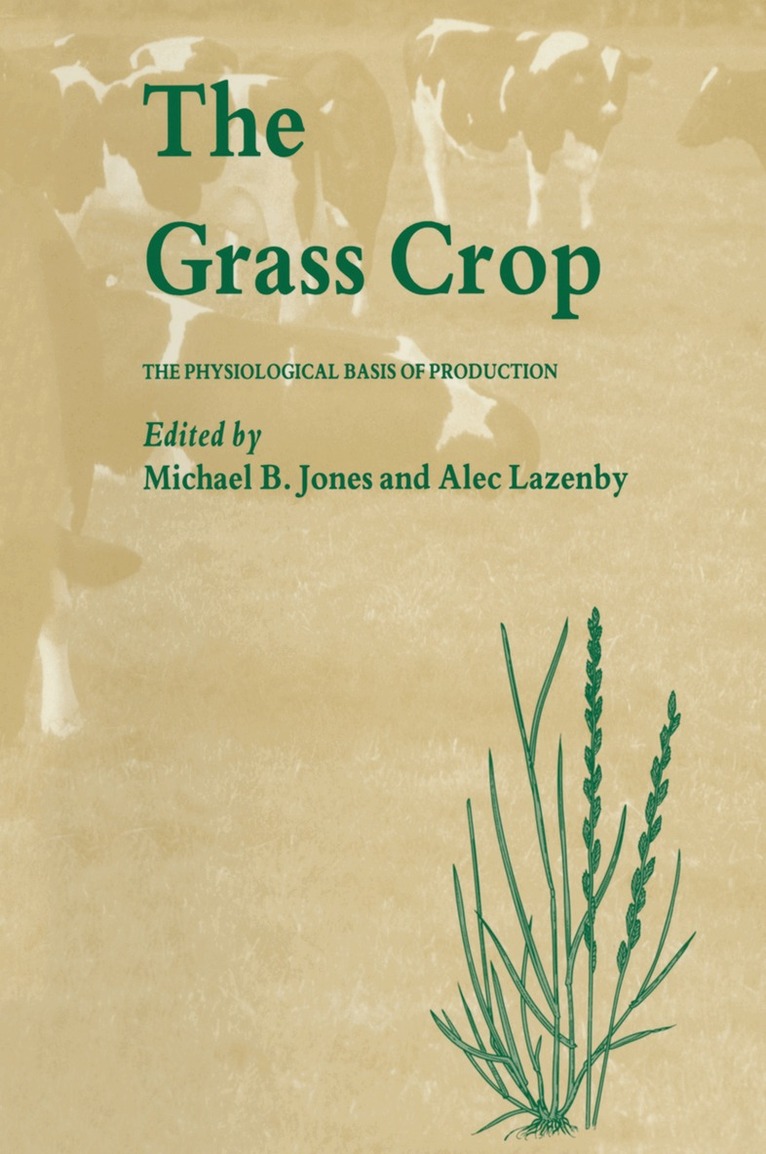
    Grass Crop

    The Physiological basis of production

    AvM. Jones

    Häftad, Engelska, 2012

    Del i serien World Crop Series

    546 kr

    Beställningsvara. Skickas inom 10-15 vardagar. Fri frakt över 249 kr.

    Fler format och utgåvor

    E-bok

    700 kr

    Beskrivning

    Grass is a very important world crop. In some countries, for example the UK, Australia and New Zealand, animal products from grassland make a greater contribution to the value of agricultural production than does any other crop. Yet research being undertaken to further· our understanding of the factors affecting the growth and productivity of grasslands has trailed in the shadow of the determined efforts made to improve our knowledge of cereals and, to a somewhat lesser extent, legumes. However, in spite of its low profile, grassland research has resulted in considerable advances in our knowledge in the last 20 years, and we feel that this book provides a timely opportunity to bring together some of this work in a review of what is primarily the ecophysiology of the temperate grass crop. Unlike other crops grown for their grain or vegatative parts, grass and grassland products are used almost entirely for the feeding of ruminant animals; the interaction of the sward and the animal thus adds an extra dimension to investigations of the productivity of grassland. No one author could adequately encompass the breadth of work covered in the book. Acknowledged experts have therefore been selected as contributors to provide an up-to-date review of their own specialized areas. Whilst multi­ author texts can cause problems of lack of uniformity of approach, each contributor has been made aware of the contents of the other chapters in an attempt both to provide continuity and to prevent glaring overlaps.

    Produktinformation

    • Utgivningsdatum:2012-01-07
    • Mått:152 x 229 x 21 mm
    • Vikt:561 g
    • Format:Häftad
    • Språk:Engelska
    • Serie:World Crop Series
    • Antal sidor:369
    • Förlag:Springer
    • ISBN:9789401070294

    Utforska kategorier

    • Agronomi och lantbruk inom Naturvetenskap och teknik

    Innehållsförteckning

    • 1 Introduction — the history of improved grasslands.- 1.1 The world’s grasslands.- 1.2 The Graminae.- 1.3 Tropical and temperate grasses — C3 and C4 pathway.- 1.4 Improved grasslands.- 1.5 Recent developments in understanding the physiology of the grass crop.- 1.6 Potential production of pastures.- References.- 2 The grass plant — its form and function.- 2.1 Introduction.- 2.2 The seed and seedling establishment.- 2.3 The vegetative shoot.- 2.4 The reproductive shoot.- 2.5 Tiller production.- 2.6 Biomass production.- 2.7 Leaf photosynthesis.- 2.8 Meristematic activity and the utilization of assimilates.- 2.9 Respiration.- 2.10 The plant and the community.- References.- 3 The regrowth of grass swards.- 3.1 Introduction.- 3.2 Regrowth in vegetative plants.- 3.3 Changes in sward structure during regrowth.- 3.4 Regrowth in different defoliation systems.- 3.5 The regrowth of reproductive swards.- 3.6 The influence of the animal on sward regrowth.- 3.7 Conclusions.- References.- 4 The effects of season and management on the growth of grass swards.- 4.1 Introduction.- 4.2 Seasonal changes in the environment.- 4.3 Seasonal production.- 4.4 Management.- 4.5 Physiological basis for optimizing production from grassland.- References.- 5 Mineral nutrients and the soil environment.- 5.1 Introduction.- 5.2 The role of associated organisms.- 5.3 The continuum between soil and plant.- 5.4 A view of the essentiality of elements — defining essentiality in physiological and ecological terms.- 5.5 Seasonal changes in nutriention deployment within the plant.- 5.6 Macronutrient cycles.- 5.7 The competitive status of grasses and their macronutrient supply.- 5.8 Acclimation of grass plants to growth-limiting soil characteristics.- References.- 6 Water relations.- 6.1 Introduction.-6.2 The hydrological cycle.- 6.3 Development and effects of water stress.- 6.4 Implications for yield.- 6.5 Conclusion.- References.- 7 Physiological models of grass growth.- 7.1 Introduction.- 7.2 Model terminology.- 7.3 Requirements for crop physiological models.- 7.4 Light interception and photosynthesis.- 7.5 Respiration.- 7.6 Partition of assimilates.- 7.7 Rate of utilization.- 7.8 Transformation of asimilate into plant tissue.- 7.9 Regrowth.- 7.10 Death of tissue.- 7.11 Concluding remarks.- Acknowledgements.- References.- Definition of symbols.- 8 The effects of pests and diseases on grasses.- 8.1 Introduction.- 8.2 Insect pests.- 8.3 Nematodes.- 8.4 Fungi.- 8.5 Bacteria.- 8.6 Viruses.- 8.7 Concluding remarks.- References.- 9 The grass crop in perspective: selection, plant performance and animal production.- 9.1 Introduction.- 9.2 Selection.- 9.3 Growth and DM yields.- 9.4 Quality.- 9.5 Utilization.- 9.6 Meeting the nutritional requirements of the animal.- 9.7 Systems based on grass.- 9.8 Postscript.- References.