• Fri frakt över 249 kr
  • •
  • Snabba leveranser
  • •
  • Billiga böcker
Kundservice

Du är på sajten för privatpersoner.

Företag, bibliotek eller offentlig verksamhet?

Du handlar på classic.bokus.com, där alla dina funktioner finns intakta.
Till classic.bokus.com
Bokus logotyp. Gå till startsidan.
  • Erbjudanden
  • Nyheter
  • Student
  • Topplistor
  • Barn & ungdom
  • Bokus Play
  • E-böcker
  • Pocketböcker
  • Spel & pussel

10% rabatt på allt med kod: NYSTART10 →

Sidfot

Mina sidor

    Hjälp

    • Kundservice
    • Vanliga frågor och svar
    • Frakt och leverans
    • Retur vid ångerrätt
    • Reklamera vara
    • Betalning
    • Köpvillkor
    • Allmänna villkor
    • Information om webbplatsens tillgänglighet

    Om Bokus

    • Om oss
    • Pressrum
    • För studenter
    • För företag
    • För bibliotek och offentlig verksamhet
    • För leverantörer
    • Hållbarhet

    Populärt

    • Aktuella erbjudanden
    • Presentkort
    • Studentlitteratur
    • Nya böcker
    • Topplistor
    • Signerade böcker
    • Engelska böcker

    Inspiration

    • Boktips
    • BookTok
    • Populära bokserier
    • Barnbokskaraktärer
    • Populära författare
    Logotyp för Bokus
    Följ oss på Facebook (extern länk)Följ oss på Instagram (extern länk)Följ oss på YouTube (extern länk)Följ oss på TikTok (extern länk)
    bokus @ CookiesAnpassa cookiesIntegritetspolicyKöpvillkor
    Till Citymail hemsida (extern länk)Till Budbee hemsida (extern länk)Till Postnord hemsida (extern länk)Till Schenker hemsida (extern länk)Till Early Bird hemsida (extern länk)Till Walleys hemsida (extern länk)
    1. Djur och Natur
    2. Naturböcker
    3. Växtböcker

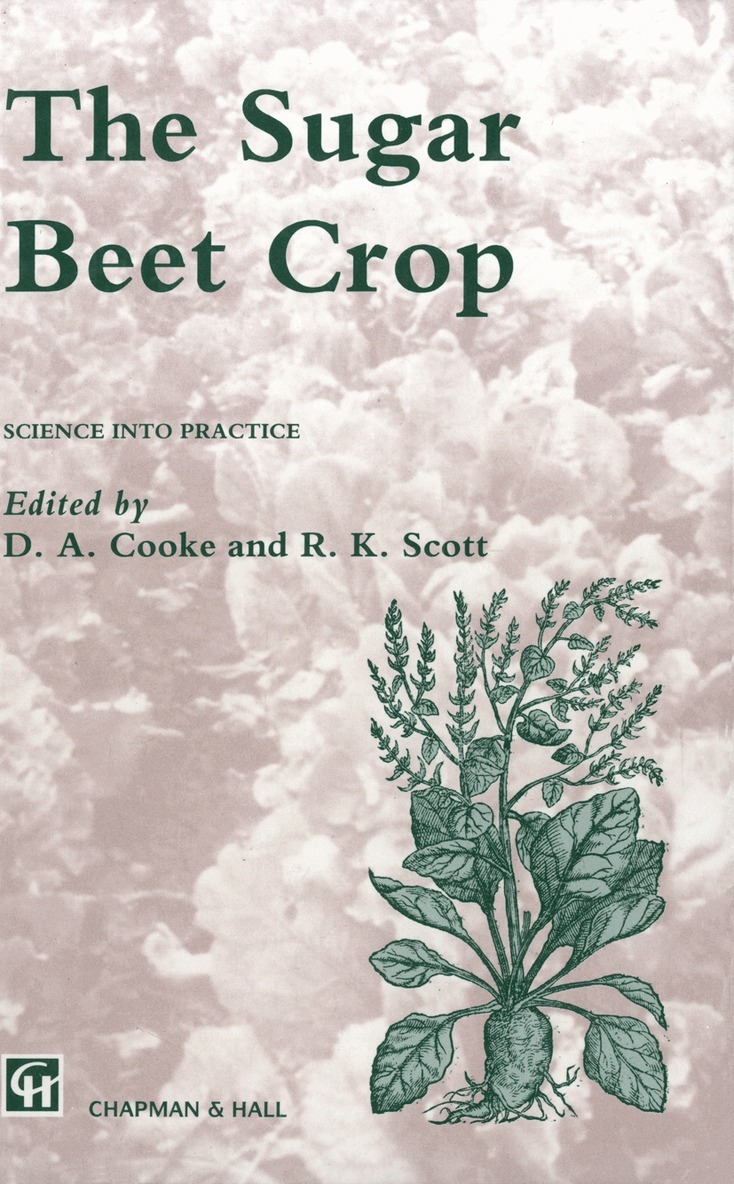
    Sugar Beet Crop

    AvD.A. Cooke,J.E. Scott

    Häftad, Engelska, 2011

    Del i serien World Crop Series

    1 625 kr

    Beställningsvara. Skickas inom 10-15 vardagar. Fri frakt över 249 kr.

    Beskrivning

    D.A. Cooke and R.K. Scott Sugar beet is one of just two crops (the other being sugar cane) which constitute the only important sources of sucrose - a product with sweeten­ ing and preserving properties that make it a major component of, or additive to, a vast range of foods, beverages and pharmaceuticals. Sugar, as sucrose is almost invariably called, has been a valued compo­ nent of the human diet for thousands of years. For the great majority of that time the only source of pure sucrose was the sugar-cane plant, varieties of which are all species or hybrids within the genus Saccharum. The sugar-cane crop was, and is, restricted to tropical and subtropical regions, and until the eighteenth century the sugar produced from it was available in Europe only to the privileged few. However, the expansion of cane production, particularly in the Caribbean area, in the late seventeenth and the eighteenth centuries, and the new sugar-beet crop in Europe in the nineteenth century, meant that sugar became available to an increasing proportion of the world's population.

    Produktinformation

    • Utgivningsdatum:2011-09-28
    • Mått:155 x 235 x 38 mm
    • Vikt:1 042 g
    • Format:Häftad
    • Språk:Engelska
    • Serie:World Crop Series
    • Antal sidor:704
    • Förlag:Springer
    • ISBN:9789401066549

    Utforska kategorier

    • Växtböcker inom Djur och Natur
    • Botanik inom Naturvetenskap och teknik
    • Agronomi och lantbruk inom Naturvetenskap och teknik

    Recensioner i media

    The book clearly presents a very comprehensive account of the crop. The book clearly provides a broad and considered outline of this major crop...it should be available widely in the libraries of colleges, universities and research institutes wherever crop science is studied - Journal of Agricultural Science

    Innehållsförteckning

    • 1 History of the crop.- 1.1 Origins of beet growing.- 1.2 Evolution of cultivated Beta species.- 1.3 Achard and the first beet sugar factory.- 1.4 The early history of sugar-beet breeding.- 1.5 Development of the beet sugar industry in the nineteenth century.- 1.6 Improvements in growing techniques and expansion of sugar-beet cultivation in the twentieth century.- 1.7 Sugar beet in retrospect and prospect.- 1.8 Historical time-table.- References.- 2 Biology and physiology of the sugar-beet plant.- 2.1 Introduction.- 2.2 Crop establishment and vegetative growth.- 2.3 Production and distribution of assimilates.- 2.4 Reproductive growth 60 References.- 3 Genetics and breeding.- 3.1 Introduction.- 3.2 Objectives of sugar-beet breeding.- 3.3 Characters subjected to selection.- 3.4 The inheritance of specific characters.- 3.5 Allopolyploidy in sugar-beet breeding.- 3.6 Selection methods.- 3.7 Synthetic varieties in sugar beet.- 3.8 Background to hybrid breeding in sugar beet.- 3.9 Hybrid breeding methods and development of hybrid varieties.- 3.10 Breeding for specific characters.- 3.11 Impact of new technologies on sugar-beet breeding.- References.- 4 Seed production and quality.- 4.1 Introduction.- 4.2 Seed production — indirect (steckling transplant) method.- 4.3 Seed production — direct (overwintering) method.- 4.4 Seed production — harvest.- 4.5 Seed quality.- 4.6 Seed law requirements.- References.- 5 Soil management and crop establishment.- 5.1 Obj ectives of tillage.- 5.2 Primary tillage.- 5.3 Secondary tillage, sowing and post-sowing tillage.- 5.4 Mechanical weed control.- 5.5 Soil compaction.- 5.6 Subsoil loosening.- 5.7 Protection against wind erosion.- 5.8 Reduced tillage.- References.- 6 Crop physiology and agronomy.- 6.1 Introduction.- 6.2 The physiology ofcrop growth.- 6.3 Analysing agronomy in physiological terms.- 6.4 Analysing the effects of weeds andyirus yellows in physiological terms.- 6.5 The application of physiological principles to the future development of the industry.- References.- 7 Nutrition.- 7.1 Introduction.- 7.2 Nitrogen.- 7.3 Phosphorus and sulphur.- 7.4 Potassium and sodium.- 7.5 Calcium and magnesium.- 7.6 Micronutrients.- References.- 8 Water use and irrigation.- 8.1 Introduction.- 8.2 Sugar-beet plants and water.- 8.3 Water use.- 8.4 Water use and crop growth.- 8.5 Responses to irrigation.- 8.6 Irrigation practice.- References.- 9 Rhizomania.- 9.1 Introduction.- 9.2 Symptoms and damage.- 9.3 Causal agents.- 9.4 Factors affecting disease development.- 9.5 Spread of the disease.- 9.6 Control.- 9.7 Conclusions.- References.- 10 Diseases.- 10.1 Introduction.- 10.2 Major virus diseases.- 10.3 Virus diseases of minor or unknown importance.- 10.4 Major fungal diseases.- 10.5 Minor or localised fungal diseases.- 10.6 Diseases caused by bacteria and bacteria-like organisms.- References.- 11 Pests.- 11.1 Introduction.- 11.2 Effects of pests on plant growth and crop yield.- 11.3 Distribution, biology, and pathogenicity of the major pests.- 11.4 Minimising yield losses caused by pests.- References.- 12 Weeds and weed control.- 12.1 Introduction.- 12.2 Weeds.- 12.3 Weed competition and the effect of time of removal.- 12.4 Weed control.- 12.5 Weed control outside the sugar-beet crop.- 12.6 Herbicide resistance.- 12.7 Herbicide soil residues.- 12.8 Summary and future prospects.- References.- 13 Opportunities for manipulation of growth and development.- 13.1 The rationale for growth regulation.- 13.2 Chemical regulation of growth and development.- 13.3 A molecular biological approach to regulation of growth anddevelopment.- 13.4 Conclusions.- References.- 14 Storage.- 14.1 Introduction.- 14.2 Amount of losses.- 14.3 Causes of losses.- 14.4 Reducing storage losses.- References.- 15 Root quality and processing.- 15.1 Introduction.- 15.2 Historical overview of technical quality.- 15.3 Concepts of good beet quality.- 15.4 Quality parameters.- 15.5 Factors influencing quality.- 15.6 Evolution of beet quality.- 15.7 Concluding remarks.- References.- 16 By-products.- 16.1 Introduction.- 16.2 Sugar-beet tops.- 16.3 Sugar-beet pulp.- 16.4 Sugar-beet molasses.- 16.5 Molassed sugar-beet pulp (feed).- 16.6 Beet vinasse.- 16.7 Concluding remarks.- References.