World of Islam - Böcker
Visar alla böcker i serien World of Islam. Handla med fri frakt och snabb leverans.
6 produkter
6 produkter
137 kr
Skickas inom 5-8 vardagar
Literature has for thousands of years served as a space in which people have negotiated the ethics of daily life. In the Islamic tradition, the broad concept of adab spans ethical instruction and literary culture. Literature classified as adab was intended to cultivate readers’ minds and characters. Similarly, the Chinese concept of wen represents the intellectual, cultural, and ethical foundations of society. Adab and wen offer ways to navigate complex social environments with respect and empathy, promoting harmony in multicultural societies. Such concepts remain highly relevant and valuable in today’s global world.In this book, Wen-chin Ouyang shows how our experience of adab stories has the power to transform both our personal relationships and society. She draws on classic Arabic stories from the famous Thousand and One Nights and compares them with tales from the canonical Chinese novels Three Kingdoms, The Journey to the West, and Water Margin. The book demonstrates how these stories tell us about ourselves, allowing us to define, test, and refine our ethics of living. More than this, they have the power to help us experience a profound contemplation of our lives on earth, linking us to our shared humanity and showing us how to live meaningfully.
119 kr
Skickas inom 5-8 vardagar
The story of Islam is not one story, but many stories involving peoples of different races, ethnicities, and cultures. Every religious tradition is marked by internal diversity, manifested through its various communities of interpretation. Islam likewise is multifaceted, as are Muslim life and faith. Living Islam invites readers to appreciate ways in which Muslims from diverse backgrounds and traditions interpret and experience their faith. Adopting a cultural studies approach, Ali Asani begins by posing questions such as ‘Which Islam?’ and ‘Whose Islam?’, and he considers different conceptions of being Muslim. He then illustrates multidimensional ways in which Muslims relate to the Prophet Muhammad, including as messenger, model, intercessor, and beloved. Drawing on Muslim devotional practices and exploring the Islamic ‘artscape’, he showcases how the beauty of the transcendent can be experienced through sonic, visual and poetic arts.
151 kr
Skickas inom 7-10 vardagar
One of the most prosperous and influential dynasties of the Muslim world, the Fatimids (909–1171) were distinguished by their Imam-caliphs, who asserted religious as well as political authority in direct descent from the family of the Prophet. Their conquest of Egypt in 969 marked the inception of a burgeoning Mediterranean empire. From there, they refined their systems of administration, judiciary, and governance, instilling principles of inclusion which contributed to stability during their caliphate. Fatimid Cairo flourished as a vibrant cultural and intellectual centre through patronage of the arts, architecture, and scholarship. This book continues the story of the Fatimids from their newly founded capital of Cairo. Introducing the figures who moulded the empire, Shainool Jiwa charts the Fatimids’ expansion, the reasons behind their ultimate fall by the hand of Saladin, and the legacy that continues with the living Ismaili communities today. This lively and engaging work, including maps and colour images, draws on a broad range of primary sources to lead readers through two centuries that witnessed the triumphs and trials of the only sustained Shi’i caliphate to rule across the medieval Islamic world.
167 kr
Skickas inom 10-15 vardagar
I.B.Tauris in association with the Institute of Ismaili StudiesEmerging from a period of long seclusion, the leader of the burgeoning community of Ismaili Shi'i Muslims was declared the first Fatimid Imam-caliph in the year 909. Abd Allah al-Mahdi founded the only sustained Shi'i dynasty (909-1171) to rule over substantial parts of the medieval Muslim world, rivalling both the Umayyads of Spain and the Abbasids. At its peak, the Fatimid Empire extended from the Atlantic shores of North Africa, across the southern Mediterranean and down both sides of the Red Sea, covering also Mecca and Medina. This accessible history, the first of two volumes, tells the story of the birth and expansion of the Fatimid Empire in the 10th century. Drawing upon eyewitness accounts, Shainool Jiwa introduces the first four generations of Fatimid Imam-caliphs -- al-Mahdi, al-Qa'im, al-Mansur, and al-Mu'izz -- as well as the people who served them and those they struggled against. Readers are taken on a journey through the Fatimid capitals of Qayrawan, Mahdiyya, and Mansuriyya and on to the founding of Cairo. In this lively and comprehensive introduction, readers will discover various milestones in Fatimid history and the political and cultural achievements that continue to resonate today.
167 kr
Skickas inom 10-15 vardagar
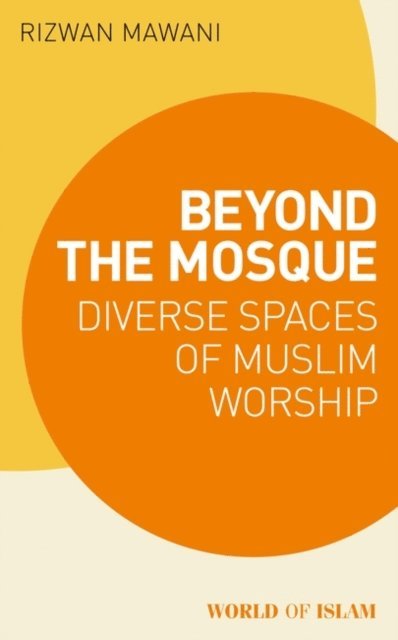
I.B. Tauris in association with the Institute of Ismaili StudiesWhile mosques are the central house of worship for a majority of Muslims around the world, many of Islam’s communities have developed their own distinctive religious spaces. These complementary spaces serve the different cultures, geographies and interpretations of Islam that continue to enrich the Muslim tradition.In this book, Rizwan Mawani encounters diverse communities and their sites of worship, from the mosque and husayniya to the khanaqah and jamatkhana. Readers are introduced to a variety of Muslim spaces, modest and elaborate – their distinct structures and the rituals practised within them, as well as the purposes they serve as community centres and markers of identity. Beyond the Mosque reveals architectural responses to evolving community needs and local environments, from Senegal and China to Iran and India. This illuminating survey celebrates the significant pluralism that characterises the living Muslim tradition today.
178 kr
Skickas inom 10-15 vardagar
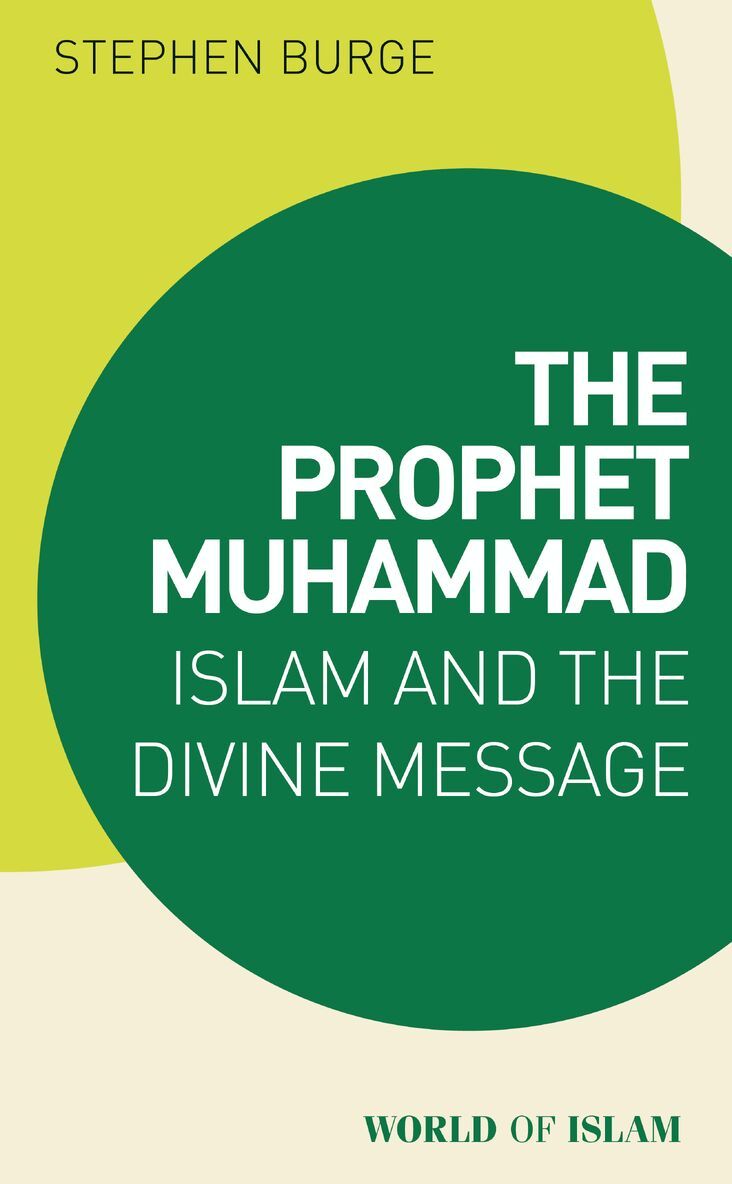
I.B. Tauris in association with the Institute of Ismaili StudiesProphets serve as intermediaries between the human and divine worlds, granting them a special status in history across diverse religions and cultures. For Muslims, the Prophet Muhammad (570–632 CE) represents the culmination of the line of monotheistic prophets, including Abraham, Moses and Jesus. In his own lifetime, Muhammad overcame opposition and brought reforms, firmly establishing a thriving community of believers which would become a major world civilisation. Today, the Prophet’s life and actions continue to inspire the Muslims worldwide.The Prophet Muhammad presents an illuminating portrait of Muhammad in his capacity as God’s messenger and an exemplary figure to Muslims. Revealing the challenges and triumphs of prophecy, Stephen Burge examines how prophets have inspired faith communities’ relationship with the Divine, and one another. In doing so, this engaging account elucidates the enduring influence of prophecy and the profound legacy of the Prophet Muhammad.