• Fri frakt över 249 kr
  • •
  • Snabba leveranser
  • •
  • Billiga böcker
Kundservice

Du är på sajten för privatpersoner.

Företag, bibliotek eller offentlig verksamhet?

Du handlar på classic.bokus.com, där alla dina funktioner finns intakta.
Till classic.bokus.com
Bokus logotyp. Gå till startsidan.
  • Erbjudanden
  • Student
  • Topplistor
  • Barn & ungdom
  • Bokus Play
  • E-böcker
  • Ljudböcker
  • Pocketböcker
  • Spel och pussel

Pocketfynda! Hundratals böcker för 49 kr/st →

Sidfot

Mina sidor

    Hjälp

    • Kundservice
    • Vanliga frågor och svar
    • Frakt och leverans
    • Retur vid ångerrätt
    • Reklamera vara
    • Betalning
    • Köpvillkor
    • Allmänna villkor
    • Information om webbplatsens tillgänglighet

    Om Bokus

    • Om oss
    • Pressrum
    • För studenter
    • För företag
    • För bibliotek och offentlig verksamhet
    • För leverantörer
    • Hållbarhet

    Populärt

    • Aktuella erbjudanden
    • Presentkort
    • Studentlitteratur
    • Nya böcker
    • Topplistor
    • Signerade böcker
    • Engelska böcker

    Inspiration

    • Boktips
    • BookTok
    • Barnbokskaraktärer
    • Populära författare
    Logotyp för Bokus
    Följ oss på Facebook (extern länk)Följ oss på Instagram (extern länk)Följ oss på YouTube (extern länk)Följ oss på TikTok (extern länk)
    bokus @ CookiesAnpassa cookiesIntegritetspolicyKöpvillkor
    Till Citymail hemsida (extern länk)Till Budbee hemsida (extern länk)Till Postnord hemsida (extern länk)Till Schenker hemsida (extern länk)Till Early Bird hemsida (extern länk)Till Walleys hemsida (extern länk)
    1. Samhälle och politik
    2. Politik och statsskick
    3. Politiskt förtryck

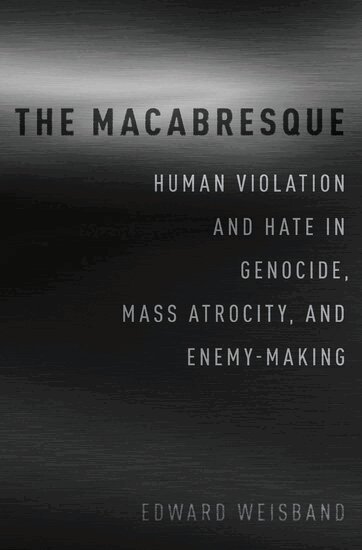
    The Macabresque

    Human Violation and Hate in Genocide, Mass Atrocity and Enemy-Making

    AvEdward Weisband

    Inbunden, Engelska, 2017

    Del i serien OXFORD UNIV PR

    1 125 kr

    Beställningsvara. Skickas inom 5-8 vardagar. Fri frakt över 249 kr.

    Beskrivning

    Studies of genocide and mass atrocity most often focus on their causes and consequences, their aims and effects, and the number of people killed. But the question remains, if the main goal is death, then why is torture necessary? This book argues that genocide and mass atrocity are committed not as an end in themselves but as a means to pursue sustained and systemic torture -- the spectacle of violence -- against its victims. Extermination is not the only, or even the primary, goal of genocidal campaigns. In The Macabresque, Edward Weisband looks at different episodes of mass violence (Chinese Cultural Revolution, the Holocaust, post-Ottoman Turkey, Cambodia, Rwanda, and Bosnia, among other instances) to consider why different methods of violence were used in each and how they related to the particular cultural milieu in which they were perpetrated. He asserts that it is not accidental that certain images capture our memory as emblematic of specific genocides or mass atrocities (the death marches of the Armenian genocide, mass starvation in the Ukraine, the killing apparatus and laboratories of the Holocaust, the killing fields of Cambodia) because such violence assumes a kind of style each time and place it arises. Weisband looks at these variations in terms of their aesthetic or dramaturgical style, or what he calls the macabresque. The macabresque is ever present in genocide and mass atrocity across time, place and episode. Beyond the horrors of lethality, it is the defining feature of concentration and/or death camps, detention centers, prisons, ghettos, killing fields, and the houses, schools and hospitals converted into hubs for torture. Macabresque dramaturgy also assumes many aesthetic forms, all designed to inflict hideous pain and humiliating punishments, sometimes in controlled environments, but also during frenzied moments of staged public horror. These kinds of performative violations permit perpetrators to revel in their absolute power but simultaneously to project hatred, revenge and revulsion onto victims, who embody the shame, humiliation and loss felt by their torturers. By understanding how and why mass violence occurs and the reasons for its variations, The Macabresque aims to explain why so many seemingly normal or "ordinary" people participate in mass atrocity across cultures and why such egregious violence occurs repeatedly through history.

    Produktinformation

    • Utgivningsdatum:2017-11-16
    • Mått:236 x 160 x 40 mm
    • Vikt:816 g
    • Format:Inbunden
    • Språk:Engelska
    • Serie:OXFORD UNIV PR
    • Antal sidor:480
    • Förlag:OUP USA
    • ISBN:9780190677886

    Utforska kategorier

    • Politiskt förtryck inom Samhälle och politik
    • Statsvetenskap och politisk teori inom Samhälle och politik
    • Politisk aktivism inom Samhälle och politik

    Mer om författaren

    Edward Weisband is the Edward S. Diggs Endowed Chair in the Social Sciences at Virginia Tech. He is the author of ten books, including Turkish Foreign Policy, 1943-1945, Political Culture and the Making of Modern Nation States, Nations and Nationalities, Global Accountabilities, Secrecy and Foreign Policy, and World Politics.

    Recensioner i media

    The Macabresque is an important book that asks an important question: why is victim torture a fixture of genocide, if extermination of the targeted group is the supposed goal? Weisband's answer is that perpetrators revel in the violence of shaming and humiliating their victims. The Macabresque framework offers a new way of describing and categorizing perpetrator behavior.

    Innehållsförteckning

    • Preface AcknowledgmentsPart I: The Macabresque of Human Violation Introduction: Taking Performativity Seriously1. From Collective Violence to Human Violation: Dark Desires in Disorders of Will Part II: On the "Normality" of Perpetrators: How We Know Them, How They Know Themselves 2. Perpetrators Alone and Together: Analytical Perspectives, Methodological Critiques 3. One Mind, Heart, and Spirit: Reductionist Traps in Psychosocial Theory 4. The Modalities of Desire in Mimetic Rivalry: Sin, Sign, and Symbol 5. Human Development and the Political Subject: The Lacanian Scaffolding in Psychosocial Perspectives 6. Perversity in the Performative: Sadism and Shame in the Macabresque Part III: Cultural Contexts: Case Studies of Performativity in the Macabresque 7. The Lurid and Ludic in the Chinese Cultural Revolution: Oral Disciplines and Oedipal Aggression in Mao's Re-education Camps 8. Cultural Case Studies in the Macabresque: Variations of Human Violation in the Twentieth Century The Desert March of Young Turk Predatory Horror Stalin's Ideological Purgatory Hitler's Diabolical Laboratory The Hell of Blood Trauma in the Days of Hutu Power The Confessional Archive and the Facial Aesthetics of AThe Junta's Neo-Inquisitional Operating Theaters The Bosnian Shame Camps Part IV: Politics of the Unreal 9. On the Slippery Tropes of We-ness: Reality and the Unreal in Social Fantasy and Political Ideology 10. The Quest for the Never-Is: Legitimacy-Grounding as Enemy-Making Notes Bibliography Index