Inbunden, Engelska, 2026
A Nuclear Peace
1300 kr
Kommande
Beskrivning
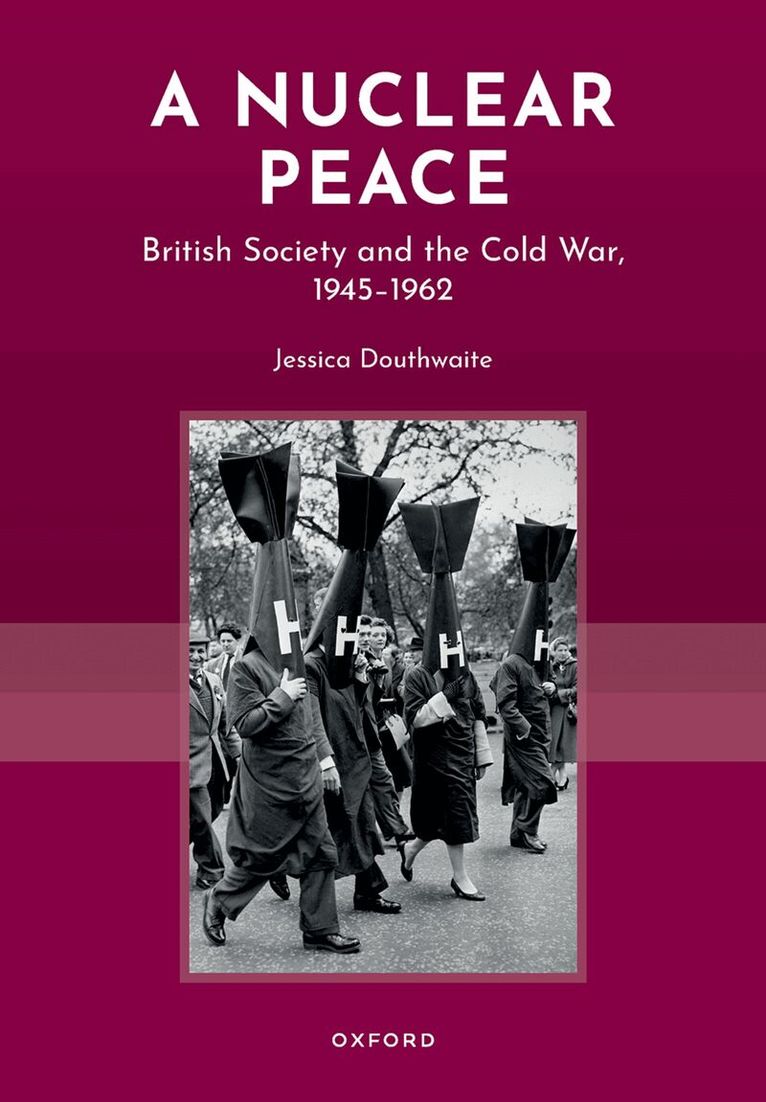
Between 1945 and 1962, a generation--too young to serve in the Second World War, yet too old to be baby boomers--grew up in the shadow of real war and the looming threat of a new, nuclear catastrophe. These young men and women reached adulthood at the precise moment that Britain's nuclear weapons, rooted in the context of the early Cold War, were deployed as deterrents. This experience shaped civilians' everyday lives in varied and surprising ways.Using original oral testimony and extensive archival research, A Nuclear Peace uncovers the Cold War experience of this woefully under-studied generation. Through an investigation into domestic life, civic organisations, and Cold War events, the book threads together a history of Cold War uncertainty from personal and global perspectives. In bringing cultural, social, and defence histories into conversation, it demonstrates that everyday life was connected to the international landscape through particularly British cultural and ideological expectations of domesticity, security, and morality. In each chapter, Jessica Douthwaite explores the historically contextual mood that contributed to British civilians' acceptance of the nuclear deterrent and perceptions of nuclear security. Topics include civil defence, anti-nuclear and pacifist campaigning, parenthood in the nuclear age, significant events such as the Berlin Airlift and Cuban Missile Crisis, and attitudes to nuclear science, nuclear testing, and radioactivity. The changing role and mechanisms of the press in a modernizing and globalizing media era permeate her historical interpretation.Ultimately, Douthwaite showcases the power of testimony, oral history methods, and memory studies to penetrate questions of emotion, experience, and cultures of conflict in the past and advocates for sensitive and nuanced approaches to historicizing civilian life. Official historians have shown that the authorities responsible for steering the course of the Cold War held sway to very British customs and values, A Nuclear Peace demonstrates that the civilians living through this transition were equally in thrall to the cultural traits that resulted in distinctly British security assumptions and expectations of citizenship in a nuclear age.
Produktinformation
- Utgivningsdatum: 2026-12-17
- Mått: 156 x 234 x undefined mm
- Format: Inbunden
- Språk: Engelska
- Antal sidor: 240
- Förlag: OUP OXFORD
- ISBN: 9780197928660
Utforska kategorier
Betyg & recensioner
0 recensioner
Inga recensioner tillgängliga.