
Fler format och utgåvor
Beskrivning
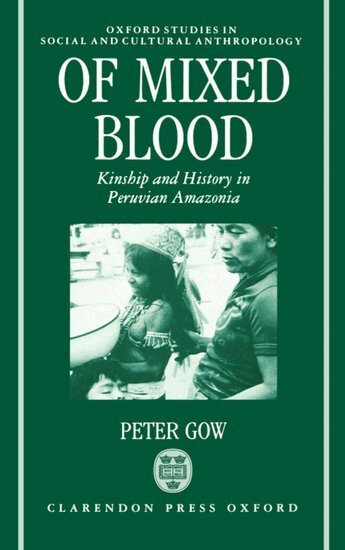
Taking as its starting point a single myth told to him by a Piro man, Peter Gow presents an analysis of a century of social transformation in an indigenous Amazonian society, the Piro people of Peruvian Amazonia. He unites the ethnographic data collected by the fieldwork methods invented by Malinowski with Levi-Strauss's analyses of the relations between myth and time. Gow explores Piro history and ethnography outwards into the domains of myth-telling in general, and following the logic of certain important myths, extends his exploration further out into other important domains of Piro experience such as visual art, shamanry and girls' initiation ritual. All these domains, like the myths themselves, have been demonstrably changing over the period since the 1880s. He goes on to show how these changes are in fact transformations of transformations, changes in social forms that are intrinsically about change.He traces the pattern of change through the historical circumstances of Piro people from the 1880s to the 1980s, to show how the inherently transformational nature of Piro social forms led them to respond as they did to the coming of rubber bosses, missionaries, and film-makers. This book makes an important contribution to debates in anthropology on the nature of history and social change, as well as addressing neglected areas such as myth, visual art, and the methodological issues involved in addressing fieldwork and archival data.
Produktinformation
Utforska kategorier
Recensioner i media
Hoppa över listan

Mer från samma författare
Constructing Building Integrity
Katja Cooper, Hugh Breakey, Charles Sampford, Peter Gow, Keith Hampson
Inbunden, 2026
2 485 kr
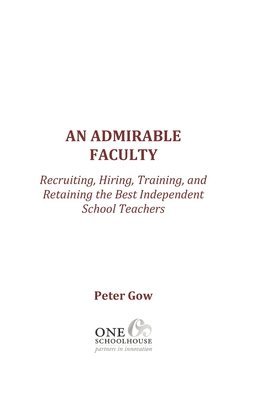
An Admirable Faculty: Recruiting, Hiring, Training, and Retaining the Best Independent School Teachers
Peter Gow
Häftad, 2020
208 kr
Hoppa över listan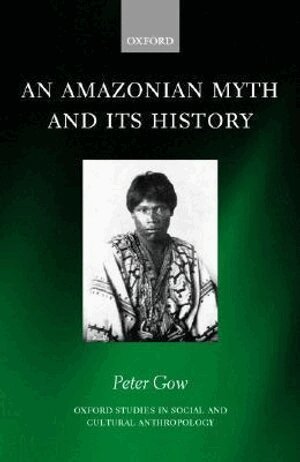
Du kanske också är intresserad av
Constructing Building Integrity
Katja Cooper, Hugh Breakey, Charles Sampford, Peter Gow, Keith Hampson
Inbunden, 2026
2 485 kr
An Admirable Faculty: Recruiting, Hiring, Training, and Retaining the Best Independent School Teachers
Peter Gow
Häftad, 2020
208 kr