- Nyhet
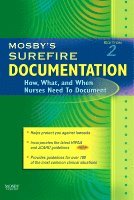
Mosby's Surefire Documentation
How, What, and When Nurses Need To Document
AvMosby
Häftad, Engelska, 2006
635 kr
Beställningsvara. Skickas inom 7-10 vardagar. Fri frakt över 249 kr.
Beskrivning
Mosby's Surefire Documentation, 2nd Edition offers clear, practical guidelines for how, what, and when to document for more than 100 of the most common and most important situations nurses face. Divided into 3 sections - Caring for Patients, Dealing with Challenging Patient Situations, and Handling Difficult Professional Problems - this essential resource details exactly what information to consider and document, to ensure quality patient care, continuity of care, and legal protection for the nurse and the institution where the nurse works.
Produktinformation
- Utgivningsdatum:2006-03-10
- Mått:152 x 229 x 19 mm
- Vikt:560 g
- Format:Häftad
- Språk:Engelska
- Antal sidor:432
- Upplaga:2
- Förlag:Elsevier Health Sciences
- ISBN:9780323034340
Innehållsförteckning
- Part 1: Caring for PatientsWhen you perform your initial patient assessmentWhen your patient loses a peripheral pulseWhen your patient has chest painWhen your patient has a myocardial infarctionWhen your patient has heart failureWhen your patient is in shockWhen your patient has cardiopulmonary arrestWhen your patient has a new arrhythmia-NEW!When your patient has hypertensive crisis- NEW!When your patient has pneumoniaWhen your patient has pneumothorax- NEW!When your patient has an asthma attackWhen your patient has a pulmonary embolismWhen your patient has pulmonary edemaWhen your patient has pulmonary tuberculosis When your patient has severe painWhen your patient is confusedWhen your patient has a seizureWhen your patient has a cerebrovascular accidentWhen your patient is unresponsiveWhen your patient aspirates a tube feedingWhen your patient has GI hemorrhage- NEW!When your patient has hypoglycemiaWhen your patient has hyperglycemiaWhen your patient has anaphylaxisWhen your patient has a transfusion reaction- NEW!When your patient has HIV infectionWhen your patient has a pressure ulcerWhen your patient has an infected woundWhen your patient has sepsis- NEW!When your patient has an adverse drug reactionWhen your patient has I.V. infiltrationWhen your patient has surgeryWhen your patient has wound dehiscence or evisceration- NEW!Part 2: Dealing with Challenging Patient SituationsWhen your patient documents her own careWhen your patient asks to see his medical recordWhen your patient's medical record isn't availableWhen your patient withholds his medical historyWhen your patient refuses treatmentWhen your patient is noncompliantWhen your patient is in police custodyWhen your patient leaves against medical adviceWhen your patient threatens to sueWhen your patient makes a sexual advanceWhen your patient becomes hostileWhen your patient threatens to harm someoneWhen your patient must be restrainedWhen your patient is anxiousWhen your patient threatens suicideWhen your patient accidentally injures herselfWhen your patient is caught smokingWhen your patient has contrabandWhen your patient tampers with medical equipmentWhen your patient hides his drugsWhen your patient removes her endotracheal tubeWhen your patient removes his chest tubeWhen your patient speaks a different languageWhen your patient has a hearing impairmentWhen your patient has a vision impairmentWhen your patient is obese- NEW!When your patient can't give informed consentWhen your patient doesn't understand the procedure he's about to undergoWhen your patient's equipment failsWhen your patient's belongings are missingWhen your patient's family questions the quality of careWhen you suspect that your patient has been abusedWhen your patient's visitors won't leaveWhen your patient is seriously ill- NEW!When your patient asks you to witness her last will and testamentWhen a patient diesWhen your patient donates an organPart 3: Handling Difficult Professional ProblemsWhen a physician or colleague illegally alters the medical recordWhen a colleague criticizes your care in the medical recordWhen you find an inappropriate comment in the medical recordWhen a physician asks to remove a medical record from the facilityHow to handle a physician's questionable orderWhen you take a telephone or verbal orderWhen a physician's order is illegibleWhen a colleague asks you to document her careWhen a coworker gives your patient drugs in your absenceWhen you suspect that a colleague is negligentHow to document care given by unlicensed assistive personnelWhen you're asked to countersign a colleague's notesWhen you must work on an understaffed unitWhen your patient or her family asks you for medical adviceWhen the physician and family decide to terminate the patient's life supportWhen the physician writes a "do not resuscitate orderWhen you withhold a prescribed drug or other patient careWhen someone asks to photograph or videotape your patientWhen a member of the media asks for patient informationWhen your patient is transferred or dischargedHow to make a late entryHow to use abbreviations safelyHow to complete an incident reportHow to avoid the pitfalls of computer documentationHow to protect your patient's privacy when faxing medical recordsHow to protect patient confidentiality when using the Internet
Hoppa över listan


Du kanske också är intresserad av
Heterocyclic Systems with Bridgehead Nitrogen Atoms, Volume 15, Part 2
Mosby, William L. Mosby
Inbunden
6 369 kr
- Nyhet