• Fri frakt över 249 kr
  • •
  • Snabba leveranser
  • •
  • Billiga böcker
Kundservice

Du är på sajten för privatpersoner.

Företag, bibliotek eller offentlig verksamhet?

Du handlar på classic.bokus.com, där alla dina funktioner finns intakta.
Till classic.bokus.com
Bokus logotyp. Gå till startsidan.
  • Erbjudanden
  • Student
  • Topplistor
  • Barn & ungdom
  • Bokus Play
  • E-böcker
  • Ljudböcker
  • Pocketböcker
  • Spel och pussel

Upp till 25% på utvalda nyheter →

Sidfot

Mina sidor

    Hjälp

    • Kundservice
    • Vanliga frågor och svar
    • Frakt och leverans
    • Retur vid ångerrätt
    • Reklamera vara
    • Betalning
    • Köpvillkor
    • Allmänna villkor
    • Information om webbplatsens tillgänglighet

    Om Bokus

    • Om oss
    • Pressrum
    • För studenter
    • För företag
    • För bibliotek och offentlig verksamhet
    • För leverantörer
    • Hållbarhet

    Populärt

    • Aktuella erbjudanden
    • Presentkort
    • Studentlitteratur
    • Nya böcker
    • Topplistor
    • Signerade böcker
    • Engelska böcker

    Inspiration

    • Boktips
    • BookTok
    • Barnbokskaraktärer
    • Populära författare
    Logotyp för Bokus
    Följ oss på Facebook (extern länk)Följ oss på Instagram (extern länk)Följ oss på YouTube (extern länk)Följ oss på TikTok (extern länk)
    bokus @ CookiesAnpassa cookiesIntegritetspolicyKöpvillkor
    Till Citymail hemsida (extern länk)Till Budbee hemsida (extern länk)Till Postnord hemsida (extern länk)Till Schenker hemsida (extern länk)Till Early Bird hemsida (extern länk)Till Walleys hemsida (extern länk)
    1. Psykologi och pedagogik
    2. Pedagogik
    3. Högskola och universitet

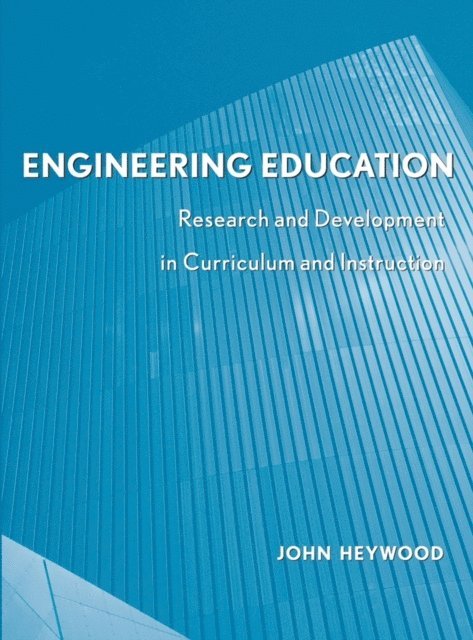
    Engineering Education

    Research and Development in Curriculum and Instruction

    AvJohn Heywood

    Inbunden, Engelska, 2005

    2 394 kr

    Beställningsvara. Skickas inom 5-8 vardagar. Fri frakt över 249 kr.

    Fler format och utgåvor

    E-bok

    2 761 kr

    Beskrivning

    A synthesis of nearly 2,000 articles to help make engineers better educators While a significant body of knowledge has evolved in the field of engineering education over the years, much of the published information has been restricted to scholarly journals and has not found a broad audience. This publication rectifies that situation by reviewing the findings of nearly 2,000 scholarly articles to help engineers become better educators, devise more effective curricula, and be more effective leaders and advocates in curriculum and research development.The author's first objective is to provide an illustrative review of research and development in engineering education since 1960. His second objective is, with the examples given, to encourage the practice of classroom assessment and research, and his third objective is to promote the idea of curriculum leadership.The publication is divided into four main parts: Part I demonstrates how the underpinnings of education—history, philosophy, psychology, sociology—determine the aims and objectives of the curriculum and the curriculum's internal structure, which integrates assessment, content, teaching, and learningPart II focuses on the curriculum itself, considering such key issues as content organization, trends, and change. A chapter on interdisciplinary and integrated study and a chapter on project and problem-based models of curriculum are includedPart III examines problem solving, creativity, and designPart IV delves into teaching, assessment, and evaluation, beginning with a chapter on the lecture, cooperative learning, and teamworkThe book ends with a brief, insightful forecast of the future of engineering education. Because this is a practical tool and reference for engineers, each chapter is self-contained and may be read independently of the others.Unlike other works in engineering education, which are generally intended for educational researchers, this publication is written not only for researchers in the field of engineering education, but also for all engineers who teach. All readers acquire a host of practical skills and knowledge in the fields of learning, philosophy, sociology, and history as they specifically apply to the process of engineering curriculum improvement and evaluation.


    Produktinformation

    • Utgivningsdatum:2005-12-02
    • Mått:224 x 286 x 31 mm
    • Vikt:1 402 g
    • Format:Inbunden
    • Språk:Engelska
    • Antal sidor:528
    • Förlag:John Wiley & Sons Inc
    • ISBN:9780471741114

    Utforska kategorier

    • Högskola och universitet inom Psykologi och pedagogik
    • Teknik: allmänt inom Naturvetenskap och teknik
    • Läroplaner och kursplaner inom Psykologi och pedagogik

    Mer om författaren

    JOHN HEYWOOD, is a Professorial Fellow Emeritus of Trinity College Dublin. He has an MSc in Engineering Education, and a doctorate from the University of Dublin. He was founding editor of the International Journal of Technology and Design Education. He has published widely and won several awards for his writings in the areas of engineering, science, and technology. Since 1973 he has been a regular contributor to the ASEE/IEEE Frontiers in Education Conference.

    Recensioner i media

    "…a convenient, well-organized compendium of what…literature has revealed, drawing on both American and English-language international journals…highly recommended." (CHOICE, April 2006)

    Innehållsförteckning

    • Part I. Aims and Objectives (Outcomes) and Their Screening 1Chapter 1. Curriculum Design, Implementation and Evaluation 3Chapter 2. Aims and Objectives (Outcomes) 19Chapter 3. Philosophy and Sociology and the Aims of the Engineering Curriculum 53Chapters 4. Concepts and Principles (Rules) 91Chapter 5. Learning Strategies and Learning Styles 119Chapter 6. Human Development 153Part II. The Curriculum and Its Paradigms in Practice 175Chapter 7. Curriculum Change and Changing the Curriculum 177Chapter 8. Interdisciplinary and Integrated Studies 199Chapter 9. From Projects to Problem-Based Learning 221Part III. Problem Solving, Creativity, and Design 241Chapter 10. Problem Solving 243Chapter 11. Creativity 261Chapter 12. Design 283Part IV. Introduction to Chapters 13 and 14. The Lecture 317Chapter 13. Cooperative Learning and Teamwork 321Chapter 14. Other Instructional Practices and the New Technologies 353Chapter 15. Assessment and Evaluation 391Chapter 16. The Formal Assessment of Student Learning: Alternative Assessment 417Chapter 17. Attrition and Retention 443Epilogue 459Author Index 465Subject Index 483