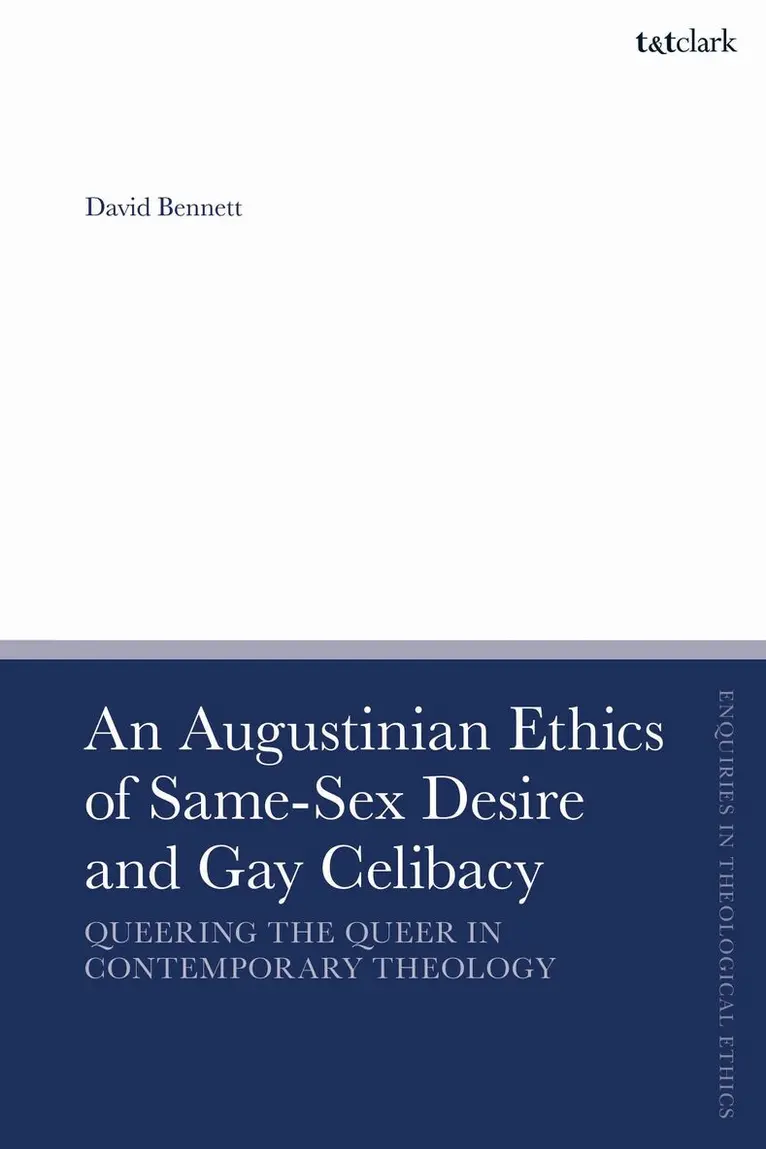
Inbunden, Engelska, 2027
Augustinian Ethics of Same-Sex Desire and Gay Celibacy
1198 kr
Kommande
Beskrivning
In this perceptive work, Bennett explores gay celibacy as a positive erotic witness in the contemporary discussion of human sexuality and queer theological discourse. With the recent publication of statements and prayers for blessing from Roman Catholic and Anglican churches, being gay and celibate are together intensely queer realities. They are, however, curiously side-lined in ecclesial ethics, queer and contemporary theologies. Through a constructive analysis of Augustine and Richard Hooker, and contemporary theologians, Oliver O’Donovan, Sarah Coakley, Graham Ward, this book proffers a theological basis for gay celibacy.In Bennett’s formulations, gay celibacy becomes a Christ-like exclusion from the created good of marriage for the sake of a greater inclusion in its eventual transformation; he also re-examines it as a form of sacramental existence that, due to its exclusion, enjoys greater intimacy and inclusion with Christ in his death and resurrection. As a robustly trinitarian asceticism, this book argues that gay celibacy can be understood as a ‘new asceticism’ which calls gay affectivity to a theological and transformative renewal. By positing such a new asceticism, this book incisively challenges the contemporary field of queer theology. Not only does Bennett open up a new space to articulate a rarely seen love for God, but he also reveals a substantive theology of God’s love and its relationship to human desire.
Produktinformation
- Utgivningsdatum: 2027-02-18
- Mått: 156 x 234 x 14 mm
- Vikt: 387 g
- Format: Inbunden
- Språk: Engelska
- Serie: T&T Clark Enquiries in Theological Ethics
- Antal sidor: 280
- Förlag: Bloomsbury Publishing PLC
- ISBN: 9780567719003
Utforska kategorier
Betyg & recensioner
0 recensioner
Inga recensioner tillgängliga.